
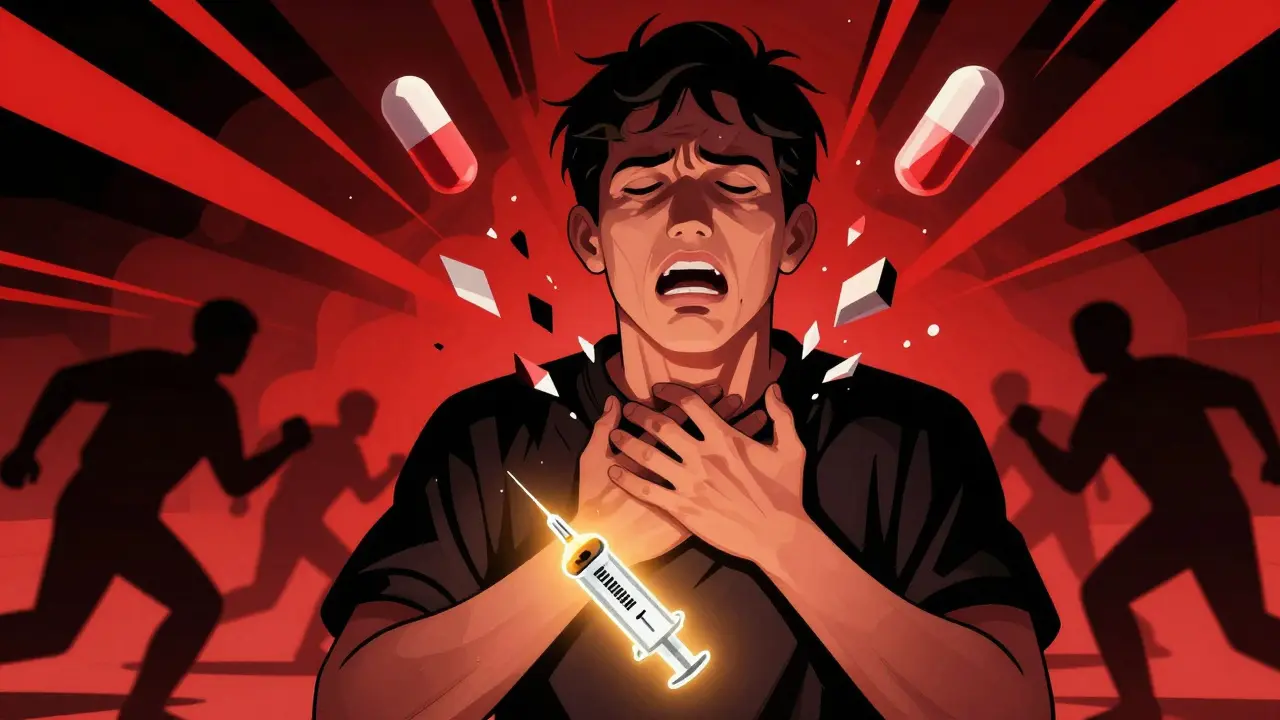
Medications save lives-but sometimes, they can turn dangerous in minutes. A severe adverse drug reaction isn’t just a rash or a stomach upset. It’s a medical emergency that can kill if you wait too long to act. If you or someone you care about starts having trouble breathing, swelling in the face or throat, or skin peeling off like a burn, severe drug reaction is the reason to call 000 right now. No waiting. No second-guessing.
What Counts as a Severe Drug Reaction?
Not every side effect is dangerous. Nausea from antibiotics? Common. A sudden drop in blood pressure after taking a new painkiller? That’s not normal. The U.S. Food and Drug Administration defines a serious adverse drug reaction as one that causes death, is life-threatening, requires hospitalization, leads to permanent damage, or causes disability. These aren’t rare outliers. Anticoagulants, diabetes meds, and opioids are the top three culprits, according to the U.S. Department of Health and Human Services. They cause bleeding, low blood sugar, and breathing failure-problems that can spiral fast.Anaphylaxis: The Silent Killer That Strikes Fast
Imagine taking a pill or getting a shot, then within minutes, your throat starts closing. Your skin breaks out in hives. Your chest tightens. You feel dizzy, like you’re going to pass out. That’s anaphylaxis-a Type I allergic reaction triggered by IgE antibodies. It’s not a slow burn. It’s a bomb going off in your body. The Resuscitation Council UK says untreated anaphylaxis kills 0.3% to 1% of people. That might sound low, but in a crowd of 1,000, that’s one person. And it happens fast.The only thing that stops it? Epinephrine. Not antihistamines. Not steroids. Not waiting to see if it gets better. Epinephrine injected into the thigh-0.01 mg per kg, max 0.5 mg-is the lifeline. The guidelines are clear: if you see trouble breathing, swelling, or low blood pressure, give it immediately. Don’t wait for a doctor. Don’t call ahead. Inject it, then call emergency services. Delaying epinephrine is the number one reason people die from anaphylaxis.
Stevens-Johnson Syndrome and Toxic Epidermal Necrolysis: When Your Skin Starts Dying
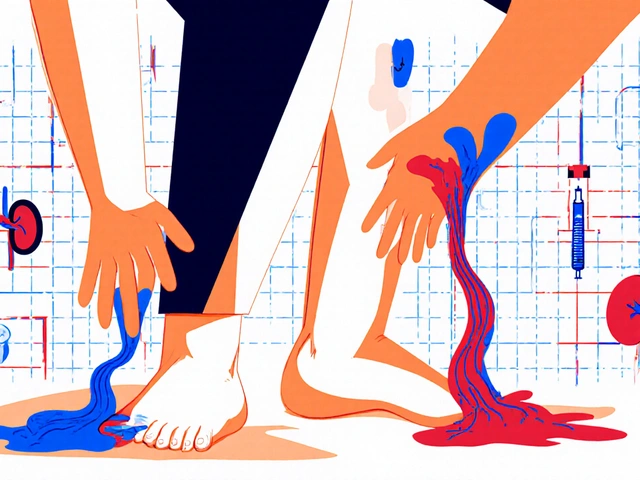
Some reactions don’t hit fast. They creep in. A fever. A red, painful rash. Then, blisters form. Skin begins to peel off in sheets-like a bad sunburn, but worse. This is Stevens-Johnson Syndrome (SJS) or its deadlier cousin, Toxic Epidermal Necrolysis (TEN). These are Type IV reactions, triggered by your immune system attacking your own skin and mucous membranes. The NCBI StatPearls reports SJS kills 10% of patients. TEN kills 30% to 50%. Age and other health problems make it worse.You won’t feel dizzy or short of breath right away. But if you’ve started a new medication in the last 1 to 6 weeks and your skin is blistering, peeling, or your eyes or mouth are covered in sores, get to a hospital immediately. This isn’t a dermatologist appointment. This is a burn unit. These patients need intensive care, fluid support, and isolation to prevent infection. Stopping the drug right away is critical. But even then, the damage can be irreversible.
DRESS: The Delayed Reaction You Might Ignore
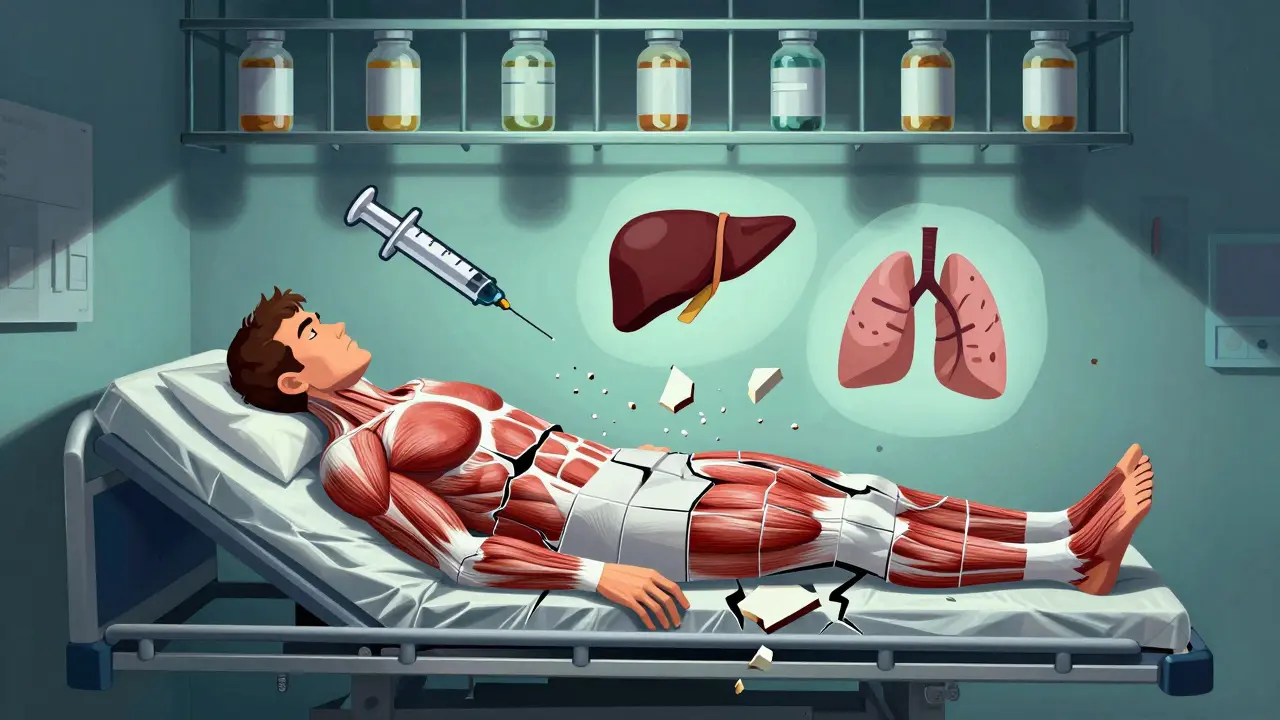
DRESS-Drug Reaction with Eosinophilia and Systemic Symptoms-is sneaky. It shows up 2 to 6 weeks after you start a new drug. You might think it’s a virus: fever, swollen lymph nodes, a rash. But it’s not. It’s your immune system attacking your liver, kidneys, or lungs. Blood tests show high levels of eosinophils-a type of white blood cell. If ignored, it can lead to organ failure.Common triggers include anticonvulsants like carbamazepine, allopurinol for gout, and some antibiotics. If you’ve been on a new medication for more than two weeks and suddenly feel sick with a rash and fever, don’t brush it off. Go to the ER. Early diagnosis and stopping the drug can mean the difference between recovery and death.
What to Do When It Happens
If you’re unsure whether it’s serious, ask yourself these questions:- Is your breathing shallow, wheezing, or blocked?
- Is your face, lips, tongue, or throat swelling?
- Is your skin peeling, blistering, or turning dark red?
- Are you dizzy, fainting, or your heart is racing uncontrollably?
- Are you vomiting blood or passing black, tarry stools?
If you answer yes to any of these, call emergency services. Do not drive yourself. Don’t wait for a friend to come over. Don’t text your doctor. Call 000. If you have an epinephrine auto-injector (like an EpiPen), use it now. Lie down, raise your legs if you can, and wait for help. Even if you feel better after the shot, you still need to go to the hospital. Anaphylaxis can rebound.
Who Should Carry Epinephrine?
If you’ve had a severe allergic reaction to a drug before, you should carry an epinephrine auto-injector. The American Academy of Family Physicians recommends this for anyone with a history of anaphylaxis to penicillin, NSAIDs, or contrast dye. You also need training on how to use it. Practice on a training device. Show your partner, your kids, your coworker. Make sure they know where it is. Keep it at room temperature. Don’t let it expire. Check the expiry date every six months.Some people are at higher risk: older adults, those on multiple medications, or people with autoimmune diseases. If you’re on long-term antibiotics, anticonvulsants, or painkillers, talk to your doctor about your risk for severe reactions. Ask if you should have an action plan.
Reporting Reactions Saves Lives
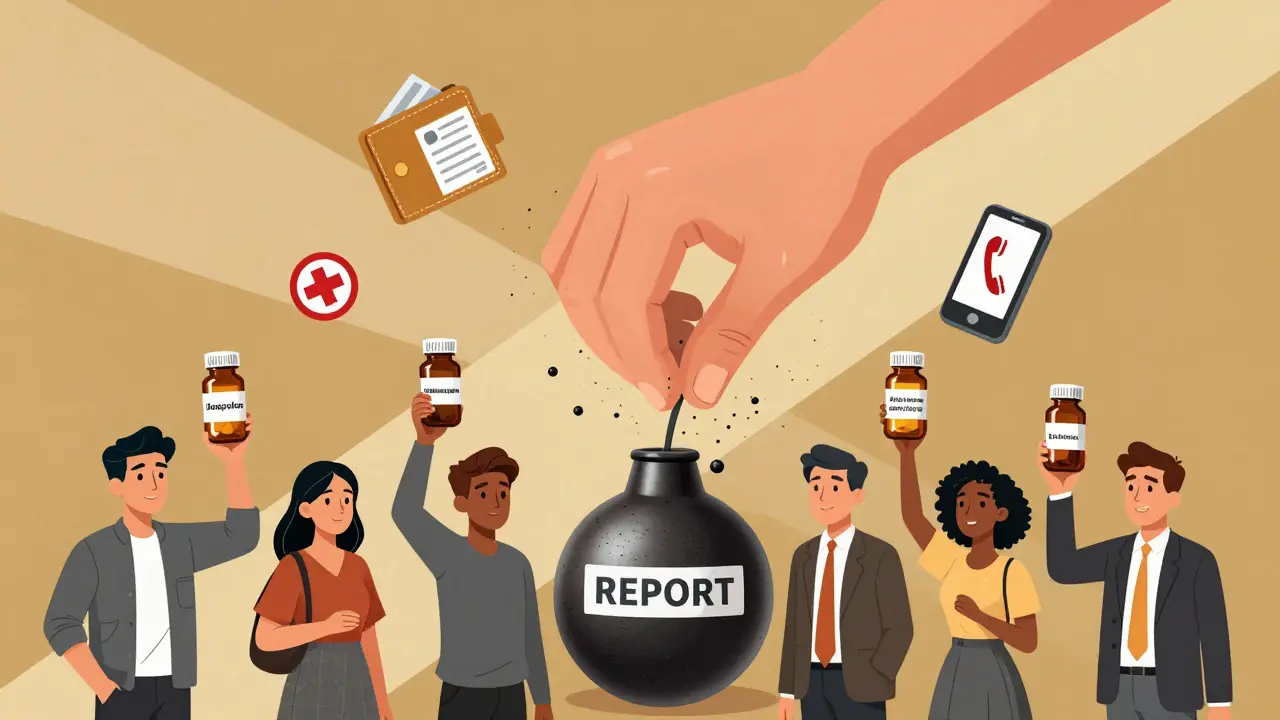
If you or someone you know has a severe reaction, report it. In Australia, you can report to the Therapeutic Goods Administration (TGA). In the U.S., it’s the FDA’s MedWatch system. In Europe, it’s EudraVigilance. These aren’t just paperwork. They’re how regulators find dangerous drugs before they hurt more people. Over 20 million suspected reactions have been reported worldwide since 2022. Each one helps make medications safer.What You Can Do Now
- Keep a list of all medications you take, including doses and why you take them. Share it with every doctor.Medications are powerful. They fix broken bones, control seizures, lower blood pressure. But they can also turn against you. The difference between survival and tragedy often comes down to one thing: knowing when to act. Don’t wait for confirmation. Don’t hope it’s nothing. If your body is screaming, listen. Your life depends on it.
What are the signs of anaphylaxis from a drug reaction?
Signs include sudden swelling of the face, lips, or throat; difficulty breathing or wheezing; hives or skin rash; rapid heartbeat; dizziness or fainting; nausea or vomiting; and a feeling of impending doom. These usually appear within minutes to an hour after taking the drug. If any of these happen, use epinephrine immediately and call emergency services.
Can a drug reaction happen days after taking the medicine?
Yes. While anaphylaxis happens quickly, other severe reactions like Stevens-Johnson Syndrome, Toxic Epidermal Necrolysis, and DRESS can take days or even weeks to develop. If you start a new drug and then get a fever, rash, blistering skin, or swollen lymph nodes after 1 to 6 weeks, seek medical help right away. These are not normal side effects.
Is it safe to use antihistamines instead of epinephrine for a severe reaction?
No. Antihistamines like Benadryl can help with mild itching or hives, but they do not stop the life-threatening drop in blood pressure or airway swelling that comes with anaphylaxis. Epinephrine is the only treatment that reverses these effects. Delaying epinephrine to use antihistamines first can be fatal.
What should I do if I don’t have an epinephrine auto-injector?
Call emergency services immediately. Lie down, elevate your legs if possible, and stay calm. If you’re with someone, ask them to help you. Do not try to drive yourself. If you’re alone and breathing becomes difficult, try to stay upright and call for help. Emergency responders are trained to treat anaphylaxis on the spot, even without an injector.
Can I get tested to find out which drugs I’m allergic to?
Yes, but only after a severe reaction. Allergy testing for drugs is complex and not always reliable. Skin tests or blood tests may be offered by an allergist for penicillin or certain antibiotics, but for most drugs, diagnosis is based on your history. After a reaction, you’ll be referred to an allergy specialist to confirm the trigger and get an emergency action plan. Never try to test yourself by taking the drug again.
Are over-the-counter painkillers like ibuprofen dangerous?
They can be. While most people tolerate them fine, NSAIDs like ibuprofen and naproxen can trigger anaphylaxis in people with asthma, nasal polyps, or a history of hives from these drugs. If you’ve ever had breathing trouble after taking one, avoid all NSAIDs. Talk to your doctor about safer alternatives like acetaminophen.
How long should I wait to see if a rash from a new drug goes away?
Don’t wait. If the rash is accompanied by fever, blistering, peeling skin, or swelling of the eyes or mouth, go to the ER immediately. Even if it seems mild at first, some reactions like SJS or DRESS can worsen rapidly over 24 to 48 hours. Early intervention saves lives and reduces long-term damage.
Can I get an epinephrine auto-injector without a prescription?
No. In Australia and most countries, epinephrine auto-injectors require a prescription. Talk to your doctor if you’ve had a severe reaction before. They can assess your risk and provide a prescription. Some pharmacies offer training and supply kits under specific protocols-ask them. Never use someone else’s injector.
What happens if I use epinephrine but don’t need it?
It’s safe. Epinephrine can cause a fast heartbeat, shaking, or anxiety, but these effects are temporary. The risk of not using it when you need it is far greater. If you’re unsure whether it’s anaphylaxis, use it. Better to use it and be fine than to wait and regret it.
Can I prevent severe drug reactions?
You can reduce your risk. Always tell every healthcare provider about every drug reaction you’ve ever had. Keep a written list. Ask your pharmacist about interactions. Avoid unnecessary medications. Don’t take someone else’s prescription. And if you’re scheduled for a procedure with contrast dye, ask about premedication options. Prevention starts with communication.




8 Comments
Man, I just read this and thought about my grandma who nearly died from a penicillin rash back in '98. They didn’t even know what SJS was back then. She spent three weeks in the burn unit, and her skin grew back weird-like mosaic tiles. I keep her EpiPen in my purse now. Just in case.
Life’s weird like that. You take a pill for a headache, and it could end you. But you also don’t want to live in fear. Just know the signs. That’s all.
💛
I’m not a doctor but I’ve seen this happen. My cousin took ibuprofen for a toothache and broke out in hives. He thought it was just a rash. Took him 45 minutes to get to the ER. By then his tongue was swollen shut. They had to stick a tube down his throat. He’s fine now but he won’t touch NSAIDs again. Don’t wait. Seriously.
Just call 000. No excuses.
Let’s be real-most people don’t even know what ‘eosinophil’ means. And yet they’re popping pills like candy. You think your ‘natural’ turmeric supplement is safe? It’s not. The FDA doesn’t regulate supplements like drugs. Your ‘wellness influencer’ doesn’t have a medical degree. Your pharmacist? Probably overworked and on their 12th refill today.
This isn’t fearmongering. It’s statistics. 1 in 500 people on carbamazepine develop DRESS. That’s not rare. That’s a lottery you don’t want to win.
Stop being lazy. Read the damn insert.
It’s fascinating how society treats pharmaceuticals as both miracle workers and invisible threats. We worship the pill that cures us, yet demonize the one that harms us-without ever questioning the system that allows both to exist under the same regulatory umbrella.
The real tragedy isn’t the reaction-it’s the fact that we’re only told to ‘watch for symptoms’ after the damage is already in motion. Why not mandate genetic screening before prescribing? Why not require mandatory pharmacogenomic testing for anyone on long-term meds?
Because it’s expensive. Because it’s inconvenient. Because profit > prevention.
And that’s not negligence-it’s capitalism.
Okay but let’s be real-epinephrine is like the superhero of meds. You don’t need a PhD to know that if your face is swelling, you don’t text your mom-you inject and RUN. I had a buddy who used his EpiPen on a guy who was having a reaction at a BBQ. Guy was fine. They got pizza after. That’s what heroism looks like now.
Also, ibuprofen? Yeah, it’s a sneaky little devil. My sister got anaphylaxis from it and she’s got asthma. She now carries TWO pens. And she makes her kids practice on the dummy. No joke. I’ve seen it.
And yeah, if you’re in the US and you think your insurance will cover it-you’re dreaming. I paid $300 out of pocket. Worth every penny.
As a registered nurse who has worked in critical care for 18 years, I can attest to the urgency conveyed in this post. I have witnessed three deaths from delayed epinephrine administration-all preventable. I have also seen patients with TEN survive only because their family recognized the rash immediately and insisted on transfer to a burn center.
Every single one of these patients had been prescribed the offending medication by a licensed provider. None had been warned of the potential severity. This is not an individual failure. It is a systemic one.
I urge all healthcare providers to review the FDA’s updated guidelines on drug reaction documentation and to ensure that patients receive not only verbal warnings, but written, plain-language instructions with visual cues. A picture of peeling skin, for example, is worth a thousand words.
Thank you for raising this awareness.
Okay so here’s the thing. I used to think this was all hype. Like, ‘oh yeah, drugs can be bad’-whatever. Then my cousin took that new anti-seizure med and got DRESS. Fever for two weeks. Liver shut down. Kidneys in trouble. He was in a coma for 11 days.
They said if he’d come in 24 hours earlier, he’d have walked out. But he thought it was ‘just the flu.’
So now? I don’t care if you think it’s ‘just a rash.’ If you’re on a new med and you feel off? Go. Now. Don’t wait for a second opinion. Don’t Google it. Just go.
I’m not even mad. I’m just… really tired of losing people to something that could’ve been stopped with one trip to the ER.
While I appreciate the clinical precision of this article, I must point out that the implicit assumption-that all adverse reactions are preventable through individual vigilance-is a dangerous neoliberal myth. The burden of detection is placed entirely on the patient, while pharmaceutical companies operate with near-total impunity, burying adverse event data in proprietary databases, lobbying against mandatory reporting, and marketing drugs directly to consumers with glossy ads that omit risk entirely.
Epinephrine may save lives, but it does not fix a system that turns patients into frontline triage officers for corporate negligence.
Until we demand structural accountability-not just personal preparedness-we are merely rearranging deck chairs on the Titanic.