
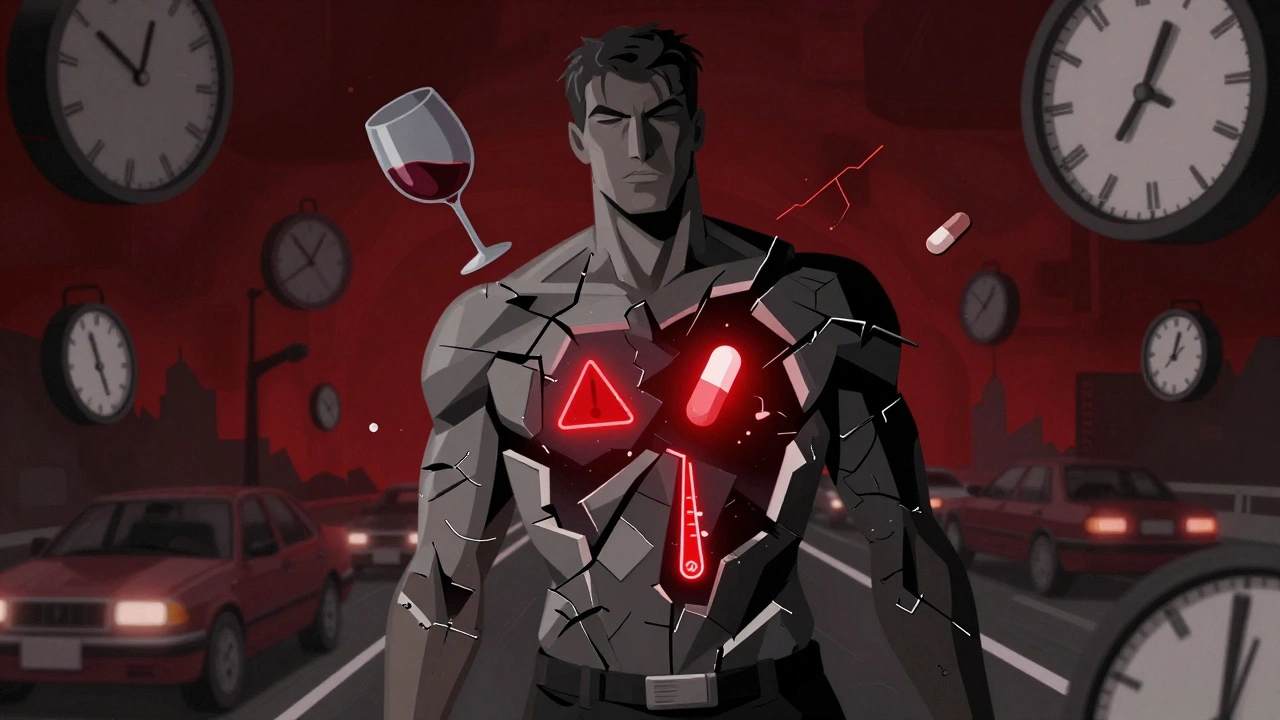
Combining alcohol with sleep medications isn’t just a bad idea-it’s a life-threatening choice. Many people don’t realize that a single glass of wine with a pill like Ambien or Lunesta can slow breathing to dangerous levels, cause memory blackouts, or even lead to death. This isn’t speculation. It’s backed by decades of clinical data, FDA warnings, and real-world emergency room reports.
Why Alcohol and Sleep Pills Don’t Mix
Alcohol and sleep medications both depress the central nervous system. That means they slow down brain activity, heart rate, and breathing. When taken together, they don’t just add up-they multiply. This isn’t 1 + 1 = 2. It’s more like 1 + 1 = 5.The science behind this is called synergistic sedation. Both substances act on the same brain receptors, especially GABA receptors, which control relaxation and sleep. Alcohol makes these receptors more sensitive, so even a normal dose of a sleep pill becomes far stronger than intended. A 2021 study in the Journal of Clinical Sleep Medicine found that mixing just one standard drink with eszopiclone (Lunesta) dropped oxygen levels in the blood to 84.7%, well below the safe threshold of 90%. That’s the kind of drop that can trigger respiratory failure.
The Three Main Types of Sleep Medications at Risk
Not all sleep aids are the same when mixed with alcohol. There are three major categories, each with different levels of danger.- Z-drugs (like Ambien, Lunesta, Sonata): These are the most dangerous. They work fast, bind tightly to brain receptors, and their effects last longer when alcohol is present. One study showed that just 0.02% blood alcohol (less than one drink) doubled zolpidem’s half-life from 2.5 hours to over 6 hours. That means you’re sedated for hours longer than you think.
- Benzodiazepines (like Ativan, Klonopin, Restoril): These are older sedatives often prescribed for anxiety and sleep. They’re less likely to cause memory loss than Z-drugs, but they still dangerously slow breathing when mixed with alcohol. The FDA found that combining temazepam with alcohol increased driving impairment by 1.9 times compared to alcohol alone.
- OTC sleep aids (like ZzzQuil, Unisom): These contain antihistamines-diphenhydramine or doxylamine. People think they’re safe because they’re over-the-counter. They’re not. For adults over 65, mixing these with alcohol triples the risk of falls and increases delirium by 400%. One Medicare analysis showed hip fracture rates jumped from 12.7 to 51.3 per 100,000 elderly users who combined these drugs with alcohol.
Meanwhile, melatonin-a natural supplement-has minimal interaction risk. It doesn’t affect GABA receptors. But even melatonin can make you groggy the next day if mixed with alcohol, so caution is still advised.
Real Stories, Real Consequences
Behind the statistics are people who woke up in places they don’t remember going to. One Reddit user, u/SleepWalker99, described waking up two miles from home after taking half an Ambien with two glasses of wine. They had no memory of driving. That’s not rare. Clinical trials show that combining Z-drugs with alcohol increases the chance of sleep-driving or sleep-walking from 0.15% to 2.4%-a 16-fold increase.The FDA received 1,872 consumer reports in 2021 alone about alcohol-sleep medication interactions. Over 60% of those reports mentioned complete memory loss. Nearly 30% required emergency care. On Drugs.com, Ambien has a 1.8 out of 5 safety rating for users who mix it with alcohol. The most common complaint? “I was drowsy for over 12 hours.”
For older adults, the risks are even more severe. AARP community posts reveal that 73% of seniors who mixed OTC sleep aids with alcohol ended up in the hospital with extreme confusion, disorientation, or falls. One 71-year-old woman in Sydney told her doctor she “just wanted to sleep after a glass of wine,” then spent three days in the ER after falling and fracturing her pelvis. She didn’t realize the combination was deadly.

It’s Not Just About Getting Drunk
You don’t need to be drunk for this to be dangerous. The FDA found that 83% of fatal Ambien-alcohol interactions happened at blood alcohol levels below the legal driving limit of 0.08%. The median BAC in those cases? 0.051%-about half a drink.That’s why the American Academy of Sleep Medicine says: “Even one standard drink with a Z-drug significantly increases risk.” One drink. One pill. That’s all it takes. There’s no safe threshold. The FDA now requires all Z-drug packaging to carry a Black Box Warning-the strongest safety alert they issue-stating: “Concomitant use with alcohol is contraindicated.”
Who’s Most at Risk?
The group most affected? Adults aged 35-54. They make up over half of all emergency visits for these interactions. But older adults suffer worse outcomes. People over 65 metabolize alcohol and sedatives 40-60% slower due to age-related liver changes. That means the drugs stay in their system longer, increasing the chance of overdose.Prescription rates are rising. In 2022, over 58 million Z-drug prescriptions were filled in the U.S.-a 12% jump since 2018. Benzodiazepine prescriptions for sleep rose 7%. Yet, a 2022 survey by the National Sleep Foundation found that 68% of patients received no clear warning about alcohol risks from their doctors. That’s not just negligence-it’s a public health failure.
What Should You Do?
If you’re taking any prescription sleep medication:- Absolutely avoid alcohol. No exceptions. Not one drink. Not one glass of wine at dinner.
- Wait at least 6 hours after drinking before taking a Z-drug. For benzodiazepines, wait 12 hours. Pharmacokinetic models show this reduces-but doesn’t eliminate-risk.
- Never take OTC sleep aids after drinking. Even if you think it’s “just a little.”
- Ask your pharmacist. Since 2022, pharmacies are required to provide written warnings with every sleep medication. Ask them to explain the risks.
- Consider alternatives. Cognitive Behavioral Therapy for Insomnia (CBT-I) is more effective long-term than pills and has zero interaction risks. The American Medical Association now recommends it as first-line treatment for anyone who drinks alcohol.
New Hope: Safer Alternatives Are Coming
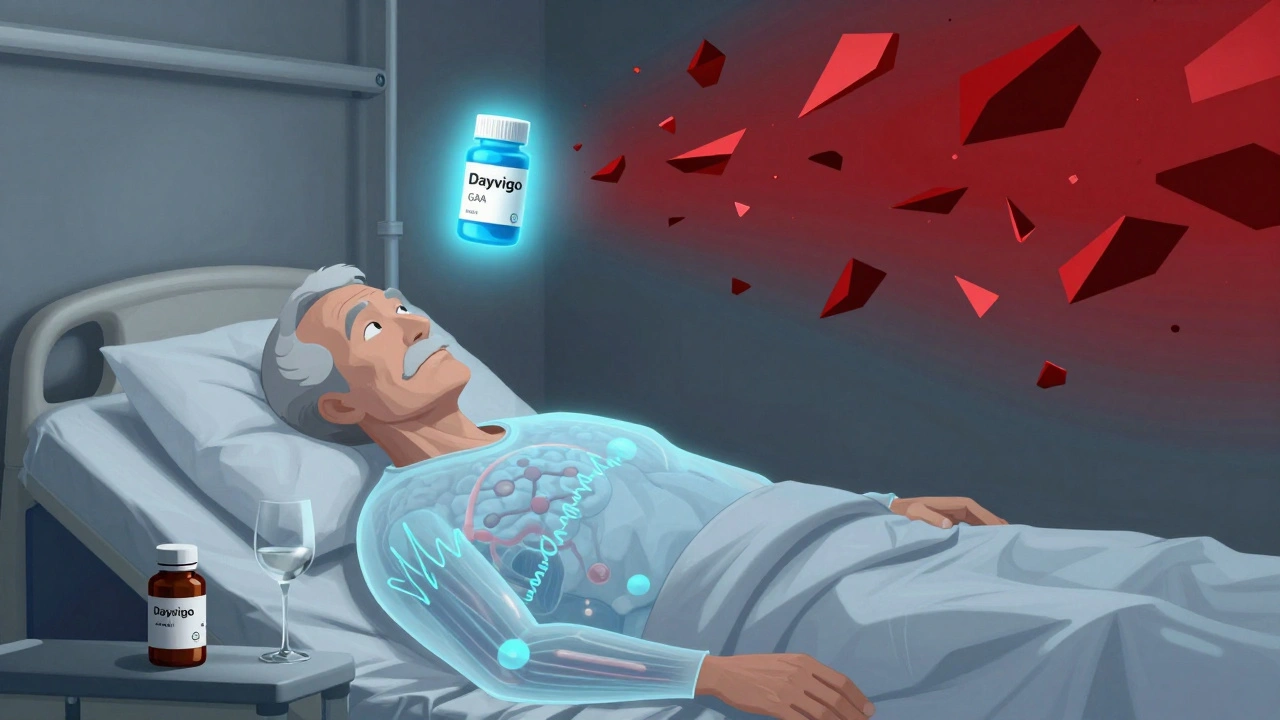
There’s good news. New sleep medications are being developed to avoid these deadly interactions. Dayvigo (lemborexant), approved by the FDA in 2023, works differently-it targets orexin receptors, not GABA. In trials, alcohol only increased its half-life by 15%, compared to 150-200% for Ambien. That’s a game-changer.Seven of the 12 sleep drugs currently in clinical trials use non-GABA mechanisms. That means the future of sleep treatment may finally move away from dangerous sedatives. But until then, the message is clear: if you’re taking a sleep pill, skip the alcohol.
Final Warning
This isn’t about being “responsible” with alcohol. It’s about survival. The combination of alcohol and sleep medication doesn’t just increase drowsiness-it shuts down your body’s ability to breathe properly. It erases your memory. It causes you to drive while asleep. It kills.The FDA, the American Academy of Sleep Medicine, and every major medical organization agree: There is no safe level of alcohol when using prescription sleep aids. If you’re using these medications, treat alcohol like a poison. Because in this case, it is.
Can I have one drink with Ambien if I wait a few hours?
No. Even one drink can significantly increase the sedative effects of Ambien, regardless of timing. Alcohol extends Ambien’s half-life, meaning it stays active in your body longer. Studies show that as little as 0.02% blood alcohol (less than one drink) can double how long Ambien stays in your system. This raises the risk of dangerous breathing suppression, memory loss, and sleep-driving. There is no safe window.
Is it safe to mix alcohol with melatonin?
Melatonin doesn’t interact with alcohol in the same dangerous way as prescription sleep aids because it doesn’t affect GABA receptors. However, combining the two can still increase next-day drowsiness by up to 35%. It won’t cause respiratory depression or sleep-driving, but it can leave you feeling groggy, uncoordinated, or impaired the next day. It’s not life-threatening, but it’s still not recommended.
Why are older adults more at risk?
As people age, their liver processes alcohol and sedatives 40-60% slower. This means both substances stay in the body longer, increasing their combined effects. Older adults are also more sensitive to sedatives, making them more prone to confusion, falls, and delirium. The American Geriatrics Society warns that mixing even small amounts of alcohol with OTC sleep aids like diphenhydramine increases fall risk by 300% in seniors.
What should I do if I’ve already mixed alcohol with a sleep medication?
If you’ve taken alcohol and a sleep medication together, do not go to sleep. Stay awake in a safe, supervised environment. Watch for signs of trouble: slow or shallow breathing, extreme confusion, unresponsiveness, or blue lips/fingertips. If any of these occur, call emergency services immediately. Even if you feel fine, the effects can build up hours later. Never drive or operate machinery.
Are there any sleep medications that are safe with alcohol?
No prescription sleep medication is considered safe with alcohol. Even newer drugs like Dayvigo (lemborexant), which have lower interaction risks, still carry warnings. The only truly safe option is non-drug treatments like CBT-I (Cognitive Behavioral Therapy for Insomnia), which has no interaction risks and is more effective long-term than any pill. Always consult your doctor before switching treatments.


15 Comments
Let’s be crystal clear: this isn’t a suggestion-it’s a forensic fact. Alcohol and GABAergic sedatives don’t just interact; they orchestrate a symphony of respiratory collapse. The FDA’s black box warning exists for a reason, and anyone who dismisses it as ‘overcautious’ is either dangerously uninformed or willfully negligent. The pharmacokinetic data is unambiguous: even 0.02% BAC doubles zolpidem’s half-life. That’s not ‘a little drowsiness.’ That’s a prelude to a coroner’s report.
Oh please. You’re telling people to give up wine with their Ambien like it’s the end of civilization? My aunt in Delhi takes her sleep pill with a glass of whiskey every night-she’s 72 and still hikes every Sunday. If your body can’t handle it, maybe you’re the problem, not the combo.
Thank you for sharing this. So many people don’t realize how quietly dangerous this is. I’ve seen friends wake up in parking lots, confused and terrified, with zero memory of how they got there. Please, if you’re reading this and you’re taking sleep meds-skip the drink. Your brain deserves better.
Y’all are acting like drinking wine with a sleep pill is a crime. I had one glass with Lunesta last Friday and woke up at 8am feeling fine. Stop scaremongering.
Of course, the West loves to pathologize cultural habits-wine with sleep pills? In India, we’ve been mixing ayurvedic sedatives with local spirits for centuries. You think your ‘FDA-approved science’ is superior? You’re not even aware of the neuropharmacological wisdom of ancient Vedic texts. Your fear-based medicine is a colonial relic.
It’s strange, isn’t it? We’ve built entire medical systems around the idea that we can control nature-chemicals, doses, timing-but here we are, still surprised when two things that calm the nervous system… calm it too much. Maybe the real danger isn’t the alcohol or the pill-it’s our belief that we can outsmart biology. We’re not engineers. We’re just mammals with a lot of words.
so like… if i had a glass of wine at 7pm and took my zzzquil at 1am… is that ok? i mean… its been like 6 hours right? lol
For anyone asking about timing: yes, waiting 6-12 hours reduces risk-but it doesn’t eliminate it. The liver doesn’t reset like a light switch. Alcohol lingers in your system longer than you think, especially if you’re over 40, female, or metabolize slowly. The only 100% safe choice? Zero alcohol. Period. And if you’re struggling with sleep, CBT-I is the gold standard-no pills, no risks, and it works better long-term than any med.
Life is short. If I want a glass of wine and a pill to sleep, who are you to tell me I can’t? You’re not my mom. You’re not my doctor. You’re just a guy with a blog and a PhD in fear.
I hear you, and I get it-sometimes the only thing between you and a full night’s rest is that little pill. But please, for your own sake, talk to your pharmacist. They’re trained to spot these risks. And if your doctor never mentioned it? Ask for a referral to CBT-I. It’s not magic, but it’s the closest thing to a cure we’ve got. You’re not broken-you just need better tools.
...but what if the FDA is lying? What if the pharmaceutical companies are hiding the real data? I read a whistleblower report last year-there’s a secret database of 12,000 deaths they never reported because they didn’t want to scare people away from their billion-dollar sleep drugs. They’re all in on it. The ‘black box’? Just theater. 😔
bro i took ambien with a beer once and woke up in a 7-eleven holding a bag of beef jerky. i didn’t even know i left my house. now i just drink coffee and stare at the wall until i pass out. still better than the dream police.
Here’s a thought: what if the real problem isn’t alcohol and pills, but the fact that we’ve outsourced sleep to chemicals? We’re so afraid of insomnia that we’ve turned our bedrooms into pharmacological battlegrounds. Maybe the solution isn’t safer pills-but a society that lets us rest without guilt, without pressure, without needing a prescription to be tired.
As a clinical pharmacologist with over two decades of experience in sleep medicine, I can confirm the data presented here is not only accurate but conservative. The synergistic depression of respiratory drive is dose-dependent and non-linear. Even in healthy young adults, the margin of safety collapses below a 12-hour window. This is not anecdotal. It is measurable, reproducible, and lethal. I urge all prescribers to reinforce this message with written, not verbal, warnings.
Wait… so if I’m on Ambien and I drink wine, I might sleepwalk and drive? But what if I’m being watched by the government? What if the sleepwalking is a cover for them to track me? I read somewhere that the FDA works with the CIA to implant memory wipes in sleep meds. That’s why people don’t remember driving-they’re being erased. 😳