
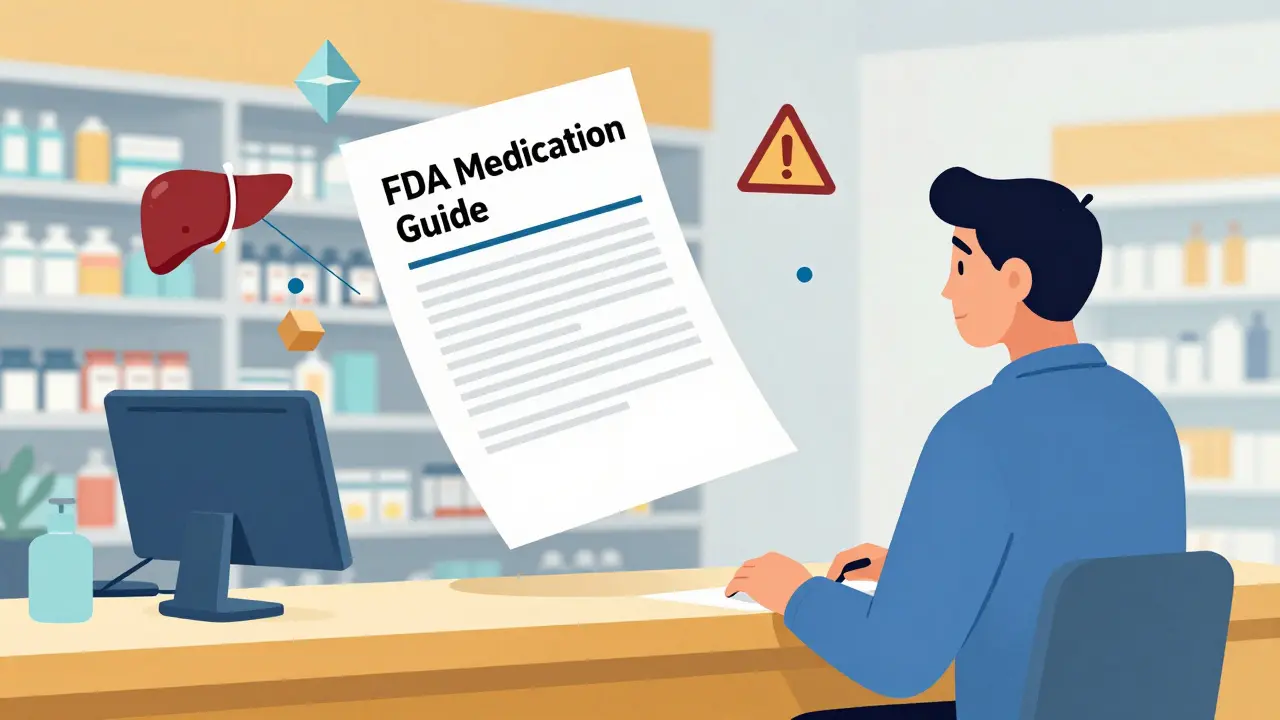
When you pick up a prescription at the pharmacy, you might be handed a small paper booklet with dense text. That’s a Medication Guide - a legally required document from the U.S. Food and Drug Administration (FDA) designed to help you understand serious risks tied to your medicine. These aren’t just brochures. They’re safety tools. And if you’re taking a drug that carries serious side effects - like blood clots, liver damage, or life-threatening allergic reactions - you have the right to see this information, no matter what your doctor or pharmacist says.
What Exactly Is an FDA Medication Guide?
An FDA Medication Guide is a printed handout that comes with certain prescription drugs. It’s not optional. The FDA requires it for drugs where the risks are high enough that patients need clear, plain-language warnings to make safe choices. Think drugs used for psychiatric conditions, cancer treatments, autoimmune diseases, or blood thinners. By September 2011, there were 305 of these guides in circulation - up from just 40 in 2006. That’s an eight-fold increase in just five years, showing how seriously the FDA takes patient safety.
These guides aren’t written by doctors. They’re created by drug manufacturers, then reviewed and approved by the FDA. Every guide must include:
- The drug’s name (brand and generic)
- What the drug is used for
- Important safety warnings - like what to avoid or when to call a doctor
- Common side effects, including those that are serious
- How to take the drug correctly
The language has to be simple. No jargon. No Latin terms. The FDA requires it to be written at a reading level most adults can understand. But here’s the problem: a 2012 study found that despite the growing number of guides, most still failed to meet basic readability standards. Many are too long, too technical, or poorly organized. That’s why the FDA is working on a new system called Patient Medication Information (PMI) - a one-page, standardized format that will be stored in a public online database. But until that rolls out fully, you still need to know how to get the current guides.
How Do You Get a Medication Guide?
The easiest way is right at the pharmacy. Every time you get a new prescription for a drug that requires a Medication Guide, the pharmacist is legally required to hand you one. This applies whether it’s your first fill or a refill. It doesn’t matter if you’ve taken the drug for years - you still get the guide each time.
But here’s what many people don’t know: you can ask for one even if you weren’t given it. If you pick up your prescription and no guide comes with it, just ask. Say: “Is there a Medication Guide for this drug?” Pharmacists are obligated to provide it. You don’t need a reason. You don’t need to prove you’re concerned. You just ask.
Some people think only new patients get these guides. That’s not true. Even if you’ve been on the same medication for five years, if your pharmacy switches suppliers or the FDA adds a new warning, you’re entitled to the updated guide. Always check.
Can You Get It Electronically?
Yes. While paper is still the default, you have the right to request an electronic version. Many pharmacies will email or text you a PDF link. Some drug manufacturers also offer digital access through their websites or patient portals.
If you prefer digital, tell the pharmacist: “Can I get this guide emailed or downloaded instead of printed?” They can’t refuse. The FDA explicitly allows this option. Some patients find it easier to save, search, or share an electronic copy - especially if they’re managing multiple medications.
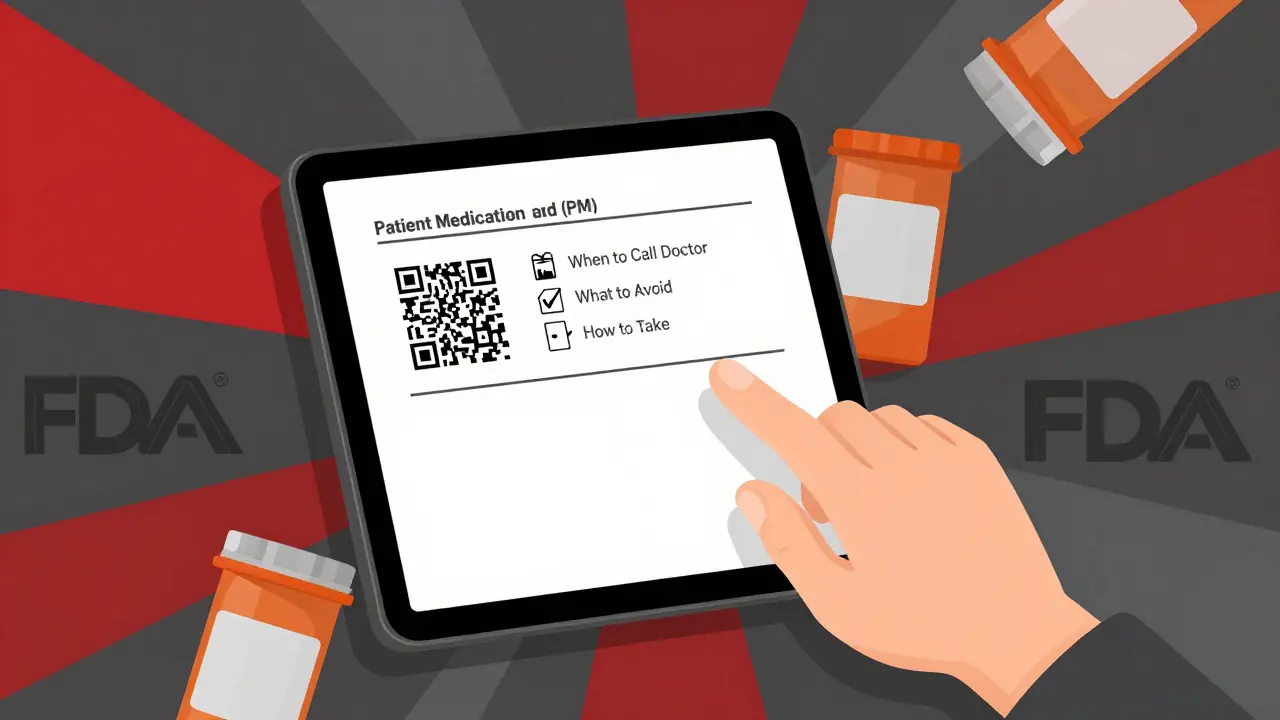
And if you’re tech-savvy, you can go straight to the source. The FDA maintains a public online library of all approved Medication Guides. Go to the FDA’s Patient Labeling Resources page and search by drug name. You’ll find every guide, in its approved version, free to download. No login. No fee. Just the official document.
When Are Medication Guides Not Given?
There are exceptions. If you’re in a hospital and your drug is administered by a nurse or doctor - like an IV antibiotic or chemotherapy - you won’t automatically get a Medication Guide. That’s because the care team is directly supervising you.
But even then, you can still ask for one. The FDA says patients have the right to request a guide at any time, regardless of where they’re being treated. And if your drug is part of a Risk Evaluation and Mitigation Strategy (REMS) program - which applies to the riskiest medications - your doctor or pharmacist must review the guide with you before you start treatment. That’s not optional. It’s part of the law.
Another exception: if your doctor believes giving you the guide could cause harm - say, if you have severe cognitive impairment and the content might cause panic - they can delay distribution. But even then, you or your legal representative can still request it later.
Why Do Some Drugs Have Guides and Others Don’t?
The FDA doesn’t pick drugs randomly. A drug gets a Medication Guide only if it meets one or more of these three criteria:
- It has serious risks that could lead to death or permanent injury if not properly understood
- Patients must follow very specific instructions for the drug to work - like taking it at exact times or avoiding certain foods
- Patient behavior (like skipping doses or mixing with alcohol) could cause life-threatening reactions
Examples include blood thinners like warfarin, certain antidepressants with suicide risk warnings, and drugs like isotretinoin (Accutane), which can cause severe birth defects. If you’re on one of these, you’ll see the guide. If you’re not sure, check the FDA’s online database or ask your pharmacist.
What’s Changing Soon? The Patient Medication Information (PMI) System
The current system is outdated. Medication Guides vary wildly in format - some are 10 pages long, others are poorly designed. Many patients don’t read them. A 2012 study found no improvement in readability over years, even as the number of guides grew.
The FDA is replacing them with a new system called Patient Medication Information (PMI). By 2026, all new drugs will use this format. Existing drugs will transition over time:
- Drugs approved before 2013: Have 5 years to switch
- Drugs approved between 2013 and 2023: Have 3 years
- Drugs approved after 2023: Must use PMI from day one
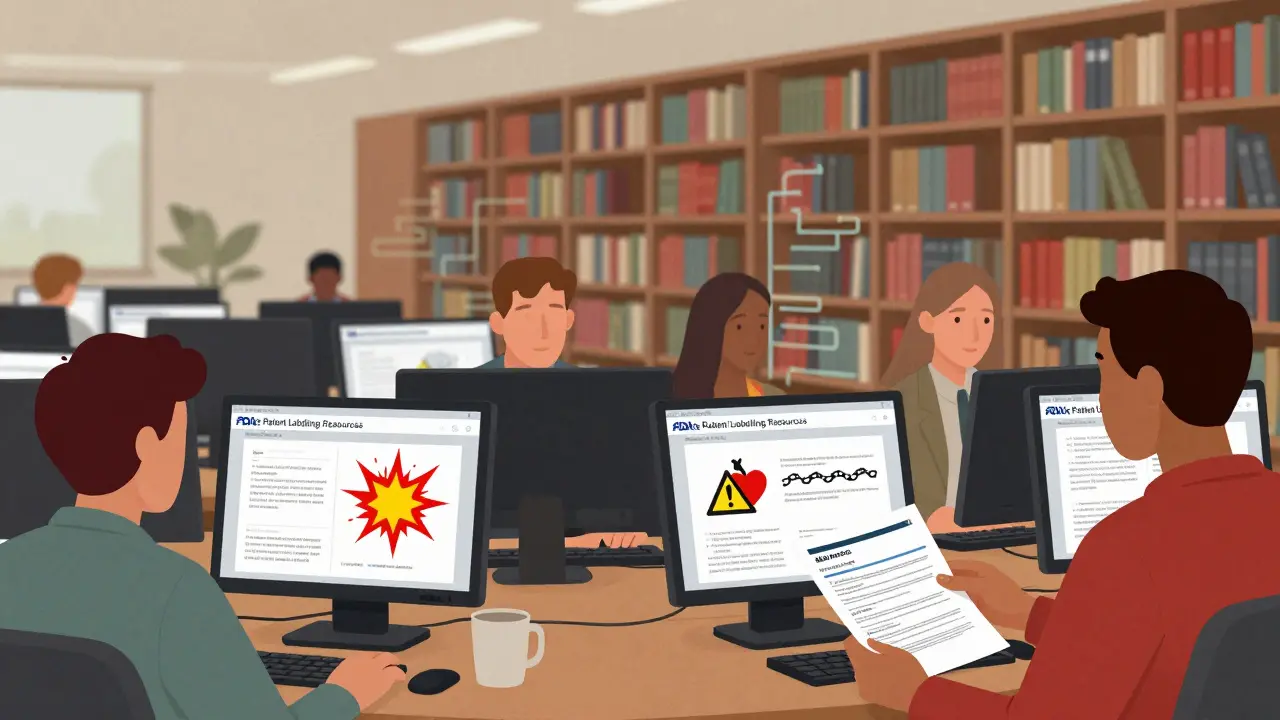
PMI will be one page. Standardized. Easy to scan. It will include:
- What the drug is for
- When to call your doctor
- What to avoid
- How to take it
- Where to find more info (via a QR code or website)
All PMI documents will be stored in a free, public FDA database. You’ll be able to search by drug name, scan a QR code on your pill bottle, or get it emailed. No more digging through thick booklets. Just clear, consistent info.
What Should You Do Right Now?
Don’t wait for the system to change. Here’s your action plan:
- When you get a new prescription, always ask: “Is there a Medication Guide for this?”
- If you’re not given one, ask again. Don’t assume it’s not needed.
- Request the electronic version if you prefer it - it’s your right.
- Save the guide. Don’t throw it away. Keep it with your medication records.
- Visit the FDA’s Patient Labeling Resources page and search for your drug. Bookmark it.
- If you’re on a drug with serious risks, read the guide before taking your first dose. If something isn’t clear, call your pharmacist or doctor.
Medication Guides aren’t just paperwork. They’re your shield. They tell you when to stop the drug and get help. They warn you about dangerous interactions. They could save your life. Treat them like you would your insurance card or emergency contacts - keep them handy, read them, and never ignore them.
Still Not Sure? Here’s What to Do Next
If you’re confused about whether your drug needs a guide, or you can’t find it:
- Call your pharmacy and ask for the Medication Guide by drug name
- Search the FDA’s online repository at www.fda.gov/patient-labeling
- Check your drug manufacturer’s website - most have a patient support section
- Ask your doctor or pharmacist to explain the risks in plain terms - even if you don’t have the guide in hand
Remember: You don’t need a prescription to access these guides. You don’t need to be a patient. You don’t even need to be American. The FDA’s online library is open to anyone, anywhere.
Do I have to pay for an FDA Medication Guide?
No. Medication Guides are provided free of charge by pharmacies and manufacturers. You should never be charged for them. If a pharmacy tries to bill you, ask to speak to the pharmacist in charge - it’s against FDA regulations.
Can I get a Medication Guide for an over-the-counter (OTC) drug?
No. FDA Medication Guides only apply to prescription drugs. OTC drugs have Drug Facts labels, which are different. These are simpler and found on the packaging. If you’re unsure about an OTC drug’s safety, ask your pharmacist - they can help you interpret the label.
What if the Medication Guide says something different from what my doctor told me?
Always trust the guide. It’s reviewed and approved by the FDA. If your doctor’s advice contradicts it, ask them to explain why. Sometimes, doctors give simplified advice. But the guide contains the full safety picture. If there’s a conflict, get a second opinion or contact the FDA’s MedWatch program to report it.
Can I share my Medication Guide with someone else?
Yes. Medication Guides are public documents. You can print, email, or give them to family members, caregivers, or friends. In fact, it’s a good idea if someone helps you manage your meds. Just make sure they know it’s specific to your drug and dosage.
Are Medication Guides updated if new risks are found?
Yes. If the FDA learns of a new serious risk, the manufacturer must update the guide and submit it for approval. Pharmacies are required to give out the latest version. Always check the date on the guide. If it’s old, ask for the current one or download the latest from the FDA website.

15 Comments
Why do we even need these guides when doctors are supposed to know what they’re prescribing? In Nigeria we just trust the professional and move on
OMG YES!! I got my warfarin guide last week and it was like 17 pages of tiny font!! I asked for the PDF and they were like ‘uhhh we don’t do that’ and I had to call the FDA hotline?? Like?? I paid for my meds not a novel!!
Y’all are overthinking this. The guide is just a safety net. If you’re on something that can kill you, you deserve to know how. No drama. Just read it. Keep it. Share it. Done.
Always ask. Always. Even if you’ve been on the drug for a decade. The FDA updates these guides when new risks emerge. If you don’t ask, you’re not just uninformed-you’re vulnerable.
The PMI rollout is a classic bureaucratic overcorrection. We already have standardized labeling in the EU-why reinvent the wheel with another federal mandate? The current system works fine for 90% of patients.
Someone just told me they threw away their guide because it was ‘too scary.’ That’s not ignorance-that’s negligence. If you don’t read it, you’re gambling with your life. And no, your ‘I’m fine’ attitude doesn’t override FDA science.
Let me tell you something-when I was on antidepressants, I didn’t know about the suicide risk guide until my sister found it in my drawer. She printed it, highlighted the warning signs, and taped it to my fridge. I didn’t know I needed it until I had it. Now I give every new patient a copy. It’s not paperwork-it’s a lifeline. And if you’re not reading it, you’re not living fully. You’re just surviving. And that’s not enough.
Bro I asked for my guide and the pharmacist acted like I was asking for a unicorn. I said ‘I’m not dumb, I want to know what I’m taking’ and she handed it over like I just robbed her. Why is this even a thing we have to fight for? It’s a legal right, not a favor.
Just checked the FDA site-found my guide in 10 seconds. Free. No login. No BS. 🤝💡
The FDA’s failure to enforce uniform readability standards across Medication Guides is a glaring regulatory lapse. The linguistic complexity of these documents undermines their intended purpose-patient autonomy-and constitutes a form of institutional negligence.
So… we’re supposed to read a 12-page PDF about a drug that makes me sleepy… but the pharmacy won’t give it to me unless I beg? And this is the land of the free? 😂
It's not about the guide... it's about the silence between the lines. The real warning is what they don't say. 🌌
My grandma in Florida didn’t speak English well but she got the guide in Spanish. She showed me the pictures of the warning symbols. We laughed, we cried, we saved it. This isn’t bureaucracy-it’s love in paper form.
Most people can’t even read at a 6th grade level so why bother with guides? It’s performative safety. The real issue is systemic illiteracy, not pharmaceutical transparency. You can’t fix dumb with a pamphlet
Urvi, that’s a dangerous assumption. The guides aren’t for the ‘dumb’-they’re for the overwhelmed. People on blood thinners, chemo, or antipsychotics aren’t choosing ignorance-they’re choosing survival. And the guide is the only thing standing between them and a preventable death. You’re not helping by dismissing it.