
Tyramine Risk Calculator
This tool calculates tyramine content in foods based on medical guidelines. The dangerous threshold is 6mg for sensitive individuals and 25mg for others. Exceeding these levels can cause life-threatening hypertensive crisis.
Risk Assessment
Select food and enter amount to calculate risk
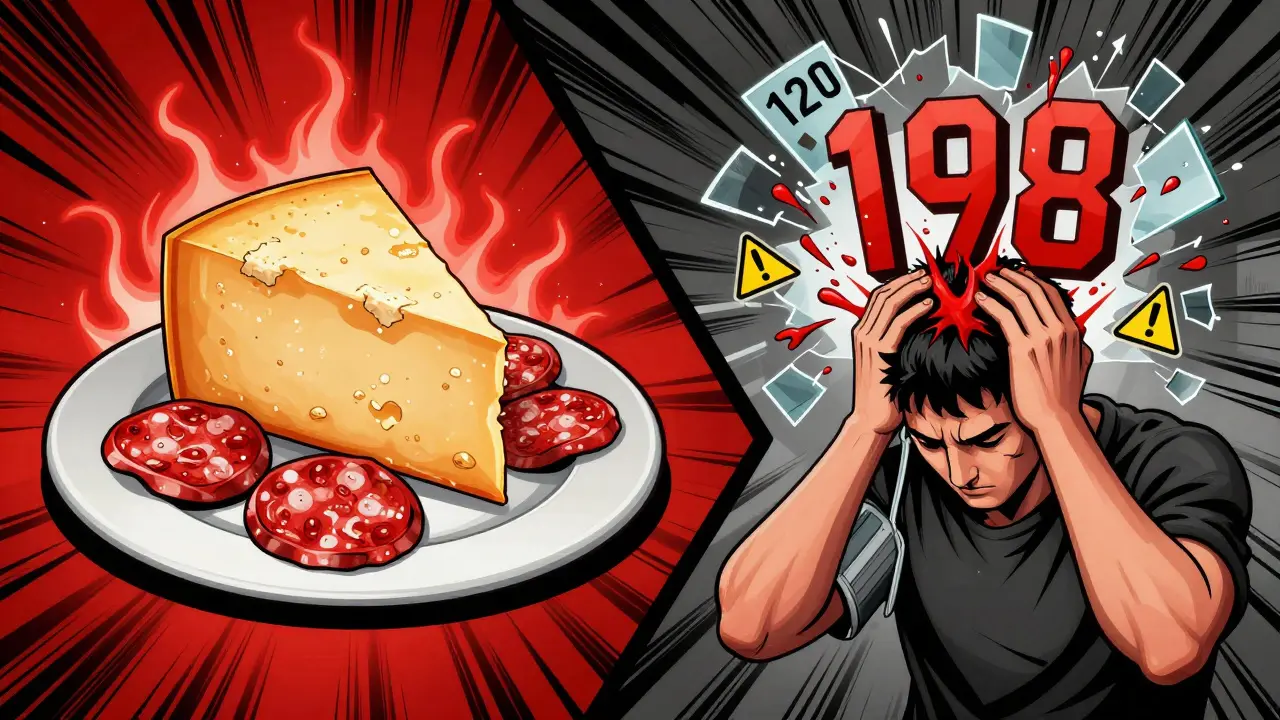
When you're on an MAOI antidepressant like Nardil or Parnate, your favorite sharp cheddar or pepperoni sandwich isn't just a snack-it could be a medical emergency. This isn't scare tactics. It's chemistry. And it's life-threatening.
Why Aged Cheese and Processed Meats Are Dangerous with MAOIs
MAOI drugs block an enzyme called monoamine oxidase. That enzyme normally breaks down tyramine, a compound found naturally in aged, fermented, or cured foods. When the enzyme is turned off, tyramine builds up in your bloodstream. That triggers a massive release of norepinephrine, a chemical that spikes your blood pressure. In minutes, your systolic pressure can jump from 120 to 180 or higher. That’s not just a headache. That’s a hypertensive crisis-stroke, heart attack, or even death can follow.This interaction was first proven in 1965, when researchers linked cheese consumption to sudden, dangerous blood pressure spikes in people taking early MAOIs. Since then, we’ve learned the exact amounts that trigger reactions. For some people, as little as 6 mg of tyramine can cause symptoms. For others, it takes 25 mg. But there’s no safe way to guess where you fall on that scale.
Which Cheeses Are Risky? The Tyramine Breakdown
Not all cheese is created equal. Fresh cheese? Usually fine. Aged cheese? High risk.- High-risk cheeses (over 600 mcg/g): Aged cheddar (72-953 mcg/g), Parmesan (610-1,400 mcg/g), Swiss (400-1,200 mcg/g), blue cheeses like Stilton and Gorgonzola (1,000-3,500 mcg/g), and brined feta (350-800 mcg/g).
- Moderate-risk cheeses: Camembert, Brie (200-600 mcg/g), Gruyère, Edam (150-500 mcg/g).
- Safe cheeses (under 50 mcg/g): Fresh mozzarella, ricotta, cottage cheese, cream cheese, American cheese-all made from pasteurized milk and not aged.
A single 30g slice of aged cheddar can contain up to 28.59 mg of tyramine. That’s over four times the dangerous threshold for sensitive individuals. Parmesan, often sprinkled on pasta or salads, can pack nearly 1,400 mcg per gram. One tablespoon could be enough to trigger symptoms.
Processed Meats: The Hidden Danger
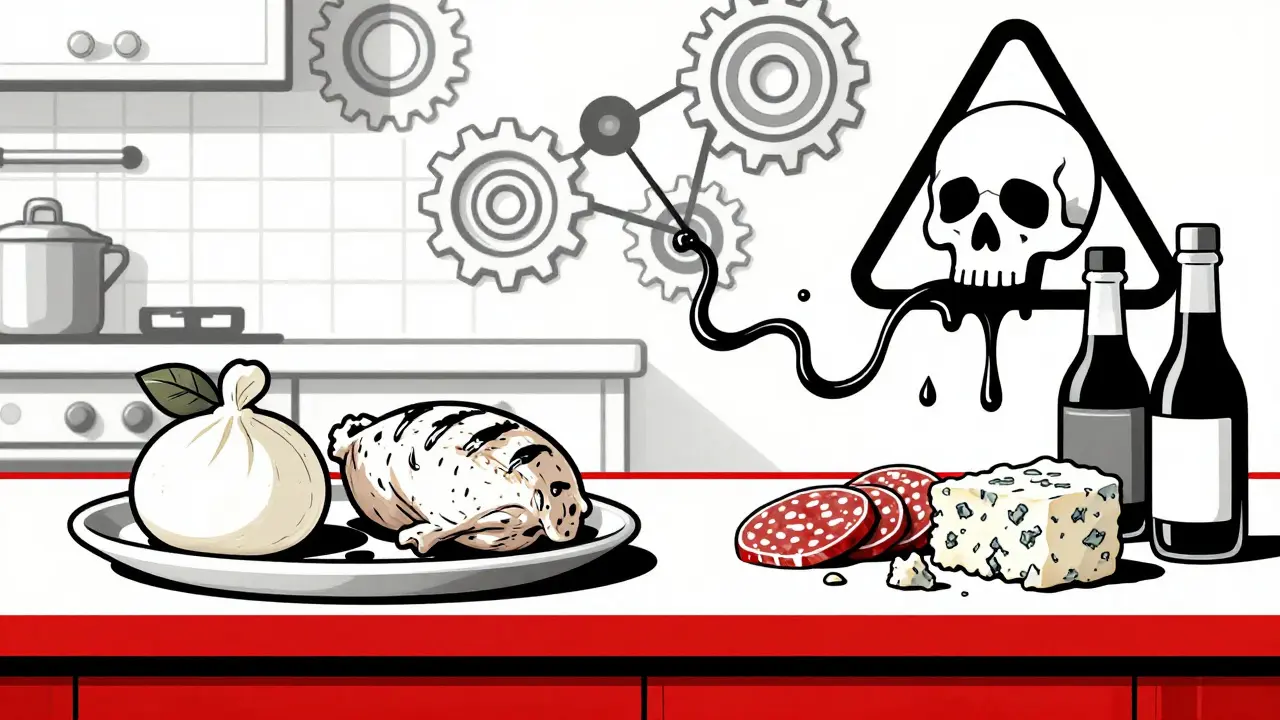
You might not think of your deli meat as a threat-but it is. Curing, smoking, and fermenting meat allows tyramine to build up over time.- High-risk meats: Dry-cured salami (150-500 mcg/g), pepperoni (200-600 mcg/g), summer sausage (300-900 mcg/g).
- Moderate-risk meats: Bacon (75-250 mcg/g), corned beef (60-180 mcg/g), bologna (50-200 mcg/g).
- Safe meats: Freshly cooked chicken, turkey, beef, or pork-nothing cured, smoked, or aged.
Even if the label says “no nitrates,” it doesn’t mean “no tyramine.” The aging process itself creates tyramine, regardless of additives. That’s why a fresh turkey sandwich is safe, but a deli-style roast beef with aged cheese on rye is not.
Other Surprising Sources of Tyramine
Cheese and meat aren’t the only culprits. Many fermented or preserved foods contain dangerous levels:- Soy sauce: 1,000-2,500 mcg/g
- Miso paste: 800-2,000 mcg/g
- Fish sauce: 1,200-3,000 mcg/g
- Tap beer and unpasteurized beer: Can contain up to 100 mcg/g
- Overripe bananas: Over 10 mcg/g (ripe is fine; overripe is risky)
- Peanuts: 75-200 mcg/g (a small handful is usually safe, but avoid large amounts)
Chocolate? It’s fine-50-150 mcg/g, well below dangerous levels. Pickled fish? If it’s properly stored and not fermented long-term, it’s generally safe. But if it’s been sitting in brine for weeks? Skip it.
What Happens When You Eat These Foods?
Symptoms hit fast-usually within 15 to 30 minutes. They’re not subtle:- Severe, throbbing headache (often at the back of the head)
- Heart palpitations or irregular heartbeat
- Profuse sweating
- Blurred vision or sensitivity to light
- Nausea, vomiting
- Confusion or anxiety
One user on Drugs.com described eating a Parmesan salad while on Nardil: “My blood pressure hit 198/112. I thought I was having a stroke.” Another reported a headache so bad they couldn’t speak. Emergency rooms see 3-5 cases a year directly tied to cheese and MAOIs-even today.
How Long Do You Need to Stay on the Diet?
You can’t just stop the drug and go back to your old diet. Monoamine oxidase enzymes take 14 to 21 days to fully recover after you stop taking an MAOI. That means you need to stick to the diet for two to three weeks after your last pill.Many patients think they’re safe once symptoms improve. They’re wrong. The enzyme rebuilds slowly. Eating aged cheese just one day after stopping the drug can still trigger a crisis.
Practical Tips for Sticking to the Diet
This isn’t about perfection-it’s about survival. Here’s how real people manage it:- Read labels: Look for “aged,” “cured,” “fermented,” or “dry-cured.” If it’s not fresh, assume it’s risky.
- Use fresh substitutes: Swap aged cheddar for fresh mozzarella. Use grilled chicken instead of salami. Choose plain yogurt over fermented kefir.
- Carry an emergency card: A small card in your wallet that says “I’m on MAOI medication. Avoid tyramine-rich foods.”
- Track your meals and blood pressure: Keep a simple log. Note what you ate and your BP reading. Over time, you’ll see your personal threshold.
- Ask restaurants: “Is this cheese aged?” “Is this meat cured or smoked?” Don’t be shy. Your life depends on it.
Many people struggle with social situations. A birthday party with cheese platters? A holiday dinner with ham? Plan ahead. Eat a safe meal before you go. Bring your own dish. Or simply say, “I’m on a strict medication diet-I can’t eat cheese or cured meats.” Most people will understand.

What’s Changing? New Tools and Future Hope
The food and pharma industries are catching up. In 2023, Mayo Clinic launched the MAOI Diet Tracker app, which scans barcodes to flag high-tyramine foods. Beta testers got it right 89% of the time.Some cheese makers now produce “MAOI-safe” lines-like Sargento’s fresh mozzarella cups, which contain less than 20 mcg/g of tyramine. Sales hit $14.7 million in 2022.
Regulations are tightening too. The FDA requires tyramine warnings on all MAOI packaging. The EU now mandates tyramine content labeling on aged cheeses. In 2025, the American Pharmacists Association plans to roll out voluntary tyramine labeling on food products.
Long-term, research is exploring enzyme supplements that could break down tyramine before it enters the bloodstream. One NIH-funded trial is testing this approach. If successful, it could eliminate the need for strict diets altogether.
Why This Still Matters Today
About 1.4 million Americans are on MAOIs. Most are taking them for treatment-resistant depression or Parkinson’s. Prescribers discuss dietary risks in 78% of cases. But compliance? Only 39% of patients stick to the diet long-term.That’s why 61% of MAOI-related ER visits are due to food mistakes. Not ignorance. Not rebellion. Just confusion. Aged cheese looks like cheese. Pepperoni looks like meat. But they’re not.
There’s no middle ground here. You can’t have one bite and hope for the best. You can’t trust your gut. You can’t assume you’re “not sensitive.” The numbers don’t lie: a single serving can kill.
It’s not about giving up food. It’s about choosing what keeps you alive.
Can I eat cheese if I’m on an MAOI?
Only fresh cheeses made from pasteurized milk and not aged-like mozzarella, ricotta, cottage cheese, cream cheese, and American cheese. Avoid all aged, blue, hard, or fermented cheeses, including cheddar, Parmesan, Swiss, feta, and blue cheese. Even a small amount can trigger a life-threatening reaction.
How long after stopping MAOIs can I eat aged cheese?
Wait at least two to three weeks after your last dose. Monoamine oxidase enzymes take 14 to 21 days to fully regenerate. Eating tyramine-rich foods too soon can still cause a hypertensive crisis, even if you feel fine.
Is pepperoni safe on MAOIs?
No. Pepperoni is a dry-cured, fermented meat that contains 200-600 mcg/g of tyramine. Even a few slices can exceed the dangerous threshold. Stick to freshly cooked meats like grilled chicken, turkey, or beef.
Do bananas have tyramine?
Ripe bananas have less than 10 mcg/g and are safe. Overripe or brown-spotted bananas can contain more than 10 mcg/g and should be avoided. Stick to yellow, fresh bananas.
What should I do if I accidentally eat aged cheese or meat?
Check your blood pressure immediately. If it’s above 160/100, or if you have a severe headache, palpitations, or sweating, go to the ER. Don’t wait. Call 911 if symptoms worsen. Keep an emergency card with your medication info handy.
Are there any new medications that don’t have this food restriction?
Yes. Newer antidepressants like SSRIs and SNRIs don’t interact with tyramine. If diet restrictions are too difficult, talk to your doctor about switching. But never stop or change your MAOI without medical supervision.
Can I drink alcohol while on MAOIs?
Avoid all alcohol, especially tap beer, red wine, and unpasteurized brews. They can contain tyramine or other compounds that trigger blood pressure spikes. Even small amounts can be dangerous.
What to Do Next
If you’re on an MAOI:- Make a list of all the foods you currently eat that might be risky.
- Replace each one with a safe alternative.
- Download the MAOI Diet Tracker app or print a tyramine food list from Mayo Clinic.
- Set a daily reminder to check your blood pressure.
- Talk to your pharmacist or dietitian. They can help you create a personalized plan.
This isn’t a diet you give up after a month. It’s a lifelong habit if you stay on the medication. But it’s manageable. Thousands of people live full, normal lives on MAOIs-they just know what’s safe and what’s not.
Aged cheese and processed meats aren’t evil. But they’re deadly in the wrong context. Knowledge isn’t just power here-it’s your shield.





11 Comments
Just had a slice of fresh mozzarella with tomato and basil tonight-no aged cheese, no pepperoni, just pure simple joy. 🍅🧀 Life on MAOIs isn’t about deprivation, it’s about rediscovering what’s actually delicious. I used to miss blue cheese like crazy… now I just appreciate how good a ripe banana can taste. 🍌
i just wanna say thank you for writing this. i’ve been on parnate for 3 years and honestly thought i was being paranoid about cheese. then i ate a tiny bit of cheddar and my head felt like it was gonna explode. this post saved me from a hospital trip. i’m not great with details but this? this is gold. 🙏
Oh please. This is just fearmongering dressed up as medical advice. I’ve been on MAOIs for a decade and I’ve eaten Parmesan on pasta every Sunday. My BP is fine. If you’re that fragile, maybe you shouldn’t be on antidepressants at all. Stop treating people like children.
How quaint. A 1965 study still dictates dietary norms in the age of precision medicine? The tyramine hypothesis is a relic of pharmacological naïveté. We now understand interindividual variability in MAO-A expression, polymorphisms in the COMT gene, and gut microbiome modulation of tyramine metabolism. To reduce this to a binary ‘safe/unsafe’ food list is not just reductive-it’s epistemologically lazy. The real issue is the medical establishment’s refusal to engage with pharmacogenomic data. You’re not managing risk-you’re enforcing dogma.
And don’t get me started on the ‘MAOI Diet Tracker’ app. Another techno-solutionist band-aid for a systemic failure in patient education. If we’re going to pathologize food, at least do it with statistical rigor, not QR codes.
You’re not being dramatic. You’re being alive. This isn’t a diet. It’s a lifeline. If you’re on an MAOI and you’re still eating aged cheese, you’re playing Russian roulette with your brain. I’ve seen people collapse in grocery stores from this. No warnings. No second chances. Just silence. Don’t be the person who says ‘I didn’t know.’ You know now.
So basically don’t eat anything that tastes good. Cool. I’ll just stick to boiled chicken and sadness.
It’s fascinating how food becomes a moral boundary when medicine is involved. We label cheese as ‘dangerous’ as if it has intent. But it’s just a product of time, bacteria, and patience. Perhaps the real danger isn’t the tyramine-it’s the fear that makes us forget we’re still human, still hungry, still longing for flavor. Maybe the cure isn’t just avoiding cheese, but learning to live gently with the weight of our choices.
Let’s talk about the pharmacoeconomics here. The FDA’s tyramine labeling push is a textbook case of regulatory capture-pharma giants lobbying for ‘safety’ while blocking generic MAOIs from market competition. Meanwhile, Sargento’s ‘MAOI-safe’ mozzarella? Priced at $8.99 a cup. That’s not innovation, that’s predatory compliance. The real revolution isn’t in cheese-it’s in decriminalizing access to safer antidepressants for low-income patients who can’t afford $200/month prescriptions or $100/month specialty groceries.
Also, ‘overripe banana’ is a red herring. The threshold is 10 mcg/g. One banana = 5 mcg. You’d need to eat 20 overripe ones in 20 minutes to even approach danger. This is fear-mongering with a side of pseudoscience.
Hey, I’m on Nardil too. Been doing this for 5 years. The hardest part isn’t the food-it’s the loneliness. People don’t get it. You say ‘no cheese’ at a party and they think you’re being weird. But I’ve learned to bring my own snack. Hummus with cucumber. Grilled chicken skewers. Apple slices with almond butter. And you know what? People start asking why. And that’s how you teach. One plate at a time. You’re not alone. 🤝
THIS. THIS IS WHY I’M CRYING. I had a hypertensive crisis after eating a slice of blue cheese on a pizza. I thought it was a migraine. Turns out I was 10 minutes from a stroke. I’m so grateful for this post. I’ve been scared to tell anyone because I thought I was the only one who messed up. Now I know I’m not alone. Thank you for making this so clear. 🫂❤️
It is imperative to emphasize that the consumption of tyramine-rich foods in conjunction with monoamine oxidase inhibitors constitutes a potentially lethal pharmacological interaction, as substantiated by peer-reviewed clinical literature dating back to the mid-20th century. The assertion that ‘a single serving can kill’ is not hyperbolic but empirically validated. Regulatory agencies, including the FDA and EMA, mandate such warnings precisely because of the non-linear dose-response curve and the absence of a safe threshold for susceptible individuals. Compliance is not optional-it is a non-negotiable component of therapeutic safety.