

Ever had pain around your shoulder, elbow, or knee that just won’t go away? You might think it’s just a strain. But if it lingers for weeks, gets worse with movement, or wakes you up at night, it could be bursitis or tendinitis - two common but often confused joint problems. They’re not the same thing, and treating them the wrong way can make things worse.
What’s the Difference Between Bursitis and Tendinitis?
Bursitis is inflammation of a bursa. These are tiny, fluid-filled sacs that act like cushions between bones and tendons or muscles. There are about 160 of them in your body, and they’re especially important where movement happens - like your shoulder, hip, knee, and elbow. When a bursa gets irritated from repeated pressure or motion, it swells up and hurts. You’ll feel a dull ache around the joint, and it often feels worse when you lie on the affected area at night.
Tendinitis, on the other hand, is inflammation of a tendon - the tough, fibrous tissue that connects muscle to bone. Think of your Achilles tendon at the back of your ankle or the rotator cuff tendons in your shoulder. When these get overused, they develop tiny tears and become inflamed. The pain usually follows the path of the tendon and spikes during specific movements - like lifting your arm, reaching behind you, or pushing off with your foot.
Here’s the catch: they often happen together. In fact, about 65% of shoulder pain cases involve both the rotator cuff tendon and the subacromial bursa. That’s why so many people get misdiagnosed. If your doctor assumes it’s just tendinitis and gives you strengthening exercises, but you actually have bursitis, those exercises can make the swelling worse.
Where Do These Problems Usually Show Up?
Some spots are way more prone to trouble than others. For bursitis, the most common culprits are:
- Shoulder - subacromial bursa, often from overhead lifting or reaching
- Elbow - olecranon bursa, nicknamed "student’s elbow" from leaning on desks
- Knee - prepatellar bursa, common in carpet layers or gardeners who kneel
- Hip - trochanteric bursa, especially in women over 40
For tendinitis, the usual suspects are:
- Shoulder - rotator cuff tendons, especially with repetitive overhead motion
- Elbow - tennis elbow (lateral epicondylitis) or golfer’s elbow (medial epicondylitis)
- Knee - patellar tendon, often called "jumper’s knee"
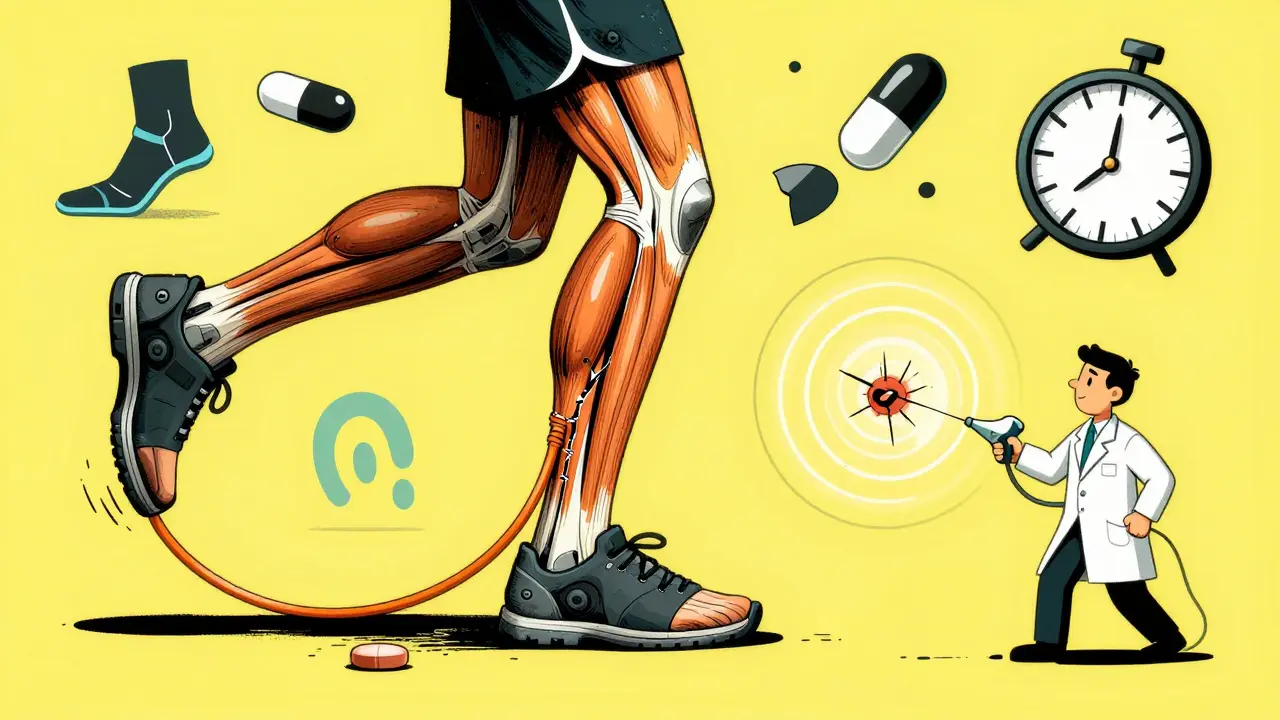
- Ankle - Achilles tendon, common in runners and people who suddenly increase activity
Over 30 million outpatient visits in the U.S. each year are for tendinitis alone. And bursitis sends about 1.7 million people to the doctor. Most of them are over 40. That’s because tendons and bursae lose their elasticity and resilience as we age. But it’s not just older adults. Musicians, construction workers, and even office workers who type all day are at risk.
How Do You Know Which One You Have?
Doctors don’t just guess. They look for specific signs.
With bursitis, you’ll usually feel:
- Swelling that looks like a soft lump around the joint
- Pain that gets worse when you press directly on the area
- Discomfort that’s worse at night, especially if you lie on the side
- Less pain when you move the joint gently - the pain is more about pressure than motion
With tendinitis, you’ll notice:
- Pain that follows the exact line of the tendon
- Sharp pain when you use the muscle attached to that tendon - like lifting your arm or standing on your toes
- Stiffness in the morning that improves with movement
- A creaking or crackling feeling (crepitus) when you move the joint
Ultrasound is the most accurate tool for telling them apart - it shows swelling in the bursa or tiny tears in the tendon. MRI can help too, but it’s expensive and often overused. A 2022 study found that 40% of people over 50 show signs of bursitis or tendinitis on MRI - even if they feel no pain at all. That’s why diagnosis isn’t just about images. It’s about matching the pain pattern to the movement.
What Actually Works for Treatment?
The good news? Most cases get better without surgery. Less than 5% of people need an operation.
First-line treatment for both is the same: rest, ice, and avoiding the motion that hurts. But here’s where they split apart.
Bursitis responds well to:
- Corticosteroid injections - these reduce swelling fast. Studies show 78% of people feel better within four weeks.
- Ice massage - rolling a frozen water bottle over the area for 10 minutes, 3 times a day, helps reduce inflammation.
- Padding - if you kneel a lot, use knee pads. If you sleep on your side, put a pillow between your legs to take pressure off your hip.
Tendinitis needs a different approach:
- Eccentric strengthening - this is the gold standard. For Achilles tendinitis, that means slow heel drops: stand on a step, rise up on both feet, then lower down slowly on just the injured foot. Do 180 reps a day for 12 weeks. Sounds extreme? It works - 68% of people report lasting improvement.
- Physical therapy - not just stretching. A good therapist will retrain how you move to stop putting stress on the tendon.
- Avoiding cortisone shots - injecting a tendon can weaken it. Only do this if other options fail, and never more than twice a year.
NSAIDs like ibuprofen can help with pain and swelling, but don’t take them longer than 10-14 days. They don’t fix the root problem and can hurt your stomach or kidneys if overused.
What to Avoid - The Big Mistakes
People make the same mistakes over and over.
- Doing stretches too early - if you have acute bursitis, stretching can flare it up. Wait until swelling goes down.
- Ignoring pain levels - if an exercise hurts more than 3 out of 10, you’re pushing too hard. Pain above that level means damage, not progress.
- Self-diagnosing as "tendonitis" - 68% of people who think they have rotator cuff tendinitis actually have bursitis. Don’t assume. Get checked.
- Waiting too long to act - untreated tendinitis can lead to a full tear. Bursitis can become chronic and turn into a thickened, scarred sac that’s hard to treat.
One study found that people who got the wrong treatment took 3.2 times longer to recover. That’s over 18 weeks instead of under 6. Don’t let that be you.
Real People, Real Results
On Reddit, one user with chronic shoulder pain thought it was rotator cuff tendinitis. He did stretches for months - nothing changed. Then he saw a physical therapist who used ultrasound and found the bursa was swollen. He got one cortisone shot, stopped overhead lifting for six weeks, and used ice packs daily. His pain dropped from 8/10 to 1/10 in three weeks.
Another person with Achilles tendinitis tried rest and NSAIDs. It didn’t help. Then he started Alfredson’s eccentric heel drops. He did them every day, even when it hurt. After 27 weeks, he could run again. He tracked his progress using a simple questionnaire - and saw real improvement each month.
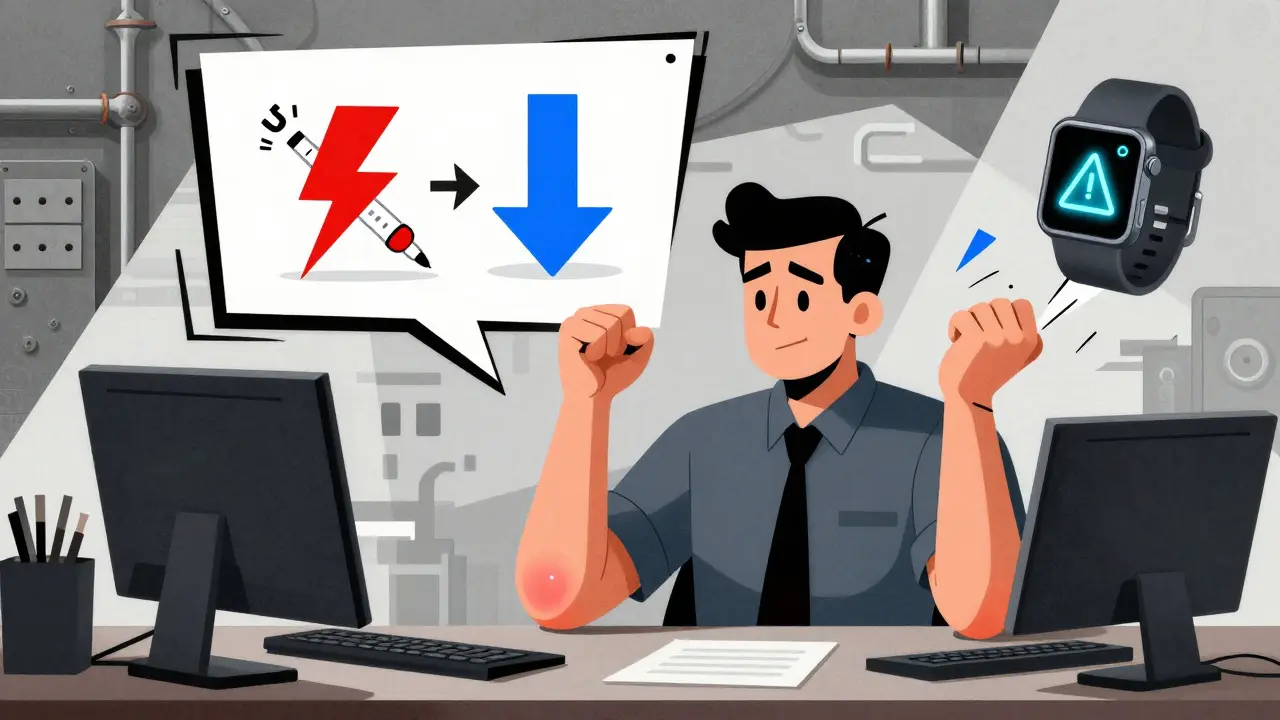
Workplace changes matter too. One office worker with elbow pain realized she was resting her forearm on the desk while typing. She switched to a vertical mouse and adjusted her chair height. Her pain vanished in three weeks.
When to See a Doctor
You don’t need to rush to the ER. But call your doctor if:
- The pain lasts more than two weeks despite rest and ice
- You notice redness, warmth, or fever - that could mean infection
- You can’t move the joint at all
- You’ve had two or more episodes in the same spot
Most primary care doctors can handle the basics. For stubborn cases, look for a sports medicine specialist or a physical therapist certified in orthopedics. They know the difference between inflammation and degeneration - and they won’t push you into a shot or surgery too soon.
The Future: Better Tools, Smarter Care
New tech is making diagnosis and treatment more precise. Ultrasound-guided injections are now standard - they’re accurate 95% of the time, compared to 70% with the old "feel it out" method.
Platelet-rich plasma (PRP) injections are showing promise for chronic tendinitis. One 2023 study found PRP worked better than cortisone after six months - though it costs more ($850 vs. $120). It’s not covered by all insurance yet.
Wearable tech like the Apple Watch is starting to help too. Stanford’s pilot study showed it can detect risky movement patterns before pain even starts. Imagine getting a notification: "You’ve been leaning on your elbow 120 times today. Take a break."
And research is moving away from the term "tendinitis." Many experts now say "tendinopathy" - because often, there’s no active inflammation. Just worn-out tissue. That changes how we treat it. Instead of fighting inflammation, we rebuild strength.
Can bursitis and tendinitis be prevented?
Yes - mostly by avoiding repetitive stress. Use proper technique during sports or work. Take breaks every 30-45 minutes if you’re doing the same motion over and over. Strengthen the muscles around your joints - strong muscles protect tendons and bursae. Stretch after activity, not before. And if you’re over 40, don’t suddenly increase your activity level. Build up slowly.
Is heat or ice better for bursitis or tendinitis?
Ice is best for the first 48-72 hours after pain starts - it reduces swelling. After that, heat can help with stiffness, especially in tendinitis. But if you’re still swollen, stick with ice. Don’t apply heat to an inflamed bursa - it can make swelling worse.
How long does recovery take?
Bursitis often improves in 4-6 weeks with rest and ice. Tendinitis takes longer - 12-16 weeks for full recovery, especially with eccentric exercises. Rushing it leads to setbacks. Patience is the most effective treatment.
Can I still exercise with bursitis or tendinitis?
Yes - but not the activity that caused it. If your shoulder hurts, avoid overhead lifts. Try swimming or cycling instead. For knee tendinitis, swap running for elliptical or rowing. The goal is to stay active without stressing the injured area. Movement keeps blood flowing and helps healing.
Are cortisone shots dangerous?
They’re effective for bursitis, but risky for tendons. Injecting a tendon can weaken it and increase the chance of rupture. That’s why doctors limit shots to 2-3 per year and only after other treatments fail. For tendons, focus on strengthening, not injections.
Bottom Line
Bursitis and tendinitis aren’t just "joint pain." They’re specific conditions with different causes, symptoms, and treatments. Mixing them up wastes time and makes recovery slower. If you’ve had pain for more than a couple of weeks, get it checked. Don’t rely on Google. Use the right tools - ice, rest, movement modification, and targeted rehab. And remember: the goal isn’t to push through pain. It’s to heal properly so it doesn’t come back.





12 Comments
You people are so lazy these days. You don’t want to work, so you call it 'bursitis' and expect a cortisone shot like it’s a free Starbucks gift card. I worked construction for 30 years, never took a day off, and now my knees are shot-but I didn’t whine, I adapted. Stretching? Please. You need to toughen up, not ice your problems away.
And don’t even get me started on 'eccentric heel drops.' That’s just fancy physio-speak for 'do the thing that hurts.' If you can’t handle pain, maybe you shouldn’t be moving at all.
Also, who let this article get published? It’s like a Google search written by a physical therapist with a thesaurus addiction. Real men don’t need ultrasound to know when their body’s broken. They just keep going.
And don’t tell me about 'tendinopathy'-that’s just woke medicine trying to erase the word 'inflammation' because it sounds too harsh. Pain is pain. Deal with it.
Stop looking for magic cures. Get stronger. Or get out of the gym.
And if you’re over 40? Stop pretending you’re still 25. Your body’s not a Tesla. It’s a 1998 Honda Civic. You don’t upgrade it-you maintain it. Or replace it.
And yes, I’ve had both. I didn’t need a Reddit post to tell me how to fix them. I fixed them with sweat, not screenshots.
Also, the Apple Watch telling you to stop leaning on your elbow? That’s not tech. That’s a babysitter. Grow up.
And if you think PRP is worth $850, you’re either rich or stupid. I got my shoulder fixed with a bag of ice and a hammer. Just kidding. But not really.
Stop treating your body like a smartphone that needs an update. It’s not broken. You’re just weak.
And if you’re still reading this, you probably have bursitis from scrolling too much. Put the phone down. Go lift something heavy. Then come back and tell me you’re still in pain.
And if you’re a woman over 40 and your hip hurts? That’s not bursitis. That’s your body screaming at you to stop wearing yoga pants and start lifting weights. Just saying.
Pain is data. Not a diagnosis.
Structure follows function. Break the pattern, heal the tissue.
Rest isn’t surrender. It’s strategy.
Time is the only real healer.
Everything else is noise.
Did you know the American Physical Therapy Association gets funding from pharmaceutical companies? That’s why they push cortisone shots and PRP-so Big Pharma can keep selling you pills and procedures.
And who invented the term 'tendinopathy'? Some Ivy League professor who’s never held a hammer. They’re erasing the word 'inflammation' because it doesn’t fit their narrative. But inflammation is your body’s natural defense system-your immune system is trying to fix you!
Meanwhile, the military has known for decades that ice, rest, and movement restriction are the only real treatments. But you won’t hear that from your PT because they’re paid by insurance to keep you coming back.
And why is the Apple Watch suddenly giving you health advice? Because they’re collecting your movement data to sell to insurers. Next thing you know, your premium goes up because you 'overused your elbow.'
They’re turning your body into a surveillance product. You think this article is helpful? It’s a Trojan horse. They want you dependent on tech, therapy, and drugs. Real healing? It’s quiet. It’s simple. It’s old. And it’s being buried.
Don’t trust the system. Trust your body. And stop letting Silicon Valley tell you how to move.
ok but like… what if the real problem is that we’re all just sitting too much??
i mean like… i type all day, then i scroll on my phone, then i slouch on the couch… no wonder my shoulder feels like it’s full of cement
also who made the rules about ice vs heat?? it’s all just vibes now
and why does everyone act like cortisone is the devil?? i got one for my knee and it felt like a miracle
also why do we call it 'student’s elbow'?? who’s out there leaning on desks all day??
also i think the apple watch is kinda cool
but also i’m scared of everything now
help
Thank you for writing this so clearly 😊
I’ve had elbow pain for months and I thought it was just 'typing too much' but now I realize it’s probably tendinitis - and I’ve been stretching it like crazy 😅
Turns out I was making it worse 😅
Just started doing the heel drop thing for my Achilles (even though mine’s elbow)… I’m confused but willing to try
Also I love how you mentioned workplace changes - I switched to a vertical mouse last week and my pain dropped already 🙌
So grateful for real info that doesn’t just say 'take ibuprofen and rest' 😊
Also… who else feels like their body is a mystery they’re slowly learning to read? 🤍
This is one of the most well-researched and practical guides I’ve seen on this topic. Thank you for the clarity and evidence-based approach.
It’s alarming how often patients are misdiagnosed because clinicians default to the most common term without proper imaging or movement analysis. The statistic about 68% of people misidentifying rotator cuff tendinitis when it’s actually bursitis is staggering.
I’ve seen patients waste months on aggressive stretching routines that only exacerbated their condition. The emphasis on rest, targeted movement modification, and eccentric loading is spot-on.
Also, the note about PRP being more effective than cortisone at six months is critical. Insurance barriers are real, but for chronic cases, it’s worth advocating for.
Most importantly, this article reinforces that healing is not linear. Patience, consistency, and listening to your body are the true treatments.
Well done. This should be required reading for anyone with persistent joint pain.
Oh my goodness, this is so helpful… I’ve been dealing with hip pain for over a year, and I just thought I was getting old…
But now I realize… I’ve been sleeping on my side without a pillow between my legs… and I’ve been doing yoga stretches every morning…
Wait… I think I’ve been doing it all wrong…
So… ice for swelling, rest for a bit, and then… gentle movement… not stretching…
And I’ve been doing heel raises for my knee… but maybe I should try the eccentric ones…
Also… I’m 42… and I just started walking 20 minutes a day… I feel like I’m finally listening to my body…
Thank you… I feel less alone now…
And if anyone else is feeling this… we’re in this together…
Love you all…
❤️
Why do you guys always blame the system? You don’t need a fancy ultrasound to know your body’s broken. You need to work harder. I’ve been lifting since I was 16. I’ve had bursitis, tendinitis, torn ligaments. I didn’t get better because of ice or a watch. I got better because I didn’t quit.
And if you’re over 40 and your hip hurts? That’s not a medical condition. That’s a lifestyle choice. You stopped lifting. You started sitting. You ate junk. Now you want a pill?
Here’s the truth: your body doesn’t care about your feelings. It only responds to stress. So stop whining. Start lifting. And if you can’t do it alone? Find a real coach. Not some guy with a degree who tells you to stretch your shoulder for 20 minutes a day.
Also, PRP? That’s for rich people who don’t want to sweat. Real men use ice, rest, and time.
And if your elbow hurts from typing? Get a standing desk. Or quit your job. Either way, stop being a baby.
What if pain isn’t a problem to be solved, but a signal to be understood?
We treat the body like a machine that breaks, not a living system that adapts.
Rest isn’t failure. It’s feedback.
Stretching isn’t healing. It’s often masking.
Injection isn’t cure. It’s temporary silence.
The real question isn’t ‘bursitis or tendinitis?’
It’s: ‘What is your body trying to tell you that you’ve been too busy to hear?’
And if you’re still scrolling through Reddit while your shoulder screams…
…maybe the diagnosis isn’t in your joint.
Maybe it’s in your life.
I had tennis elbow for 8 months. Tried everything.
Then I started the eccentric drops.
Day 1: agony.
Day 30: manageable.
Day 90: I could lift my coffee again.
It’s not sexy.
But it works.
Don’t give up.
Thank you for this comprehensive and thoughtful overview. I appreciate the emphasis on differential diagnosis and the clear distinction between bursitis and tendinitis, especially regarding treatment protocols.
As a healthcare provider, I’ve seen too many patients undergo prolonged physical therapy for tendinitis when the primary issue was bursal inflammation. The use of ultrasound for accurate diagnosis is indeed critical and underutilized in primary care settings.
I also agree with the caution around corticosteroid injections in tendons. The risk of tendon rupture is real and often underdiscussed.
The mention of tendinopathy as a more accurate term is a welcome shift in clinical language-it reflects a deeper understanding of chronic degenerative changes versus acute inflammation.
Well-structured, evidence-based, and clinically relevant. This is the kind of content that helps patients make informed decisions.
Just wanted to say how much I appreciated how this was written-not just facts, but real stories. The person who switched to a vertical mouse? That’s me.
I had elbow pain for six months. Thought it was ‘carpal tunnel.’ Went to three doctors. Got two different diagnoses. Finally, I just… paid attention.
Turns out, I was resting my forearm on the desk like a lazy cat. Changed my setup. Took breaks. Didn’t stretch. Didn’t ice. Just… stopped doing the thing that hurt.
Three weeks later, gone.
Not magic. Just awareness.
And I’m not saying everyone should do what I did. But maybe… listen to your body before you listen to the internet.
Also, thank you for not saying ‘just rest.’ That’s not helpful.
You said ‘modify movement.’ That’s the key.