
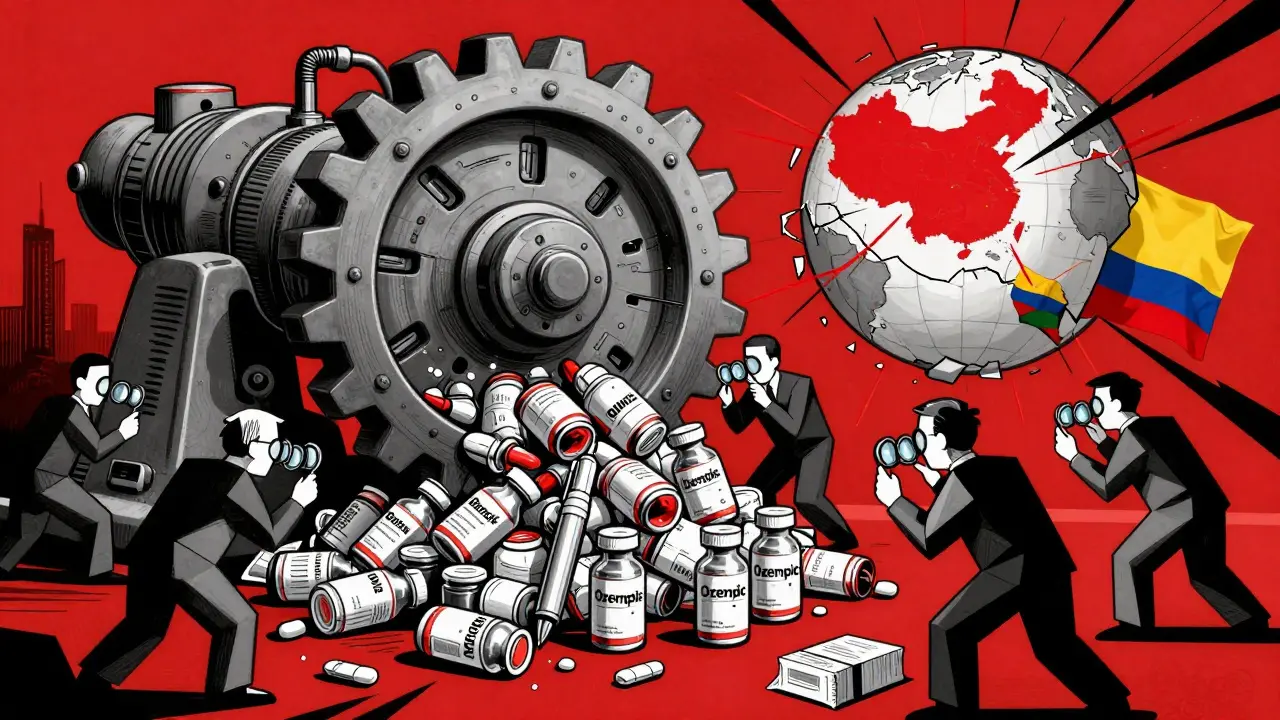
Every year, millions of fake pills, injections, and vials slip through borders, online marketplaces, and pharmacies-putting real people at risk. These aren't just poor imitations. They're dangerous. Some contain no medicine at all. Others have toxic chemicals, heavy metals, or deadly doses of fentanyl. And they’re getting harder to spot.
What Gets Seized-and Where
In 2025, global law enforcement seized over 50 million doses of counterfeit medications in a single operation. That’s not a typo. Interpol’s Pangea XVI effort involved 90 countries, shut down 13,000 illegal websites, and arrested 769 people. The numbers don’t lie: counterfeit drugs are a global crisis, not a niche problem.
The most common targets? Weight-loss drugs like Ozempic, Semaglutide, and Tirzepatide. Why? Because demand is skyrocketing, and the profit margins are insane. A single counterfeit pre-filled pen can sell for $300 on Etsy or Instagram-while costing criminals less than $5 to make. In August 2025, U.S. Customs intercepted 16,740 of these fake pens. Most came from Hong Kong, China, Colombia, and Korea. They were headed to 40 U.S. states.
But it’s not just weight-loss meds. HIV treatments, Botox, dermal fillers, and erectile dysfunction pills are all being faked at alarming rates. The Pharmaceutical Security Institute recorded over 6,400 incidents of counterfeit pharmaceuticals in 2024 alone-spanning 153 countries. Biologics, once thought too complex to fake, are now being counterfeited at a 12% higher rate than the year before.
How the Fakes Get In
You won’t find counterfeit drugs on street corners like you might find fake designer bags. Criminals have moved online. The National Association of Boards of Pharmacy found that 47% of counterfeit GLP-1 medications are sold through platforms like Etsy. Another 31% come from direct orders to illegal labs. The rest? Sold by foreign pharmacies that look legitimate but aren’t.
Here’s how it works: A customer searches for "Ozempic discount" on Instagram. They’re directed to a website that looks like a real pharmacy. They pay with cryptocurrency. A package arrives in the mail-sealed, branded, with batch numbers. It’s flawless. Until it isn’t.
One patient in Texas developed severe cellulitis after injecting a fake dermal filler. The product looked identical to the real thing. Under a microscope, lab tests found glass shards and industrial solvents. That’s not a manufacturing error. That’s intentional.
Even pharmacies aren’t immune. In Iowa, a local pharmacy was fined $25,000 for selling counterfeit Ozempic. They didn’t know it was fake. The packaging was perfect. The labels matched. The barcode scanned. But the active ingredient? Gone. Replaced with sugar and dye.
The Regulatory Gap
Here’s the chilling truth: U.S. Customs can’t seize every fake drug they find.
Dr. Carmen Catizone of the NABP explained it plainly: "CBP cannot seize medications that violate only the Federal Food, Drug, and Cosmetic Act-they must be counterfeit to be seized." What does that mean? If a drug is imported without approval but contains the correct ingredient, it’s legal to bring in-even if it’s unregulated. But if it’s fake? Then it’s seized.
This loophole means thousands of dangerous products slip through every year. A shipment might contain 10,000 pills. 9,000 are unapproved but real. 1,000 are counterfeit. Customs takes the 1,000. The rest? They enter the market.
And it’s not just the U.S. In Nigeria, NAFDAC shut down a facility making unregulated herbal "cures." In South Africa, police seized counterfeit meds worth over $100,000 in a single raid. But without coordinated international tracking, these seizures stay isolated.
Who’s Behind It?
It’s not lone operators. It’s organized crime. The DEA reported 61.1 million fake pills seized in 2024-mostly laced with fentanyl. These pills are often pressed in the same labs that make illegal stimulants. The same networks that move meth now move fake Ozempic.
The DOJ prosecuted 70+ people in a single case for defrauding Medicaid of $17 million by selling $9.5 million in counterfeit HIV drugs. These weren’t street dealers. They ran websites, hired customer service reps, and used PayPal and Venmo to collect payments. One defendant even created a fake patient portal to make the scam look real.
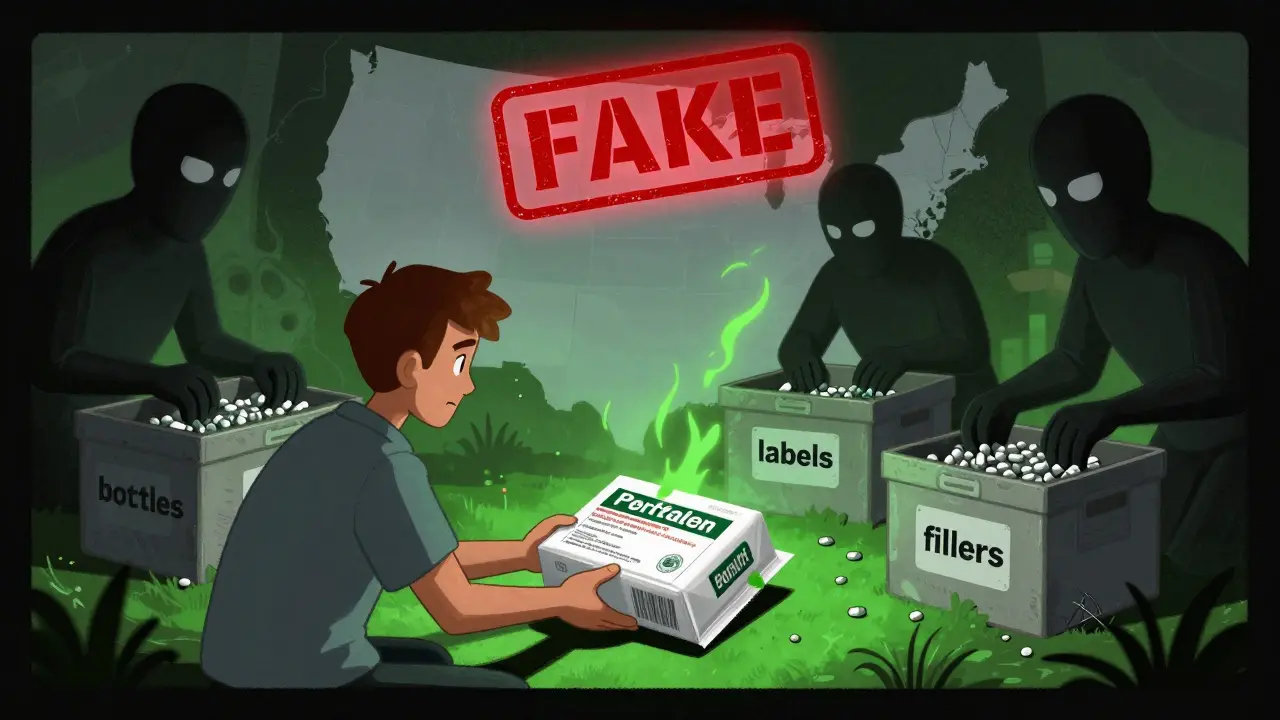
And the tactics are evolving. Criminals now ship unassembled parts: bottles from one country, labels from another, pills from a third. They assemble them near the target market-making it nearly impossible to trace the origin.
What Happens When You Take a Fake
The FDA’s MedWatch database saw a 43% jump in adverse events linked to suspected counterfeit drugs in the first half of 2025. Most involved weight-loss injectables or cosmetic fillers.
One woman in Florida lost vision in one eye after using a fake Botox product. Another developed kidney failure after taking a counterfeit diabetes pill that contained arsenic. A man in California went into cardiac arrest after a fake GLP-1 injection triggered an allergic reaction to an unknown filler.
These aren’t rare cases. They’re symptoms of a broken system. Patients aren’t being reckless-they’re being tricked. The packaging is flawless. The website is professional. The reviews? Fake, but convincing.
Lessons Learned
So what’s working?
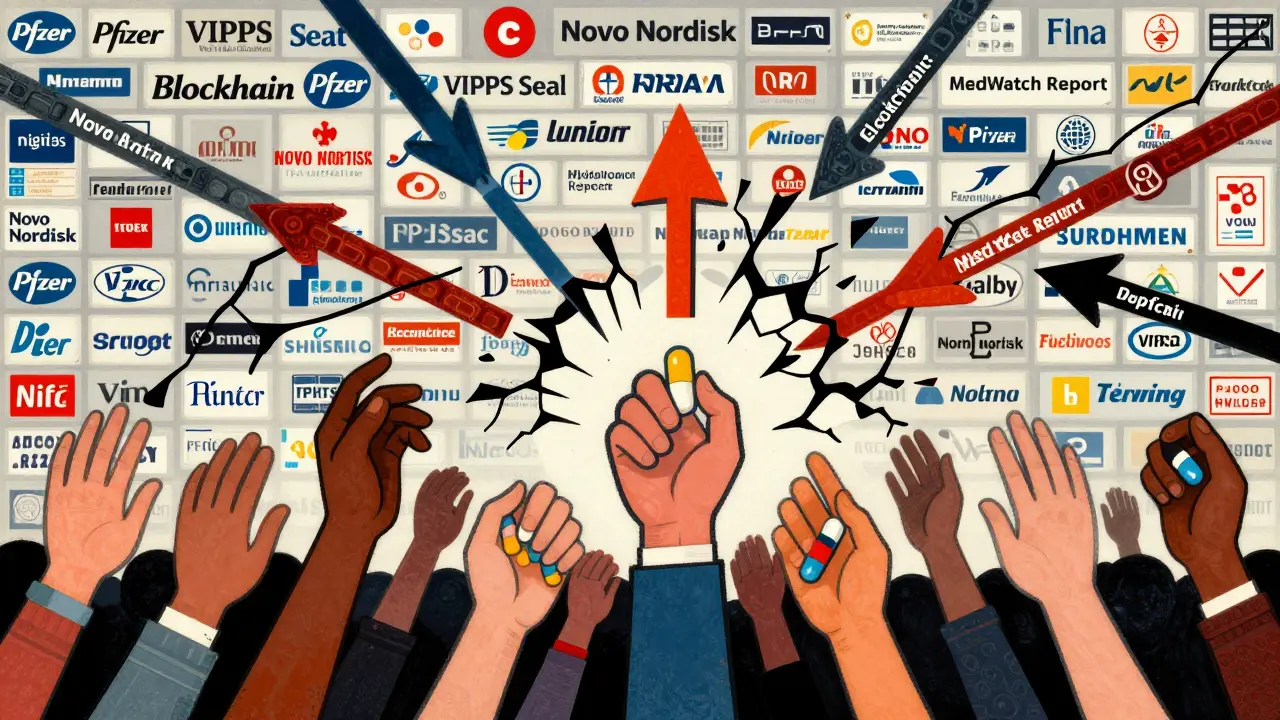
- Blockchain tracking: Some pharmaceutical companies have reduced counterfeit incidents by 37% using blockchain to track each batch from factory to pharmacy.
- Law enforcement training: Pfizer has trained agents in 183 countries to spot fake packaging-down to the font size on the label.
- Public awareness: The NABP’s "Verify Before You Buy" campaign has helped reduce online purchases from unlicensed pharmacies by 22% in two years.
But the real lesson? You can’t arrest your way out of this. You can’t just seize packages. You need to cut the supply chain at the source.
India and China (including Hong Kong) are still the top sources of counterfeit drugs seized at the U.S. border. But enforcement alone won’t stop it. We need better international data sharing. We need real-time alerts between customs agencies. We need mandatory authentication codes on every prescription.
And we need patients to ask: "Where did this come from?"
What You Can Do
If you’re buying medication online:
- Check if the pharmacy is verified by the NABP’s VIPPS program. Look for the seal.
- Never buy from social media sellers-even if they have "reviews."
- Compare the packaging to a bottle you’ve had before. Tiny differences? Red flag.
- Report suspicious products to the FDA’s MedWatch system. Your report saves lives.
And if you’re a prescriber? Talk to your patients. Ask if they’ve bought meds online. Don’t assume they know the risks. Most don’t.
Counterfeit drugs aren’t a distant problem. They’re in your community. In your pharmacy. In your neighbor’s medicine cabinet. And they’re getting smarter every day.
How can I tell if my medication is counterfeit?
Look for inconsistencies: mismatched fonts, spelling errors, unusual packaging texture, or missing batch numbers. Compare it to a previous bottle. If the pill color or shape changed, or the packaging feels cheaper, contact your pharmacist. You can also check the NABP’s VIPPS directory to verify your pharmacy.
Are counterfeit drugs only sold online?
No. While most are sold online, counterfeit drugs can also enter legitimate supply chains through stolen shipments, compromised warehouses, or corrupt distributors. Even licensed pharmacies have been caught selling fake meds without knowing it. Always buy from trusted sources.
Why are GLP-1 drugs like Ozempic so often counterfeited?
Because they’re in high demand and expensive. A single pen can cost over $1,000. Criminals make fake versions for under $10 and sell them for hundreds. The profit margin is huge, and enforcement is slow. The FDA received over 1,200 reports of fake GLP-1 products in 2025 alone.
Can counterfeit drugs be safe if they contain the right ingredient?
No. Even if a fake drug contains the right active ingredient, it may have improper dosing, harmful fillers, or unstable chemical structures. One batch of fake Semaglutide was found to contain industrial solvent used in paint thinner. Another had no active ingredient at all. Safety isn’t guaranteed just because the label looks right.
What’s being done to stop counterfeit drugs?
Global operations like Interpol’s Pangea XVI, blockchain tracking by manufacturers, and better customs training are helping. But progress is slow. The OECD warns that without stronger international cooperation and real-time data sharing, counterfeit drug incidents could rise 15-20% per year. The real solution requires governments, pharma companies, and patients to act together.


15 Comments