
Every year, millions of people around the world take generic drugs because they’re affordable, effective, and widely available. But what if the pill you just swallowed wasn’t made by the company it claims to be? What if it had no active ingredient at all-or worse, something toxic? This isn’t science fiction. It’s happening right now, and the fake generic drug trade is growing faster than most people realize.
How Counterfeit Drugs Are Made
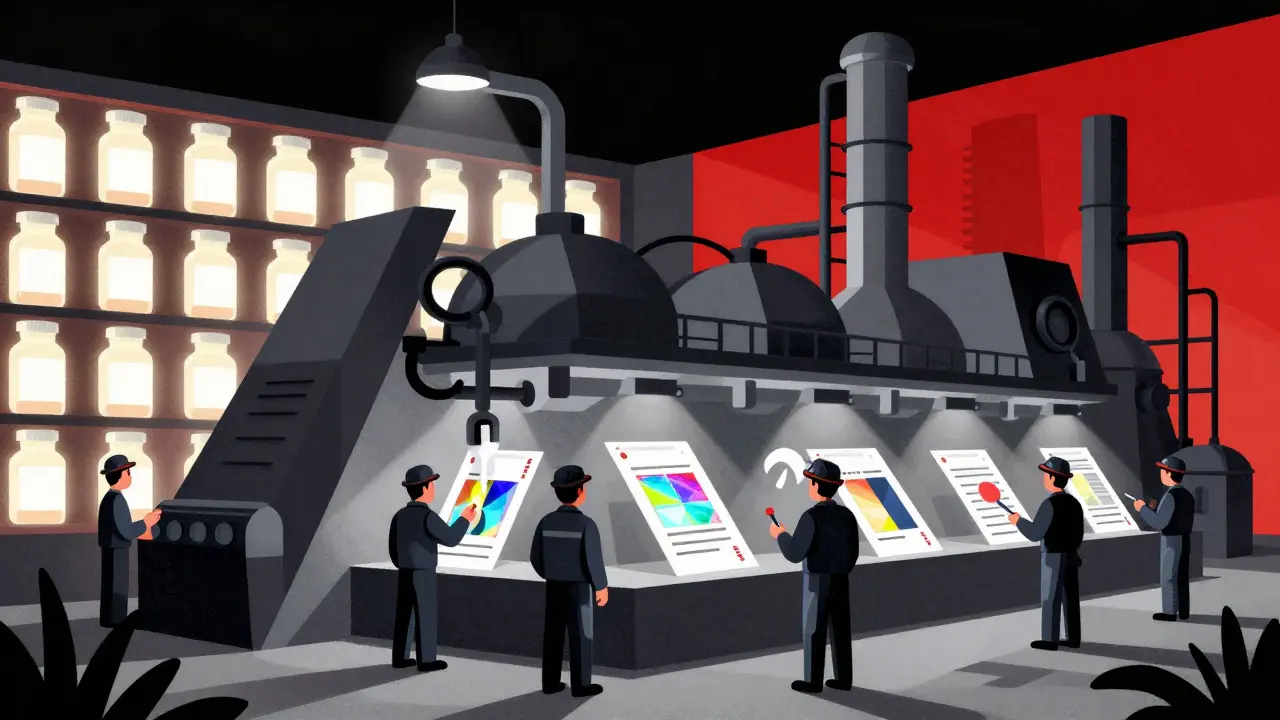
Counterfeit generic drugs don’t come from shady back alleys anymore. They’re produced in factories-sometimes large, sometimes hidden-that look like real pharmaceutical plants. These facilities are mostly located in countries with weak oversight, like parts of Southeast Asia, Eastern Europe, and West Africa. They don’t need advanced labs. All they need is access to cheap chemicals, standard printing equipment, and a copy of the real drug’s packaging.
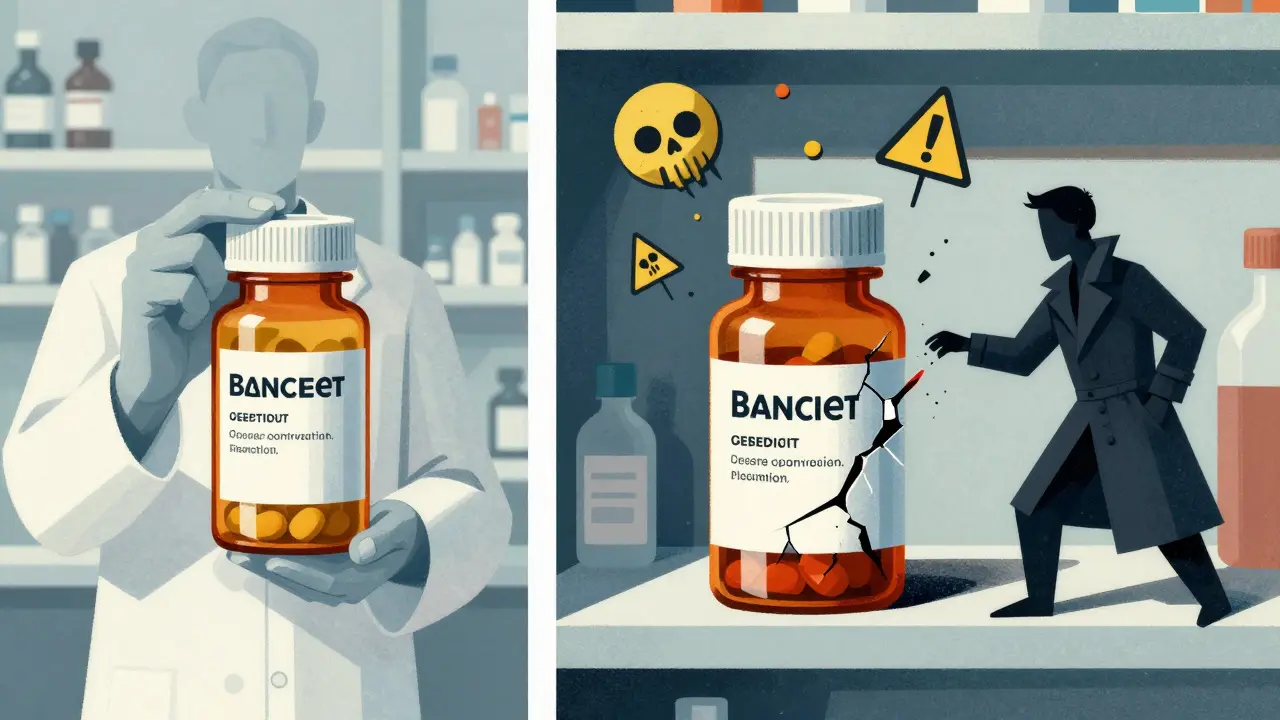
Here’s how it works: A counterfeit drug maker buys the same active ingredient used in a legitimate generic-say, losartan for high blood pressure-but cuts it with fillers like chalk, talc, or even sawdust. Sometimes they use a chemically similar but dangerous substitute. In one case in 2018, counterfeit antimalarial drugs were found to contain only 10% of the needed artemisinin. That’s not a weak dose-it’s a death sentence for someone with malaria.
The packaging? Nearly perfect. Modern printers can replicate holograms, color-shifting ink, and even tiny serial numbers with 95% accuracy. A 2023 study by TrueMed Inc. found that even trained pharmacists struggled to tell the difference without lab tests. Some fakes even include fake batch numbers that look real on paper but don’t exist in any official database.
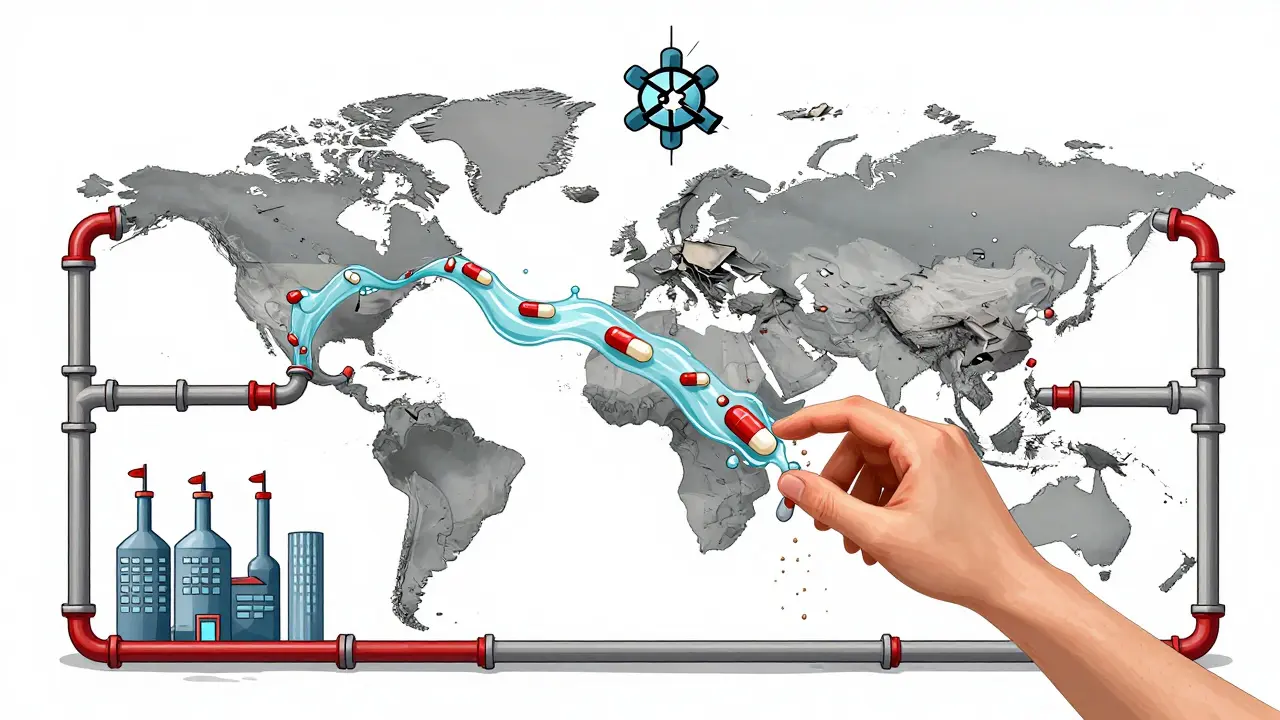
How They Sneak Into Legitimate Supply Chains
Counterfeiters don’t just sell online. They get into the real system-hospitals, pharmacies, clinics-through three main paths.
- Parallel importation: A drug approved in one country might be cheaper than in another. Criminals buy bulk quantities legally in low-price markets, then resell them in high-price ones without authorization. Along the way, they swap real boxes for fakes.
- Grey market sales: Some distributors mix counterfeit drugs with real ones. A wholesaler might get 100 boxes of metformin. They keep 80 real ones, slip in 20 fakes, and send the whole lot to a pharmacy. No one notices until patients stop responding to treatment.
- Online pharmacies: This is the biggest loophole. The National Association of Boards of Pharmacy (NABP) found that 95% of online pharmacies selling prescription drugs operate illegally. You think you’re ordering from a U.S.-based site, but the drugs come from a warehouse in India or China. No prescription check. No license verification. Just a credit card and a shipping label.
The 2008 heparin crisis showed just how dangerous this can be. A Chinese supplier contaminated raw heparin with a toxic chemical. It passed through multiple intermediaries before reaching U.S. hospitals. Over 149 people died. The contamination wasn’t intentional-it was negligence-but it proves how easily a bad product can travel across borders and end up in a patient’s IV bag.
Why Generic Drugs Are the Main Target
Why not fake Viagra or insulin? Because those are expensive. Counterfeiters go for volume, not profit per unit. Generic drugs are the perfect target.
The global generic drug market hit $438.7 billion in 2022. That’s a lot of pills. And because generics are sold at low margins, manufacturers cut corners. Some legitimate companies skip quality checks to save money. That creates openings for fakes to slip in unnoticed.
According to the U.S. Pharmacopeia, the most commonly counterfeited generics are:
- Cardiovascular drugs (28.7%)-like atorvastatin, lisinopril
- Antibiotics (22.4%)-like amoxicillin, ciprofloxacin
- Antimalarials (18.9%)-like artemether-lumefantrine
These are life-saving drugs. If a fake version gets into circulation, it doesn’t just fail to work-it makes diseases worse. People with untreated infections spread them. Cancer patients don’t respond to treatment. Diabetics have dangerous blood sugar spikes.
The Tools That Help Detect Fakes
There are ways to spot counterfeits-but they’re not foolproof.
Overt features: Holograms, color-changing ink, UV markings. These are easy to copy, but still useful. A 2022 survey of 1,200 pharmacists found that 68% had seen suspected fakes, and most caught them by noticing mismatched fonts or slightly off packaging.
Covert features: These are hidden markers-chemical tracers, DNA tags, micro-printed codes. Only labs can detect them. They’re expensive to add, so only big manufacturers use them. The cost? Around $0.02 to $0.05 per unit. For a $2 generic, that’s a big chunk. Most companies won’t pay it.
Digital tracking: The U.S. passed the Drug Supply Chain Security Act (DSCSA) in 2013, requiring every drug package to have a unique serial number by 2023. Only 22 out of 194 WHO member states have fully operational systems. Most countries still rely on paper logs or none at all.
Blockchain systems like MediLedger have shown promise. In 2022 trials, they detected supply chain anomalies with 97.3% accuracy. But they’re still rare. Most pharmacies, especially in poorer countries, can’t afford them.
What You Can Do
You can’t test every pill you take. But you can protect yourself.
- Buy from licensed pharmacies: If you’re buying online, check if the site is verified by the NABP’s VIPPS program. Look for the Verified Internet Pharmacy Practice Sites seal. If it’s not there, walk away.
- Check the packaging: Compare the pill’s color, shape, and imprint to the one you’ve taken before. If it looks different, ask your pharmacist. A 2023 Reddit user noticed their Lipitor tablets had different scoring and color-turns out they were fake.
- Don’t trust too-good-to-be-true deals: If a 30-day supply of metformin costs $3 online, it’s not a discount. It’s a trap.
- Report suspicious drugs: If you suspect a fake, tell your pharmacist or local health authority. The U.S. FDA and WHO both have online reporting systems.
Pharmaceutical companies are also stepping up. Pfizer’s anti-counterfeiting program has stopped over 302 million fake doses since 2004. But they can’t do it alone. It takes law enforcement, regulators, pharmacists, and patients working together.
The Future Is Getting Worse
Counterfeiters aren’t standing still. In February 2023, Europol seized cancer drugs with AI-generated holograms that perfectly mimicked the real thing. These weren’t hand-printed-they were designed by algorithms trained on thousands of real packaging images. Visual inspection alone won’t catch them anymore.
The OECD warns that without global action, counterfeit drugs could make up 5-7% of all medicine sales by 2030. That’s not a distant threat. It’s a ticking clock.
The good news? We know how to stop this. We have the technology. We have the laws. What we lack is coordination. Countries with strong regulations sit next to those with none. Online sellers operate from one continent and ship to another. There’s no global database. No unified standard. No real enforcement.
Until we fix that, fake generics will keep slipping through. And people will keep getting sick because of it.

11 Comments
So we're just supposed to trust that our meds are real now? I mean, I get that generics are cheaper but if I can't even tell if the pill in my hand is real or just chalk and glitter... what's the point?
My pharmacist doesn't even look at the packaging anymore. Just hands it over like it's a candy bar.
Let me guess - you're one of those people who thinks the FDA is your mom and that everything's fine because 'regulations' exist.
Newsflash: the system is broken. Companies cut corners. Distributors turn a blind eye. Countries don't have the resources to track pills. And you think blockchain is gonna save us? Nah.
It's 2024. AI-generated holograms on fake cancer drugs. Real people are dying because we'd rather save $5 than save a life. The only thing that's 'generic' here is the negligence.
Hey - I know this sounds heavy but I really want to say this: you're not alone in feeling scared.
I used to work in a rural clinic. We had a patient who stopped responding to her blood pressure meds. Turned out her bottle was 80% fake. She almost died.
But here’s the good part - we started checking packaging. We trained our staff. We told patients: 'If it looks off, ask.' And guess what? It worked.
Small steps. Real impact. We can fix this. Not with laws alone - with vigilance. You. Me. The pharmacist down the street. We’re the last line of defense.
It's funny how we treat medicine like it's just another commodity - buy low, sell high, don't ask questions.
But pills aren't shoes. They aren't coffee. They're the invisible architecture of life.
When the foundation cracks, you don't notice until the whole house falls. And by then, it's too late.
Counterfeit drugs aren't a supply chain issue. They're a moral one. We've normalized the idea that someone's life is worth less if they can't afford the real thing.
And now we're paying for it - not in money, but in silence.
AMERICA IS BEING ROBBED 😡
China and India are flooding our system with fake pills and our government just sits there like a sleepy cat 🐱
WE NEED BORDER WALLS FOR DRUGS NOT FOR PEOPLE 🇺🇸
Also why do we even have generics? Just make everyone pay full price. Problem solved. 💪
How quaint. A 1200-word essay on counterfeit drugs, complete with pie charts and bullet points, as if this were a Harvard Business Review case study.
And yet - no one mentions the elephant in the room: we've turned healthcare into a market, not a right.
When profit dictates access, counterfeits aren't an anomaly - they're the logical outcome.
But let's keep blaming 'foreign factories.' It's so much easier than confronting the fact that we're complicit.
I’ve been a pharmacist for 18 years. I’ve seen fake metformin. Fake insulin. Fake antibiotics.
Most of the time, the fake stuff is just... bland. Wrong color. Wrong smell. Wrong imprint.
But here’s the scary part - patients don’t notice. They’re too tired. Too poor. Too scared to ask.
So we need to do better. Not just with tech. With empathy. Train the whole team. Talk to customers. Make it okay to question.
It’s not rocket science. It’s just human.
Every time I hear about another fake drug scandal, I think of my grandmother.
She took her blood pressure pills every morning. Always bought them from CVS. Never questioned anything.
One day, she collapsed. The doctors said it was a stroke. But the toxicology report? No active ingredient in her system.
She didn’t survive.
So yes - this is personal. And yes - we have to fix this. Not tomorrow. Today.
So the system is broken and we need global coordination and blockchain and uh... what?
Meanwhile in real life people are buying pills off Instagram and wondering why they feel worse
the problem isnt the fake drugs its the people who dont know the difference
and the people who dont care
and the government that pretends to care
we are all just waiting for the next outbreak
and we will be surprised again
because we are lazy and distracted and too busy scrolling
and that is the real tragedy
Just want to say - I read this whole thing and I'm so glad someone finally put this out there.
My cousin in Mexico got fake malaria meds last year. She was fine - but her kid wasn't.
Thank you for the reporting. We need more of this.
And hey - if you're reading this and you work in pharma or logistics - reach out.
We can do better. Let's start a conversation. 💙
Think about this... what if the entire generic drug industry is a controlled operation? What if the 'counterfeits' are actually being allowed in to keep the population dependent? What if the real drugs are being hoarded for the elite? The FDA, WHO, big pharma - they all have the same board members. Coincidence? I think not.
And don't tell me about 'data' - the data is manipulated. The serial numbers? Fake. The blockchain? A distraction.
They want you to think this is about pills. But it's about control.
Wake up.