
Chemo at Home: Handling, Storage, and Exposure Safety
If you’re receiving chemotherapy at home, you’re not alone. More than 65% of cancer patients in 2023 got part of their treatment outside the hospital. It’s convenient. It’s less disruptive. But it also means you and your family are now responsible for handling some of the most powerful-and dangerous-drugs in medicine. One wrong move, and you could be putting yourself, your kids, your partner, or even your pet at risk.
Chemotherapy isn’t just medicine. It’s a poison designed to kill fast-growing cells. That’s why it works against cancer. But it doesn’t know the difference between a cancer cell and a healthy one. And when it leaves your body through sweat, urine, vomit, or even saliva, it’s still active. For up to 48 hours after each dose, those fluids can harm anyone who comes into contact with them.
This isn’t scare tactics. It’s science. A 2022 study in the Journal of Oncology Practice found that nearly 13% of healthcare workers exposed to chemo without protection developed skin rashes or irritation within six months. Imagine what happens when those same drugs are handled in a kitchen, bathroom, or bedroom without proper steps.
How to Handle Chemo Medications Safely
Whether you’re taking pills or getting IV chemo at home, the rules are simple but strict.
For oral chemotherapy-which makes up about 30% of home treatments-you must never crush, chew, or break pills. Why? Because the powder can become airborne. One sneeze, one gust of wind from a fan, and you’re breathing it in. That’s how exposure happens. Always use a dedicated cup or spoon to pour pills from the bottle into your hand. Don’t touch them directly. Wash your hands before and after, for at least 20 seconds, using soap and warm water. That’s the same time it takes to sing "Happy Birthday" twice.
For IV chemo, you’ll likely have a pump or bag connected to a port or line. Never touch the tubing or the bag unless you’re wearing gloves. Even a tiny tear in the plastic can leak. Always wear two pairs of nitrile gloves-not latex. Latex doesn’t block chemo chemicals. Nitrile does. And make sure they’re at least 5 mil thick. That’s about the thickness of a standard plastic grocery bag. Thin gloves? They’re useless.
And never, ever use your bare hands to adjust the pump, wipe down the bag, or clean up a spill. If something leaks, you need a chemo spill kit. Most oncology centers give you one for free. If you don’t have one, ask for it. It should include absorbent pads, forceps, disposable gowns, and sealed bags for disposal. Never use paper towels or regular cleaning cloths.
Where to Store Chemo Medications
Storage isn’t just about keeping the medicine fresh. It’s about keeping it away from people.
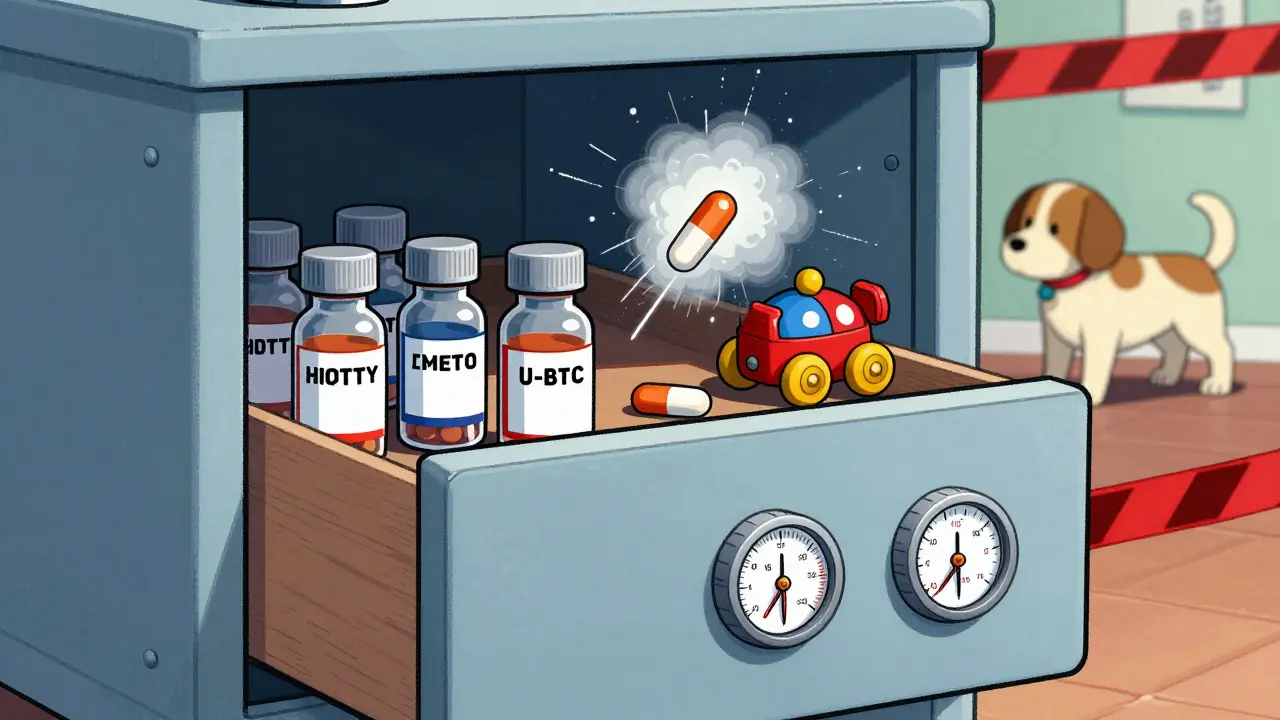
All chemo drugs must be kept in a locked cabinet-out of reach of children, pets, and even curious visitors. Don’t leave them on the counter, even for a minute. Don’t store them in the kitchen or bathroom cabinet next to your vitamins or painkillers. Use a dedicated drawer or cabinet, preferably in a room no one else uses often.
Temperature matters too. Some drugs need to be refrigerated. Others must stay at room temperature. Check the label. Most refrigerated chemo drugs require 2°C to 8°C (36°F-46°F). That’s your fridge’s main compartment, not the door. Door shelves fluctuate too much. Room temperature drugs should be kept between 15°C and 30°C (59°F-86°F). Avoid the bathroom-humidity ruins many medications. A bedroom drawer or a closet in a dry, cool room works best.
Some newer drugs, like sotorasib or dostarlimab, were added to the NIOSH hazardous drug list in 2023. If your prescription is new, double-check the storage instructions. The rules change fast.
Understanding the 48-Hour Exposure Window
This is the most critical rule you’ll ever follow.
After you take chemo, your body doesn’t instantly flush it out. For the next 48 hours, your urine, stool, vomit, sweat, and even your tears can carry active drug particles. Some drugs, like cyclophosphamide, stay active for up to 72 hours. During that time, anyone who touches your bodily fluids could be exposed.
That means:
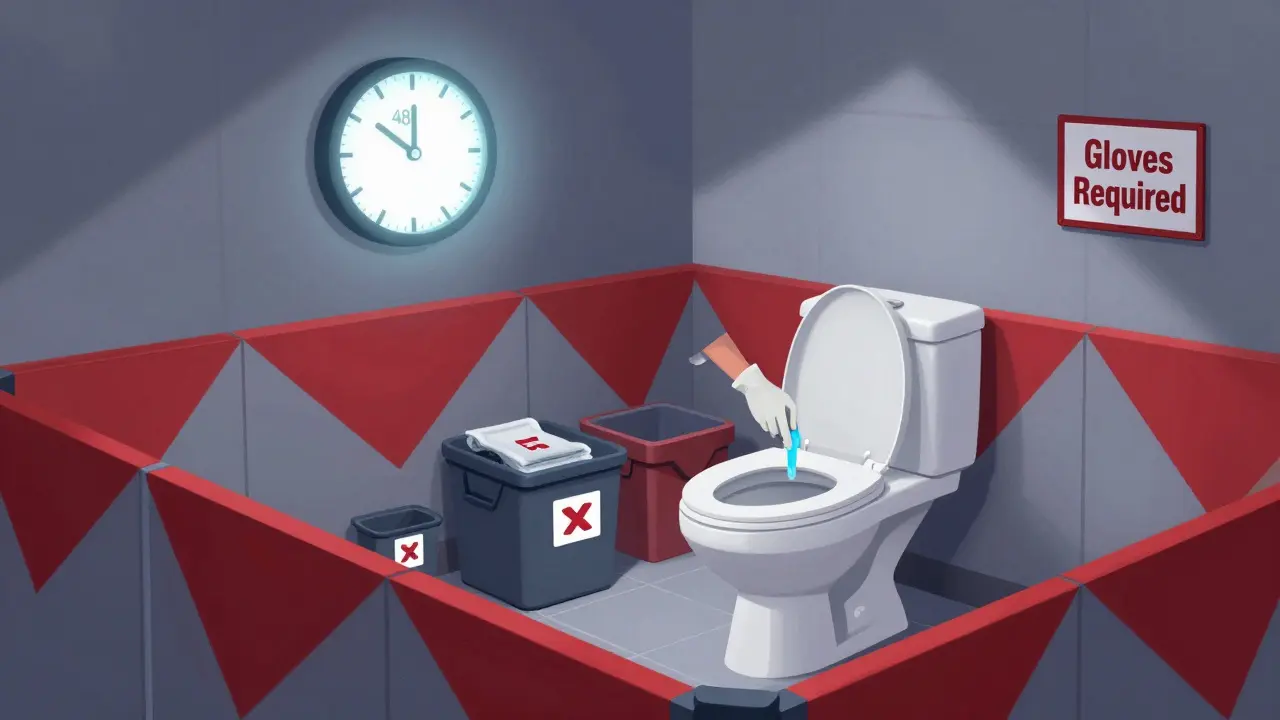
- Flush the toilet twice after every use-with the lid down.
- Wear gloves when changing diapers, cleaning up vomit, or helping with toileting.
- Wash your hands immediately after using the bathroom.
- Don’t share towels, washcloths, or bedding during this window.
- Wash soiled clothes and linens separately in hot water (at least 140°F or 60°C) with regular detergent. Run two full cycles.
And if you’re pregnant, trying to get pregnant, or breastfeeding-do not handle chemo meds or clean up after them. A 2019 study in Cancer found detectable levels of chemotherapy in breast milk up to 72 hours after treatment. The risk to a developing baby or infant isn’t theoretical. It’s documented.
Creating a Chemo Zone in Your Home
Designate one area as your chemo zone. Most people pick the bathroom. Why? It’s easy to clean, has running water, and you can close the door.
Set it up with:
- Plastic-backed absorbent pads on the counter or floor where you handle meds
- A labeled bin for used gloves and pads
- A trash can with a lid, just for chemo waste
- A sign on the door: "Chemo Handling Area-Gloves Required"
Keep your spill kit here. Keep your gloves here. Keep your chemo diary here. Don’t move it around. Consistency reduces mistakes.
Some families set up a small table in the laundry room or a corner of the garage. If you do, make sure it’s well-ventilated and off-limits to others. Never use the kitchen table. Ever.
Disposal: What Goes Where
There’s a myth that chemo waste needs special medical disposal. It doesn’t-at home.
Used gloves, pads, empty pill bottles, and even syringes (if they’re not sharps) go in your regular household trash. Do not recycle them. Do not flush pills down the toilet unless the label says so. Most don’t.
But here’s what you do need to do:
- Remove personal info from pill bottles before throwing them away.
- Seal used gloves and pads in a plastic bag before tossing them.
- Keep unused pills in their original container. Don’t mix them with other meds.
- Return unused or expired chemo to your pharmacy or oncology center. Never throw them in the trash unsealed.
A 2021 Mayo Clinic survey found that 37.5% of home chemo patients didn’t know how to dispose of gloves. That’s dangerous. Gloves aren’t clean just because they’re used. They’re contaminated. Treat them like biohazard waste-even if they’re going in the regular trash.
Who Should Avoid Contact With Chemo
Not everyone can be around you during treatment.
According to the Oncology Nursing Society and the CDC:
- Pregnant women should not handle chemo meds or clean up bodily fluids.
- Women trying to conceive should avoid exposure-chemo can damage eggs and sperm.
- Children under 12 should not be in the chemo zone. Their developing bodies are more sensitive.
- Pets should be kept away from areas where chemo is handled. Even licking a contaminated floor can be risky.
- People with weakened immune systems (like those on steroids or with HIV) should limit close contact during the 48-hour window.
And if you’re caring for someone on chemo? You’re not a nurse. You’re a family member. That means you need training. Most cancer centers offer a 2-3 hour session with an oncology nurse. Don’t skip it. It’s free. It’s lifesaving.
Tools and Tech That Help
Technology is catching up to the risks.
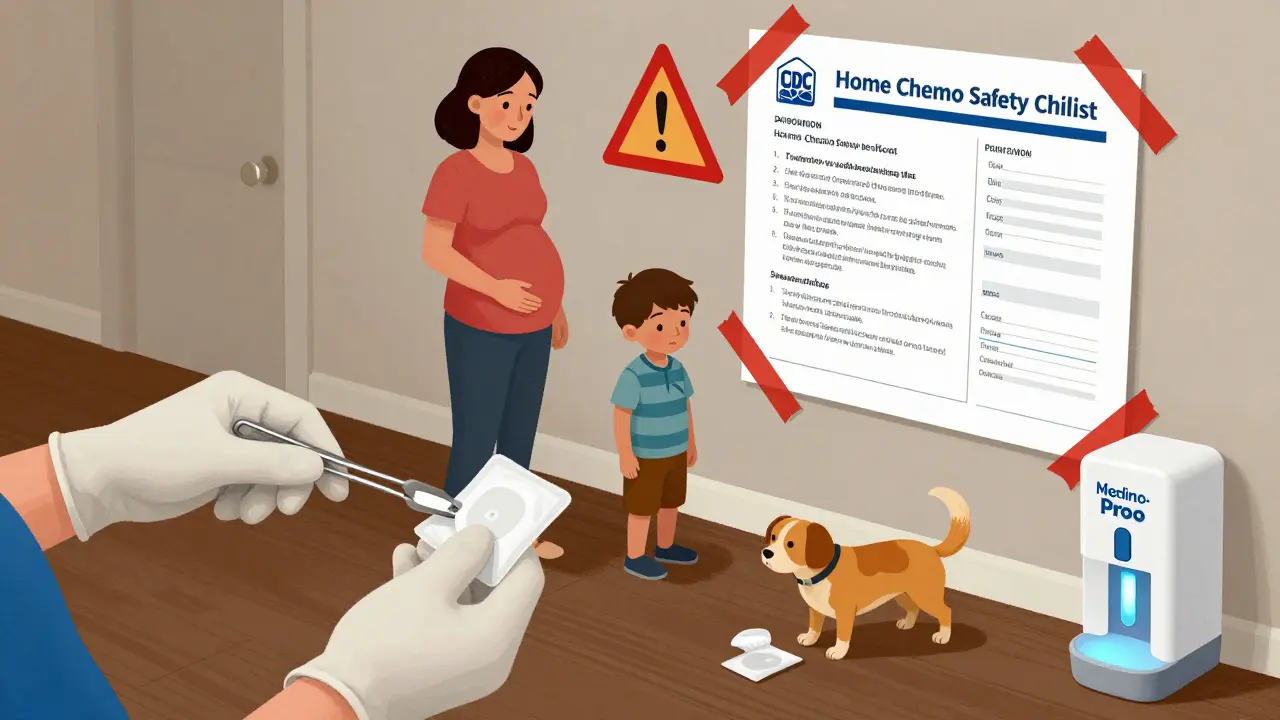
In 2022, the FDA approved the first smart pill dispenser for chemo: MedMinder Pro Chemo. It locks the pills until it’s time to take them. It talks to you: "Wear gloves. Flush twice." It logs every dose. It alerts your care team if you miss a pill. Over 12,000 patients are using it now.
There’s also the CDC’s free Home Chemo Safety Checklist. Download it. Print it. Tape it to your fridge. It covers gloves, flushing, laundry, and disposal. Over 87,000 people downloaded it in 2022. You should too.
And if you’re in a rural area? You’re not alone. Only 58% of rural patients knew about the 48-hour rule. Urban patients? 82%. The National Cancer Institute is now funding education programs to close that gap. But you don’t have to wait. Call your oncology nurse. Ask for the checklist. Ask for the training. Ask for help.
What Happens If You Make a Mistake
Accidents happen. You drop a pill. You touch the bag without gloves. You forget to flush twice.
Don’t panic. But don’t ignore it either.
Wash your skin immediately with soap and water. If you think you inhaled powder, go outside for fresh air. If you’re pregnant or have a chronic condition, call your oncology team. There’s a 24/7 Chemotherapy Safety Hotline run by the Oncology Nursing Society: 1-866-877-7851. They answered over 12,000 calls in 2022. Average wait time? 47 seconds.
And if you’re worried about fines? Home health agencies can be fined up to $15,625 per violation for unsafe practices. That’s why they give you the training, the gloves, the spill kit. They’re not being bureaucratic. They’re protecting you.
Final Thoughts: Safety Is a Habit
Chemo at home isn’t about fear. It’s about awareness. It’s about turning risky moments into safe routines.
Wear gloves. Flush twice. Wash hands. Store locked. Dispose sealed. Keep kids and pets away. Use the checklist. Call the hotline if you’re unsure.
These aren’t rules to follow because someone said so. They’re rules because people got sick. Because children were exposed. Because caregivers got rashes. Because lives were put at risk by simple mistakes.
You’re doing something hard. You’re fighting cancer. Don’t let a preventable mistake make it harder.
Can I hug my family after taking chemo at home?
Yes, but avoid close contact for the first 24 hours after treatment, especially if you’ve just received IV chemo. Skin-to-skin contact is low risk, but bodily fluids like sweat can carry traces of chemo. Wash your hands and shower before hugging. Avoid kissing on the mouth and sharing towels or bedding for 48 hours.
Do I need to wear gloves when taking oral chemo pills?
Yes. Even if you’re just picking up a pill, always use gloves or a dedicated cup. Chemo pills can leave residue on your skin. That residue can transfer to doorknobs, phones, or food. Gloves are your first line of defense. Nitrile gloves, at least 5 mil thick, are required.
Can I use the same bathroom as others?
Yes, but you must flush twice with the lid down after every use. Clean the toilet seat and handle with disinfectant wipes after each use. If possible, use a separate toilet or wait until others have finished. Avoid sharing towels, toothbrushes, or razors for 48 hours after treatment.
What if I accidentally spill chemo liquid?
Put on two pairs of nitrile gloves. Use the absorbent pads from your spill kit to soak it up. Don’t wipe. Don’t use paper towels. Place all contaminated materials in a sealed plastic bag. Wash the area with soap and water. Then call your oncology team or the Chemotherapy Safety Hotline at 1-866-877-7851 for further instructions.
How long do I need to keep using gloves after my last chemo dose?
For 48 hours after your last dose, treat all bodily fluids as potentially hazardous. If you’re on cyclophosphamide or another drug with a longer half-life, extend precautions to 72 hours. Always check your specific medication’s guidelines. When in doubt, keep wearing gloves and flushing twice.
Is it safe to have pets around while I’m on chemo?
Keep pets away from your chemo zone and any areas where you’ve spilled fluids or used the bathroom. Pets can lick contaminated surfaces and ingest chemo particles. While serious reactions in pets are rare, they’re possible. Wash your hands after petting them, and avoid letting them sleep in your bed during treatment.
Can I cook or prepare food while on chemo?
Yes, but wash your hands thoroughly before handling food. Avoid preparing meals immediately after taking pills or if you’ve just vomited. Use separate utensils if possible. Don’t share food or drinks with others during the 48-hour window. Chemo can transfer through saliva.
Do I need to tell my employer I’m on home chemo?
You’re not legally required to disclose your diagnosis. But if you need accommodations-like flexible hours or remote work-you may need to share details under disability laws. If you’re receiving home chemo through a home health agency, they may require a safety plan to be on file with your employer. Talk to your oncology social worker.




13 Comments