
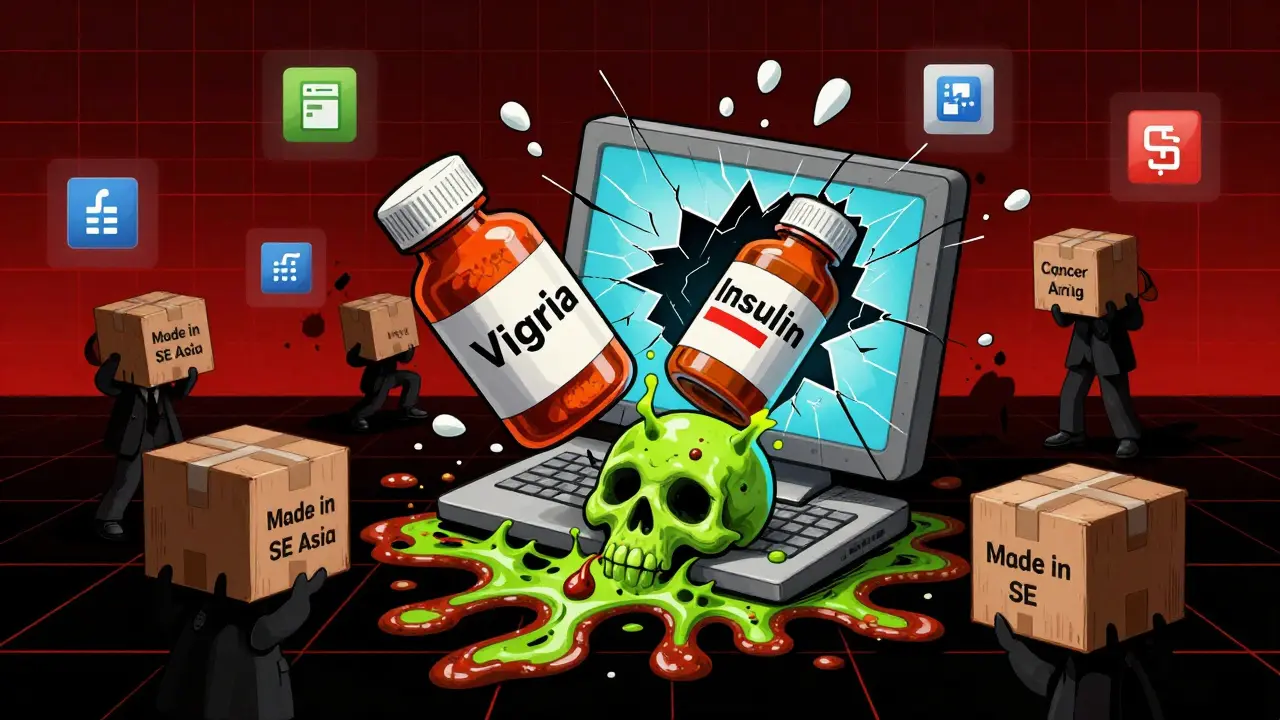
Buying medicine online from another country might seem like a smart way to save money. But what if the pills you’re taking aren’t real? Every year, millions of people order drugs from websites that look legitimate-but are actually fronts for criminal networks selling fake, dangerous, or empty pills. The risks aren’t theoretical. People have ended up in hospitals, lost vision, or even died because they trusted a website that promised cheap Viagra, insulin, or cancer drugs-but delivered poison instead.
What Exactly Are Counterfeit Drugs?
Counterfeit drugs aren’t just knockoffs like fake designer watches. They’re life-threatening. These products can contain the wrong active ingredient, too little of the right one, or toxic chemicals like rat poison, paint thinner, or industrial dyes. Some have no medicine at all. Others have wildly inconsistent doses-say, 28% or 198% of the labeled amount of sildenafil. That’s not a typo. Real cases have been documented where people took what they thought was a 50mg Viagra pill and got 99mg or 2mg instead. Both can kill. The World Health Organization says 1 in 10 medicines in lower-income countries are substandard or falsified. But this isn’t just a problem overseas. In 2025, Australia seized over 5.2 million units of illegal drugs imported by individuals. Canada, the U.S., and the UK reported similar numbers. The fake drugs aren’t coming from small-time sellers. They’re produced in unregulated labs-often in Southeast Asia-and shipped through complex global networks that hide behind fake websites, social media ads, and encrypted payment apps.How Do You Even Know You’re Buying Fake?
It’s harder than you think. Criminals have gotten good at this. They copy the logos, fonts, and layouts of real pharmacies. They use fake certifications. They even hire actors to appear in “patient testimonials.” You might see a site that looks just like CVS or Walgreens, complete with a “Verified Pharmacy” badge-but that badge is fake too. Here’s what real, safe international pharmacies do:- Require a valid prescription from a licensed doctor
- Have a licensed pharmacist available to answer questions
- Provide a physical address and phone number you can call
- Are certified by trusted programs like VIPPS (U.S.) or CIPA (Canada)
- Don’t sell controlled substances without a prescription
The Real Cost: Health Risks You Can’t Ignore
Counterfeit drugs don’t just fail to work-they actively harm you. Take antibiotics. If a fake pill contains only 10% of the needed medicine, it won’t kill the infection. Instead, it lets bacteria survive and become resistant. That’s how superbugs spread. The WHO estimates that counterfeit antibiotics contribute to tens of thousands of deaths each year from treatable infections. Cancer drugs? Even worse. These medicines have a razor-thin safety margin. A fake version of a drug like paclitaxel might contain no active ingredient-or worse, a toxic chemical that damages your liver or kidneys. Patients who took counterfeit cancer meds reported severe vomiting, organ failure, and sudden death. And it’s not just the meds themselves. Counterfeit insulin has been found with incorrect concentrations. One patient in the UK ended up in a diabetic coma after using fake insulin bought from a website offering “90% off.” A 2020 OECD report linked counterfeit anti-malarial drugs to over 116,000 deaths annually. Another 72,000-169,000 child deaths from pneumonia each year are tied to fake or substandard antibiotics. These aren’t statistics. These are real parents burying children who never got the medicine they needed.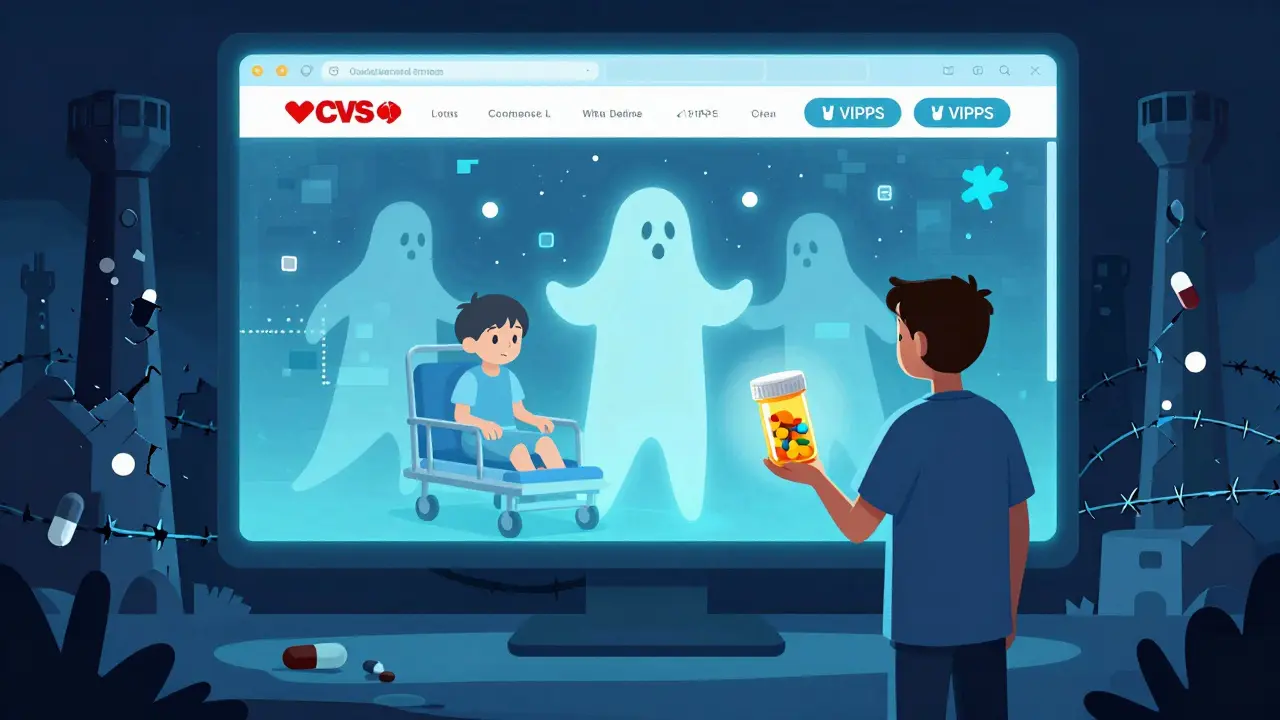
Why Do People Still Buy From These Sites?
The answer is simple: price. In the U.S., a month’s supply of insulin can cost over $300. In Canada, it’s under $40. So people cross borders-or click a link. A 2024 Kaiser Family Foundation survey found 18% of Americans have ordered prescription drugs from overseas. But 72% of them didn’t check if the pharmacy was legitimate. People think, “It’s just one order.” Or, “It’s for my cat.” Or, “I’ve used this site before.” But the same criminal networks that sell fake erectile dysfunction pills also sell fake heart meds, vaccines, and antibiotics. Once you give them your credit card and address, you’re in their system. They’ll keep sending you fake drugs-maybe even more dangerous ones next time.What Can You Actually Do to Stay Safe?
There’s no perfect solution-but there are steps that cut your risk dramatically. 1. Only use certified pharmacies. Look for VIPPS (U.S.), CIPA (Canada), or the WHO’s “Be Medicinewise” checklist. These aren’t marketing claims-they’re verified by government agencies. 2. Check the website’s domain. Legit pharmacies use .com, .ca, .au, etc. But so do fakes. Look for misspellings: “pharmaciee.com” or “meds4less.net.” Real ones rarely use strange domains. 3. Call them. If they don’t list a phone number, walk away. If they answer with a call center in a country you’ve never heard of, ask for a licensed pharmacist. If they can’t connect you, it’s fake. 4. Compare the pills. If your medication looks different-color, shape, markings-don’t take it. Contact your doctor. Take a photo. Report it. 5. Report suspicious sites. In Australia, report to the Therapeutic Goods Administration. In the U.S., go to the FDA’s BeSafeRx portal. Your report helps shut these operations down.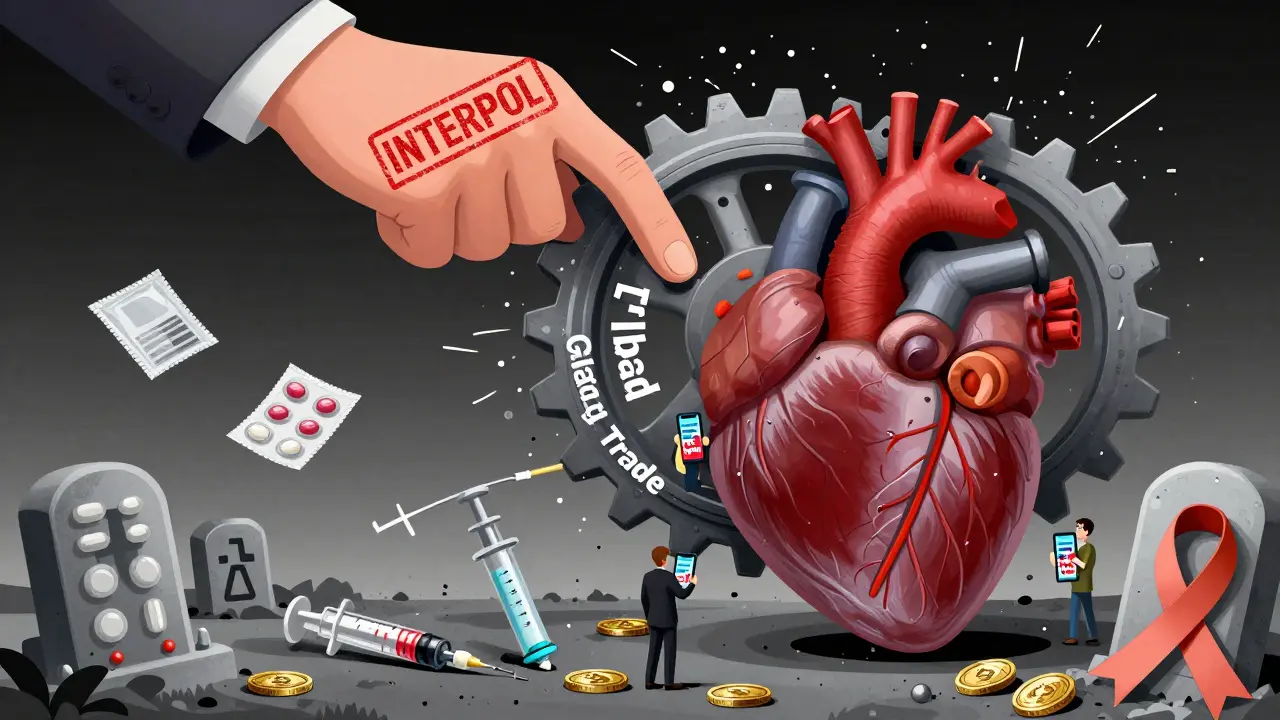
The Bigger Picture: Why This Keeps Happening
This isn’t just about greedy criminals. It’s about broken systems. In 125 of 194 countries, there’s some form of drug regulation. But only 60 have fully functional systems. That means fake drugs can be made in one country, shipped through another, and sold to someone in a third-all without anyone checking if they’re safe. Criminals make up to 9,000% profit on fake drugs. Compare that to a 20% margin on real ones. That’s why they’re investing in AI-generated websites, cryptocurrency payments, and dark web marketplaces. Meanwhile, patients are left to navigate a minefield alone. No one warns them. No one teaches them how to spot a fake. And when they get sick, they’re too ashamed to say they bought drugs online.What’s Being Done?
In May 2025, INTERPOL shut down 13,000 websites and arrested 769 people across 90 countries in Operation Pangea XVI. That’s the biggest global crackdown ever. But it’s a game of whack-a-mole. As soon as one site goes down, ten pop up. The EU now requires safety features on prescription drugs-like unique codes you can scan to verify authenticity. The U.S. is rolling out similar track-and-trace systems. But these tools only work if you’re buying from a pharmacy that uses them. If you’re ordering from a shady site, you’re bypassing every safety net. Pfizer has prevented over 302 million counterfeit doses from reaching patients since 2004. But they can’t police every website. They can’t stop every fake ad. They need your help.Final Warning: This Isn’t Worth the Risk
You wouldn’t buy a car from a stranger on the internet without checking the VIN. You wouldn’t trust a surgeon who doesn’t have a license. So why take pills from a website you can’t verify? The savings aren’t worth it. The convenience isn’t worth it. The gamble isn’t worth it. If you need cheaper medication, talk to your doctor. Ask about generic versions. Look into patient assistance programs. Check if your country has a legal international pharmacy program. There are safe ways to save money. This isn’t one of them. Your health isn’t a product you can return. Once you swallow a fake pill, there’s no undo button.How can I tell if an online pharmacy is real?
A real online pharmacy requires a valid prescription, has a licensed pharmacist on staff, displays a physical address and phone number, and is certified by a trusted program like VIPPS (U.S.) or CIPA (Canada). Avoid sites that sell controlled substances without a prescription, don’t let you speak to a pharmacist, or use suspicious domains like .biz or .info. Always check the pharmacy’s credentials through your country’s health regulator.
Are all foreign pharmacies dangerous?
No-not all. Pharmacies in countries like Canada, the UK, Australia, and New Zealand that are properly licensed and certified (like CIPA or VIPPS) are generally safe. The danger comes from unregulated websites based in countries with weak oversight, often operating out of Southeast Asia or Eastern Europe. The key isn’t the country-it’s whether the pharmacy follows international safety standards and can be verified.
What should I do if I already took fake medication?
Stop taking the medication immediately. Contact your doctor or go to the nearest emergency room. Bring the packaging and any remaining pills. Report the pharmacy to your national health authority-like the TGA in Australia or the FDA in the U.S. Even if you feel fine, fake drugs can cause delayed reactions or long-term damage. Don’t wait for symptoms to appear.
Why are counterfeit cancer drugs so dangerous?
Cancer drugs have a very narrow therapeutic window-meaning the difference between a helpful dose and a toxic one is tiny. If a counterfeit version contains too little active ingredient, the cancer keeps growing. If it contains too much-or a toxic chemical-it can destroy your liver, kidneys, or bone marrow. Fake biologics and targeted therapies are especially risky because they’re complex molecules that can’t be easily replicated. Even small errors in manufacturing can turn them deadly.
Can I trust websites that say they’re certified?
Not unless you verify the certification yourself. Fake websites often display fake seals like “NABP Verified” or “LegitScript Certified.” Go directly to the official site of the certifying body-like NABP’s VIPPS directory-and search for the pharmacy by name. If it’s not listed, the certification is fake. Never trust a badge you see on the pharmacy’s own site.
Is it illegal to order drugs from abroad?
In most countries, including Australia, the U.S., and Canada, importing prescription drugs from overseas without proper authorization is technically illegal-even if the drug is legal in your country. Enforcement is often focused on large-scale operations, but customs agencies do seize personal shipments. More importantly, legality doesn’t equal safety. Just because you haven’t been caught doesn’t mean the pills you received are safe.

10 Comments
OMG I just realized I bought insulin from a site that looked like CVS last year 😳 I thought I was saving $$$ but now I’m shaking thinking about what was actually in those pens… I’m going to the ER tomorrow just to be safe. Thanks for this post-seriously, lifesaver.
It’s wild how we’ve normalized risk when it comes to health because we’re scared of prices. We’ll haggle over a $300 insulin bill like it’s a garage sale, but we won’t ask the same questions about the source. We treat medicine like a commodity, not a lifeline. That’s the real tragedy here-not the criminals, but the system that made us desperate enough to gamble with our lives.
Let’s be real-the regulatory arbitrage is a systemic failure. The pharmacoeconomic externalities are being internalized by vulnerable populations who lack access to affordable, state-sanctioned supply chains. Meanwhile, the black-market supply chain leverages blockchain-enabled crypto payments and AI-generated domain spoofing to evade detection. It’s not just fraud-it’s a metastasizing public health catastrophe with zero accountability frameworks.
It is a matter of grave concern that individuals in developed nations, despite having access to advanced healthcare infrastructure, still resort to purchasing pharmaceuticals from unverified international sources. This behavior reflects a profound lack of awareness regarding the potential for irreversible physiological harm. One must exercise extreme caution at all times.
This is all a CIA psyop. They want you scared so you’ll pay $400 for insulin when it costs $3 to make. The FDA and WHO are in bed with Big Pharma. Fake drugs? More like fake fear. I’ve been buying from India for 5 years. Still alive. 😎
STOP. Just STOP. I’m a pharmacist in Toronto and I’ve seen the aftermath-real people, real trauma. I had a 68-year-old woman come in with kidney failure because she bought ‘generic’ chemo from a Telegram bot. She thought she was being smart. She wasn’t. She was dead. And I’m not even mad-I’m heartbroken. If you’re reading this and you’ve ever ordered from a site that doesn’t have a phone number you can call, you’re not a customer. You’re a target. Please, for the love of everything holy, stop.
It’s funny how we trust Uber drivers with our lives but won’t trust a pharmacy that’s been around for 10 years with a 5-star review. We’ve outsourced trust to algorithms, and now we’re paying the price. The real villain isn’t the seller-it’s the system that made us believe convenience > safety.
Hi everyone, I just wanted to say I’m so glad this post exists. I’m from India and I’ve seen how people in my village buy antibiotics from street vendors because they can’t afford the clinic. It breaks my heart. But I also know that not all online pharmacies are bad-I’ve ordered my mom’s blood pressure meds from a verified Indian pharmacy that ships globally. The key is checking the license, calling them, and seeing if they have a real pharmacist on the line. Don’t give up on saving money-but don’t give up on safety either. You can do both if you’re smart. 💛
If you’re buying drugs online, you deserve whatever happens to you. This isn’t a tragedy-it’s karma. You knew the risks. You chose greed over responsibility. Now stop pretending you’re a victim.
I just want to say thank you to the person who wrote this. I’m a nurse in Mumbai and I’ve seen kids die because their parents bought fake malaria pills from a Facebook ad. I’ve held their hands while they slipped away. No one told them it was fake. No one warned them. This post? It’s the kind of thing we wish someone had handed us five years ago. Please share this. Someone out there needs to read it before it’s too late.