
Rebound Congestion Recovery Calculator
How Long Will It Take to Recover?
This calculator estimates your recovery time based on how long you've used decongestant sprays and your treatment approach.
Recovery Timeline Estimate
Your estimated recovery timeline:
What to expect:
- Days 1-3 Worst symptoms - withdrawal congestion peaks
- Days 4-7 Symptoms begin to improve
- Days 8-14 Significant relief with most treatment methods
Tips for faster recovery:
- Use saline rinses twice daily
- Keep your nasal passages moisturized
- Avoid irritants like smoke and strong fragrances
- Stay hydrated with water and herbal teas
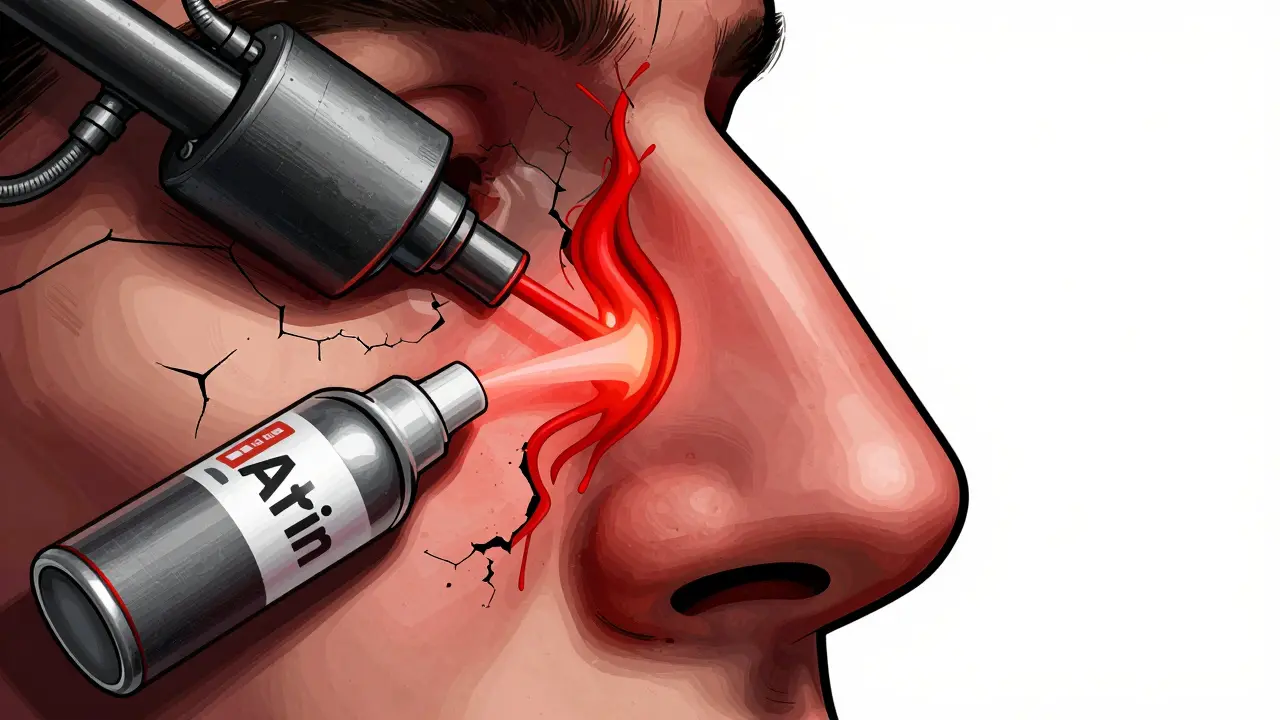
Ever used a nasal spray for a stuffy nose, only to find your congestion got worse after a few days? You’re not alone. What feels like a cold that won’t quit might actually be rhinitis medicamentosa - a condition caused by overusing nasal decongestant sprays. It’s not a myth. It’s a real, well-documented problem that affects hundreds of thousands of people every year. And the worst part? The very thing you’re using to feel better is making it worse.
How Your Nasal Spray Is Making You More Congested
Nasal decongestant sprays like Afrin, Neo-Synephrine, and Oxymetazoline work fast. They shrink swollen blood vessels in your nose, giving you instant relief. But here’s the catch: they don’t fix the root cause. They just mask it. And when the effect wears off - usually within 10 to 12 hours - your blood vessels don’t just return to normal. They overreact. They swell even more than before. That’s called rebound congestion. This cycle starts subtly. You use the spray for a couple of days. Relief. Then you use it again the next day. And the next. By day five, you notice your nose feels stuffy again, even before the spray wears off. You increase the dose. You spray more often. Soon, you’re using it every few hours just to breathe. This isn’t addiction in the drug sense - it’s a physiological response your body can’t turn off on its own. According to the National Center for Biotechnology Information (NCBI), this condition is called rhinitis medicamentosa. It’s not just a nuisance. It’s a clinical diagnosis. Studies show that 92% of people who use these sprays beyond 10 days develop some level of rebound congestion. And in the U.S. alone, about 500,000 cases are diagnosed each year. The nasal lining becomes red, swollen, and even granular. In severe cases, it turns pale, crusty, and dry. You start breathing through your mouth. Your throat gets dry. You snore. Sleep suffers. It’s a spiral.What Happens When You Stop - And Why It’s So Hard
The good news? You can get out of this cycle. The bad news? The first few days after quitting are brutal. When you stop using the spray, your nasal passages go into overdrive. Blood flow surges. Swelling peaks. This is called withdrawal congestion. It’s not dangerous, but it’s uncomfortable - sometimes worse than the original congestion. Most people give up during this phase. That’s why relapse rates are high. Cleveland Clinic data shows that 22% of patients who stop abruptly go back to using the spray within two weeks. But there’s a smarter way. One proven strategy is the one-nostril-at-a-time method. Stop using the spray in one nostril while continuing in the other. Wait until the first side clears - usually 3 to 7 days - then stop on the other side. This reduces the shock to your system. WebMD’s 2023 patient survey found that 63% of people who tried this reported manageable symptoms. Only 41% of those who stopped both sides at once said the same. Another option? Gradual reduction. Instead of quitting cold turkey, cut back by one spray per day every 2 to 3 days. This works better for some, especially if you’ve been using the spray for months. But either way, you need a plan. And support.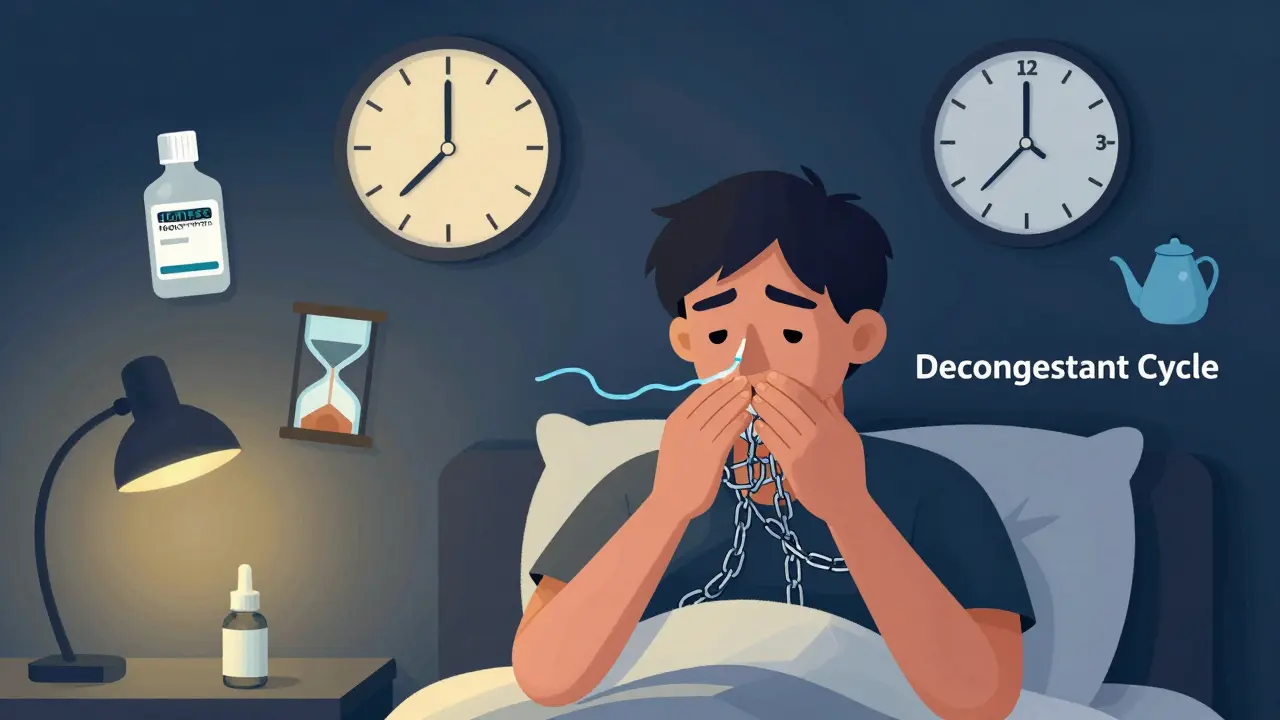
What Actually Works to Fix It
The cornerstone of treatment isn’t another decongestant. It’s intranasal corticosteroids. These are prescription or over-the-counter sprays like Flonase (fluticasone) and Nasonex (mometasone). They don’t constrict blood vessels. They reduce inflammation. And they’re backed by strong clinical evidence. Studies show that when used consistently during withdrawal, these sprays reduce congestion symptoms by 68% to 75%. They take a few days to kick in - so patience is key. Most patients start feeling better after 5 to 7 days, with major improvement by day 14. A 2021 multicenter trial found that combining corticosteroids with a short course of oral prednisone (0.5 mg per kg for 5 days) boosted success rates to 82%. Saline nasal irrigation is another powerful tool. Rinsing your nose with saltwater helps clear mucus, soothes irritated tissue, and reduces swelling. A 2022 review in the Journal of Allergy and Clinical Immunology found that 60% of patients using saline twice daily during withdrawal saw noticeable improvement. It’s cheap, safe, and works alongside other treatments. Some newer options are emerging. Capsaicin - the compound in hot peppers - is being tested as a nasal spray. European trials show it reduces congestion in 55% of users. Azelastine, an antihistamine nasal spray, showed 65% effectiveness in early 2023 trials at Johns Hopkins. These aren’t first-line yet, but they’re promising.Real Stories: What Patients Say
Reddit user “AllergySufferer89” wrote on June 15, 2023: “After 3 weeks of Flonase and no Afrin, my nose finally cleared up - the first week was hell but worth it.” That’s the pattern. The worst is early. The relief comes later. But not everyone makes it. Of 1,247 patient reviews analyzed from Healthgrades, WebMD, and Reddit between 2022 and 2023, 32% reported severe withdrawal symptoms lasting 7 to 10 days. Common complaints: inability to sleep, constant pressure, dry mouth, headaches. And 18% relapsed - not because they didn’t want to get better, but because they didn’t have a clear plan. Cleveland Clinic’s patient registry found that those who received structured counseling - like a written plan, a follow-up call, and saline instructions - had a 7% relapse rate. Those who didn’t? 22%. Education matters.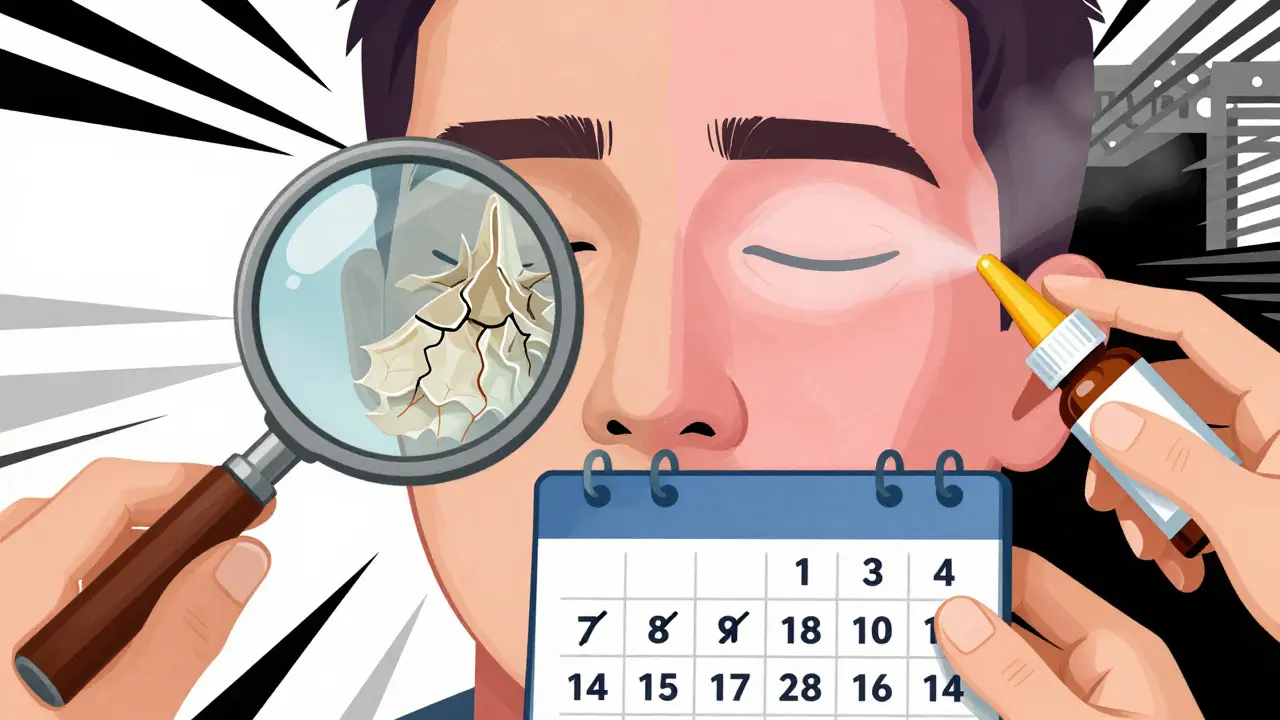
How to Prevent This From Happening Again
The best treatment is prevention. And it’s simple:- Never use nasal decongestant sprays for more than 3 days in a row. The FDA now requires this warning on all packaging in 10-point font.
- Use saline spray first. If you’re congested, try rinsing with saltwater before reaching for the decongestant. Studies show this cuts the risk of rebound congestion by 40%.
- Check labels. Many sprays list “use for up to 7 days” - but that’s misleading. The real danger starts after day 3. Stick to 3 days max.
- Avoid oral decongestants if you have high blood pressure. Pseudoephedrine can spike blood pressure in 1 in 7 patients, according to a 2021 study from Massachusetts General Hospital.
- Don’t use nasal sprays if you’re on MAO inhibitors. The interaction can cause dangerous spikes in blood pressure.
What to Do If You’re Already Stuck
If you’re in the middle of this right now, here’s your step-by-step plan:- Stop the spray. Choose one method: one nostril at a time, or gradual reduction. Stick to it.
- Start saline rinses. Use a neti pot or squeeze bottle twice daily. Warm water, non-iodized salt.
- Begin intranasal corticosteroid. Use Flonase or Nasonex once daily. Don’t skip days. It takes 5-7 days to work.
- Use a humidifier. Moist air reduces dryness and irritation.
- Drink more water. Hydration thins mucus and eases throat dryness.
- Give it time. Days 1-3: worst. Days 4-7: improving. Days 8-14: clear.
Rebound congestion isn’t your fault. It’s a trap set by a product designed to help - but only for a very short time. The solution isn’t more spray. It’s patience, the right tools, and a plan. You can break this cycle. And once you do, you’ll breathe easier - for good.
Can nasal decongestant sprays cause permanent damage?
Long-term overuse of nasal decongestant sprays can lead to permanent changes in nasal tissue. Chronic inflammation can cause the nasal lining to thin, become crusty, or develop small growths called polyps. Studies show a 15% increased risk of nasal polyps after 6 months of daily overuse. While not all damage is irreversible, prolonged use can reduce the effectiveness of natural nasal defenses and increase susceptibility to infections.
Is it safe to use saline spray every day?
Yes, saline nasal spray is safe for daily use, even long-term. It’s non-medicated and works by moisturizing the nasal passages and flushing out irritants. Many people use it daily as part of allergy or cold management. Unlike decongestant sprays, it doesn’t cause rebound congestion or dependency.
Why do I feel worse after stopping the spray?
When you stop using a nasal decongestant spray, your blood vessels, which were constricted by the medication, rebound and dilate more than usual. This causes increased swelling and congestion - often worse than before you started. This is called rebound congestion or rhinitis medicamentosa. It’s temporary, but it can last 5 to 10 days. Using saline rinses and corticosteroid sprays during this time helps reduce the severity.
Can I use oral decongestants instead?
Oral decongestants like pseudoephedrine can help with congestion, but they don’t solve rebound congestion from nasal sprays. They also carry risks - especially for people with high blood pressure, heart disease, or glaucoma. A 2021 study found 1 in 7 hypertensive patients had dangerous blood pressure spikes from oral decongestants. They’re not a safe long-term substitute. Focus on stopping the spray and using corticosteroids and saline instead.
How long does it take to recover from rebound congestion?
Recovery time varies. Most people see improvement within 5 to 7 days after stopping the spray, with significant relief by day 14. Severe cases - especially after months of daily use - can take up to 4 to 6 weeks. Consistent use of intranasal corticosteroids and saline irrigation speeds up recovery. Patience and consistency are key. Relapse is common if you go back to the spray too soon.
Do I need a prescription to treat this?
Not always. Many corticosteroid nasal sprays like Flonase and Nasacort are available over the counter. Saline rinses require no prescription. However, if symptoms persist beyond 2 weeks, or if you have severe swelling, polyps, or chronic sinus issues, you should see a doctor. They may prescribe stronger corticosteroids, oral steroids, or rule out other causes like allergies or infections.







14 Comments