
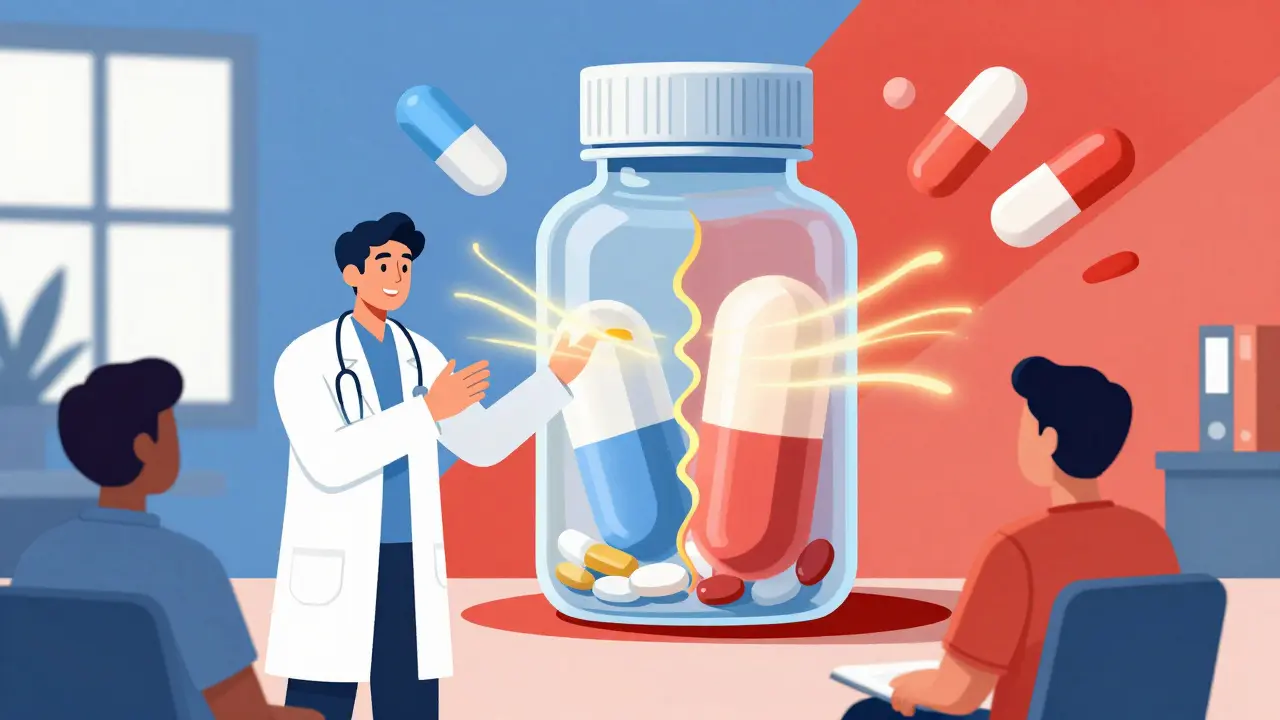
When a patient asks why they’re getting a cheaper pill with a different name, doctors need to answer with confidence. Not just because it’s cheaper - but because it works just as well. That’s where continuing medical education (CME) on generic drugs comes in. It’s not optional anymore. It’s essential.
Why Generics Matter More Than Ever
Ninety-one percent of all prescriptions filled in the U.S. are for generic drugs. Yet, they make up only 23% of total drug spending. That’s a massive savings - $156 billion a year, according to the RAND Corporation. But here’s the catch: many doctors still hesitate to prescribe them. Why? Because they’re not sure. Not because generics are less effective - they’re not. The FDA requires them to be bioequivalent to brand-name drugs. That means they deliver the same active ingredient, in the same amount, at the same rate. The body can’t tell the difference.Still, myths linger. Patients worry. Some doctors, especially those not in primary care, never got proper training on how to explain this. That’s where CME steps in. It’s not just about ticking a box. It’s about building trust - with patients and with science.
What’s Required by Law
Every state has its own rules. Forty states require doctors to complete 20 to 50 hours of CME every two years. Ten states don’t require any. That’s a huge gap. California, for example, demands 50 hours of Category 1 CME every two years - no exceptions. But here’s the thing: nowhere in California’s rules does it say, “You must take a course on generics.” It’s buried. Under pharmacology. Under therapeutic guidelines. Under controlled substances.The MATE Act, which went into effect in June 2023, changed that. Now, every doctor with a DEA number - that’s most prescribers - must complete eight hours of training on substance use disorders. And yes, that includes education on generic alternatives to opioids and other controlled drugs. Compliance is due by June 2025. This isn’t a suggestion. It’s federal law.
Some states go further. Florida requires two hours every two years on controlled substance prescribing. Maryland adds half an hour on Prescription Drug Monitoring Programs. And starting January 2024, California added two hours on biosimilars - the complex, biologic cousins of generics. These aren’t random updates. They’re responses to real problems: cost, misuse, confusion.
What Doctors Actually Learn
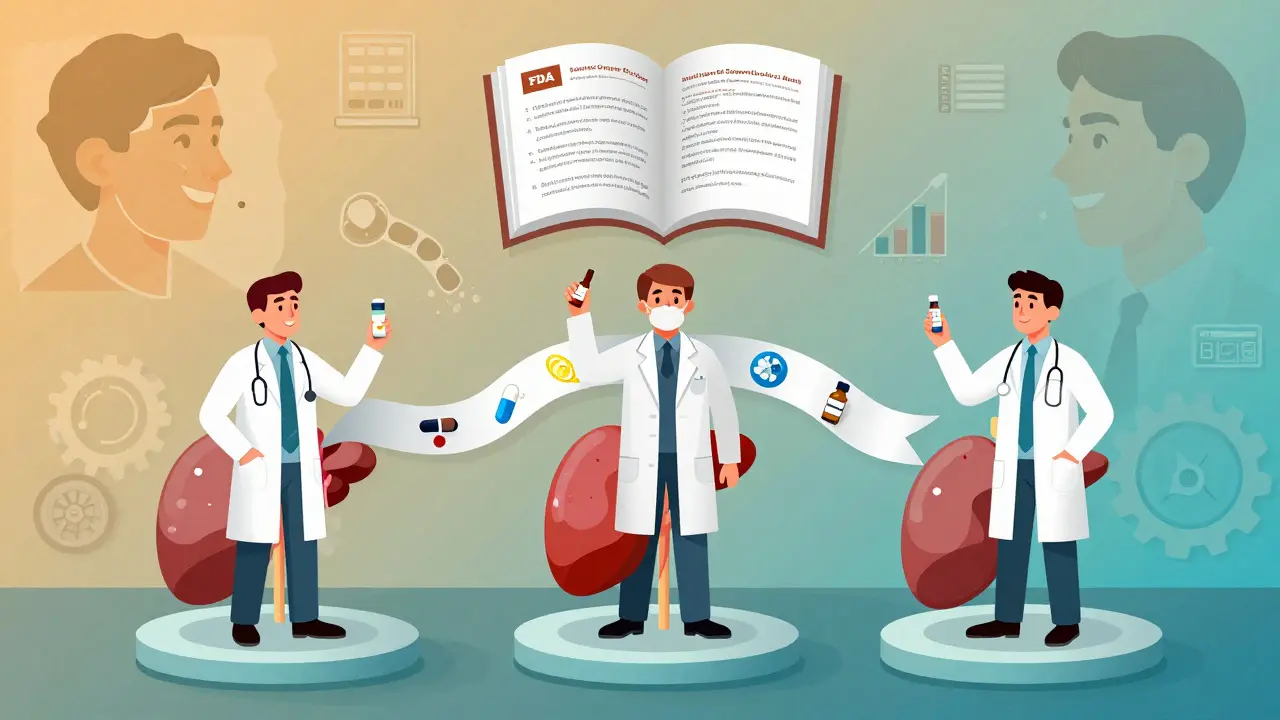
Good CME doesn’t just say, “Generics are fine.” It shows you how to use them. Courses from accredited providers like UpToDate, Medscape, and RenewNowCE teach:- How to read the FDA’s Orange Book - the official list of approved generic drugs and their therapeutic equivalence ratings
- When generics aren’t interchangeable - like with narrow therapeutic index drugs (warfarin, levothyroxine, lithium)
- How to explain bioequivalence to patients without sounding dismissive
- How to spot fake or low-quality generics - rare, but possible
- How drug interactions change (or don’t) when switching from brand to generic
One study found that doctors who completed pharmacology-focused CME made 17.3% more appropriate generic substitution decisions. That’s not just numbers. That’s fewer patients skipping doses because they can’t afford their meds. Fewer hospital readmissions. Better outcomes.
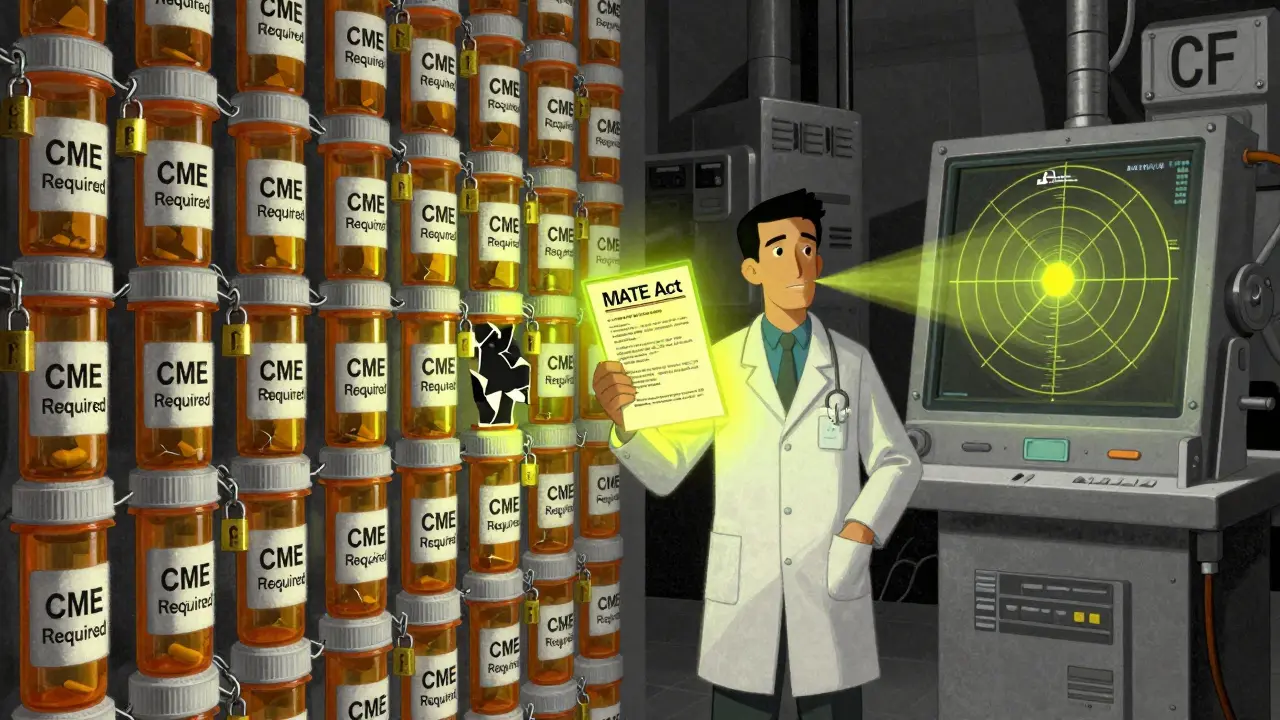
The Reality Check: Not All CME Is Equal
A 2023 survey on the Sermo physician network showed 68% of doctors felt more confident about generics after CME. But 32% said it felt irrelevant. A radiologist told me: “I don’t prescribe pain meds. Why am I spending 12 hours on opioid prescribing?” That’s the problem. Most CME is still designed for primary care. It doesn’t account for specialties.Neurologists need to know about generic antiepileptics. Oncologists need clarity on biosimilars. Cardiologists need to understand generic statins and how switching brands might affect LDL levels. Yet, most courses don’t break it down that way. They give you one-size-fits-all modules on hypertension and diabetes.
And engagement? Low. A 2022 study in Academic Medicine found physicians completed only 68% of required pharmacology CME - compared to 87% for clinical topics. Why? Because it feels disconnected from daily practice. Until it’s not.
How to Make It Stick
The best CME doesn’t feel like homework. It feels like help. That’s why 63% of doctors now use integrated systems - like UpToDate linked to Epic EHR. When you’re reviewing a patient’s prescription, a pop-up gives you a quick CME credit for reading a drug monograph. No extra time. No logins. Just real-time learning.Other smart tools:
- FDA’s free Orange Book Primers - updated quarterly
- ASHP’s online modules - used by 41% of physicians
- Mobile apps that send weekly one-minute updates on new generic approvals
And here’s the kicker: the most effective CME doesn’t just test knowledge. It tests decision-making. Instead of multiple-choice quizzes, some programs now use case studies: “Patient has high blood pressure. Prescribed brand-name lisinopril. Cost is $120/month. Generic is $4. What do you do?”
What’s Next
By 2027, AI will personalize CME based on your prescribing habits. If you write a lot of brand-name statins, the system will nudge you with data on generic alternatives. If you prescribe opioids, it will auto-fill your MATE Act credits. The National Academy of Medicine is already piloting competency-based CME - not hours. Can you prove you know how to choose a generic? Then you’re done.Meanwhile, the FDA approved over 1,000 new generics in 2023. More are coming. The cost savings will grow. But only if doctors keep up.
What You Can Do Today
You don’t have to wait for your state to mandate it. Start now:- Check your state’s medical board website for current CME requirements
- Look for ACCME-accredited courses with “pharmacology” or “generic drugs” in the title
- Use the FDA’s Orange Book to review your top 5 prescribed drugs - are they all available as generics?
- Ask your pharmacy: “What’s the generic for this?” - and learn the answer
- Talk to patients. Ask them if cost is a barrier. Then offer the generic - and explain why it’s safe
Generics aren’t second-rate. They’re smart medicine. And the doctors who understand that - who can explain that - are the ones patients trust. Not because they’re cheaper. But because they’re just as good. And that’s worth learning.
Are generic drugs really as effective as brand-name drugs?
Yes. The FDA requires generic drugs to have the same active ingredient, strength, dosage form, and route of administration as the brand-name version. They must also be bioequivalent - meaning they work the same way in the body. Studies show no meaningful difference in clinical outcomes for the vast majority of drugs. The only exceptions are drugs with a narrow therapeutic index, like warfarin or levothyroxine, where even small differences in absorption matter. Even then, switching within the same generic manufacturer is generally safe.
Do I need special CME to prescribe generics?
Not every state requires a separate course, but most require pharmacology education that includes generics. As of 2023, 42 states include generic vs. brand-name identification in their CME requirements. The MATE Act now mandates eight hours of training on substance use disorders - including generic alternatives - for all DEA-registered prescribers. Even if your state doesn’t require it, the American College of Physicians strongly recommends it.
Why do some doctors still avoid prescribing generics?
Three main reasons: lack of training, patient pressure, and outdated beliefs. Some doctors were taught in medical school that generics were inferior - a myth that hasn’t fully faded. Others fear patient complaints or assume patients won’t adhere to cheaper pills. But studies show patients actually adhere better to generics because they’re affordable. The real issue is communication. If you don’t explain why a generic is safe, patients assume it’s a compromise.
What’s the difference between a generic and a biosimilar?
Generics are chemically identical copies of small-molecule drugs - like metformin or atorvastatin. Biosimilars are highly similar versions of complex biologic drugs - like insulin or Humira. They’re not exact copies because biologics are made from living cells. But they must show no clinically meaningful differences in safety or effectiveness. The FDA approves them under stricter standards than generics. As of 2024, biosimilars are becoming more common, and some states now require specific CME on them.
How can I stay updated on new generic drugs?
Check the FDA’s Orange Book quarterly - it’s free and updated regularly. Subscribe to alerts from the American Society of Health-System Pharmacists (ASHP). Use clinical tools like UpToDate or Epocrates that flag new generics during prescribing. Many CME platforms now send monthly summaries of new approvals. And if you’re a prescriber, ask your pharmacy: “What new generics came out this month?” It’s a simple habit that keeps you current.




15 Comments
My grandma takes five generics a day and still outwalks me. She says the pills look different but the side effects are the same. I used to worry, now I just nod and hand her the bottle.
Oh great, another CME lecture disguised as public service. Next they’ll make us watch a 45-minute video on why aspirin isn’t magic fairy dust. At this point, I’d rather get fined than sit through another ‘Generics Are Fine’ webinar with a PowerPoint that looks like it was made in 2003.
I love how the FDA says generics are bioequivalent but then there’s that one guy who swears his blood pressure went haywire after switching from brand to generic lisinopril… and then he switches back and it’s fine… and then he switches again and it’s fine again… and nobody knows why… but everyone has an opinion…
Generics aren’t just cheaper-they’re smarter. They’re the quiet MVPs of healthcare. No flashy ads. No celebrity endorsements. Just science. And yet, we treat them like the understudy who might flub the lines. We owe it to patients to stop treating pharmacology like a lottery.
It’s not about the medicine. It’s about control. When a doctor prescribes a generic, it feels like they’re taking away your right to suffer properly. Like you didn’t earn your $120 pill by being sick long enough.
Look, I’ve seen generics that looked like they were manufactured in a garage with a 3D printer and a dream. I’m not saying they’re bad-I’m saying I’ve seen a pill with a logo that said ‘MegaPharm USA’ and the active ingredient was… ‘stuff.’ And yes, I know the FDA says it’s fine, but my gut says ‘maybe not.’
Just had a patient cry because she couldn’t afford her brand-name antidepressant. I switched her to the generic. She came back two weeks later and said, ‘I haven’t felt this calm in years.’ That’s not magic. That’s justice.
The notion that continuing medical education must be standardized across specialties is fundamentally flawed. A neurologist managing antiepileptic drugs requires nuanced, evidence-based guidance on interchangeability thresholds-not a generic module designed for family practitioners managing hypertension. CME must evolve beyond one-size-fits-all compliance theater.
It’s so simple: if a drug saves lives and costs a fraction, why are we still arguing about it? The science is clear. The economics are clear. The only thing left to debate is our own stubbornness.
Did you know the FDA lets generic manufacturers use different fillers? That’s not just a difference-it’s a hidden chemical experiment on millions of people. And they call it ‘bioequivalent’? I’ve seen too many people get weird rashes after switching. No one tracks it. No one cares. They just want to cut costs.
Generic bioequivalence is a statistical construct, not a physiological guarantee. The 80-125% AUC range is a regulatory loophole disguised as science. When you’re dealing with narrow TI drugs like levothyroxine, you’re playing Russian roulette with TSH levels. And don’t get me started on the lack of pharmacovigilance for generics.
It’s pathetic that we need a federal mandate to teach doctors basic pharmacology. If you can’t tell the difference between a generic and a brand-name drug by now, you shouldn’t be prescribing anything. This isn’t education-it’s damage control for a system that failed its own professionals.
Why are we even talking about this? In India, generics are the only option. And guess what? We don’t have a single doctor crying about it. We have better outcomes. We have lower costs. We have patients who actually take their meds. Maybe if American doctors spent less time worrying about liability and more time worrying about patients, we wouldn’t need 50 hours of CME to understand that a pill is a pill.
The ethical imperative of generic prescribing transcends fiscal utility-it is a moral act of distributive justice. When a patient must choose between medication and sustenance, the physician’s duty is not to defer to brand loyalty, but to affirm the dignity of accessible care. The pharmacological equivalence mandated by the FDA is not merely a technicality; it is a covenant between science and society. To withhold generics is not prudence-it is negligence cloaked in tradition.
One must also consider the epistemological dissonance: physicians trained in the mid-20th century were taught that pharmaceutical innovation equated to superiority. This paradigm, now archaic, persists as cultural inertia. Yet, the evidence is not merely abundant-it is categorical. The bioequivalence standard, grounded in rigorous pharmacokinetic modeling, has been validated across decades of clinical trials and post-marketing surveillance.
It is not the pill that changes, but the perception. The color, the shape, the imprint-these are aesthetic artifacts, not therapeutic variables. To fear the generic is to fear the unfamiliar, not the ineffective. The patient’s anxiety is not irrational; it is a product of marketing, not pharmacology.
The physician’s role, therefore, is not merely prescriptive, but pedagogical. To explain bioequivalence is to dismantle myth with data. To offer a generic is to extend compassion in the form of affordability. The cost savings are not incidental-they are transformative. A $120 monthly prescription reduced to $4 is not a compromise; it is liberation.
And yet, we persist in siloed CME modules, designed for primary care, ignoring the specialized needs of oncology, neurology, and cardiology. This is not education-it is bureaucratic theater. True mastery requires context-specific training: the interchangeability of antiepileptics, the pharmacodynamic nuances of biosimilars, the stability of narrow-therapeutic-index agents.
The future lies not in hours logged, but in competency demonstrated. AI-driven, practice-integrated learning, triggered by prescribing patterns, will render compliance obsolete. When the system nudges you with real-time data, when the EHR whispers, ‘This generic is safe, and here’s why,’ then education becomes seamless, not supplemental.
Let us not confuse regulatory mandates with moral clarity. The choice is not between brand and generic. It is between compassion and cost-shifting. Between knowledge and ignorance. Between healing and hesitation.
As someone who grew up in a country where generics are the only option, I’ve seen firsthand how stigma around them can delay care. In the U.S., we treat generics like second-class citizens-but in Nigeria, India, and Kenya, they’re the lifeline. Maybe our problem isn’t the drugs. It’s our mindset.