
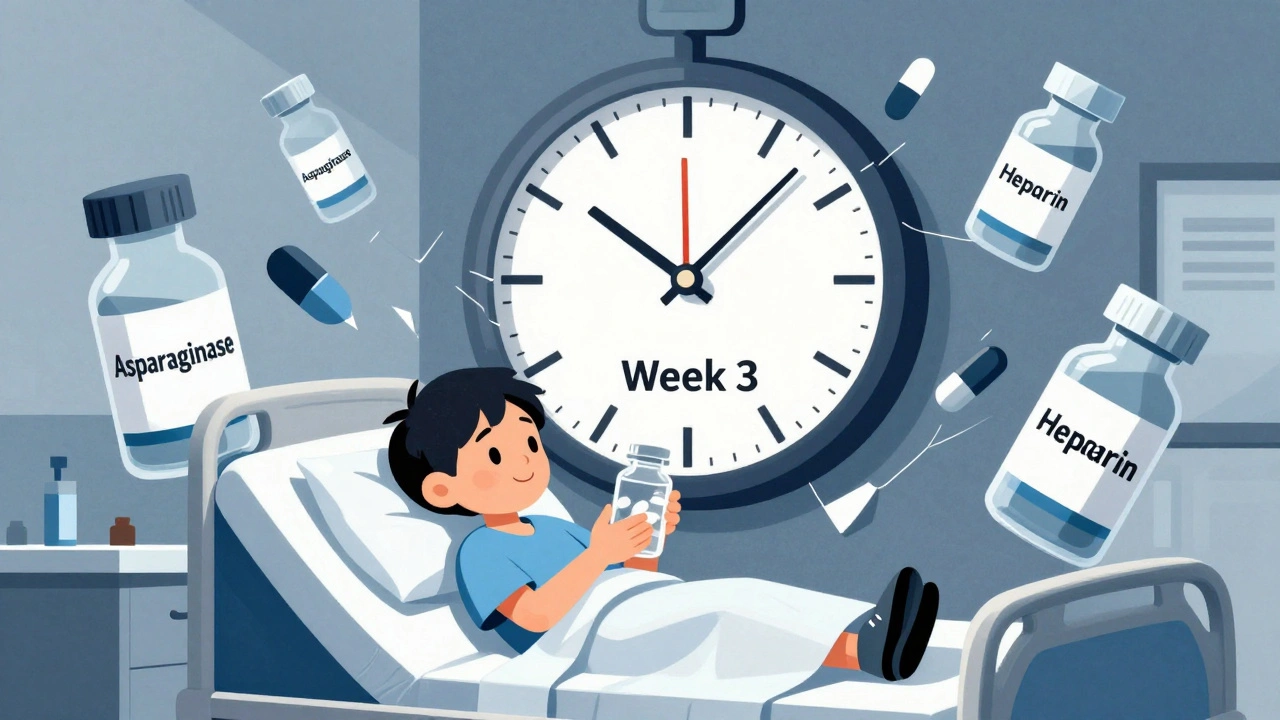
When a patient needs a life-saving drug and it’s simply not there, the consequences aren’t theoretical-they’re immediate. A child with leukemia waits weeks for asparaginase. A heart surgery patient gets a less reliable anticoagulant because heparin is gone. An elderly person with chronic pain skips doses because their opioid prescription can’t be filled. These aren’t rare exceptions. They’re daily realities in hospitals and clinics across the country.
What’s Really Going On With Drug Shortages?
Drug shortages aren’t new, but they’ve reached a breaking point. As of June 2025, there were still 253 active drug shortages in the U.S., down from a record 323 earlier in 2024. That might sound like progress, but it’s still far above the 187 shortages recorded in 2021. Most of these shortages started after 2022, meaning the problem is getting worse, not better. The issue isn’t one drug here or there. It’s systemic. About 83% of the shortages involve generic medications-drugs that cost pennies but are essential. Companies stop making them because the profit margin is too thin. A vial of IV saline might sell for $1.50, but the cost to produce, package, and ship it? Close to $1.40. Why invest in that when you can make more money elsewhere? Global supply chains are fragile. Nearly half of all shortages trace back to problems overseas-raw materials stuck at ports, factories failing inspections, or political instability disrupting production. Another third come from manufacturing quality failures. A single contaminated batch can shut down a plant for months. And when only one or two companies make a drug, there’s no backup. No redundancy. No safety net.How Shortages Hurt Patients Directly
It’s easy to think, “They’ll just use another drug.” But it’s never that simple. For cancer patients, switching from one chemotherapy drug to another isn’t just a substitution-it’s a gamble. Nelarabine, used for T-cell leukemia, has been in short supply for years. When it’s unavailable, doctors turn to alternatives that are less effective or more toxic. Treatment delays of 7 to 14 days can mean the difference between remission and relapse. In the ICU, anesthesia shortages force teams to use older, riskier drugs. Heparin shortages have led cardiac surgery centers to develop new anticoagulation protocols that increase procedure time by 22%. Longer surgeries mean higher infection risk, more blood loss, and longer recovery. Even common drugs like lorazepam or triamcinolone injections-used for seizures and inflammation-are often unavailable. Patients with chronic conditions end up skipping doses, cutting pills in half, or going without. A 2024 JAMA Network Open study found that patients are now skipping prescriptions or taking less than prescribed because they can’t get the medicine they need. And it’s not just physical health. The stress of not knowing if you’ll get your medication next month increases anxiety, depression, and non-adherence. One study found that 38% of patients complained directly about care disruptions during shortages.The Hidden Costs: Time, Errors, and Staff Burnout
Behind every shortage is a team of pharmacists, nurses, and administrators scrambling to keep up. Hospitals now monitor an average of 43 drug shortages at once. For pediatric units, that number jumps to 54. Each shortage demands 15 to 20 hours of staff time per week just to find alternatives, update protocols, train staff, and communicate with patients. That’s not overtime. That’s a full-time job on top of a full-time job. When a new drug is introduced as a substitute, error rates spike by 18.3%. Nurses give the wrong dose. Pharmacists mislabel bottles. Doctors prescribe based on outdated knowledge. In 2023, drug shortages were directly linked to a 43% increase in medication errors-up from 38% in 2019. Pediatric facilities are hit hardest. Kids don’t just need smaller doses-they need different formulations. A liquid version might be unavailable when only a tablet exists. A preservative-free version might be out of stock, forcing clinicians to use a riskier alternative. This complexity means pediatric units need 25% more staff time to manage the same shortages as adult hospitals. And the financial toll? Hospitals spent nearly $900 million in 2023 just on extra labor costs related to shortages. That doesn’t include the cost of more expensive substitute drugs, canceled procedures, or longer hospital stays.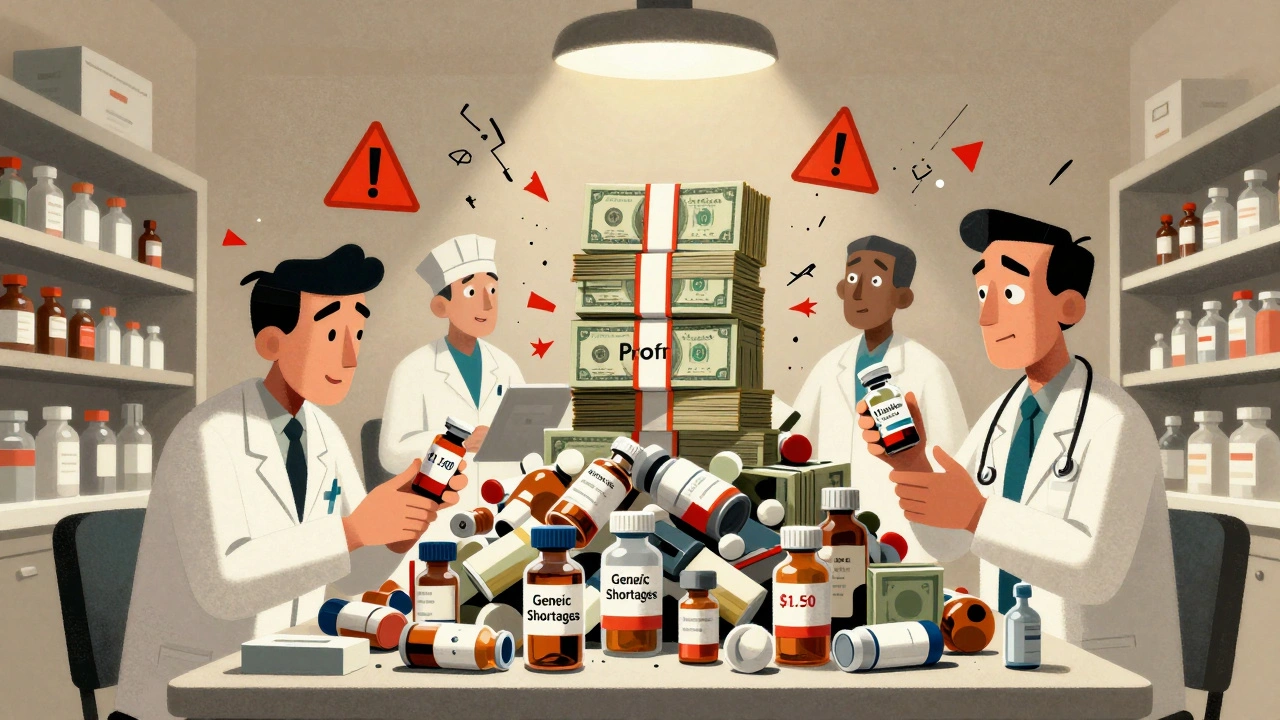
Who’s Being Left Behind?
The people most affected aren’t the ones with the best insurance or the most connections. They’re the uninsured, the underinsured, the elderly on fixed incomes, and those in rural areas with limited pharmacy access. Nearly 30% of Americans admit they’ve skipped or cut their medication because of cost. In Medicare, an estimated 1.1 million patients could die over the next decade because they can’t afford their prescriptions. Drug shortages make that crisis worse. When a drug disappears, the first to go are the cheapest, most generic versions. But those are the ones low-income patients rely on. Brand-name alternatives? Often cost 10 to 50 times more. A patient who paid $5 for a generic antibiotic now faces a $150 bill. Many just stop taking it. Children with rare diseases, cancer patients, and people with chronic pain are the most vulnerable. Their treatments are time-sensitive, precise, and non-negotiable. When the drug isn’t there, there’s no Plan B.What’s Being Done-And Why It’s Not Enough
The FDA now requires manufacturers to report potential shortages six months in advance. That sounds helpful. But in practice, many companies still wait until the last minute-or don’t report at all. The system is reactive, not proactive. Some hospitals have created shortage management teams. Others use real-time monitoring tools from group purchasing organizations like Vizient, which have helped save $300 million in inventory costs since 2023. But these are band-aids. They don’t fix the root problem: a broken economic model. The government has held hearings. Lawmakers have introduced bills. But no major policy has changed how generic drugs are priced or incentivized. Until manufacturers are paid fairly to make low-margin but essential medicines, shortages will keep coming. Some experts are pushing for onshoring-bringing production back to the U.S. and Australia. 78% of hospital systems plan to increase domestic manufacturing by 2027. That’s a step forward. But building new facilities takes years. And it won’t help the 83% of shortages that are generic drugs made overseas.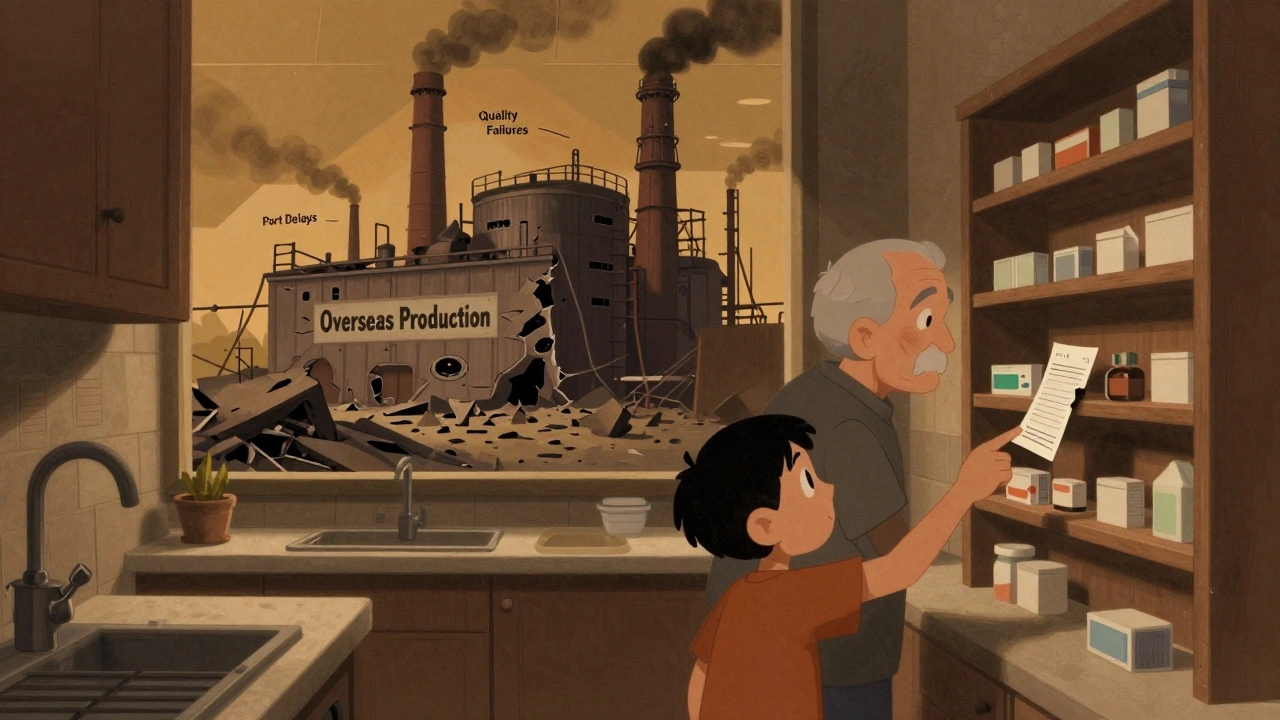
What Patients and Families Can Do
You can’t control the supply chain. But you can protect yourself.- Ask your doctor: Is this drug on shortage? If it is, ask for alternatives now-not when the pharmacy calls.
- Keep a written list of all your medications, including dosages and why you take them. Share it with every provider.
- Call your pharmacy weekly if you’re on a long-term medication. Don’t wait until your refill is due.
- If a substitute is offered, ask: Is it equally safe? Will it work the same way? Don’t assume it’s the same.
- Connect with patient advocacy groups. Many track shortages for specific conditions and share updates.
The Bottom Line
Drug shortages aren’t just an inconvenience. They’re a public health emergency. Every day, patients are delayed, substituted, or denied care because of a broken system. The numbers are clear: more errors, higher costs, longer waits, and avoidable suffering. The solutions exist-better pricing for generics, stronger supply chain oversight, investment in domestic manufacturing. But without political will and industry accountability, the problem will keep growing. If you or someone you love relies on medication, don’t wait for someone else to fix it. Stay informed. Ask questions. Advocate. Because when drugs aren’t available, lives are on the line.Why are generic drugs so often in short supply?
Generic drugs make up 83% of all shortages because they’re low-margin products. Manufacturers make little profit on them, so they stop producing them when costs rise or demand dips. If only one company makes a generic drug and it shuts down production, there’s no backup. The market doesn’t reward reliability-it rewards profit.
Can I get my medication from another country if it’s unavailable here?
Legally importing medications from other countries is extremely restricted in the U.S. and Australia. While some online pharmacies claim to sell FDA-approved drugs, most are unregulated and may sell counterfeit, expired, or contaminated products. The FDA warns against this practice. The safest route is to work with your doctor to find an approved alternative.
How do drug shortages affect children differently than adults?
Children often need specific formulations-liquid suspensions, smaller doses, or preservative-free versions-that aren’t made for adults. When a drug like IV saline or chemotherapy is in short supply, the pediatric versions are usually the first to disappear. Pediatric hospitals also require 25% more staff time to manage shortages because of the complexity involved.
Are there any drugs that are always in short supply?
Yes. Some drugs have been in chronic shortage for over five years, including asparaginase (used for leukemia), nelarabine (for T-cell cancers), and heparin (an anticoagulant). These are often complex to manufacture, have few suppliers, or are made with unstable raw materials. Even when production resumes, shortages can return within months.
What should I do if my pharmacy says my medication is out of stock?
Don’t just accept it. Ask: Is there a therapeutic alternative? Can another pharmacy get it? Can your doctor prescribe a different drug? Call your doctor immediately-they may have samples or know of a nearby supplier. Also check the ASHP drug shortage database for updates. Never skip doses without consulting your provider.

14 Comments
Just saw my neighbor’s kid get a chemo substitute last week. The nurse cried while explaining it. This isn’t policy-it’s human suffering, and we’re all just scrolling past it.
My mom’s on a drug that’s been out for 11 months. She’s 72. She doesn’t complain. But I do.
We need to stop treating medicine like a commodity and start treating it like a right.
People think drugs are like iPhones-you just order more when they run out. But making medicine isn’t about demand. It’s about profit. And when the profit’s gone, so’s the drug.
It’s not complicated. We’re letting corporations decide who lives and who doesn’t.
Why are we even surprised? India makes 70% of the world’s generics. You think we’re gonna risk our factories for $1.50 vials? Wake up. Capitalism doesn’t care about your grandma’s pills.
Stop acting like this is a US problem. It’s a global failure of incentives.
Did you know the FDA’s own database shows that 92% of drug shortages are linked to Chinese manufacturing? But no one talks about it because it’s ‘too political.’
Meanwhile, our hospitals are buying saline from companies that got fined for contamination last year. This isn’t a shortage-it’s a cover-up.
Someone’s getting paid to keep this quiet.
My sister’s a nurse in Ohio. She told me they had to use a 20-year-old anticoagulant because heparin was gone. One patient had a stroke. They didn’t even tell the family why.
They’re not trained for this. No one is. We’re putting nurses in impossible positions and calling it ‘resilience.’
Just say it: our system is broken.
I’ve been tracking this since 2020. The pattern is always the same: a single manufacturer shuts down, no backup, then a cascade. And the FDA’s six-month notice rule? Most companies file it two days before the drug vanishes.
It’s not about enforcement. It’s about the lack of financial incentive to maintain redundancy. We’ve optimized for efficiency, not survival.
And now we’re paying with lives.
Let’s be honest: if this were a luxury drug for the wealthy, there’d be a military convoy delivering it.
But since it’s a $1.40 vial for the poor, we treat it like a supply chain glitch. The moral calculus is clear: human life is only valuable if it’s profitable.
Capitalism has no conscience. Only spreadsheets.
It’s funny how we all get so mad about this, but no one wants to pay $2 more for a generic antibiotic. We want the drug. We want it cheap. We want it now. And then we’re shocked when it disappears.
It’s not a conspiracy. It’s a market failure. We’re the ones who made it this way by refusing to value what keeps us alive.
And now we’re all just waiting for the next one to go missing.
Parents, if your kid’s on a drug that’s been on shortage for years-like asparaginase or nelarabine-join the advocacy groups. They’re the only ones pushing for real change.
I used to think it was hopeless. Then I met a mom who drove 4 hours every week to get her daughter’s meds from a clinic that had a backup supplier.
She didn’t wait for the system. She built her own.
You can too. Start with the ASHP database. Save a life. It’s not magic. It’s just persistence.
my cousin got a new chemo drug last year because the old one was gone. it worked… kinda. but the side effects? nightmare. she lost her hair again, couldn’t eat, cried every night.
they didn’t even tell her it was a substitute until after she started.
we need transparency. not just ‘here’s your pill’ but ‘here’s why we’re giving you this and what it might do.’
also-why is it so hard to find a pharmacy that knows what’s in stock? i called 7 places before one had it.
we’re all just guessing now.
My aunt’s in a nursing home. She’s on lorazepam. Been out for 8 months. They gave her a different benzo. She got confused, fell, broke her hip.
They didn’t even call the family. Just said ‘she’s doing better now.’
That’s not better. That’s silence.
If you have someone on chronic meds, call their pharmacy every week. Don’t wait. Don’t assume. Be the annoying one. It saves lives.
I just lost my dad to a delayed surgery because he couldn’t get heparin. They told us it was ‘a logistical issue.’
Logistical issue. Like it’s a missed bus.
He was 68. He didn’t deserve to die because someone decided $1.50 wasn’t worth making.
Here’s what no one says: the reason we don’t fix this is because the people suffering aren’t the ones voting.
It’s the elderly. The uninsured. The rural. The poor.
And politicians? They don’t see them. They see stock prices.
So we keep pretending this is an anomaly.
It’s not. It’s the system working exactly as designed.
Why are we letting China control our medicine? We’re a superpower. We have the tech. We have the factories.
Bring it home. Ban imports. Make it here.
It’s not about trade-it’s about national security.
Our soldiers get fed. Our hospitals shouldn’t starve.