
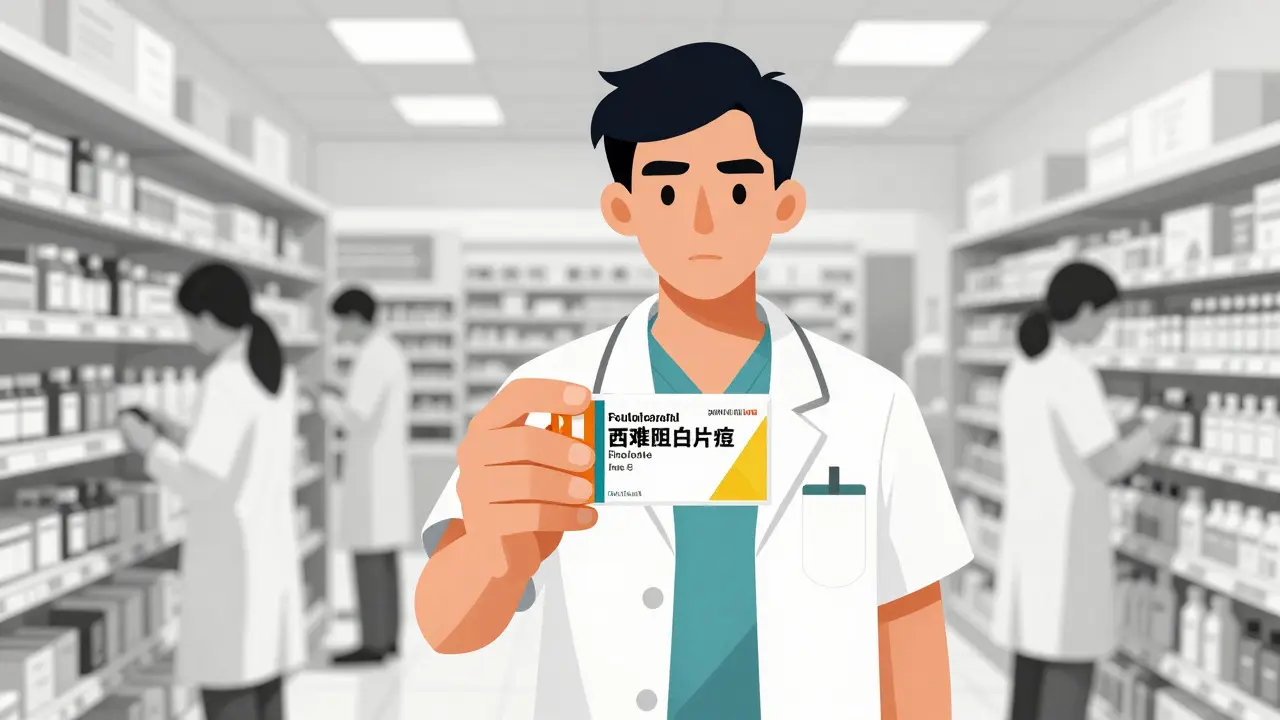
Every time you pick up a prescription, there’s a simple but powerful step you can take to avoid a dangerous mistake: confirm your name and medication on the prescription label. It’s not just a formality. It’s your last line of defense against a medication error that could land you in the hospital-or worse.
Imagine this: You’re tired after a long day. The pharmacy is busy. You grab the bottle, toss it in your bag, and head home. Later, you pop a pill without looking. That’s when you realize the label says your neighbor’s name. Or the strength is ten times higher than what your doctor prescribed. These aren’t rare stories. They happen more often than you think.
According to the Institute for Safe Medication Practices, about 25% of preventable medication errors are linked to incorrect labeling. That means one in four mistakes could have been stopped by someone just pausing for 30 seconds to check the bottle in their hand. You’re not just checking a label-you’re protecting your life.
What Every Prescription Label Must Include
By law, every prescription label in the U.S. must have six key pieces of information. If any of these are missing, wrong, or unclear, speak up. Here’s what you should see:
- Your full legal name (first and last-sometimes middle initial too)
- The exact name of the medication (both brand and generic, if applicable)
- The strength (like “5 mg” or “500 mg”)
- The dosage form (tablet, capsule, liquid, etc.)
- How to take it (e.g., “Take one tablet by mouth twice daily”)
- The pharmacy’s name, phone number, and address
There’s also a 10- or 11-digit number called the NDC (National Drug Code). It’s not for you to remember, but it helps the pharmacy track the exact batch of medicine you got. If you’re ever in doubt, ask the pharmacist to read the NDC off the bottle and compare it to the box.
Labels must also include warnings like “May cause drowsiness” or “Do not drink alcohol.” If you don’t see one for a medication you know has side effects, ask why.
The 30-Second Verification Checklist
You don’t need to be a doctor or a pharmacist to spot a mistake. You just need to follow these six steps every single time you get a new prescription.
- Hold the bottle at eye level. Don’t glance at it while walking. Stand still. Use good lighting-natural daylight or a bright lamp works best. The FDA recommends at least 500 lux of light to read labels clearly.
- Check your name. Is it spelled exactly how you gave it to the pharmacy? If your name is Maria Lopez and the label says “Mary Lopez,” that’s a red flag. Even a typo can mean someone else’s medicine.
- Match the medication name. Did your doctor say “lisinopril”? Is that what’s on the label? Or does it say “Zestril”-the brand name? Both are correct, but you need to know they’re the same. If you’re unsure, ask: “Is this the same as what my doctor called for?”
- Confirm the strength. This is where most errors happen. A “5 mg” pill is not the same as a “50 mg” pill. One could be harmless. The other could be deadly. Look closely. Is the “5” followed by a “0”? Is the “mg” clearly written?
- Read the directions. “Take one daily” is very different from “Take one every 6 hours.” If the directions don’t match what your doctor told you, don’t take it. Call the pharmacy or your doctor right away.
- Check the pharmacy’s contact info. If the phone number is smudged or missing, that’s a sign the label might have been printed incorrectly. A legitimate pharmacy will always include this.
Do this every time-even if it’s the same medicine you’ve taken before. Pharmacies sometimes switch manufacturers, and the pill might look different. Colors, shapes, and sizes change. That’s normal. But your name and dosage shouldn’t.
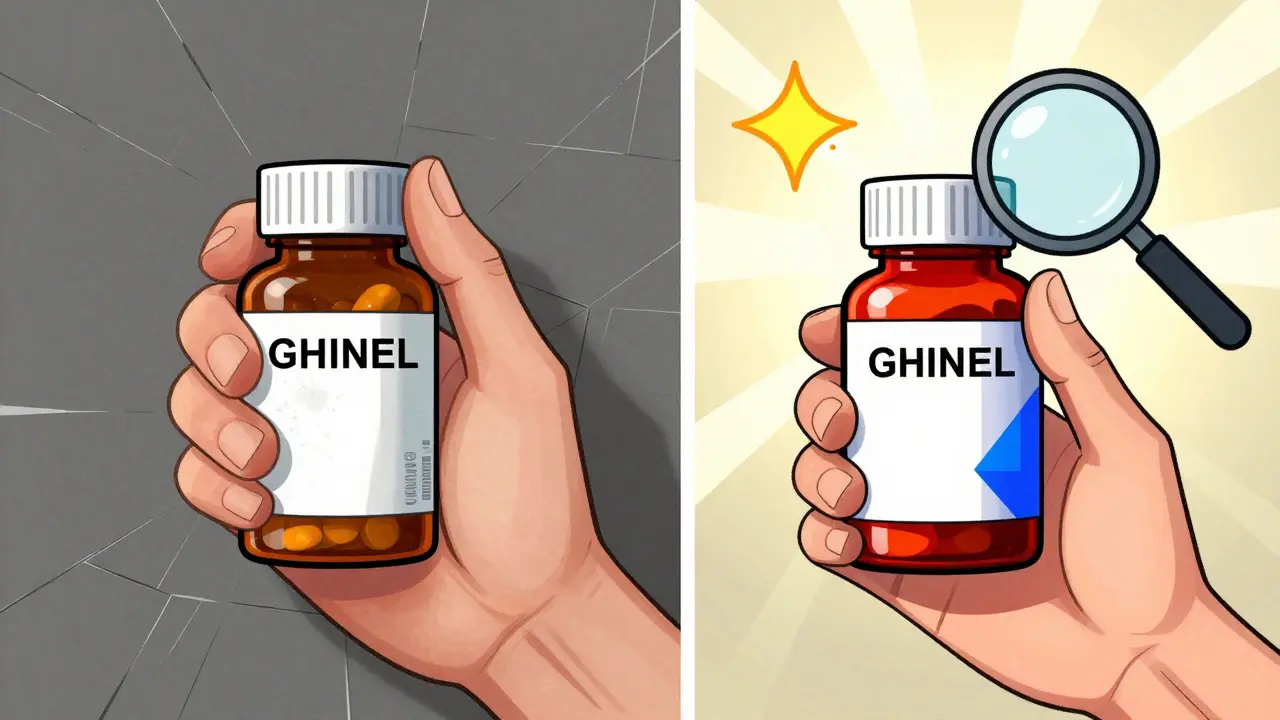
Common Mistakes and Real-Life Examples
People don’t always catch errors because they assume the pharmacy got it right. But mistakes happen. Here are the most common ones-and how real people caught them.
- Wrong strength: A Reddit user named NurseInTX caught her mom’s blood thinner labeled as 10 mg instead of 5 mg. She’d written down the correct dose. Without checking, her mom could have had a dangerous bleed.
- Wrong patient: One person on Drugs.com took their roommate’s blood pressure pill because the label had their name-but the pill looked different. The pharmacy had accidentally printed the wrong label. The roommate had a different condition entirely.
- Similar names: “Hydroxyzine” and “Hydralazine” sound alike but treat completely different things. One is for anxiety. The other is for high blood pressure. A 2023 survey found 22% of patients struggled with names that looked or sounded too similar.
- Small print: A 2022 CDC study found 12.7% of adults over 40 have trouble seeing small text. Many pharmacies now offer large-print labels on request. Always ask.
The National Patient Safety Foundation surveyed 2,500 people. 18% said they’d found an error on their own label in the past year. Most of those errors were caught before the medicine was taken. That’s the power of checking.
What to Do If You Spot an Error
If you see something wrong-don’t ignore it. Don’t assume it’s a typo. Don’t take the medicine and hope for the best.
Here’s what to do:
- Don’t leave the pharmacy. If you’re still there, tell the pharmacist immediately. Say: “I think there’s an error on this label.” They’re trained to fix this.
- Ask to see the original prescription. Pharmacists can pull up what the doctor ordered. Compare it to the label side by side.
- Call your doctor if needed. If the pharmacy says it’s correct but you’re still unsure, call your doctor’s office. Ask: “Did you prescribe [medication name] at [strength] for [condition]?”
- Get a replacement. Pharmacies are required to fix the mistake at no cost to you. Never accept a wrong label just to save time.
Some people worry about sounding like they’re accusing the pharmacist. Don’t. They want you to check. In fact, the American Medical Association passed a resolution in 2021 urging doctors to tell patients: “Always verify your label.”
Helpful Tools and Resources
You don’t have to do this alone. There are tools and services to make verification easier.
- Large-print labels: Ask for them. CVS and Walgreens have them available in 78% and 65% of locations, respectively.
- Smartphone magnifiers: Turn on the built-in magnifier on your iPhone or Android. Point the camera at the label. It’s free and works instantly.
- Medication apps: Apps like Medisafe or GoodRx let you scan barcodes and store your meds digitally. But they’re supplements-not replacements-for checking the physical label.
- Free helplines: The American Pharmacists Association offers a Medication Safety Helpline at 1-800-987-7856. Call if you’re confused about a label.
- FDA’s guide: The FDA updated its “How to Read a Prescription Label” guide in March 2023. It’s free online and includes clear images of what to look for.
If you manage five or more medications, you’re in a higher-risk group. The University of Florida found these patients need 20% more time to verify each label. That’s okay. Take the time. Use a checklist. Keep a written list of your meds with doses and reasons-update it every time something changes.
Why This Matters More Than Ever
In 2025, the FDA is rolling out new rules to make prescription labels clearer. By the end of the year, all labels must use 24-point font for your name and medication-much larger than before. That’s because they know how many people miss critical details.
States are stepping up too. California now requires labels in five non-English languages. New York requires extra counseling for opioid prescriptions. These aren’t just rules-they’re lifesavers.
The bottom line? Your pharmacist is trained to fill prescriptions. But they’re not mind readers. They can’t know if your doctor changed your dose last week. They can’t know if you’re taking a new medicine that interacts with this one. You are the final safety check. And that’s not a burden-it’s your right.
Every year, an estimated 1.5 million people in the U.S. suffer harm from medication errors. Most of them are preventable. You don’t need a degree. You don’t need special tools. You just need to pause. Look. Read. Ask.
That bottle in your hand? It’s not just medicine. It’s your health. Make sure it’s yours.
What if my name is spelled wrong on the prescription label?
If your name is misspelled-even by one letter-you should not take the medication. This is a serious error that could mean you’re getting someone else’s medicine. Return to the pharmacy immediately and ask them to reprint the label with your correct legal name. Pharmacies are legally required to fix this at no cost to you.
Can I trust the medication if the pill looks different from last time?
Yes, but only if the label is correct. Pills change color, shape, or size when the manufacturer changes-even if the medicine is the same. Always check the name, strength, and dosage on the label. If those match what your doctor prescribed, it’s safe. If you’re unsure, ask the pharmacist to confirm the generic name and NDC number.
Do I need to check the label even if I’ve taken this medicine before?
Yes. Medications can be refilled from different manufacturers, which changes how the pill looks. Doses can be adjusted without you being told. The label is your only reliable source of truth each time you pick up a prescription. Never assume it’s the same as last time.
What should I do if the pharmacy refuses to fix a labeling error?
If the pharmacy refuses to correct a label error, ask to speak with the pharmacist-in-charge. If they still won’t help, contact your state’s Board of Pharmacy. You can also report the issue to the FDA’s MedWatch program. Your safety is not optional. Pharmacies are legally obligated to provide accurate labels.
Is it safe to use a smartphone app to scan my prescription label instead of reading it?
Apps like Medisafe or GoodRx can help you track your medications and remind you when to take them, but they are not a substitute for reading the physical label. Apps can misread barcodes or pull outdated data. The label on the bottle is the official, legally binding source of information. Always verify the physical label first.
Are there special labeling rules for older adults or people with vision problems?
Yes. The American Pharmacists Association recommends labels use at least 12-point font, and many pharmacies now offer large-print or bold labels on request. By 2025, FDA rules will require 24-point font for patient names. If you have trouble reading small print, ask your pharmacist for a magnifier or a printed copy with larger text. Many CVS and Walgreens locations have magnifying stations at the pickup counter.



11 Comments
So basically, we’re supposed to become amateur pharmacists now? I get it, safety’s important, but this feels like blaming the patient for a system that’s broken. My mom got the wrong pill last year and the pharmacy just shrugged. They didn’t even apologize. Now I have to stand there like a detective just to not die? Thanks, capitalism.
Also, why does the FDA care about font size but not about staffing pharmacies properly? I’m tired of being the last line of defense when the first ten lines collapsed years ago.
This is so important! 💖 Every single person reading this needs to pause and take a deep breath before taking any pill. I’m a nurse in Texas, and I’ve seen too many close calls. One letter wrong, one zero misplaced - it changes everything. Please, please, please check your label. It takes 30 seconds, and it could save your life or someone you love. You’ve got this! 🙌
OMG I CAN’T BELIEVE WE HAVE TO DO THIS 😭😭😭
Like, in America, we’re supposed to trust our doctors and pharmacists, right? But NOOOO - now we gotta be our own personal FDA agents?! 🇺🇸🔥
And don’t even get me started on how pharmacies in other countries just hand out pills like candy. We’re the land of the free… and the land of the ‘please verify your name or you might die.’
Also, why is my name spelled ‘Johanna’ on the label when I’m Joann?! IS THIS A CULTURAL WAR?! 😤
While the checklist is superficially sound, it fails to address the systemic pharmacovigilance gap. The NDC verification protocol is non-standardized across EHR platforms, and the absence of blockchain-based prescription integrity checks renders manual verification a heuristic at best. Moreover, the FDA’s 24-point font mandate is a classic example of symptom management rather than root cause intervention - the real issue lies in the fragmentation of pharmacy workflow automation.
Also, you didn’t mention the risk of polypharmacy interaction misattribution, which increases exponentially with each additional medication. The checklist is inadequate without a medication reconciliation algorithm.
Actually, the FDA doesn’t require the generic name to be listed - only the brand name is mandatory. You’re misinformed. The ‘exact name of the medication’ isn’t even a legal requirement on the label. That’s a common myth. The NDC is the only legally binding identifier. If you’re not checking the NDC against the original prescription, you’re wasting your time. And yes, I’ve audited 300+ pharmacy labels. I know.
I just want to say - thank you. Honestly. I’m 68, and I’ve been taking the same blood pressure pill for 12 years, and I never checked the label after the first time. I thought, ‘Oh, it’s the same blue pill, it’s fine.’ Then one day, I looked closer - the strength had changed from 25mg to 50mg, and I had no idea. I almost died. I called my doctor, they were horrified. I’ve been checking every single time since. I don’t care how tired I am. I don’t care if the line is long. I don’t care if the pharmacist sighs. I check. And I will keep checking. Because my life is worth 30 seconds. And yours is too.
Please, for your mom, your dad, your partner, your kid - just pause. Look. Read. Breathe. You’re not being paranoid. You’re being smart.
Thank you for writing this. I wish I’d seen it ten years ago.
lol i once took my roommate's thyroid med because the bottle looked similar and i was half-asleep. turned out it was a 5x stronger dose. woke up at 3am with my heart trying to escape my chest. i called poison control. they were chill. said 'hey, you're lucky you didn't keel over.'
now i always read the label. even if it's the same med. even if i've had it for 5 years. even if the pharmacist says 'it's fine.'
also, yes, the pill looks different. that's normal. but my name better be spelled right.
ps: i use my phone's magnifier. it's a game changer.
pps: i'm not a doctor. i'm just a guy who almost died because he trusted too much.
Wait - you’re telling me I have to verify my name, the medication, the strength, the dosage, the directions, AND the pharmacy info - every single time - even if I’ve taken this exact pill for seven years? And if I don’t, I’m risking death? That’s not safety - that’s institutional gaslighting. Why is the burden of error-checking placed entirely on the patient? Why aren’t pharmacies required to double-confirm with the prescriber before dispensing? Why aren’t there automated cross-references between EHRs and pharmacy systems? Why do I have to be the human firewall for a broken system? This isn’t empowerment - it’s exploitation dressed up as advice.
Also, I’m pretty sure the FDA doesn’t require ‘large print’ as a standard - it’s a request. So you’re telling me I have to beg for readable text? Brilliant. Just brilliant.
Respectfully, the approach outlined is commendable but culturally impractical in many regions. In India, pharmacies often operate with minimal staffing and no digital integration. Patients frequently receive medications from small-town shops where labels are handwritten. The concept of an NDC or FDA-compliant label is irrelevant. Here, verification means asking the shopkeeper, ‘Is this the same as last time?’ - and hoping for the best. We need systemic reform, not individual vigilance. A checklist is useless if the system is designed to fail.
Wow. So now I need to become a pharmaceutical auditor just to get my antidepressants? This is peak late-stage capitalism. The real issue is that we’ve outsourced our healthcare to profit-driven corporations and now expect patients to police their own safety. How about we fix the system instead of making everyone paranoid? Also, I don’t have 30 seconds. I have a job. And a life. And a therapist who says I already worry too much. So I’ll just take the pill and hope.
Also, I didn’t know I needed a 500 lux lamp to read a label. Next you’ll tell me I need to calibrate my monitor for optimal pill readability.
Let’s be real - 90% of these ‘errors’ are either patient miscommunication or self-inflicted confusion. You think your doctor prescribed 5mg? Maybe they didn’t. Maybe you misheard. Maybe you’re mixing up meds from different bottles. You don’t need a checklist - you need to stop being lazy and start paying attention. Also, why are you trusting a pharmacy that prints your name wrong? That’s not the pharmacy’s fault - that’s YOUR fault for not double-checking your info at the counter. You’re not a victim. You’re negligent. And now you want a 24-point font? Grow up.