
Tramadol Seizure Risk Checker
Risk Assessment
This tool helps you understand your individual risk of seizures when taking tramadol based on your medical history and current medications.
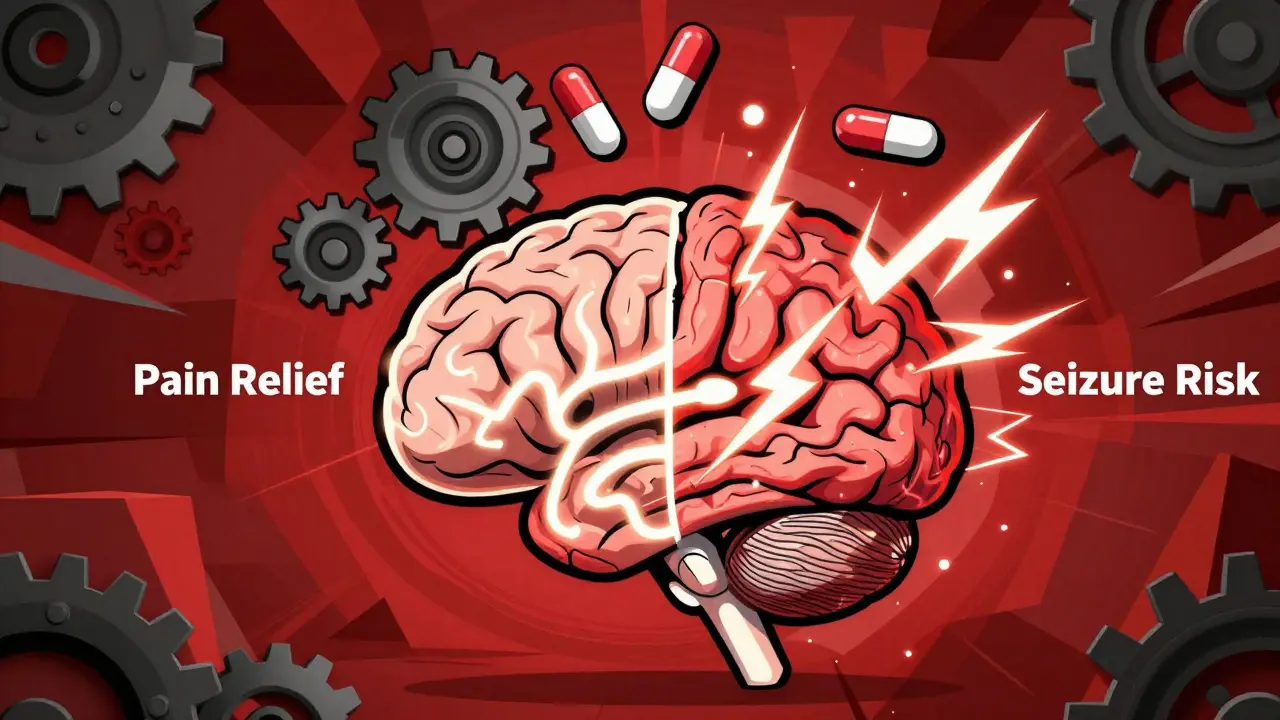
When you're in pain, finding relief is the priority. But for people with seizure disorders, one common painkiller - tramadol - can turn from a solution into a serious danger. Even at normal doses, tramadol can lower your seizure threshold, meaning it makes it easier for your brain to have a seizure. This isn't rare. It's well-documented. And it's not just about overdosing. People taking the right amount, as prescribed, have still had seizures because of it.
How Tramadol Triggers Seizures
Tramadol isn't like other opioids. Most opioids, like morphine or oxycodone, work mainly by binding to opioid receptors in the brain. Tramadol does that too - but it also messes with two other brain chemicals: serotonin and norepinephrine. It blocks their reuptake, which means more of them stick around in your brain. That's why it helps with nerve pain and even some types of depression. But here's the catch: too much serotonin and norepinephrine can overexcite brain cells. And when brain cells fire too fast, too wildly, that's when seizures happen.
Studies show this effect isn't linear. At low doses, tramadol might even calm seizures in animal models. But once you hit therapeutic or higher doses, the balance flips. The same drug that helps pain can start sparking seizures. This flip happens because of its dual action - opioid plus serotonin/norepinephrine effects - something no other commonly used opioid has.
Who's at Risk?
If you already have epilepsy or a history of seizures, tramadol is off-limits. Period. Major medical groups like UCSF's Pain Management Education program explicitly say: "Tramadol lowers the seizure threshold and should not be used in patients with seizure disorders." This isn't a suggestion. It's a hard rule.
But risk doesn't stop there. Even if you've never had a seizure, other factors can put you in danger:
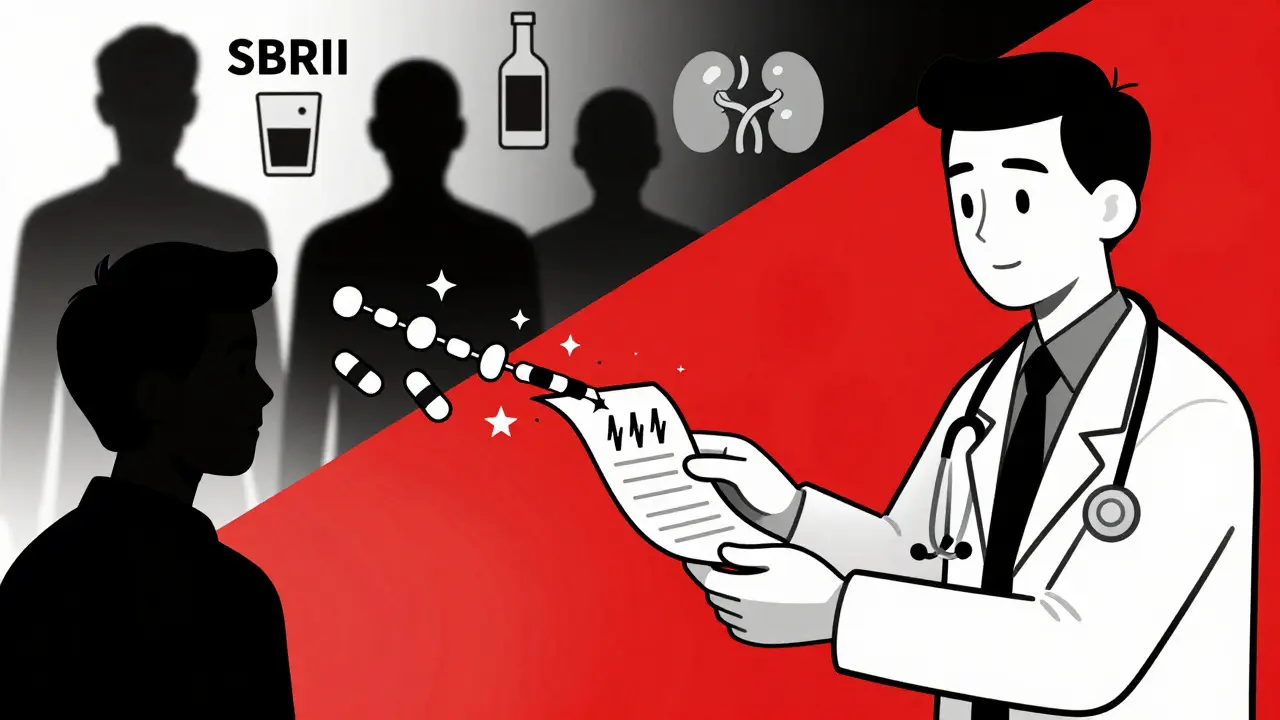
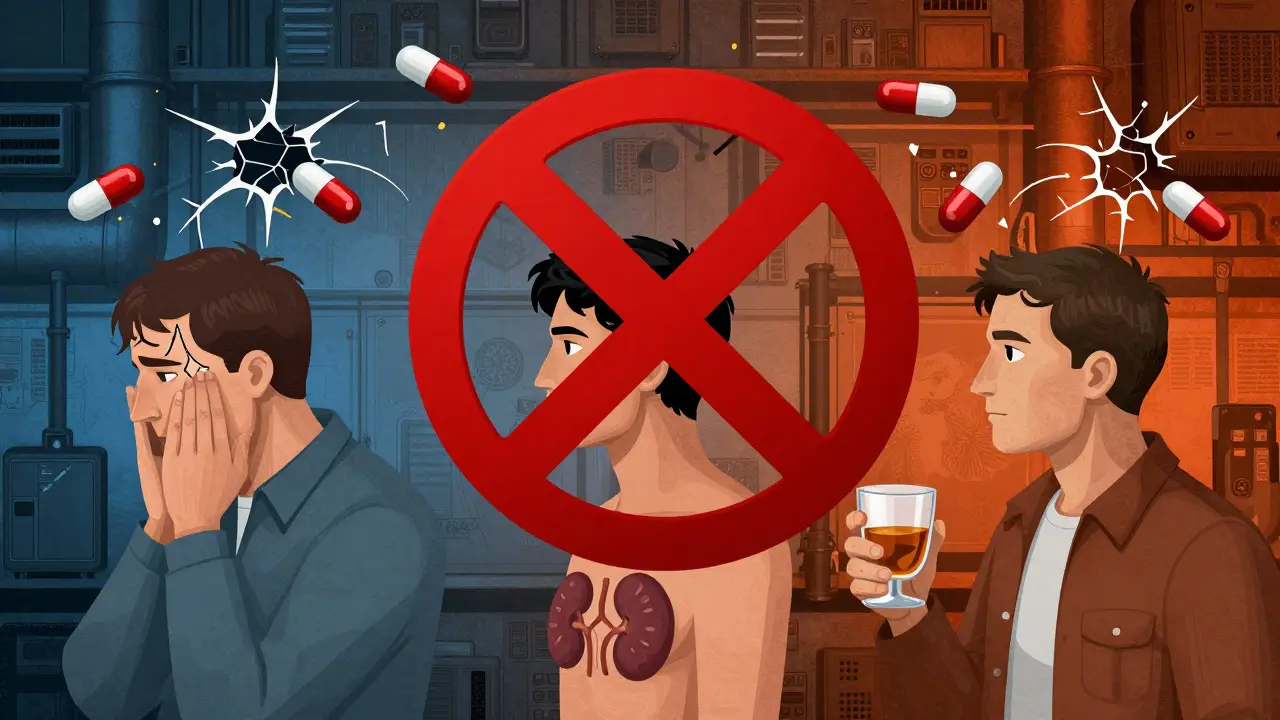
- Drug interactions: Tramadol mixed with SSRIs (like sertraline), SNRIs (like venlafaxine), tricyclic antidepressants (like amitriptyline), or antipsychotics (like risperidone) can spike serotonin levels dangerously. Three patients in one study had seizures while taking tramadol with tricyclic antidepressants - two of them when their tramadol dose was increased.
- Alcohol use: Mixing tramadol with alcohol is a recipe for trouble. It doesn't just increase sedation - it lowers your seizure threshold even more.
- Kidney problems: If your kidneys aren't working well, tramadol builds up in your body. One patient with renal failure had a seizure after receiving 300mg IV - well below the maximum dose, but too much for their body to clear.
- High doses: While seizures happen at normal doses, they're more common above 400mg/day. Still, 13 out of 28 patients in a 3-year study had seizures even though they weren't abusing the drug - they were taking it as prescribed.
Most cases occur within 24 hours of taking tramadol. One study found 89.3% of seizures happened in that first day. That’s why it's so dangerous - you might not even connect the seizure to the painkiller you took the day before.
Real Cases, Real Risks
A 42-year-old woman with no prior seizures started taking 75mg of tramadol daily for chronic back pain. Within three days, she had a tonic-clonic seizure. Her EEG showed temporary brain changes, but everything returned to normal a week later. She wasn't taking anything else. She wasn't overdosing. She was just on a normal dose.
Another case involved a man with a history of seizures from a childhood head injury. He was prescribed 400mg/day of tramadol for post-surgery pain. Within 24 hours, his seizure frequency tripled. He wasn't mixing drugs. He wasn't drinking. He was following his doctor's orders. And it still triggered a crisis.
These aren't outliers. A 2013 study of 28 people with tramadol-induced seizures found 16 of them (57%) were also taking other medications known to lower seizure thresholds. That’s more than half. Polypharmacy - taking multiple drugs at once - is a major red flag.
Why This Isn't Just an Overdose Problem
Many people assume seizures from drugs only happen when someone takes too much. That's not true with tramadol. The Medsafe report from New Zealand found that seizures occurred at recommended doses - not just overdoses. One patient took 400mg daily, the maximum allowed, and had a seizure. Another took 75mg - less than half the daily limit - and still seized.
Even more troubling: tramadol became the second most prescribed opioid in 2013. Between 2008 and 2013, prescriptions rose 88%. During the same time, emergency room visits for tramadol-related problems jumped 250%. That’s not coincidence. More prescriptions = more seizures.
That’s why the FDA reclassified tramadol as a Schedule IV controlled substance in 2014. It wasn't just about addiction. It was about the seizure risk. And the evidence keeps piling up.
What Should You Do?
If you have epilepsy, a history of seizures, or even just one unexplained seizure in your past - do not take tramadol. Tell every doctor you see. Write it on your medical alert bracelet. If you're already on it and have seizures, talk to your doctor immediately. Don't stop cold turkey - withdrawal can also trigger seizures. But get off it safely, under supervision.
If you're a caregiver or family member, watch for signs: sudden muscle jerks, confusion, staring spells, loss of awareness. These can be subtle. They don't always look like a full-blown convulsion.
There are safer alternatives. For nerve pain, gabapentin or pregabalin are often better choices. For general pain, acetaminophen or NSAIDs (if appropriate) may work. For chronic pain, physical therapy, nerve blocks, or non-opioid options like duloxetine can be effective - without the seizure risk.
The Bottom Line
Tramadol is not safe for anyone with a seizure disorder. It’s not a "maybe." It’s not "only if you’re careful." It’s a hard contraindication. The science is clear. The cases are real. The risk exists even at normal doses. And the consequences can be life-changing.
If you're being prescribed tramadol and have any history of seizures - ask for another option. If your doctor says it's fine - get a second opinion. Your brain is worth protecting.



15 Comments
As someone from Nigeria where tramadol is often sold over the counter without a prescription, I’ve seen too many young people end up in the hospital after taking it for back pain or even just to "feel better." The real tragedy isn’t just the seizures-it’s how little awareness there is. In rural areas, pharmacists hand it out like candy, and no one explains the risk. I’ve personally sat with families whose loved ones had their first seizure after taking tramadol for a sprained ankle. We need community education, not just medical warnings. It’s not enough to say "don’t take it"-we need to replace it with accessible alternatives, and that’s a systemic issue, not just an individual one.
My cousin, a nurse in Lagos, started a small awareness campaign using local radio and Pidgin English. The response was overwhelming. People finally understood: this isn’t about being "weak" or "overreacting." It’s about brain chemistry. We’re not just fighting a drug-we’re fighting ignorance. And yeah, I’m still mad that it took a near-death experience for my family to even hear this.
But progress is possible. We just need to talk about it in ways that actually reach people.
The pharmacological mechanism described here is rigorously accurate: tramadol’s dual inhibition of serotonin and norepinephrine reuptake, coupled with mu-opioid agonism, creates a neurochemical milieu uniquely prone to cortical hyperexcitability. The nonlinearity of seizure threshold reduction is particularly compelling-subtherapeutic doses may exert anticonvulsant effects via opioid-mediated GABAergic modulation, while therapeutic doses tip the balance toward glutamatergic excitotoxicity. This biphasic pharmacodynamics is absent in classical opioids and explains why standard risk assessments fail to capture tramadol’s specific danger.
Moreover, the temporal clustering of seizures within 24 hours aligns with the pharmacokinetics of tramadol’s active metabolite, O-desmethyltramadol (M1), which has a longer half-life and higher mu-receptor affinity than the parent compound. This delayed peak effect further complicates causal attribution in clinical settings. The data from the 2013 study, while retrospective, remains methodologically sound and reinforces the need for prospective cohort studies in polypharmacy populations.
Tramadol = serotonin syndrome + lowered seizure threshold. Double whammy. If you’re on SSRIs/SNRIs, don’t even think about it. Period. There are 12+ safer options for chronic pain-gabapentin, duloxetine, even low-dose naltrexone. Why risk a brain storm when you can get relief without the neurologic gamble?
Also: kidney impairment = tramadol accumulation = seizure risk amplified. Always check eGFR. Always. This isn’t opinion. It’s pharmacology 101.
So… you’re saying if I take tramadol for my back pain and I’ve never had a seizure before, I might just randomly have one? Like, outta nowhere? 😳
That’s wild. I mean… I’ve been on it for 3 years. Maybe I’m just lucky? 🤔
I’m so glad this post exists. My mom had a seizure after starting tramadol for arthritis-she’d never had one before. We thought it was a stroke. Turns out? Tramadol. The doctor was shocked. Said it was "rare."
It’s not rare. It’s underreported. And people need to know. 💙
Also, I’m Nigerian-American, and this hits home. In our community, pain meds are seen as "just pills." No one talks about the brain risks. We need to change that.
Stop whining. If you can’t handle pain, don’t take drugs. Just deal with it. Tramadol’s been around for decades. People have been using it fine. You’re just scared of real pain.
Also, epilepsy? That’s your problem. Don’t blame the medicine.
tramaadol? like the one they sell in nigeria? lol. they got a whole black market for it. people take 10 pills at once to get high. ofc they seizure. duh. this is just fearmongering. if you dont take too much u fine. stop being so weak.
I’ve been on tramadol for fibromyalgia for six years. Never had a seizure. Never even felt weird. Maybe it’s because I’m careful? Or maybe I’m just one of the lucky ones? I know people who’ve had bad reactions, but… I don’t know. I’m not ready to give it up. I don’t want to go back to the days of just sitting there in pain.
Is there a test? Like, can you get checked to see if you’re at risk?
I think it’s sad how easily we dismiss people’s pain. You say "don’t take it" like it’s so simple. But what if your pain is unbearable? What if every other option failed? What if you’ve tried everything and this is the only thing that gives you five hours of relief?
It’s not black and white. People aren’t just ignoring warnings-they’re desperate. And we’re just telling them to suffer.
Maybe the real problem isn’t the drug. Maybe it’s that we don’t have better options.
Tramadol’s seizure risk is real, but let’s not pretend it’s the only opioid with neuro risks. Fentanyl? Respiratory depression. Oxycodone? Addiction spiral. Morphine? Sedation overload. We need to stop acting like tramadol is the villain and start asking why we’re overprescribing opioids at all.
The answer isn’t just "don’t use tramadol." It’s "stop using opioids for chronic non-cancer pain."
Non-pharmacological interventions work better long-term anyway. Physical therapy. CBT. Mindfulness. They’re not sexy. But they’re real.
It is imperative to underscore that the pharmacovigilance data surrounding tramadol-induced seizure activity remains underrepresented in global pharmacoeconomic models, particularly in low- and middle-income countries where regulatory oversight is attenuated. The assertion that "seizures occur at therapeutic doses" is not merely statistically valid-it is a systemic failure of prescriber education and pharmacological literacy. The FDA’s Schedule IV reclassification was a tepid response to an escalating public health crisis. We require mandatory CME modules for prescribers, real-time EHR alerts, and public health campaigns modeled after the CDC’s opioid safety initiative. This is not a clinical nuance-it is a public health imperative.
My dad took tramadol for years after his hip replacement. Never knew about the risk. He had a seizure at 72. Scared us all to death.
But here’s the thing-he’s doing way better now on gabapentin. No more seizures. Less drowsiness. Even his mood improved.
Just saying: there’s hope. And better options. Talk to your doctor. Don’t panic. But don’t ignore it either.
As a clinical pharmacist with 18 years of experience, I can confirm that tramadol-induced seizures are significantly underdiagnosed. Many cases are labeled as "unexplained seizure" or "possible metabolic encephalopathy." We need standardized reporting protocols and mandatory pharmacogenetic screening for CYP2D6 ultra-rapid metabolizers-especially in patients with comorbid depression or renal impairment.
The 2013 study you cited is one of the few that controlled for polypharmacy. We need more of this rigor.
so like… if i take tramadol and i dont have seizures am i just immune? lol. sounds like fake science to me. people get seizures from everything. coffee. stress. bad dreams. why is this drug the bad guy?
This is so important. I’ve been a caregiver for someone with epilepsy, and I can’t tell you how many times we almost missed the link between meds and seizures. Thank you for laying this out so clearly.
Also-please, if you’re on tramadol and you’re scared, reach out. You’re not alone. There are communities out there that get it. And there are safe alternatives. You don’t have to suffer.