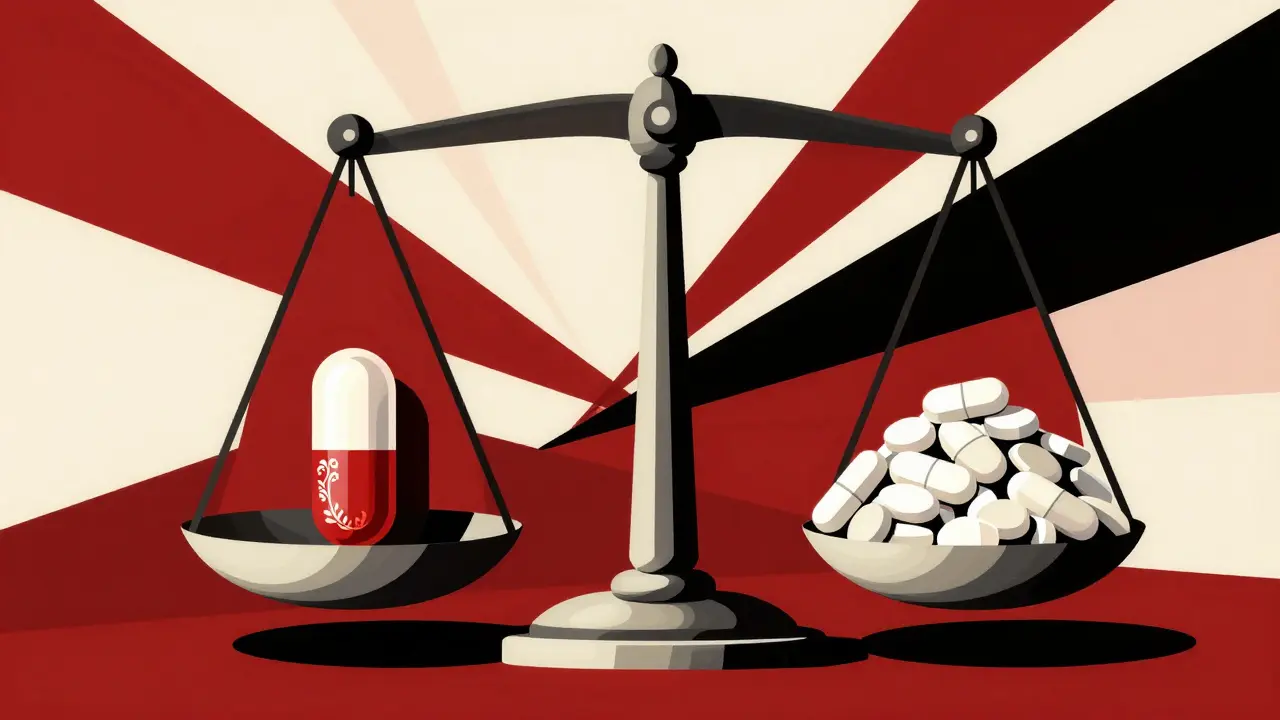
Ever wonder why a medication that is dirt cheap in India might cost a fortune in the US, or why a pharmacist in the UK automatically swaps your brand-name pill for a generic one while a doctor in Switzerland doesn't? It seems like a simple concept: a patent expires, a cheaper version hits the market, and everyone saves money. But in reality, the global map of generic drug availability is a messy web of regulatory hurdles, pricing wars, and quality gaps.
Depending on where you land, you might find that 90% of the pharmacy shelf is filled with generics, or you might be stuck paying a premium for an original brand because the local laws make it nearly impossible for competitors to enter the market. This isn't just about money; it's about how different countries define "equivalent" medicine and who they trust to make it.
| Country | Generic Prescription Volume | Competition Intensity (2+ Manufacturers) | Market Dynamic |
|---|---|---|---|
| United States | ~90% | 66% | High volume, high prices |
| United Kingdom | 83% | 50% | Strong mandatory substitution |
| Switzerland | 17% | Low | Brand-name preference |
| India | High | Very High | Global production hub |
The Regulatory Wall: Why Some Drugs Don't Move
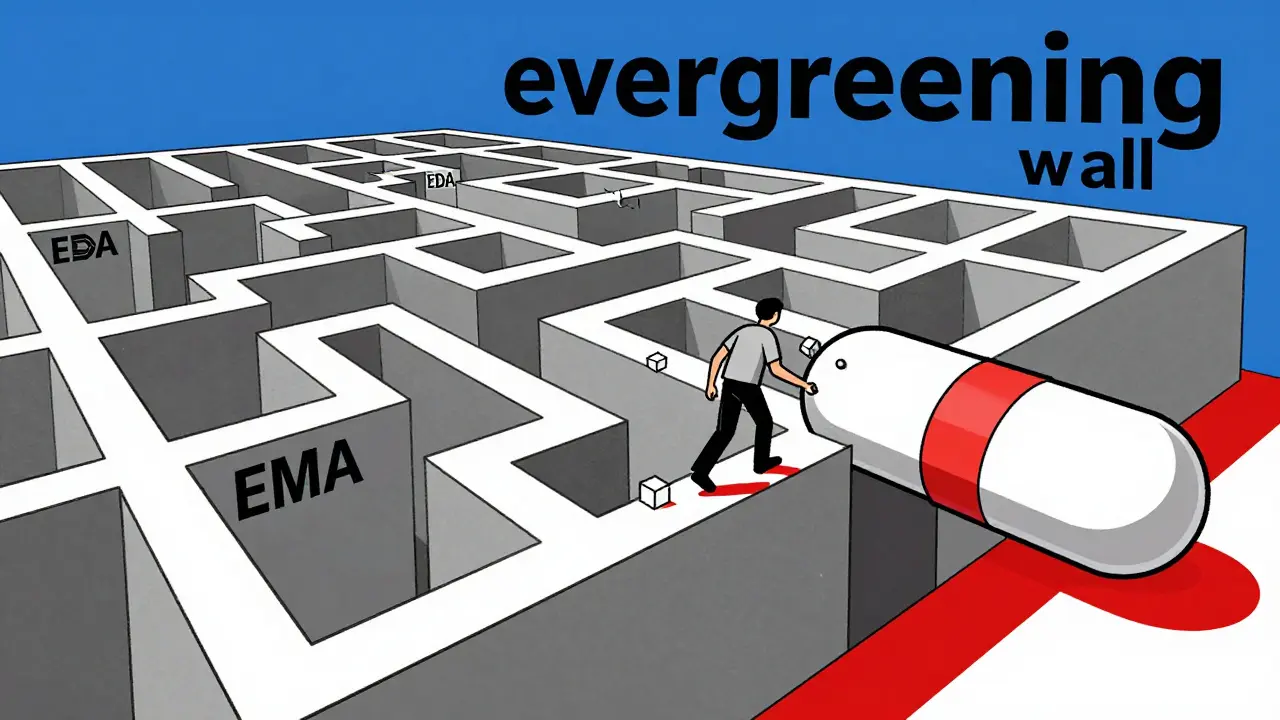
The biggest reason you can't get a specific generic in your home country is often a piece of paper. Every country has its own gatekeeper. In the US, the Food and Drug Administration (FDA) is the boss, requiring generics to prove bioequivalence-meaning the drug must perform within 80-125% of the original product's pharmacokinetic parameters. While the European Medicines Agency (EMA) follows similar logic, their specific standards differ.
This creates a "regulatory fragmentation" problem. If a company wants to sell a generic across Europe, they often can't just get one approval and call it a day. They frequently have to navigate individual country requirements, which the European Generic and Biosimilar Medicines Association notes can add up to two years to the timeline. That's two more years where the original company keeps its monopoly and keeps prices high.
Then there is the issue of "evergreening." This is a sneaky tactic where brand-name companies make a tiny, insignificant change to a drug's formula-like changing a pill's coating-and file a new patent. It doesn't actually make the drug better, but it blocks generic competitors from entering the market for years. We've seen over 1,200 supplemental patents filed for just a handful of top-selling drugs in recent years.
The Pharmacy of the World: India's Massive Influence
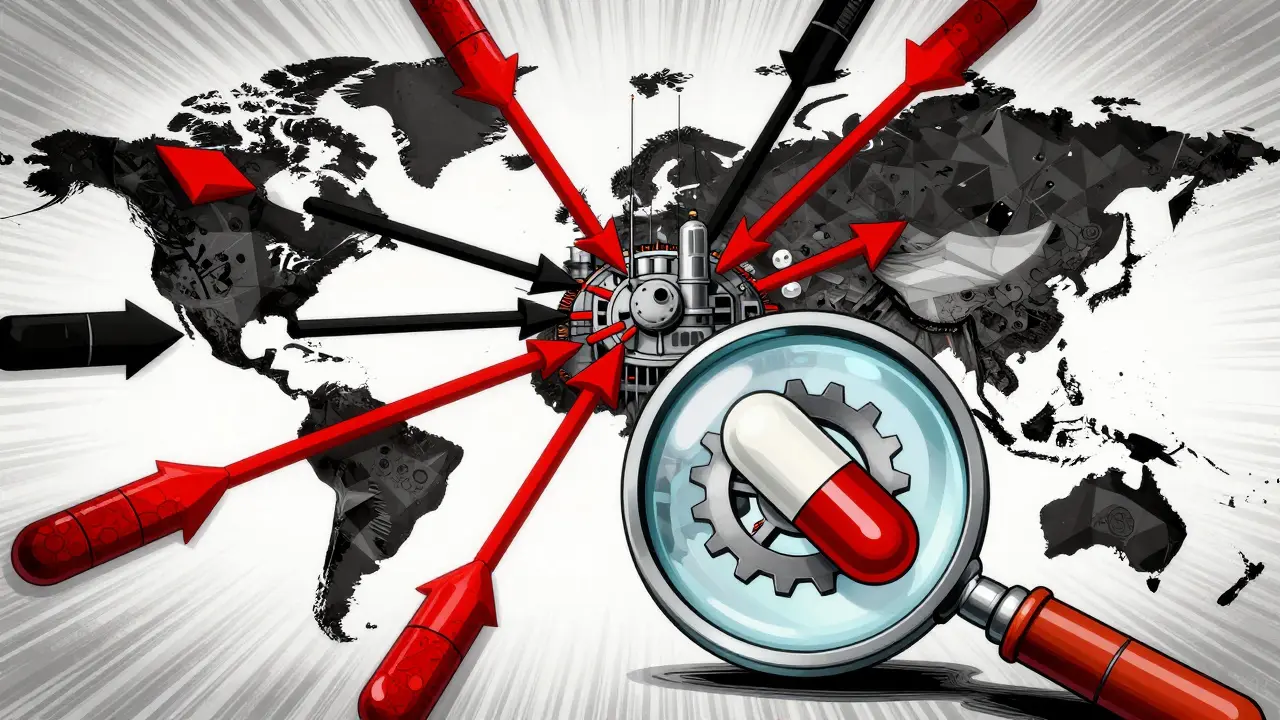
If you look at the label of your generic medication, there's a decent chance it was made in India. India is essentially the world's factory for off-patent medicine, producing about 20% of the global volume. In the US alone, 40% of generic drugs consumed are imported from Indian facilities.
But this dominance comes with a trade-off. While India drives prices down-sometimes 60% lower than in Europe-quality isn't always uniform. Some studies have pointed to higher rates of severe adverse events in certain Indian-made generics compared to US-made versions of the same drug. Why? Because of how they are inspected. The FDA often gives foreign plants a heads-up before an inspection, whereas US plants get surprise visits. This creates a gap in oversight that can lead to inconsistent batches of medication.
We also saw the danger of relying on one region during the pandemic. When India temporarily restricted the export of 26 active pharmaceutical ingredients, 22 countries suddenly faced shortages of basic antibiotics and blood pressure meds. It's a stark reminder that "cheap and available" is only true as long as the supply chain stays open.
The Pricing Paradox: High Volume vs. High Cost
The United States is a strange beast in the generic world. On one hand, Americans use generics more than almost anyone else (over 90% of prescriptions). On the other hand, they pay some of the highest prices on earth. It's a total paradox.
In many European countries, the government negotiates prices or mandates that pharmacists swap brands for generics. In the US, pricing is often a chaotic negotiation between pharmacy benefit managers and manufacturers. This leads to "irrational pricing" where a drug that has been off-patent for decades suddenly spikes in price because one or two manufacturers decided to hike the cost, and the market just accepted it.
This price gap is why "medical tourism" or online pharmacies from Canada and India are so popular. Patients often find that the exact same molecule, sold under a different name in Canada, costs 60-80% less than at a US retail pharmacy. However, this comes with risks. A patient might get a different salt form or a different excipient (the inactive ingredients), which can cause unexpected allergic reactions or change how the drug is absorbed.
The Next Frontier: Biosimilars
Most of the generics we talk about are "small-molecule" drugs-simple chemical structures. But the industry is moving toward Biosimilars, which are generics of biologic drugs (made from living cells). These are much more complex and expensive to produce.
Biosimilars are the next big wave of savings, with prices expected to be about 50% lower than the brand-name biologics they replace. But don't expect them to take over as fast as simple generics did. They require much stricter testing for "interchangeability," meaning a pharmacist can't always just swap them without a doctor's specific sign-off. This creates a slower adoption curve and more regulatory friction.
Why is my generic medication different in another country?
While the active ingredient is the same, the inactive ingredients (excipients) or the salt form of the drug can vary by manufacturer and region. These differences can occasionally affect how the drug is absorbed or cause different side effects in sensitive patients.
Are Indian generic drugs safe?
The vast majority are safe and meet FDA or EMA standards. However, some research indicates a higher rate of adverse events in certain low-cost Indian generics compared to US-made versions, often linked to differences in manufacturing oversight and inspection protocols.
What is "evergreening" in the pharma industry?
Evergreening is when a company files new patents on minor modifications of an existing drug (like a new dosage form or a slight chemical tweak) to extend their patent protection and prevent generic competitors from entering the market.
Why does the US have high generic usage but also high prices?
The US has a very efficient system for substituting brands with generics at the pharmacy counter. However, unlike many European countries, the US government does not centrally negotiate drug prices, allowing manufacturers and middlemen to maintain higher price points.
What is the difference between a generic and a biosimilar?
Generics are copies of simple chemical drugs. Biosimilars are highly similar copies of complex biologics made from living organisms. Because biologics are so complex, biosimilars are not identical copies but are "similars" that must undergo more rigorous clinical testing.
What to do if you can't find your medication
If you're traveling or facing a shortage, keep a few things in mind. First, always carry the generic name (the active ingredient) of your medication, not just the brand name. This makes it much easier for a foreign pharmacist to find an equivalent.
If you're considering an online pharmacy from another country, be cautious. While the price is tempting, ensure the pharmacy is verified. Check if the manufacturer is FDA-approved or EMA-certified. If you notice a change in how your medication feels or works after switching to a different generic source, contact your doctor immediately, as a different excipient could be the culprit.