Daptomycin CK Level & Symptom Checker
Assessment
Please enter your data to see the recommendation.
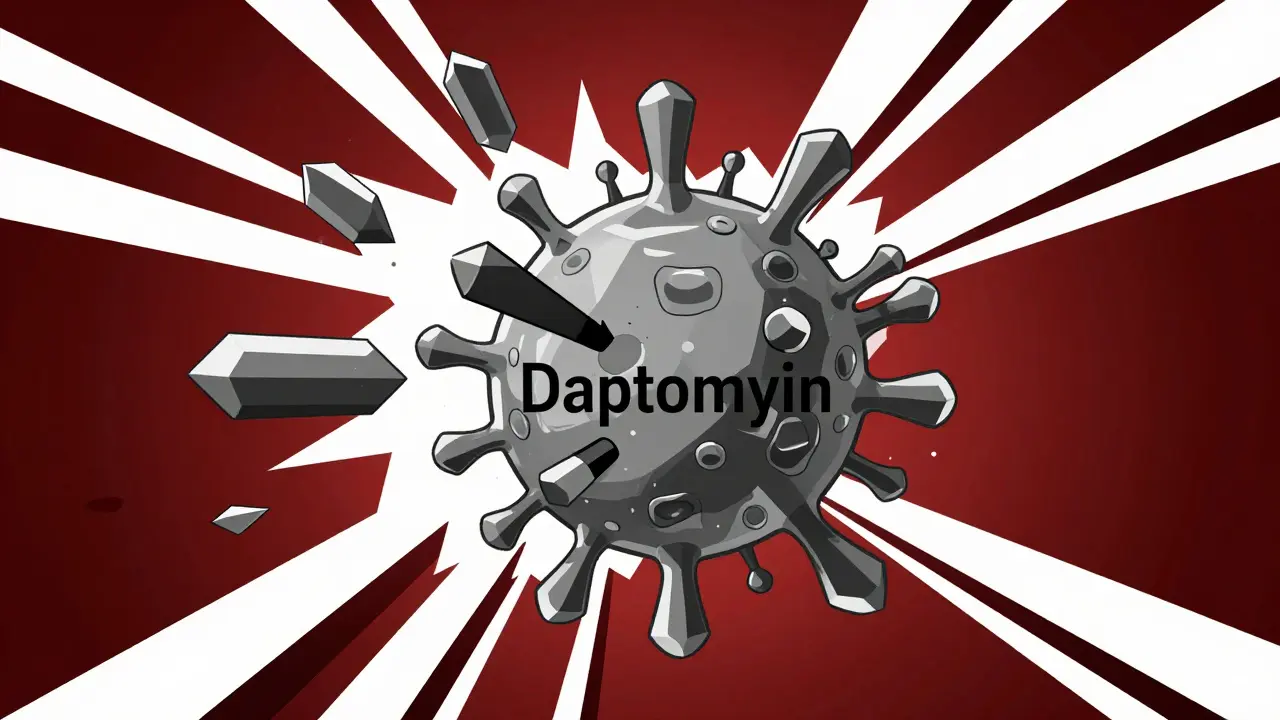
Imagine treating a severe infection with a powerful antibiotic, only to find yourself struggling with unexplained muscle pain and weakness. This is a known risk when using Daptomycin is a cyclic lipopeptide antibiotic used to treat serious Gram-positive bacterial infections, such as MRSA and endocarditis. While it is a lifesaver for many, it has a specific tendency to affect skeletal muscles. If you or a patient are on this medication, keeping a close eye on muscle health isn't just a precaution-it's a clinical necessity.
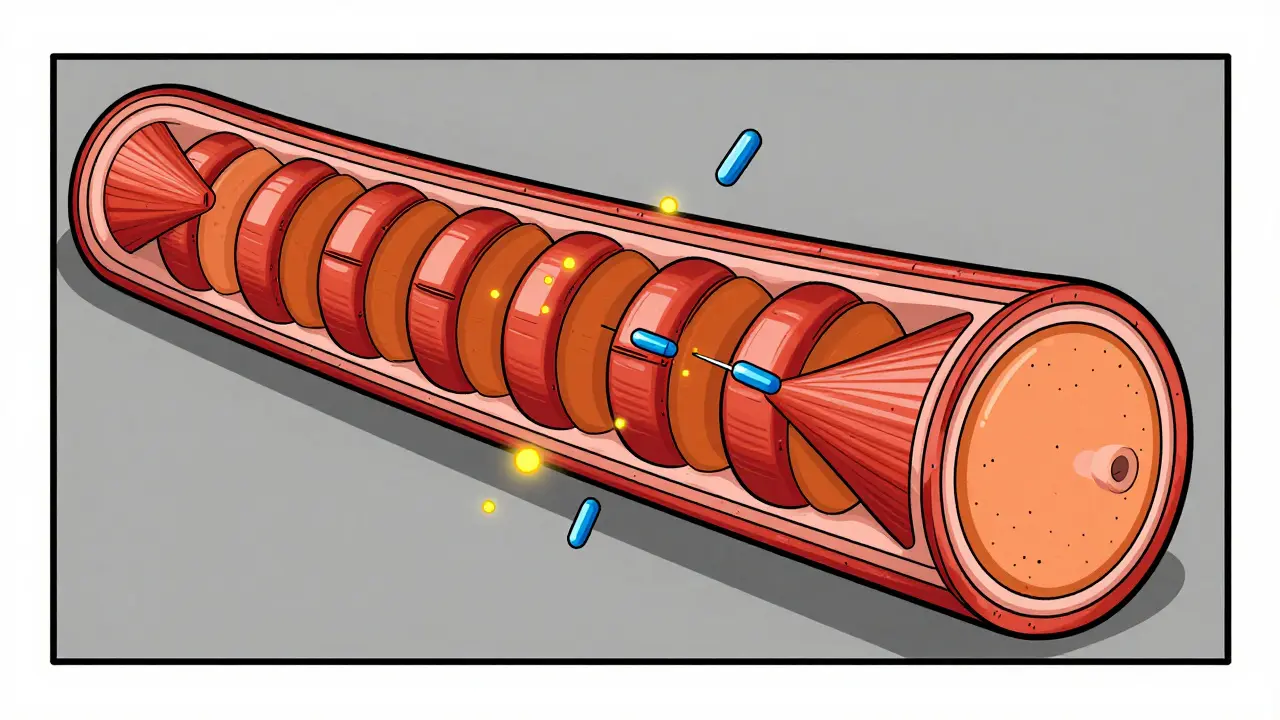
The core of the problem is that Daptomycin can cause direct injury to muscle cells. This isn't a random allergy; it's a physiological reaction where the drug damages the cellular membrane of the muscle. To catch this early, doctors track a specific enzyme called Creatine Phosphokinase (also known as CPK or CK), which leaks into the bloodstream when muscle cells are damaged. By monitoring these levels, medical teams can stop the drug before a mild ache turns into severe muscle breakdown.
What are the Symptoms of Daptomycin Myotoxicity?
Muscle toxicity, or myopathy, doesn't always start with a bang. In some cases, the first sign is a lab result, but often patients feel the changes first. You should look out for these red flags:
- Muscle Aches: General soreness or tenderness in the legs, arms, or back that doesn't align with recent exercise.
- Unexpected Weakness: Finding it harder to climb stairs or lift objects than usual.
- Tender Muscles: A feeling of soreness when the muscle is touched or pressed.
It is worth noting that this condition is generally reversible. Once the drug is stopped, the muscle damage typically heals. However, waiting too long can lead to rhabdomyolysis, where massive amounts of muscle proteins enter the blood and can potentially damage the kidneys.
Understanding CK Monitoring Protocols
Because symptoms can be vague, relying on a patient's "feeling" isn't enough. Standard medical guidelines, such as those from the University of Nebraska Medical Center, require a strict monitoring schedule. Typically, CK Monitoring happens weekly throughout the entire course of therapy.
But what do the numbers actually mean? Not every rise in CK is a cause for panic, but there are clear thresholds for action. Generally, the "Upper Limit of Normal" (ULN) is the baseline. If a patient is feeling fine (asymptomatic), doctors might wait until the CK level hits 10 times the ULN before stopping the drug. However, if the patient is actually experiencing muscle pain, the threshold drops significantly. In those cases, reaching a CK level of 1,000 U/L (roughly 5 times the ULN) is often the trigger to discontinue the medication immediately.
| Patient Status | CK Level Threshold | Recommended Action |
|---|---|---|
| Asymptomatic | > 10x Upper Limit of Normal | Consider discontinuation |
| Symptomatic (Pain/Weakness) | > 1,000 U/L (approx. 5x ULN) | Immediate discontinuation |
| Routine Monitoring | Baseline and Weekly | Continue therapy if levels stable |
Who is Most at Risk?
Not everyone reacts to Daptomycin in the same way. Some people are significantly more prone to toxicity than others. One of the most critical risk factors is Tissue Hypoxia, which occurs when tissues don't get enough oxygen. Research, including studies by Yamada et al., has shown that Daptomycin is far more toxic to muscle cells in low-oxygen environments. This means patients with severe sepsis, circulatory failure, or coronary artery disease are at a much higher risk.
Another factor is the dosage. While the standard dose for skin infections is 4 mg/kg and 6 mg/kg for bloodstream infections, some doctors use higher "off-label" doses (8-12 mg/kg) for bone and joint infections. While these higher doses are often more effective, they can increase the risk of myotoxicity and another rare but serious condition called Daptomycin-induced eosinophilic pneumonia (DIEP).
There is also the common question about Statins. These cholesterol-lowering drugs are known to cause muscle issues on their own. For years, it was assumed that taking statins with Daptomycin was a recipe for disaster. However, more recent data suggests the risk is numerically higher but not always statistically significant. Even so, many clinicians still play it safe and suspend statin use during the antibiotic course to avoid complicating the CK readings.
Comparing Daptomycin to Other Antibiotics
When a doctor chooses Daptomycin, they are usually fighting a tough enemy like MRSA. They have to weigh the benefit of the drug against its monitoring requirements. For example, Vancomycin is a common alternative. While Vancomycin is cheaper, it requires "trough and peak" blood level monitoring to ensure the dose isn't too low (ineffective) or too high (toxic to kidneys).
Daptomycin is significantly more expensive, and while its weekly CK test is relatively cheap, the drug itself costs much more per dose. However, for certain resistant infections, it is simply more effective. Unlike fluoroquinolones, which are linked to tendon ruptures, Daptomycin's risk is specifically tied to the muscle fibers themselves.

Practical Steps for Safe Administration
If you are managing a patient on Daptomycin, the goal is to balance the kill rate of the bacteria with the safety of the patient's muscles. Follow these practical rules of thumb:
- Establish a Baseline: Get a CK reading before the first dose. You can't tell if a level is "rising" if you don't know where it started.
- Strict Weekly Labs: Do not skip the weekly CK check, even if the patient says they feel great.
- Screen for Hypoxia: Be extra vigilant with patients who have heart failure or severe respiratory distress.
- Review Concurrent Meds: Identify if the patient is on statins and consult with their primary doctor about temporary suspension.
- Listen to the Patient: If a patient mentions a new ache in their calves or shoulders, treat it as a potential side effect until proven otherwise.
Why does Daptomycin cause muscle toxicity?
Daptomycin causes direct injury to the skeletal muscle cell membranes. This process is significantly worsened if the patient has low oxygen levels (hypoxia) in their tissues, which makes the muscle cells more vulnerable to the drug's effects.
Is the muscle damage caused by Daptomycin permanent?
No, Daptomycin-induced myopathy is generally fully reversible. Once the medication is discontinued, the muscle cells typically recover and CK levels return to normal.
Should I stop taking my statin while on Daptomycin?
While some studies show that the interaction isn't as dangerous as once thought, many clinicians recommend a conservative approach and temporarily pause statins to make CK monitoring clearer and reduce the risk of additive muscle toxicity.
How often should CK levels be checked?
Current medical guidelines recommend checking CK levels once a week for the duration of the Daptomycin treatment to catch any potential toxicity early.
What is the difference between CK and CPK?
They are the same thing. Creatine Phosphokinase (CPK) is the full name of the enzyme, and Creatine Kinase (CK) is the shortened version. Both terms refer to the marker used to detect muscle damage.
Next Steps and Troubleshooting
If you notice a spike in CK levels without symptoms, don't panic, but increase your vigilance. You might consider coordinating with a pharmacist to check if the Daptomycin muscle toxicity risk is being increased by other medications or a specific dosing regimen. For those treating bone and joint infections with high doses, moving toward "precision dosing"-using the AUC (Area Under the Curve) to target a specific drug exposure-can help maintain efficacy while keeping the patient safe. If a patient develops severe weakness, the immediate priority is stopping the drug and ensuring hydration to protect the kidneys from any leaked muscle proteins.