Lipid Drug Absorption Calculator
How Fat Affects Your Medication
This tool determines whether your medication might benefit from fat intake based on its drug classification and your digestive health. The information is derived from the article "How Fatty Foods Enhance Absorption of Lipid-Based Medications".
When you take a pill with a fatty meal, you’re not just eating lunch-you’re activating a hidden system in your body that can make your medicine work better. This isn’t folklore or old wives’ tales. It’s science. And it’s changing how drugs are designed today. For many medications, especially those meant to treat chronic conditions like high cholesterol, organ transplant rejection, or fungal infections, the presence of fat in your stomach can mean the difference between the drug working or barely working at all.
Why Fat Makes Some Medicines Work Better
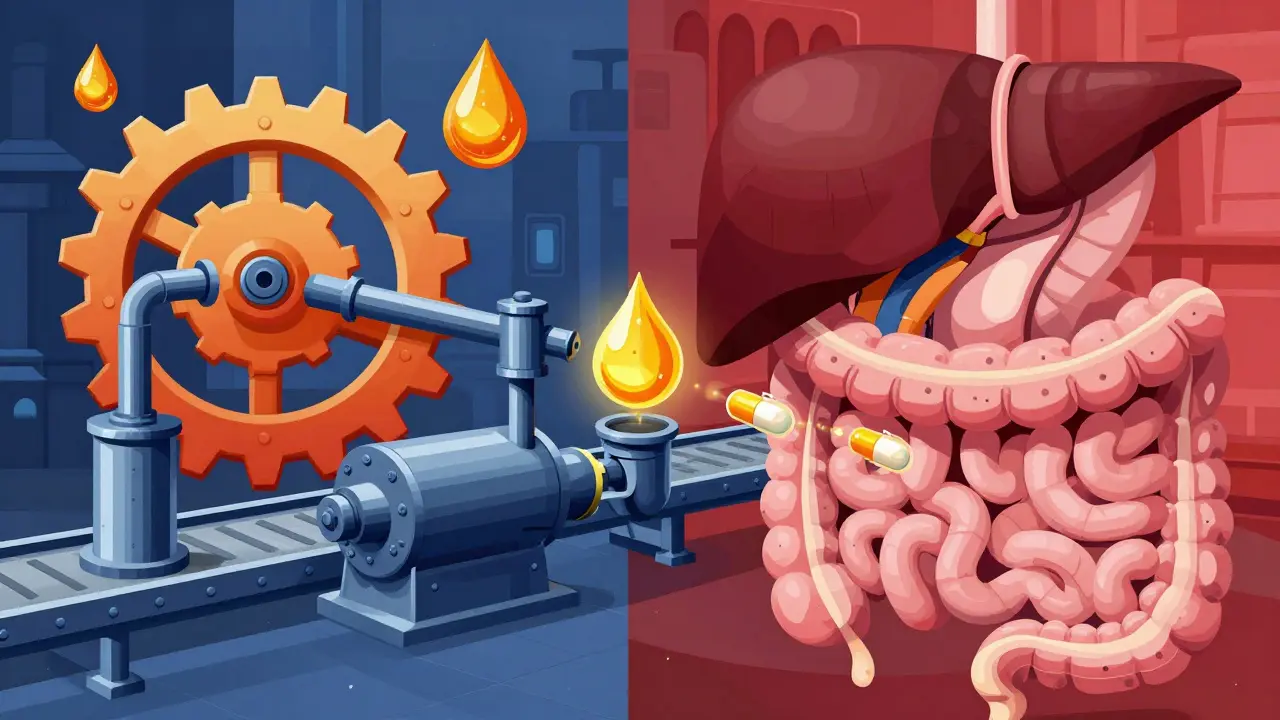
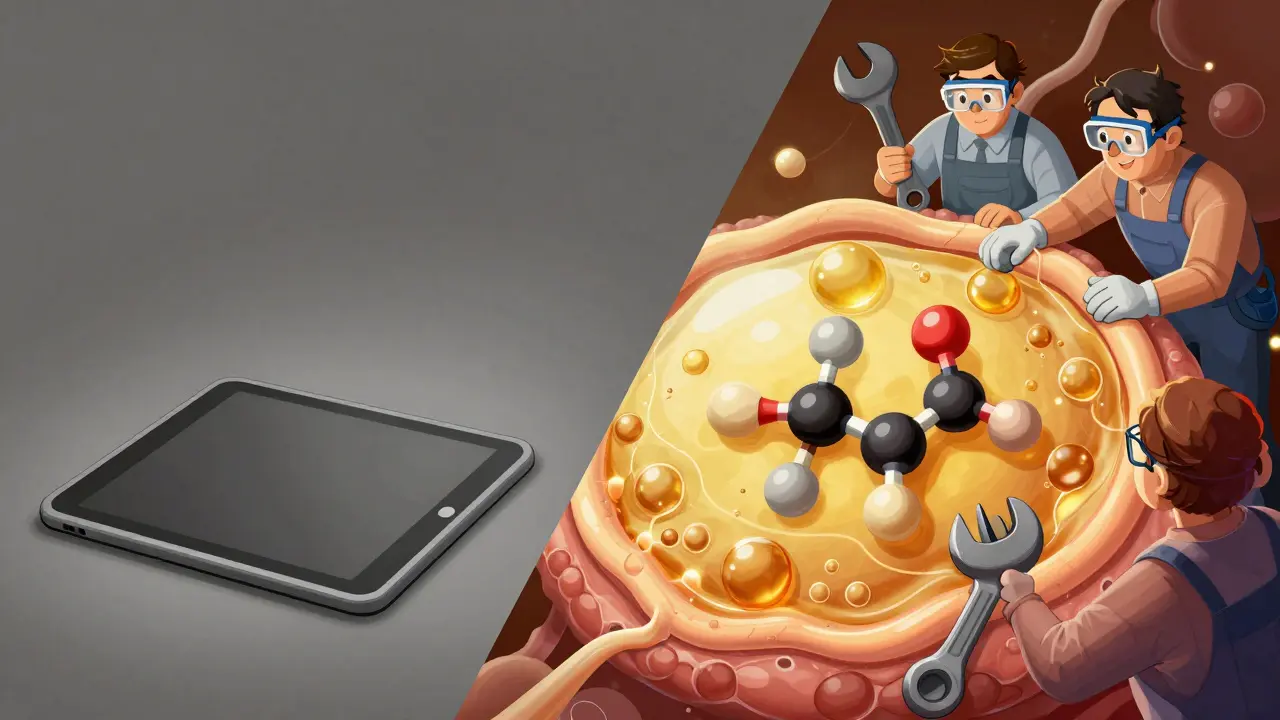
Not all drugs are created equal when it comes to dissolving in your body. About 70% of new drugs being developed today don’t dissolve well in water. These are called poorly water-soluble drugs. Without help, they just sit in your gut, barely absorbed, and end up being wasted. That’s where fat comes in. Fatty foods trigger your body to release bile and digestive enzymes that naturally break down lipids. These byproducts form tiny, oil-like structures in your intestines that can trap drug molecules and carry them across your gut lining into your bloodstream.
This isn’t just theory. It’s been proven in real patients. For example, the immunosuppressant drug cyclosporine (sold as Neoral®) shows 20-30% higher absorption when taken with a high-fat meal compared to its older version (Sandimmune®). Fenofibrate (Tricor®), used for high triglycerides, absorbs 31% better in lipid-based form than its non-lipid version. These aren’t small improvements-they’re game-changers for people who need steady, reliable drug levels.
The Science Behind the Food Effect
The term "food effect" is used in pharmacology to describe how meals alter how a drug is absorbed. But not all meals have the same impact. The key is the type of fat. Medium-chain triglycerides (MCTs), found in coconut oil and certain medical supplements, digest faster than long-chain fats from meat or butter. MCTs break down in just 15-30 minutes in the small intestine, while long-chain fats can take over an hour. Faster digestion means quicker formation of those drug-carrying structures.
Modern lipid-based drug systems, like self-emulsifying drug delivery systems (SEDDS), are engineered to mimic this natural process. They contain a precise mix of oils (30-60%), surfactants (20-50%), and cosolvents (10-30%). When swallowed, they turn into tiny droplets-just 100-300 nanometers wide-that stay stable in your gut for hours. This gives the drug time to be absorbed, even if your stomach empties slowly after a big meal.
Experts like Professor Christopher Porter from Monash University explain that lipid systems don’t just help solubility-they also stimulate bile flow, slow stomach emptying, increase gut membrane fluidity, and even push some drugs into the lymphatic system, bypassing the liver. This last point is huge. It means drugs like antifungals or cancer meds can avoid being broken down too early by liver enzymes, making them more effective at lower doses.
What Drugs Benefit Most?
It’s not magic. Lipid-based delivery only helps certain types of drugs. The Biopharmaceutics Classification System (BCS) sorts drugs by solubility and permeability. The ones that benefit most are:
- Class II: Low solubility, high permeability (e.g., cyclosporine, itraconazole, fenofibrate)
- Class IV: Low solubility, low permeability (e.g., some antiviral and anticancer drugs)
Drugs in Class I-high solubility, high permeability-don’t need this help. Think of aspirin or paracetamol. Their absorption isn’t limited by solubility, so adding fat won’t boost their effect. In fact, for some drugs like bisphosphonates (used for osteoporosis), fat can actually reduce absorption because they need an acidic stomach environment to dissolve.
Take itraconazole, an antifungal. The original capsule form has erratic absorption. If you take it on an empty stomach, you might get only 10% of the drug into your blood. With the lipid-based oral solution (Sporanox®), absorption jumps to 2.8 times higher-even without food. And the variability? It drops by 40%. That’s huge for patients who can’t afford unpredictable dosing.
Real Patient Experiences
Beyond clinical trials, real people notice the difference. In online pharmacy communities, users report:
- "Switching to Neoral eliminated my need to time meals around my meds. I can eat normally now."
- "Tricor doesn’t give me stomach cramps like the old fenofibrate did. I take it once a day instead of three times."
- "My transplant team switched me to the lipid version. My blood levels are stable. No more scary spikes and drops."
But there’s a downside. These advanced formulations cost more. A 30-day supply of Sporanox oral solution runs around $1,200. Generic itraconazole capsules? About $300. That’s a fourfold difference. For many, especially without good insurance, the price makes the better option unaffordable. Some patients end up sticking with the cheaper, less reliable version-risking treatment failure.
Limitations and Challenges
It’s not foolproof. Lipid-based systems work best in healthy guts. But what about people with Crohn’s disease, cystic fibrosis, or after gastric bypass surgery? Their bile production or fat digestion may be impaired. Studies show these patients often get inconsistent drug levels, even with lipid formulations. That’s why experts like Dr. Gordon Amidon warn that "variability in human digestion is one of the biggest hurdles" for these systems.
Also, not every drug fits. If a compound has extremely low solubility-under 1 microgram per milliliter-even lipid systems struggle. And formulation development is slow. It can take 18-24 months to optimize the oil, surfactant, and cosolvent mix for one drug. That’s twice as long as a regular tablet. And the testing? Hundreds of experiments per compound to find the right balance.
Manufacturing is harder too. These drugs often need soft gel capsules that are sensitive to heat and light. Storage and transport require more care than plain tablets. And the cost? About 25-35% higher to produce.
The Future: Smarter, Personalized Delivery
The field isn’t standing still. New technologies are emerging. Matinas BioPharma’s LNC platform, for example, delivered 92% bioavailability for amphotericin B-a drug that previously had only 30% absorption. The FDA approved Vybar® in 2022, a lipid-based fenofibric acid that boosts absorption by 45% and removes the food effect entirely.
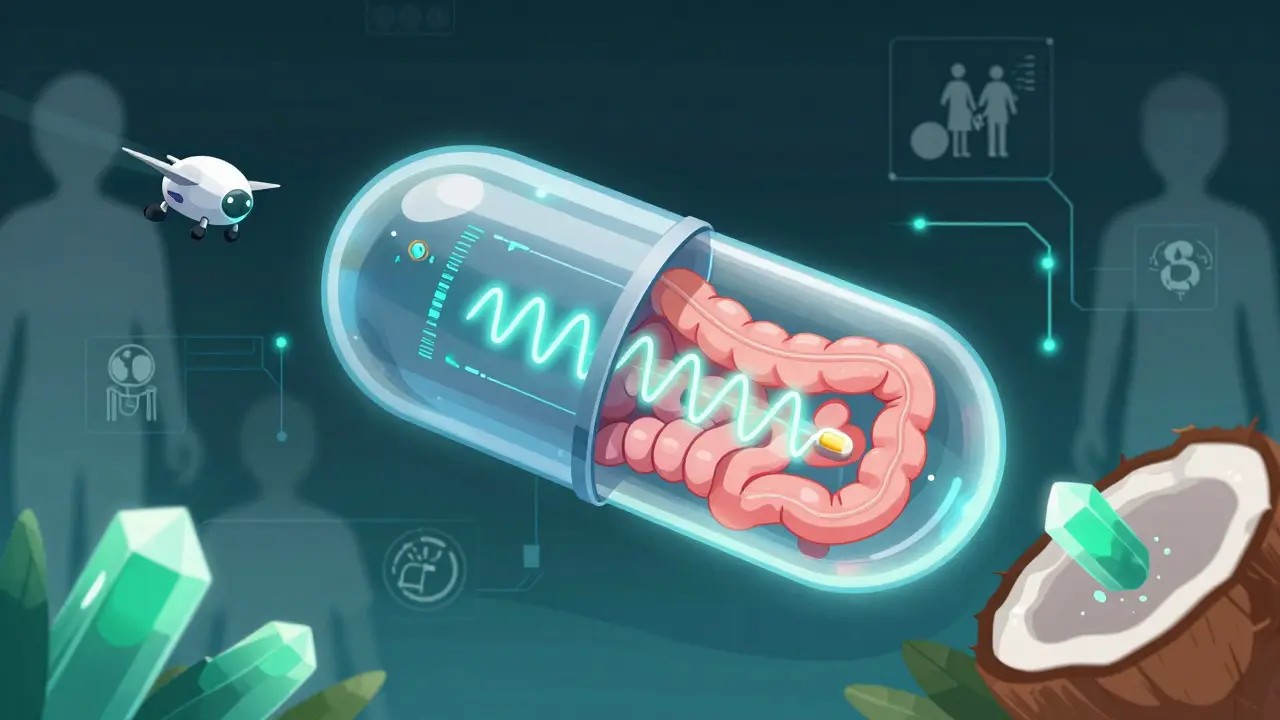
Even more exciting? Research from MIT in late 2023 introduced a "smart lipid capsule" that senses pH and enzyme levels in real time and adjusts drug release accordingly. Imagine a pill that knows whether you ate a salad or a steak-and responds by releasing the right amount of medicine. This isn’t sci-fi. It’s coming.
Environmental concerns are also being addressed. The European Federation for Pharmaceutical Sciences is pushing for plant-based oils to replace fish-derived lipids, reducing reliance on unsustainable sources.
What This Means for You
If you’re on a lipid-based medication-like cyclosporine, fenofibrate, itraconazole, or similar-pay attention to how you take it. Your doctor or pharmacist may tell you to take it with food. That’s not a suggestion. It’s part of the treatment. Skipping fat might mean your drug doesn’t work as well.
But if cost is an issue, talk to your provider. Sometimes, a generic version taken with a measured fat source (like 1 tablespoon of olive oil or a small serving of avocado) can mimic the effect. It’s not a perfect substitute, but it’s better than nothing.
And if you’re managing a chronic condition, ask whether a lipid-based version is available. The science is clear: for many drugs, fat isn’t just food. It’s part of the medicine.
Do all fatty foods enhance drug absorption the same way?
No. Medium-chain triglycerides (MCTs), like those in coconut oil or medical-grade supplements, digest faster and create better drug-carrying structures than long-chain fats from butter, cheese, or fried foods. MCTs work within 15-30 minutes; long-chain fats take over an hour. For best results, follow your doctor’s advice on meal composition.
Can I take lipid-based medications on an empty stomach?
Some lipid-based formulations are designed to work without food-like Sporanox® oral solution or Vybar®. But many still require fat to reach full effectiveness. If your prescription says "take with food," don’t skip it. If you’re unsure, check with your pharmacist. Taking it without fat could mean lower drug levels and reduced effectiveness.
Why are lipid-based drugs more expensive?
They’re more complex to make. Formulating them requires precise blends of oils, surfactants, and solvents, plus specialized packaging (like soft gel capsules) to protect the ingredients. Development takes longer-up to two years-and testing involves hundreds of trials. Manufacturing costs are 25-35% higher than regular tablets. These factors drive up the price.
Do lipid-based medications work better for everyone?
Not always. People with conditions that affect fat digestion-like cystic fibrosis, Crohn’s disease, or after gastric surgery-may not benefit as much. Bile production and enzyme activity vary between individuals. In these cases, drug levels can still be unpredictable, even with lipid formulations. Always discuss your medical history with your provider.
Are there natural ways to boost absorption without medication?
Yes, but cautiously. For some drugs, taking them with a small amount of healthy fat-like avocado, nuts, or olive oil-can mimic the effect of lipid-based formulations. For example, taking fenofibrate with 1 tablespoon of olive oil may help absorption. But this doesn’t work for all drugs, and timing matters. Never substitute without consulting your pharmacist or doctor.