
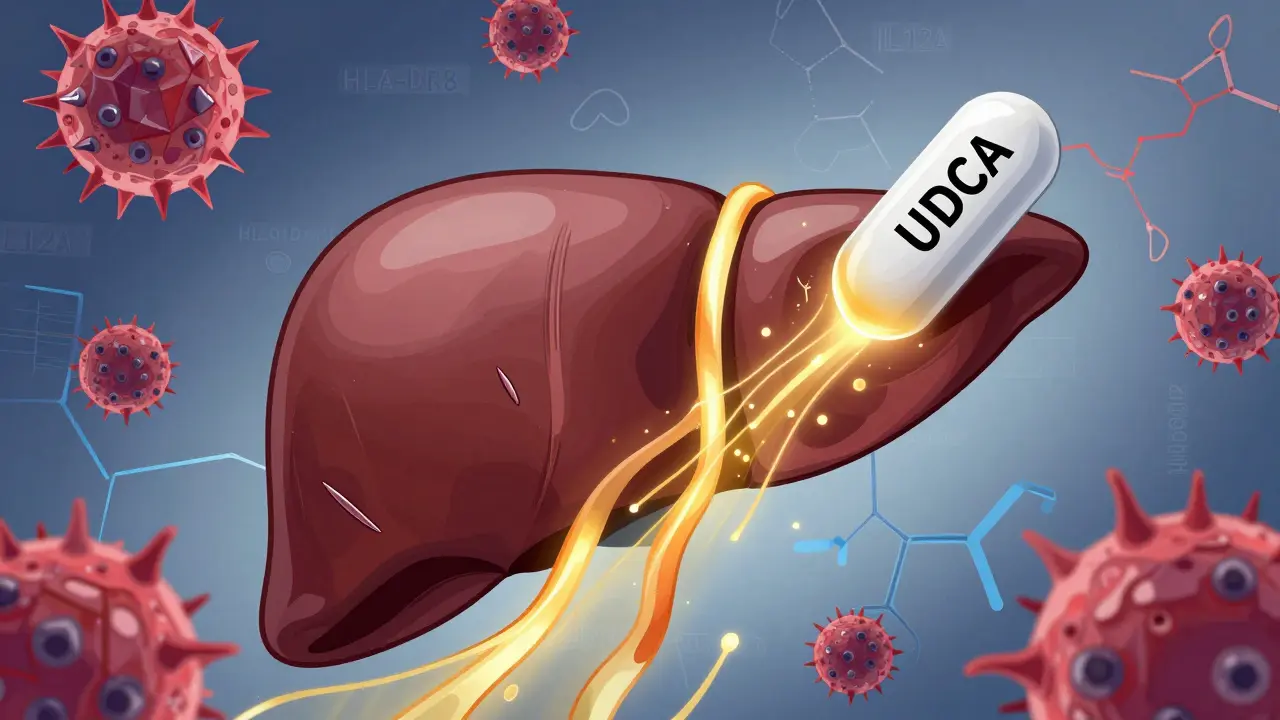
Primary Biliary Cholangitis (PBC) isn’t just another liver condition. It’s a slow, silent disease that attacks the bile ducts inside the liver, leading to scarring, fatigue, intense itching, and eventually liver failure if left unchecked. For decades, treatment options were limited. But in 2025 and 2026, everything changed. New drugs arrived, old ones were pulled, and doctors now have a clearer roadmap than ever before for helping patients live longer, feel better, and avoid transplants.
What Exactly Is Primary Biliary Cholangitis?
PBC is an autoimmune disease. That means your immune system mistakenly targets your own body - specifically, the small bile ducts in your liver. These ducts normally carry bile out of the liver to help digest food. When they get damaged, bile builds up, poisons liver cells, and causes scarring. Over time, this can lead to cirrhosis and liver failure.
The disease hits women far more often than men - about 9 out of every 10 patients are female. Most people are diagnosed between ages 30 and 65. It’s rare in younger people. The exact cause isn’t known, but genetics play a role. People with certain gene variants - like HLA-DR8 or IL12A - are more likely to develop it. Environmental triggers, like certain infections (especially E. coli urinary tract infections), may set it off in those who are genetically prone.
One key clue doctors look for is an antibody called AMA (anti-mitochondrial antibody). Over 90% of PBC patients have it. Blood tests showing high levels of alkaline phosphatase (ALP) and bilirubin are also red flags. Symptoms often start subtly: fatigue, itchy skin, dry eyes or mouth. Many people don’t feel sick until the disease has progressed.
First-Line Treatment: UDCA Still Rules
Ursodeoxycholic acid (UDCA), also known as ursodiol, has been the backbone of PBC treatment since the 1990s. It’s not a cure, but it’s proven to slow disease progression. Doctors prescribe it at 13-15 mg per kilogram of body weight daily - usually one or two pills taken once or split into two doses.
How does it work? UDCA replaces toxic bile acids in the liver with a gentler version. It helps flush out harmful substances and reduces inflammation. Studies show that if a patient responds well to UDCA - meaning their ALP levels drop below 1.67 times the upper limit of normal after 12 months - they have an 87% chance of surviving 10 years without needing a liver transplant. Those who don’t respond? Their survival rate drops to 69%.
But here’s the catch: about 35% of patients don’t respond to UDCA. That’s why treatment doesn’t stop there. For years, doctors had few options for these patients. That changed dramatically in 2024 and 2025.
The Big Shift: Ocaliva’s Withdrawal and What Replaced It
For nearly a decade, obeticholic acid (Ocaliva) was the go-to second-line drug for patients who didn’t respond to UDCA. Approved in 2016, it worked by targeting the farnesoid X receptor (FXR), which regulates bile flow. In clinical trials, it lowered ALP levels in about 46% of patients.
But safety concerns mounted. Long-term data showed a higher risk of serious liver complications, especially in patients with advanced scarring. Pruritus (severe itching) affected over half of users, and some had to stop taking it. By 2024, the FDA started reviewing its risk profile. In September 2025, Ocaliva was officially withdrawn from the U.S. market after the agency concluded its risks outweighed its benefits.
This wasn’t just a minor update - it was a seismic shift. Thousands of patients had to switch treatments. Clinics scrambled to adjust protocols. And two new drugs stepped into the void: seladelpar and elafibranor.

Now the Two New Players: Seladelpar and Elafibranor
By early 2026, two drugs are approved and widely used as second-line options:
- Seladelpar (Livdelzi) - Approved December 2024
- Elafibranor (Iqirvo) - Approved November 2024
Both work differently from Ocaliva. Seladelpar activates the PPAR-δ receptor, which helps reduce inflammation and bile buildup. Elafibranor activates both PPAR-α and PPAR-δ, which also improves fat metabolism.
Here’s how they compare based on real-world data:
| Feature | Seladelpar (Livdelzi) | Elafibranor (Iqirvo) |
|---|---|---|
| Dosage | 5 mg daily, titrated to 10 mg after 4 weeks | 80 mg daily |
| ALP Reduction (52 weeks) | 70% achieve ≥15% drop | 56% achieve ≥15% drop |
| ALP Normalization | 42% | 21% |
| Pruritus Improvement | 45% reduction in itching | 38% reduction in itching |
| Common Side Effects | Temporary itching increase (25%), nausea | Elevated creatinine (18%), mild GI upset |
| Monitoring Required | ALP, liver enzymes, pruritus | ALP, creatinine, lipids |
Seladelpar leads in ALP normalization - nearly double elafibranor’s rate. It also does better at reducing itching, which is a major quality-of-life issue for PBC patients. But it requires careful dosing. About 25% of patients experience a temporary spike in itching during the first few weeks, though it usually fades by week 8. Elafibranor is simpler to take - one pill a day - and it improves cholesterol and triglyceride levels better than seladelpar.
What About Fibrates? They’re Still in the Game
Fibrates - like fenofibrate and bezafibrate - aren’t FDA-approved for PBC, but they’re used off-label with growing confidence. Studies show they can lower ALP levels, especially in patients who don’t respond to UDCA or newer drugs. They’re cheaper, available as generics, and often used when the newer drugs aren’t accessible.
Some doctors combine fibrates with UDCA, especially if a patient’s ALP remains high. In real-world clinics, about 15% of patients are on this combo. It’s not perfect, but it’s a practical option when other treatments are too expensive or unavailable.
Monitoring and Treatment Goals: It’s Not Just About Numbers
Doctors don’t just look at one ALP test. They track trends over months. A single high reading doesn’t mean treatment failed. What matters is whether ALP drops by at least 15% over 12 months - even if it doesn’t reach normal levels.
Research published in 2024 showed that every 10% reduction in ALP correlates with a 7.2% lower risk of needing a transplant or dying. That’s powerful. So even if you don’t hit full normalization, you’re still gaining protection.
Doctors now use the term “composite biochemical response” (CBR): ALP below 1.67x ULN, with a 15% drop from baseline, and bilirubin at normal levels. Patients who achieve CBR have significantly better long-term outcomes.
Monitoring happens every 3 months during the first year of treatment, then every 6 months if stable. Liver enzymes, bilirubin, and creatinine (for elafibranor users) are tracked. Pruritus is also measured using patient-reported scales - because how you feel matters as much as lab results.

What’s Next? The Pipeline and Future Treatments
The PBC treatment landscape is far from finished. More than a dozen new drugs are in clinical trials:
- Tropifexor - A non-bile acid FXR agonist, Phase 2b results expected in 2026.
- Lanifibranor - A pan-PPAR agonist that could hit multiple pathways at once.
- Setanaxib - Targets oxidative stress, Phase 3 trials underway.
- VE-202 - A fecal microbiota transplant capsule designed to reset gut bacteria, with results expected in mid-2026.
One exciting development is the FDA’s acceptance of the PBC-40 PRO instrument - a patient-reported outcome tool that measures fatigue, itching, and quality of life. Starting in 2026, future drug trials will need to prove they improve how patients feel, not just their lab numbers.
Real-World Challenges: Access, Cost, and Insurance
Even with better drugs, access isn’t easy. Seladelpar and elafibranor cost over $500 a month out-of-pocket. Many patients with commercial insurance report paying $300-$700 monthly. Medicare requires proof of UDCA failure and ALP levels above 1.67x ULN before approving coverage. About 28% of prior authorization requests for seladelpar are denied initially.
Community clinics lag behind academic centers. While 82% of university hospitals have updated their protocols, only 63% of private practices have. Why? Training, cost, and paperwork. Patients in rural areas often face delays getting the right treatment.
Some organizations, like the PBC Foundation, offer free tools - like the Treatment Navigator - to help patients understand their options and talk to their doctors. Patient support groups are now more critical than ever.
Bottom Line: What Should You Do?
If you’ve just been diagnosed with PBC:
- Start with UDCA at the full dose (13-15 mg/kg/day).
- Get your ALP tested at 3, 6, and 12 months.
- If ALP hasn’t dropped below 1.67x ULN after 12 months - you’re a candidate for second-line therapy.
- Discuss seladelpar if itching is your biggest problem. Discuss elafibranor if you have high triglycerides or want simpler dosing.
- Ask about fibrates if cost is a barrier.
- Track your symptoms - not just your labs.
The goal isn’t perfection. It’s progress. Even a 15% drop in ALP can extend your life. And with better drugs, better monitoring, and more patient-centered care, PBC is no longer a death sentence. It’s a manageable chronic condition - if you know where to look.
Can PBC be cured?
No, there is no cure for PBC yet. But with proper treatment, disease progression can be slowed significantly. Many patients live normal lifespans without needing a transplant, especially if they respond well to UDCA or newer drugs like seladelpar. Liver transplant remains an option for advanced cases, with success rates above 85%.
Is itching always a sign of PBC worsening?
Not necessarily. Itching affects about 70% of PBC patients, and it can occur early, even before liver damage is severe. Newer treatments like seladelpar and elafibranor have been shown to reduce itching significantly, which suggests it’s not always tied to disease progression. However, if itching suddenly gets worse while on treatment, it could signal a need to adjust therapy or check for other causes.
Why was Ocaliva pulled from the market?
Ocaliva (obeticholic acid) was withdrawn in September 2025 after the FDA reviewed long-term safety data. It showed increased risk of serious liver complications in patients with advanced scarring and caused severe itching in over half of users. The agency concluded the benefits no longer outweighed the risks, especially since safer, more effective alternatives like seladelpar were now available.
How often should I get my liver enzymes checked?
When starting or changing treatment, check ALP and liver enzymes every 3 months. Once stable - meaning your levels are consistently improving - you can switch to every 6 months. If you’re on elafibranor, creatinine levels should also be monitored every 3-6 months. Always follow your doctor’s specific plan.
Can I take supplements like vitamin D or calcium?
Yes, and many patients need them. PBC can lead to bone loss and vitamin deficiencies because bile is needed to absorb fat-soluble vitamins (A, D, E, K). Most doctors recommend daily calcium and vitamin D supplements. Vitamin E may also be advised if levels are low. Always get your levels tested before starting supplements - too much can be harmful.
Do I need to avoid alcohol?
Yes. Alcohol can accelerate liver damage in PBC, even in small amounts. While moderate drinking may be tolerated in early-stage disease, most specialists recommend complete avoidance. The liver is already under stress - adding alcohol increases the risk of fibrosis and cirrhosis.
What lifestyle changes help with PBC?
A healthy diet, regular exercise, and avoiding toxins are key. Eat plenty of vegetables, lean proteins, and whole grains. Limit sugar and saturated fats. Exercise helps reduce fatigue and supports bone health. Avoid raw shellfish (risk of infection) and unregulated supplements. Quit smoking - it worsens liver inflammation. Stay up-to-date on vaccines for hepatitis A and B, flu, and pneumococcus.





9 Comments
Just started UDCA last month after my AMA came back positive. My ALP was through the roof-280 U/L. Got my 3-month checkup yesterday: 210. Not perfect, but it’s moving. I’m trying not to panic, but honestly? I’m terrified of what comes next if this doesn’t work. Any advice from people who’ve been on this road longer?
Hey there, welcome to the club. I’ve been on UDCA for 4 years now. First year was rough-fatigue, itching, the whole package. But by year 2, things leveled out. I didn’t hit normal ALP, but I hit that 15% drop. That’s the real win. You’re already ahead of where most people are at month 3. Keep going. And if you’re worried about next steps? Talk to your doc about seladelpar. It’s not magic, but it helped me sleep again.
It’s strange… I used to think of liver disease as something that just… happened. But reading this, I realize it’s not just biology-it’s a conversation between your genes, your environment, your stress, even your gut. I’ve been reading about the microbiome link. The VE-202 trial with the fecal transplant capsule? That’s wild. What if PBC isn’t just about bile… but about imbalance? Maybe we’re treating symptoms while the real trigger is still whispering in the background.
Let me just say this: the entire PBC treatment narrative is a corporate circus. Ocaliva was pulled because it made too many people itch? That’s not science-that’s PR. Seladelpar? $500/month? Who the hell is this for? I’ve seen patients on Medicaid wait 11 weeks for prior auth. Meanwhile, Big Pharma is running clinical trials with 300 people and calling it ‘real-world data.’ And don’t get me started on the ‘composite biochemical response’ buzzword. It’s not medicine-it’s accounting dressed up in lab coats. You’re not a patient-you’re a metric in a spreadsheet.
And yet, somehow, I’m still here. Still alive. Still taking my pills. Because even if the system is broken, my liver isn’t.
Let’s clarify the pharmacokinetics here. Seladelpar’s PPAR-δ agonism leads to a 70% reduction in ALP at 52 weeks-yes-but that’s only in responders. The non-responder cohort shows a 9% increase in ALT. That’s hepatotoxicity territory. And elafibranor’s creatinine elevation? That’s not benign. It’s a marker of tubular stress. We’re trading one risk for another. And fibrates? They’re CYP3A4 inhibitors. Combine with UDCA? Risk of rhabdomyolysis. This isn’t a treatment algorithm-it’s a minefield with a pretty infographic.
There’s something deeply human about this disease-how it doesn’t just attack your liver, but your sense of time. You’re told you might live a normal lifespan… but then you’re also told to check your ALP every three months, to track your itching on a scale of 1–10, to avoid raw shellfish, to take calcium, to avoid alcohol, to monitor lipids, to be vigilant about vaccines, to hope that your insurance approves the drug that costs more than your rent. And you’re supposed to be grateful? No. You’re supposed to be angry. And you should be. Because this isn’t healthcare. It’s survival engineering. And we’re all just trying to stay in the game.
I’m the author of this post. Just wanted to say thank you to everyone who’s shared. I was diagnosed two years ago. I didn’t think anyone would care. But reading your comments… I feel less alone. I’m on seladelpar now. The itching spiked at first-honestly, I thought I was losing my mind. But by week 6? It was gone. I can sleep. I can hug my daughter without wanting to scratch her skin off. That’s not a number. That’s a life. Keep going. You’re not just surviving. You’re rewriting the story.
Okay, but what if the whole thing is a scam? What if PBC doesn’t even exist? What if it’s just a label for ‘liver weirdness’ that Big Pharma invented so they could sell us pills for $500 a pop? I read that the AMA antibody test has a 5% false positive rate. What if I’m one of them? What if I’ve been on this drug for two years for nothing? What if my doctor doesn’t even know what he’s doing? I’m not paranoid-I’m just awake. And I’m not taking another pill until someone shows me the raw data. No summaries. No charts. Just the numbers. And if they won’t give them to me… then maybe I’m not sick. Maybe I’m just being scammed.