

QT Prolongation Risk Calculator
Patient Risk Factors
Medical History
Antibiotic Selection
Risk Assessment
Recommendations
When a patient gets a urinary tract infection or a respiratory bug, doctors often reach for antibiotics like azithromycin or ciprofloxacin. But behind those common prescriptions lies a quiet, potentially deadly risk: QT prolongation. This isn’t a theoretical concern-it’s a real, measurable, and sometimes fatal electrical glitch in the heart that can trigger Torsades de Pointes, a dangerous arrhythmia that can lead to sudden cardiac arrest. And it’s not rare. Studies show that fluoroquinolones and macrolides, two of the most widely prescribed antibiotic classes, are among the top drug culprits. The good news? This risk is predictable, preventable, and manageable-if you know what to look for and when to act.
What QT Prolongation Really Means
The QT interval on an ECG measures how long it takes the heart’s ventricles to recharge between beats. When this interval stretches too long, the heart’s electrical system becomes unstable. That’s QT prolongation. It doesn’t cause symptoms on its own. But it sets the stage for Torsades de Pointes-a twisting, chaotic rhythm that can collapse into ventricular fibrillation and death within minutes. Fluoroquinolones (like ciprofloxacin, levofloxacin, moxifloxacin) and macrolides (like erythromycin, clarithromycin, azithromycin) both block the hERG potassium channel. This channel helps the heart reset after each beat. When it’s blocked, repolarization slows down. The result? A longer QT interval. This isn’t new. Sparfloxacin was pulled from the market in the 1990s because of this exact issue. Today, even commonly used drugs like moxifloxacin and erythromycin carry clear warnings.Who’s at Highest Risk?
Not everyone who takes these antibiotics will have problems. But some people are sitting on a ticking clock. The biggest risk factors stack up like dominoes:- Age over 65
- Female gender (women have 2-3 times higher risk of TdP)
- Baseline QTc longer than 450 ms (men) or 470 ms (women)
- Low potassium or magnesium levels
- Heart disease-especially low ejection fraction, prior heart attack, or left ventricular hypertrophy
- Other QT-prolonging drugs taken at the same time (antifungals, antidepressants, antiarrhythmics)
- Kidney or liver disease, slowing drug clearance
- Bradycardia (heart rate under 50 bpm)
Which Antibiotics Are Riskiest?
Not all fluoroquinolones or macrolides are equal. The risk isn’t random-it follows a clear hierarchy. Fluoroquinolones (highest to lowest risk):- Sparfloxacin (withdrawn)
- Grepafloxacin (never approved in the U.S.)
- Moxifloxacin
- Levofloxacin
- Ciprofloxacin
- Erythromycin
- Clarithromycin
- Azithromycin
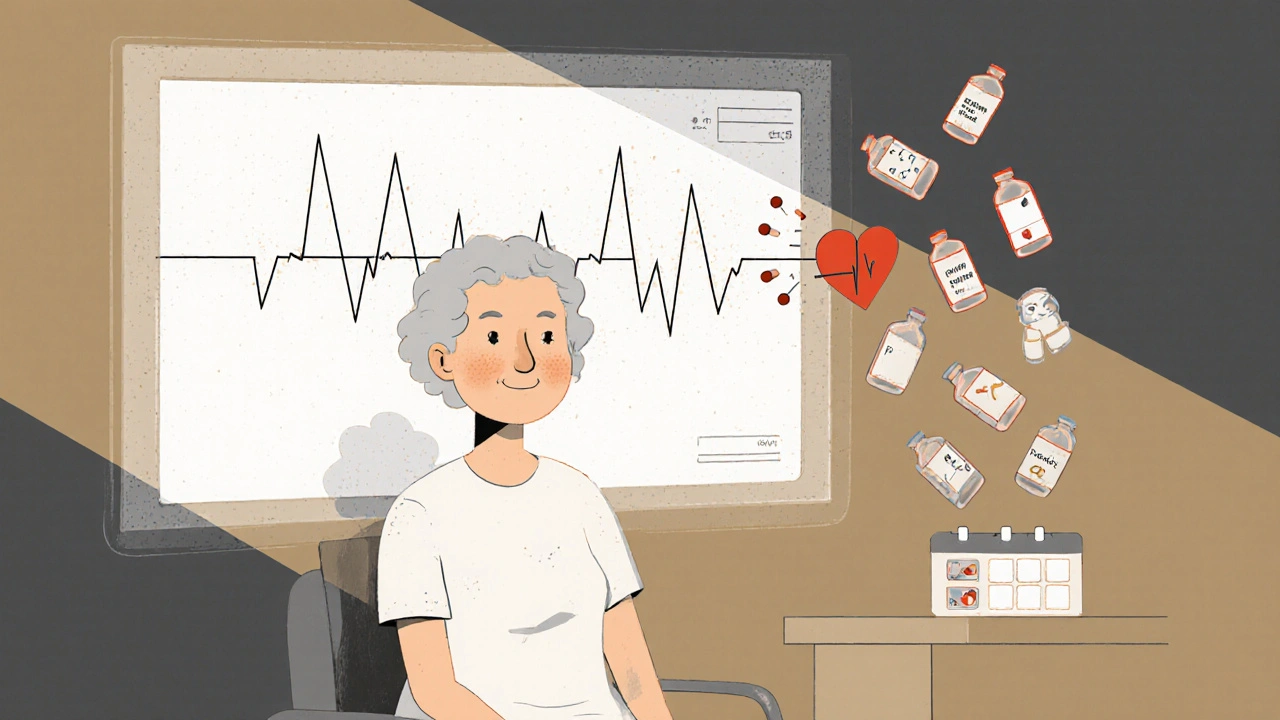
How to Measure QT Correctly
You can’t just glance at an ECG and guess. QT measurement is tricky. The heart rate changes how long the interval looks. That’s why we correct it. Two formulas exist:- Bazett’s formula: QTc = QT / √RR - still common, but flawed
- Fridericia’s formula: QTc = QT / ∛RR - more accurate, especially at high or low heart rates
When and How to Monitor
Monitoring isn’t one-size-fits-all. It depends on risk. For low-risk patients (no heart disease, no electrolyte issues, no other QT drugs):- No routine ECG needed
- Only monitor if new symptoms arise (dizziness, palpitations, fainting)
- Before starting: Get a baseline ECG. Measure QTc using Fridericia’s formula. If QTc >450 ms (men) or >470 ms (women), avoid these antibiotics.
- For macrolides: British Thoracic Society guidelines say repeat ECG at 1 month after starting. If QTc increases by more than 60 ms from baseline, stop the drug.
- For fluoroquinolones: First ECG 7-15 days after starting, then monthly for the first 3 months, then as needed.
- Timing matters: ECGs should ideally be done 2 hours after the dose-when drug levels peak.

What to Do If QT Prolongation Shows Up
If QTc exceeds 500 ms-or increases by more than 60 ms from baseline-stop the antibiotic immediately. No exceptions. No “let’s wait and see.” Then fix what you can:- Check potassium and magnesium. Target potassium >4.0 mmol/L and magnesium >2.0 mg/dL. IV correction can be lifesaving.
- Stop all other QT-prolonging drugs if possible.
- Correct dehydration and hypothyroidism.
- Consider magnesium sulfate infusion if TdP develops-this is standard emergency care.
Why This Matters Beyond the ECG
This isn’t just about picking a safer antibiotic. It’s about changing how we think about prescribing. Fluoroquinolones are still overused for simple UTIs-especially in older women. But the FDA and multiple guidelines now say: don’t. The risk of a fatal arrhythmia outweighs the benefit for a minor infection. Azithromycin or nitrofurantoin are safer alternatives. Antimicrobial stewardship programs aren’t just about preventing resistance. They’re about preventing cardiac death. Hospitals that track QT prolongation in their antibiotic use report fewer cardiac events. That’s not a side note-it’s a core safety metric.What’s Next?
Research is moving fast. Tools are being built to predict risk on the spot-combining age, sex, labs, meds, and ECG data into a single score. Genetic testing for long QT mutations is becoming more accessible. And big databases like the FDA’s FAERS and CNODES are tracking real-world outcomes, revealing dangerous drug combos before they become headlines. The message is clear: QT prolongation isn’t a rare side effect. It’s a predictable, preventable danger. And every time we prescribe a fluoroquinolone or macrolide without checking the ECG or considering the patient’s full risk profile, we’re gambling with their life. The tools to prevent this are here. It’s time to use them.Can azithromycin cause QT prolongation?
Yes, azithromycin can prolong the QT interval, but its risk is significantly lower than erythromycin or clarithromycin. It’s considered low-risk for most patients. However, in those with multiple risk factors-like older age, female gender, low potassium, or other QT-prolonging drugs-it can still trigger Torsades de Pointes. Always check baseline ECG and avoid combining it with other cardiac-risk drugs in vulnerable patients.
Is ciprofloxacin safe for the heart?
Ciprofloxacin carries a low risk of QT prolongation compared to other fluoroquinolones like moxifloxacin. But “low risk” doesn’t mean “no risk.” In patients over 65, with kidney disease, low magnesium, or on diuretics, even ciprofloxacin can push QTc into the danger zone. Always assess the full clinical picture before prescribing.
Should I get an ECG before taking a macrolide?
Yes-if you’re over 65, female, have heart disease, low potassium, or are taking other QT-prolonging drugs. The British Thoracic Society recommends a baseline ECG before starting any macrolide in these patients. If your QTc is already above 450 ms (men) or 470 ms (women), avoid the drug. A simple ECG can prevent a cardiac arrest.
What’s the best way to correct QT prolongation?
Stop the offending drug immediately. Then correct reversible causes: give IV magnesium sulfate (especially if TdP occurs), raise potassium to above 4.0 mmol/L, and correct any low magnesium. Avoid pacing or drugs that slow the heart further. In emergencies, temporary pacing or isoproterenol may be used to increase heart rate and shorten QT. Prevention is always better than emergency treatment.
Can fluoroquinolones be used for UTIs in older women?
Guidelines now strongly advise against it. Older women with uncomplicated UTIs often have multiple risk factors-age, female sex, kidney changes, and polypharmacy. Fluoroquinolones increase their risk of fatal arrhythmias far beyond any benefit. Nitrofurantoin, fosfomycin, or trimethoprim-sulfamethoxazole are safer, equally effective alternatives. Prescribing fluoroquinolones for simple UTIs is outdated and dangerous.






8 Comments
Of course the pharmaceutical giants don’t want you to know this. They’d rather you die quietly from a ‘natural cause’ than admit their $20 pills are basically heart grenades. QT prolongation? That’s just the FDA’s polite way of saying ‘we knew this would kill people and still let it slide.’ And don’t get me started on how they let azithromycin stay on the shelf while sparfloxacin got axed. Coincidence? Nah. Profit motive. Always.
ok so like… i just took cipro for a UTI last month and now i’m paranoid my heart’s gonna explode. but also, isn’t this just doctors being dramatic? like, i’ve had 3 antibiotics in 5 years and i’m fine. why are we acting like every woman over 65 is a ticking bomb? also, i think the ECG thing is just a way for hospitals to bill more. lol. #freehealthcare #notbuyingit
While the clinical implications of QT prolongation are well-documented in peer-reviewed literature, the assertion that fluoroquinolones and macrolides are ‘top drug culprits’ requires contextual qualification. The absolute risk remains low in healthy populations, and the relative risk increase is most pronounced in the presence of polypharmacy and electrolyte derangements. It is imperative to distinguish between population-level statistical associations and individual clinical risk. The ECG monitoring protocols cited are evidence-based, but their implementation must be stratified by risk, not applied universally. Failure to do so results in iatrogenic harm through unnecessary testing and patient anxiety.
So let me get this straight - you’re telling me that the same doctors who gave me azithromycin for my ‘sinus infection’ that turned out to be allergies are now suddenly worried about my heart? And they want me to get an ECG before taking a simple antibiotic? Who’s paying for this? My insurance? My deductible? I’ve got three kids and a dog with a yeast infection - I can’t be running to the hospital every time I sneeze. This isn’t medicine. This is fearmongering dressed up as guidelines.
There’s something deeply human about how we treat medical risk. We want absolutes - safe, dangerous, black, white. But the heart doesn’t work like that. It’s a symphony of ions, currents, and timing. A QT interval is just one note. The real danger isn’t the drug - it’s the assumption that one note can be judged in isolation. We’ve built systems that reduce patients to risk factors, then blame the system when it fails. Maybe the question isn’t ‘which antibiotic is safest?’ but ‘why are we prescribing so many antibiotics at all?’
bro i just took moxifloxacin last week and now i’m scared to even breathe 😭. like why is this not on the box?? ‘WARNING: May cause sudden cardiac death if you’re a woman over 60, have a cold, and ate a banana today.’ 🤡. also, fridericia’s formula? sounds like a yoga pose. just tell me if i’m gonna die or not. and why is cipro ‘low risk’ but still on the list?? this is so confusing. someone please make a flowchart. or a meme. i need a meme.
As a clinician practicing in Lagos, I’ve seen firsthand how these guidelines are a luxury in resource-limited settings. We don’t have ECG machines in every clinic, nor do we have the luxury of alternatives like nitrofurantoin. But we do know this: untreated UTIs kill faster than QT prolongation. The answer isn’t to abandon antibiotics - it’s to adapt. Train community health workers to recognize syncope and palpitations. Use point-of-care electrolyte tests. Prioritize the most vulnerable. Risk stratification must be practical, not theoretical. We can’t wait for perfect systems to save lives - we must build them from the ground up.
So I’m supposed to believe that a simple UTI is worth risking my heart? And now I’m supposed to get an ECG before taking azithromycin? But my doctor didn’t even ask if I was on birth control or if I’ve ever had a panic attack. This isn’t medicine. This is a trap. And now I’m stuck between a rock and a hard place - either I get sick, or I get scared to death. Thanks, healthcare system. You’re doing a great job.