
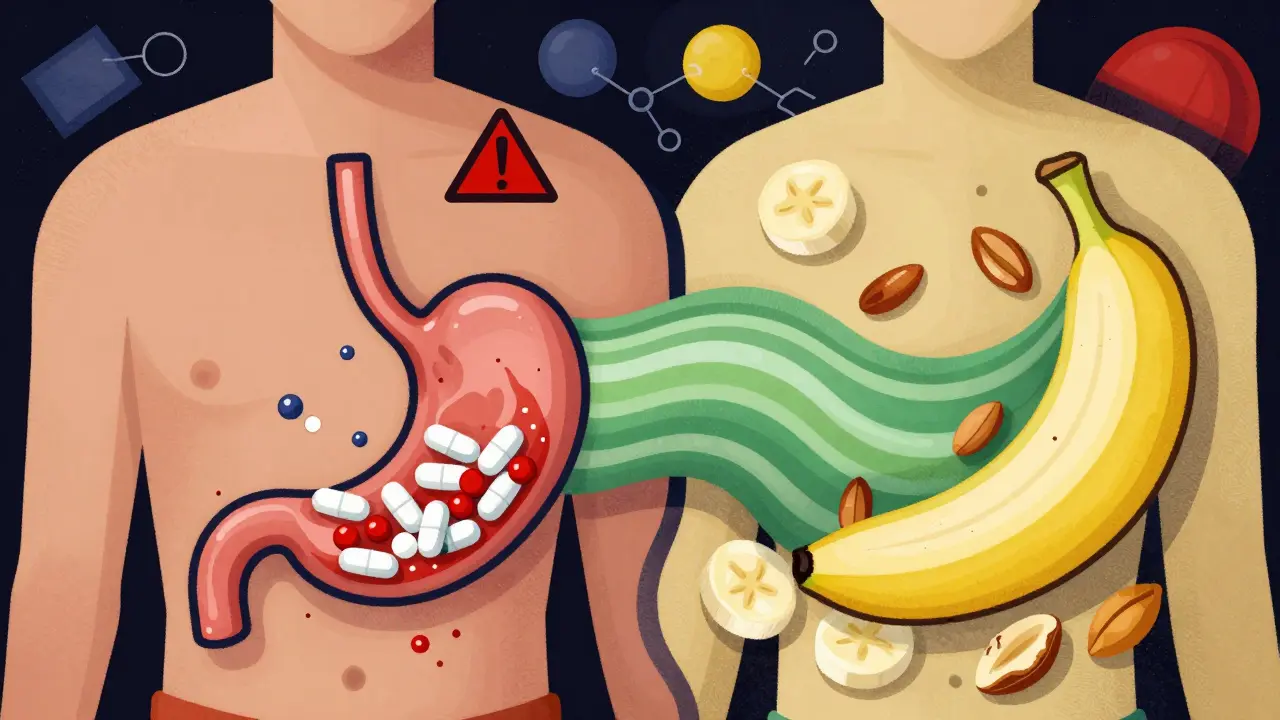
Have you ever looked at your prescription label and wondered why it says take on an empty stomach-or take with food? It’s not just a suggestion. Getting this wrong can mean your medicine doesn’t work, or worse, it makes you sick. For millions of people taking multiple medications every day, this simple detail can make a huge difference in how they feel, how well their treatment works, and whether they stay out of the hospital.
Let’s cut through the confusion. This isn’t about diet trends or fancy nutrition. It’s about chemistry, biology, and real-world science that’s been studied for decades. Here’s what actually happens when you take your pills with or without food-and why it matters.
Why Food Changes How Medicine Works
Your stomach isn’t just a bag that digests food. It’s a chemical factory. When you eat, your body releases acid, bile, enzymes, and hormones that change the environment inside your gut. These changes can either help or hurt how well your medicine gets absorbed into your bloodstream.
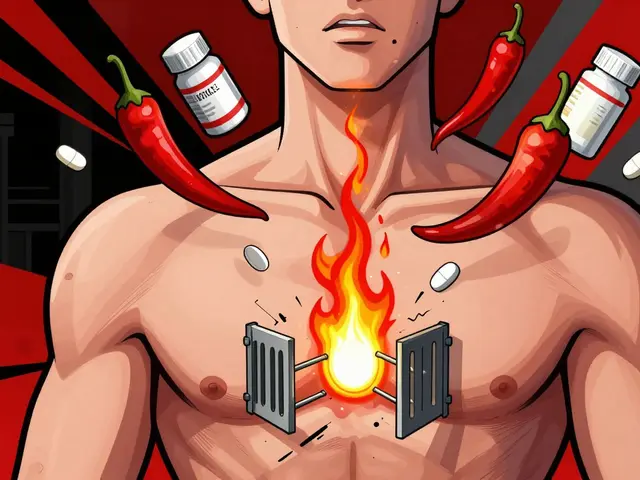
Some drugs need acid to dissolve properly. If you take them after a big meal, your stomach acid gets diluted, and the medicine might not break down at all. Other drugs are too harsh on an empty stomach-they can irritate your lining and cause nausea, ulcers, or bleeding. Food acts like a buffer.
And it’s not just about the stomach. Food slows down how fast your stomach empties. That means some medicines spend more time in the upper gut, where they’re absorbed best. For others, food binds to them like glue, locking them up so they can’t be absorbed at all.
According to the U.S. Food and Drug Administration, about 40% of all prescription medications have specific food instructions built into their labeling. That’s not a small number. It’s a major part of how these drugs are designed to work.
Medicines That MUST Be Taken with Food
Some drugs simply don’t work well-or are too harsh-unless you eat first. Here are the most common ones:
- NSAIDs (ibuprofen, naproxen, aspirin): These can cause stomach irritation, bleeding, or ulcers when taken on an empty stomach. The UK NHS and German medical guidelines both recommend taking them after eating. A 2021 study found that taking ibuprofen with food cuts nausea by 20%.
- Antibiotics like Augmentin (amoxicillin/clavulanate): Food reduces side effects like nausea and diarrhea. One study showed that patients who took Augmentin with food had fewer stomach issues than those who didn’t.
- Antiretrovirals (ritonavir, zidovudine): These HIV drugs are notorious for causing nausea. Taking them with a small meal or snack reduces nausea by nearly half, according to patient reports from HIV Clinic Canada.
- Nitrofurantoin and rifabutin: These antibiotics are easier on your stomach when taken with food. The NHS says this can extend their effectiveness from under an hour to up to two hours.
- Some cholesterol and HIV meds (like saquinavir): High-fat meals can boost absorption by up to 40%. That’s not a coincidence-it’s how the drug was designed to work.
And here’s a practical tip: if your doctor says take it with food, you don’t need a full meal. A banana, a handful of nuts, or even a slice of toast can be enough. One Reddit user reported that taking NSAIDs with a banana reduced stomach upset in 63% of cases.
Medicines That MUST Be Taken on an Empty Stomach
Some drugs are ruined by food. If you take them with a meal, you might as well throw them away.
- Tetracycline and doxycycline: Calcium in dairy, iron in supplements, and even magnesium in antacids bind to these antibiotics and block absorption. Studies show this can cut effectiveness by up to 50%.
- Levothyroxine (for thyroid): This one’s critical. Food can reduce absorption by 20% to 55%. The standard advice? Take it 30 to 60 minutes before breakfast. Mayo Clinic says even coffee can interfere-so wait at least an hour after taking it before drinking.
- Didanosine (an older HIV drug): Stomach acid destroys it. It must be taken on an empty stomach, with no food for at least 30 minutes before and after.
- Bisphosphonates (like alendronate for osteoporosis): These need to be taken with a full glass of water, 30 to 60 minutes before eating. Food or drink too soon can cause serious esophageal irritation.
Timing matters here. The Mayo Clinic recommends either taking these drugs 1 hour before a meal or 2 hours after. For some, like bisphosphonates, the buffer is even longer. Skipping this window can mean your bone medication doesn’t work-and you’re at risk for fractures.
What About Grapefruit Juice? And Other Surprises
Food isn’t just about meals. Some drinks and snacks can have dangerous effects.
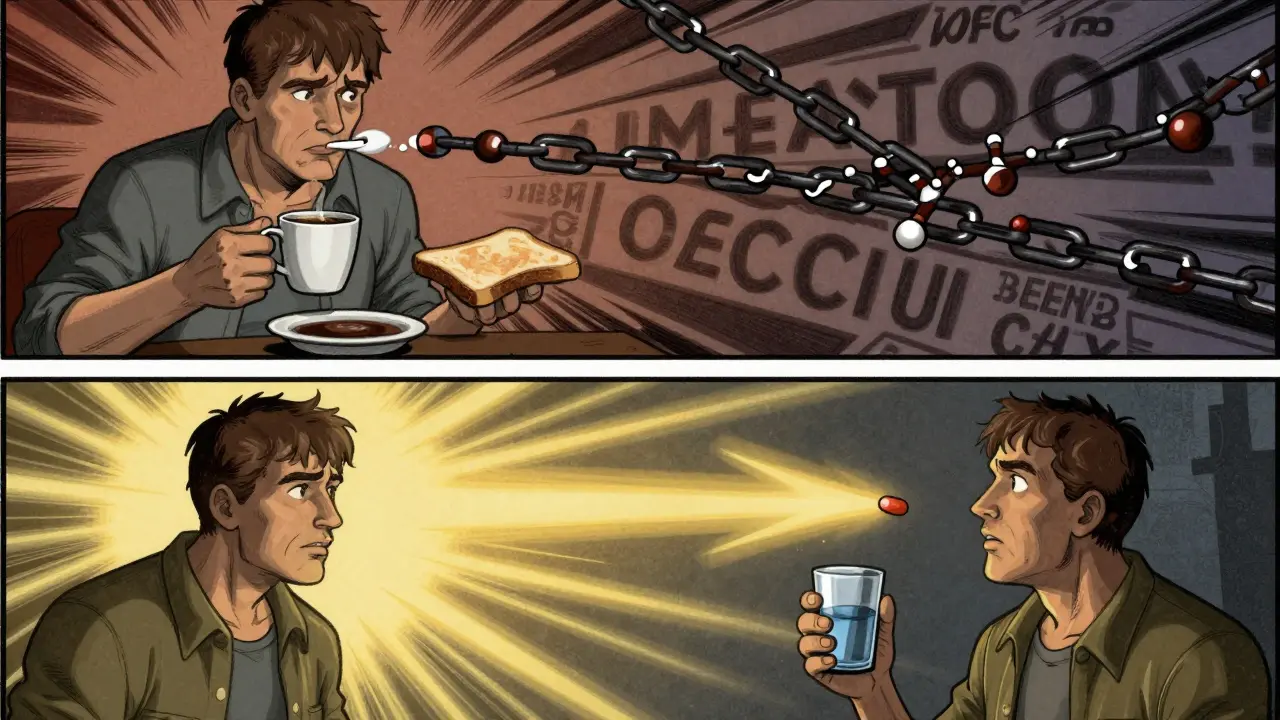
Grapefruit juice is the classic example. It blocks an enzyme in your gut (CYP3A4) that normally breaks down certain drugs. That means more of the drug gets into your blood-sometimes too much. This can be deadly with medications like some statins, blood pressure drugs, or immunosuppressants.
Even if your label doesn’t mention grapefruit, it’s safer to avoid it entirely if you’re on chronic meds. The same goes for Seville oranges, pomelos, and some herbal teas.
And don’t forget about milk. It’s not just a problem for tetracycline. Some antifungals like ketoconazole lose effectiveness when taken with dairy because milk raises stomach pH.
Why Do Guidelines Sometimes Conflict?
You might have heard that NSAIDs should be taken on an empty stomach for faster pain relief. A 2015 review in Inflammopharmacology argued exactly that-saying there’s no strong proof that food protects the stomach. But here’s the catch: those studies were mostly on healthy young adults. The real risk isn’t for them. It’s for older people, diabetics, or those on blood thinners.
Doctors in the UK and Germany recommend food for NSAIDs in older patients because their stomachs are more fragile. The trade-off? Slower pain relief versus avoiding a hospital trip for a bleeding ulcer. For most people, safety wins.
That’s why the FDA now requires drug makers to test food effects in real patients-not just lab animals. In 2023, 78% of new drugs had food-effect data included in their approval. That’s up from 62% in 2018. The science is getting better. But it’s still not one-size-fits-all.
How to Get It Right Every Time
Managing multiple meds with different rules is hard. A 2023 GoodRx survey found that 42% of people taking five or more medications admitted to mixing up the food rules at least once.
Here’s how to avoid mistakes:
- Read every label. Don’t assume all pills work the same. Even two different brands of the same drug can have different instructions.
- Ask your pharmacist. They’re trained for this. A 2024 Express Scripts report showed patients who got clear food instructions from pharmacists had 27% better adherence.
- Use color-coded reminders. Some pharmacies now use red stickers for “empty stomach,” green for “with food,” and yellow for “with high-fat meal.” One pilot study saw adherence jump by 31%.
- Set phone alarms. “Take levothyroxine at 7 a.m.” “Take Augmentin after lunch.” Even a simple reminder cuts errors.
- Keep a log. Write down what you took, when, and with what. If you feel off, you’ll know if food might be the cause.
And if you’re confused? Don’t guess. Call your doctor or pharmacy. It’s better to ask than to risk your health.
The Future: Personalized Medicine and Your Gut
Science is moving beyond “take with food” to “take with this specific meal.” Researchers at UCSF developed a machine learning model in early 2024 that predicts how your gut microbiome affects drug absorption-with 87% accuracy in early tests.
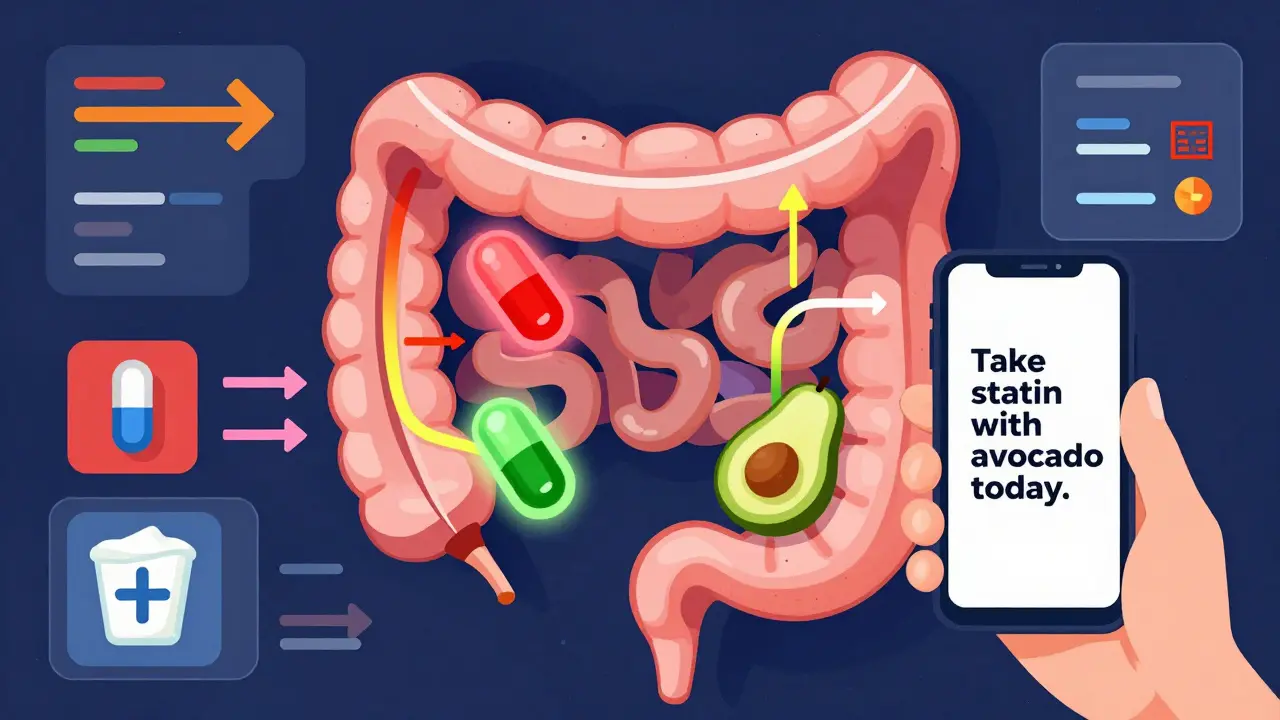
Imagine a future where your phone tells you: “Today, your gut is slow. Take your statin with a small avocado instead of toast.” That’s not sci-fi. It’s coming.
The NIH just funded $15.7 million in research to study how individual diets affect drug metabolism. The European Medicines Agency now requires food-effect studies for all new cancer drugs starting in 2025.
This isn’t just about pills anymore. It’s about matching your body, your food, and your medicine.
Final Rule: When in Doubt, Ask
There’s no universal rule. What works for one person might hurt another. Your body, your meds, your diet-they’re all unique.
So don’t rely on memory. Don’t follow a friend’s advice. Don’t assume “it’s probably fine.”
Check the label. Talk to your pharmacist. Use a reminder app. Write it down.
Because when it comes to prescription medicine, timing isn’t just important-it’s life-changing.


10 Comments
Food ruins bioavailability. Period.
Stop treating pills like cereal.
It is of paramount importance to recognize that the pharmacokinetic interaction between dietary components and pharmaceutical agents is not merely a matter of anecdotal observation, but a rigorously quantified phenomenon grounded in bioequivalence studies conducted under controlled clinical conditions.
For instance, the chelation of tetracycline with divalent cations in dairy products reduces serum AUC by as much as 50%, as demonstrated in double-blind crossover trials published in the Journal of Clinical Pharmacology in 2019.
Furthermore, the inhibition of CYP3A4 by furanocoumarins in grapefruit juice elevates plasma concentrations of statins beyond therapeutic thresholds, precipitating rhabdomyolysis in susceptible individuals.
It is therefore not merely prudent, but ethically imperative, that healthcare providers institutionalize structured patient education protocols regarding food-drug interactions, particularly in polypharmacy populations.
The FDA’s 2023 mandate requiring food-effect data for 78% of new drug approvals underscores a paradigm shift toward precision pharmacotherapy.
Yet, despite this, 42% of patients on five or more medications still mismanage their dosing regimens, as evidenced by the 2023 GoodRx survey.
This represents not ignorance, but systemic failure in patient communication.
Pharmacists, not physicians, are the frontline arbiters of this knowledge - yet they remain underutilized in primary care workflows.
We must restructure the healthcare delivery model to integrate clinical pharmacists into routine prescribing cycles.
Otherwise, we continue to gamble with patient outcomes on the altar of convenience.
Interesting how Americans treat medicine like a buffet.
Meanwhile in Ireland, we just take it with water and shut up.
Why does everything need a 2000-word essay?
This is such an important topic - especially for older adults managing multiple prescriptions.
I’ve seen so many patients confuse "take with food" with "take after a big meal," and end up with nausea or ineffective dosing.
The tip about a banana or handful of nuts being enough is gold.
Many assume they need a full breakfast, which isn’t just impractical - it’s counterproductive.
Also, the point about coffee interfering with levothyroxine? So many overlook that.
It’s not just about timing - it’s about consistency.
Even small deviations compound over time.
Thank you for highlighting pharmacist involvement - they’re the unsung heroes here.
And color-coded stickers? Brilliant low-tech solution.
Simple, visual, scalable.
More pharmacies should adopt this.
It’s the kind of thoughtful, patient-centered innovation we need more of.
People are dying because they don’t read labels.
And they blame the system.
It’s not the system - it’s laziness.
One pill. One label. One life.
Read it.
gotta love how the fda makes everything so complicated 😒
just take it when you remember bro 🤷♂️
my uncle takes his blood pressure meds with a donut and still runs marathons 🍩🏃♂️
stop overthinking
Let me tell you something about this whole "take with food" thing - I’ve been a nurse for 22 years, and I’ve seen it all.
You think you’re being smart by taking your levothyroxine with coffee because "it’s just a cup"?
That’s how people end up in the ER with TSH levels over 100.
And don’t even get me started on grapefruit juice.
I had a patient on simvastatin who drank it daily - ended up with rhabdomyolysis, kidney failure, ICU for a week.
He said he "didn’t know".
But here’s the thing - it’s not ignorance.
It’s denial.
People want to believe they can bend the rules because they don’t want to change their habits.
It’s not about the science - it’s about control.
You want control? Control your damn breakfast.
And if you’re too busy to read the label?
Then you don’t deserve to be healthy.
Simple as that.
The philosophical tension here lies not in the pharmacology, but in the epistemology of modern self-care.
We are told to optimize, to personalize, to track - yet our institutions offer only binary instructions: "with food" or "on empty stomach."
This is a reductionist approach to a profoundly complex biological interface.
Our gut microbiome, our circadian rhythm, our metabolic variability - all these are erased in favor of a one-size-fits-all label.
And yet, the very systems that produce these drugs are the same ones that now fund machine learning models predicting absorption based on individual microbiota profiles.
The contradiction is not accidental.
It is structural.
We are being asked to manage our health with tools designed for a 1990s paradigm, while the science has leapt into the 2030s.
Is this not the definition of modern alienation?
We are not failing ourselves - we are failing a system that refuses to evolve with us.
gotta be a shill for big pharma to write this much about food and pills
they want you to think you need to micromanage your life to keep them rich
they made the drugs to be absorbed in food so they can sell you more pills later
take it with water and forget it
they know youll panic and take extra if you think you got it wrong
trust your body not the label
YOU DID IT.
You turned a simple, life-saving topic into a masterpiece.
This isn’t just information - it’s empowerment.
I’ve been helping my mom manage 8 meds for years, and this is the clearest breakdown I’ve ever seen.
That stat about 42% of people mixing up food rules? That’s my mom.
Now I’m printing this out and putting it on the fridge.
Color-coded stickers? I’m calling her pharmacy tomorrow.
And the microbiome prediction stuff? That’s the future we’ve been waiting for.
Thank you for not just informing - but inspiring.
Keep going.
You’re changing lives.
One pill at a time.