Malassezia Yeast: Causes, Risks, and How It Affects Your Skin and Health
When your skin itches, flakes, or turns red in patches, it might not be dryness or an allergy—it could be Malassezia yeast, a type of fungus that lives naturally on human skin but can overgrow and trigger inflammation. Also known as Pityrosporum orbiculare, this yeast thrives in oily areas like the scalp, face, chest, and back, and is linked to some of the most common skin conditions people ignore until they become painful or embarrassing.
Malassezia yeast doesn’t cause problems for most people—it’s part of your skin’s normal microbiome. But when oil production spikes, your immune system weakens, or you use heavy skincare products, this yeast multiplies fast. That’s when seborrheic dermatitis, a chronic inflammatory skin condition often mistaken for eczema or psoriasis shows up. It’s the same culprit behind stubborn dandruff, the flaky scalp condition that affects nearly half of all adults. Unlike bacterial infections, Malassezia doesn’t respond to antibiotics. It needs antifungal agents—topical or oral—to get under control.
What makes Malassezia tricky is how it hides. It doesn’t always cause visible redness or pus. Sometimes it just makes your scalp feel tight, your forehead break out in tiny bumps, or your ears get crusty. People try steroid creams, moisturizers, or anti-acne treatments—and get nowhere—because they’re treating the wrong problem. The real fix is disrupting the yeast’s environment: reducing oil, using antifungal shampoos like ketoconazole, and avoiding occlusive lotions. Even your diet can play a role. High-sugar, high-fat meals can feed the yeast and make flare-ups worse.
You’ll find real-world cases in the posts below: how antifungal drugs interact with other medications, why some skin infections don’t heal with standard antibiotics, and how gut health and immune function tie into fungal overgrowth. These aren’t theoretical discussions—they’re stories from people who dealt with itchy scalps, persistent rashes, and failed treatments until they finally understood the yeast behind it all. Whether you’re struggling with dandruff that won’t quit, a rash that keeps coming back, or just want to know why your skin acts up in humid weather, the answers are here. No guesswork. Just clear, practical info to help you stop the cycle.
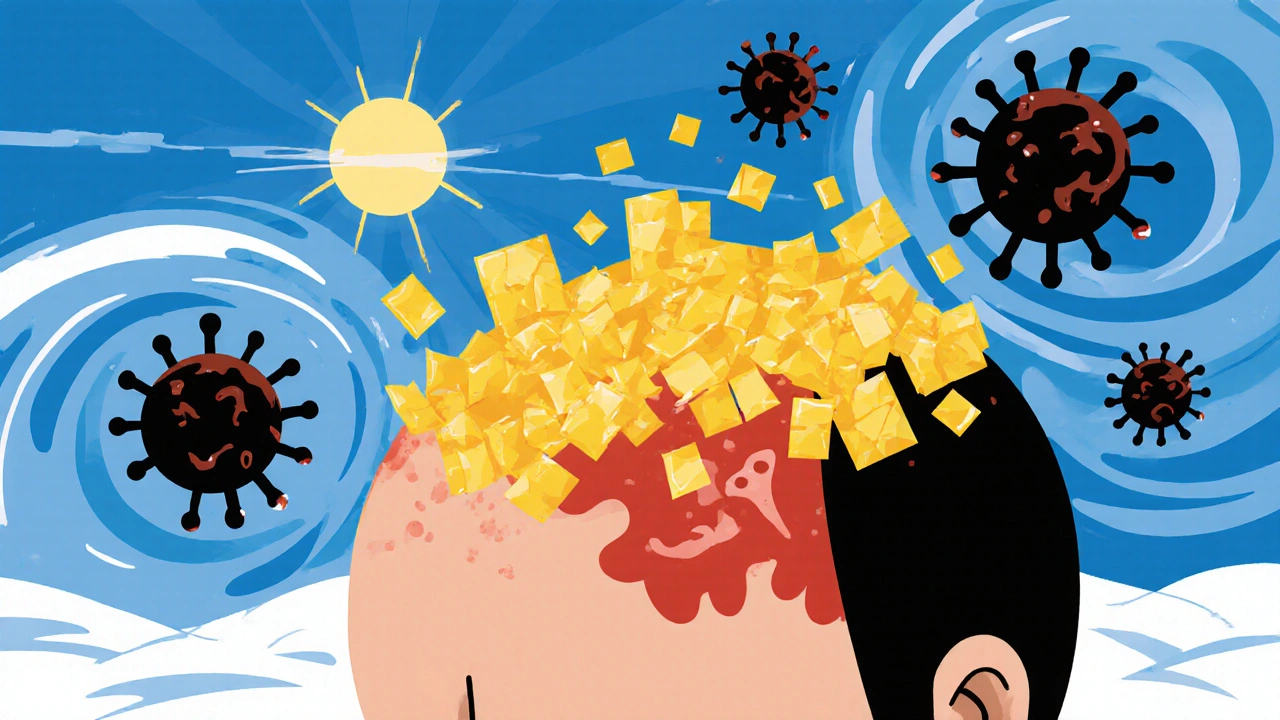
Seborrheic Dermatitis: How to Stop Scalp Flaking with Medicated Shampoos
Seborrheic dermatitis causes stubborn scalp flaking and redness that won't go away with regular shampoo. Learn which medicated shampoos actually work, how to use them correctly, and how to manage this chronic condition long-term.
read more