
Penicillin-Cephalosporin Cross-Reactivity Calculator
Your Reaction History
Your Personalized Risk Assessment
Risk Level:
Cross-Reactivity Probability:
Why This Matters
Understanding your true allergy status can help you access more effective, safer antibiotics while reducing your risk of C. difficile infections and antibiotic resistance.
Recommended Action
Additional Information:
More than 10% of people in the U.S. say they’re allergic to penicillin. But here’s the truth: 95% of them aren’t. That’s not a typo. Most of those labels were assigned after a childhood rash, a stomach ache, or a doctor’s guess-and they’ve stuck for decades. The problem? It’s not just inconvenient. It’s dangerous. When you’re labeled penicillin-allergic, doctors reach for stronger, costlier, and often less effective antibiotics. That means more side effects, longer hospital stays, and higher risk of deadly infections like C. difficile. The same confusion spills over to cephalosporins-another major class of beta-lactam antibiotics. Are they safe? Should you avoid them? Let’s cut through the noise.
What Exactly Is a Beta-Lactam Allergy?
Beta-lactam antibiotics are a family of drugs built around a four-membered ring called the beta-lactam ring. Penicillins (like amoxicillin and ampicillin) and cephalosporins (like ceftriaxone and cephalexin) both have it. That shared structure is why people worry about cross-reactivity. But the allergy isn’t to the ring itself-it’s to how your immune system reacts to the drug’s side chains and breakdown products. A true IgE-mediated allergy triggers an immediate reaction: hives, swelling, trouble breathing, or even anaphylaxis. But most people who say they’re allergic never had that. They had a rash. Or nausea. Or a fever after a viral infection. Those aren’t allergies. They’re side effects. And they don’t mean you can’t take penicillin again.Penicillin Reactions: What Actually Happens
If you’ve had a real penicillin allergy, symptoms usually show up within an hour. Hives appear in about 90% of cases. Swelling of the lips, tongue, or throat-angioedema-happens in half. Wheezing or trouble breathing? That’s in 30%. Anaphylaxis? Rare. Only 0.01% to 0.05% of penicillin doses cause it. But here’s what’s worse: most people who think they’re allergic never got tested. They were told as kids, never re-evaluated, and now avoid penicillin for life. That’s a problem because penicillin is still the best treatment for syphilis, strep throat, and many bacterial infections. Avoiding it means using drugs like vancomycin or clindamycin, which are more toxic and increase your risk of C. difficile by up to 50%.Cephalosporin Reactions: The Misunderstood Link
For years, doctors told patients with penicillin allergies to avoid all cephalosporins. The old rule? 10% to 30% cross-reactivity. That number was never backed by solid data. Today, we know better. For first-generation cephalosporins (like cephalexin), the real cross-reactivity rate is closer to 1% to 3%. For later generations-like ceftriaxone or cefdinir-it’s even lower, often near zero. Why? Because their side chains are structurally different. Ceftriaxone, for example, shares almost nothing chemically with penicillin. Yet, many hospitals still block it for anyone with a penicillin label. That’s outdated. And it’s hurting patients. A 2022 study showed hospitals that stopped automatically avoiding cephalosporins in penicillin-allergic patients reduced broad-spectrum antibiotic use by 23% and cut C. difficile infections by 17%.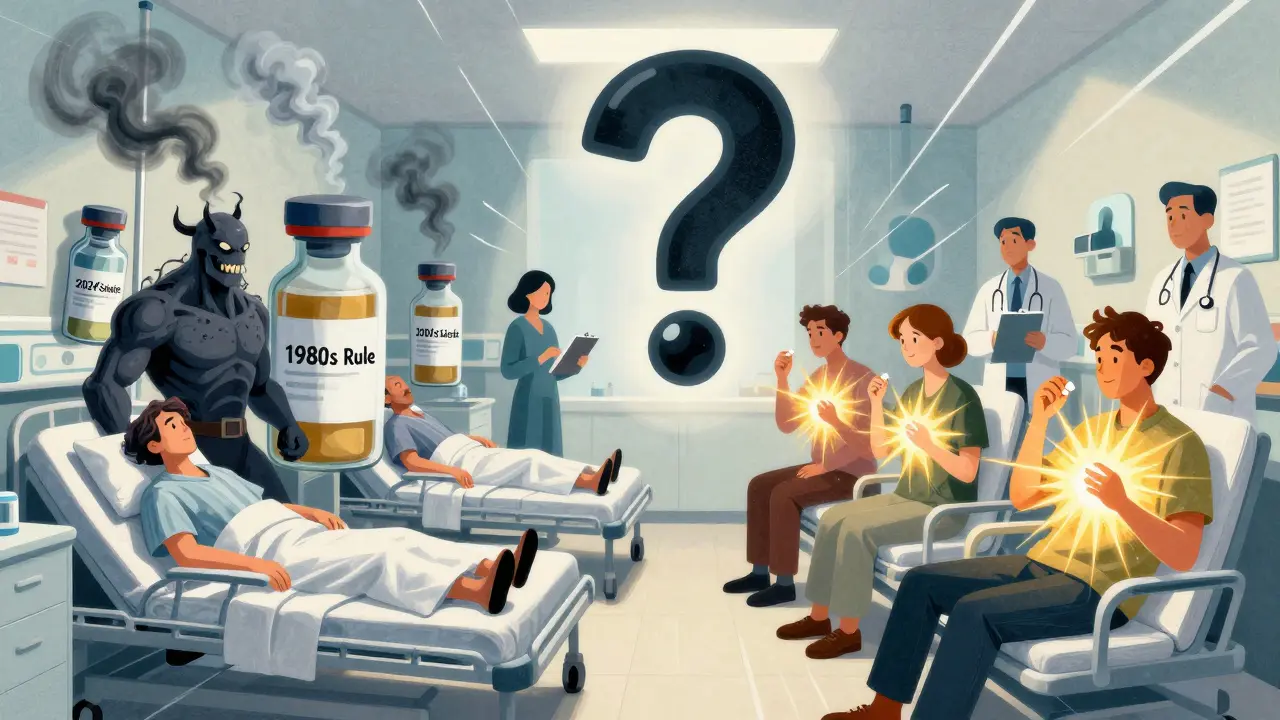
How Doctors Test for Real Allergies
If you’ve been labeled allergic, the only way to know for sure is testing. The gold standard? Skin testing. It’s quick, safe, and accurate. An allergist uses tiny amounts of penicillin major and minor determinants-specific parts of the drug that trigger reactions-to prick or inject your skin. If there’s no reaction, you’re almost certainly not allergic. The negative predictive value? 97% to 99%. That means if you test negative, you can safely take penicillin again. For low-risk cases-like a mild rash that happened more than 10 years ago-some clinics skip skin testing and just give a single oral dose of amoxicillin under observation. If you don’t react in an hour, you’re cleared. This is called an oral challenge. It’s simple, cheap, and effective. But most doctors don’t offer it. Why? Because they don’t have the time, training, or access to allergists.What If You Really Are Allergic?
If you’ve had a true anaphylactic reaction to penicillin-swelling, breathing trouble, drop in blood pressure-you need to avoid it. But even then, there’s a path forward. Desensitization exists. It’s not a cure. It’s a temporary reset. In a hospital setting, under constant monitoring, you’re given tiny, increasing doses of penicillin every 15 to 30 minutes over 4 to 8 hours. Your immune system gets tricked into tolerating it-just long enough to finish your treatment. This is how patients with neurosyphilis or syphilis in pregnancy get the only drug that works: penicillin. Success rates? Over 80%. But it’s not for everyone. You need a controlled environment. Emergency equipment. Trained staff. And it only lasts as long as you’re taking the drug. Once you stop, your allergy comes back.Why This Matters Beyond You
This isn’t just about individual risk. It’s about public health. Every time a patient with a false penicillin allergy gets clindamycin instead of amoxicillin, we’re contributing to antibiotic resistance. Clindamycin, vancomycin, and fluoroquinolones are broad-spectrum drugs. They kill good bacteria along with bad ones. That’s how superbugs like MRSA and C. difficile spread. The CDC estimates that mislabeling penicillin allergies costs the U.S. healthcare system $2,000 to $4,000 per patient each year. That’s billions. Hospitals with formal allergy delabeling programs have seen vancomycin use drop by 28%. That’s not just savings. That’s lives saved.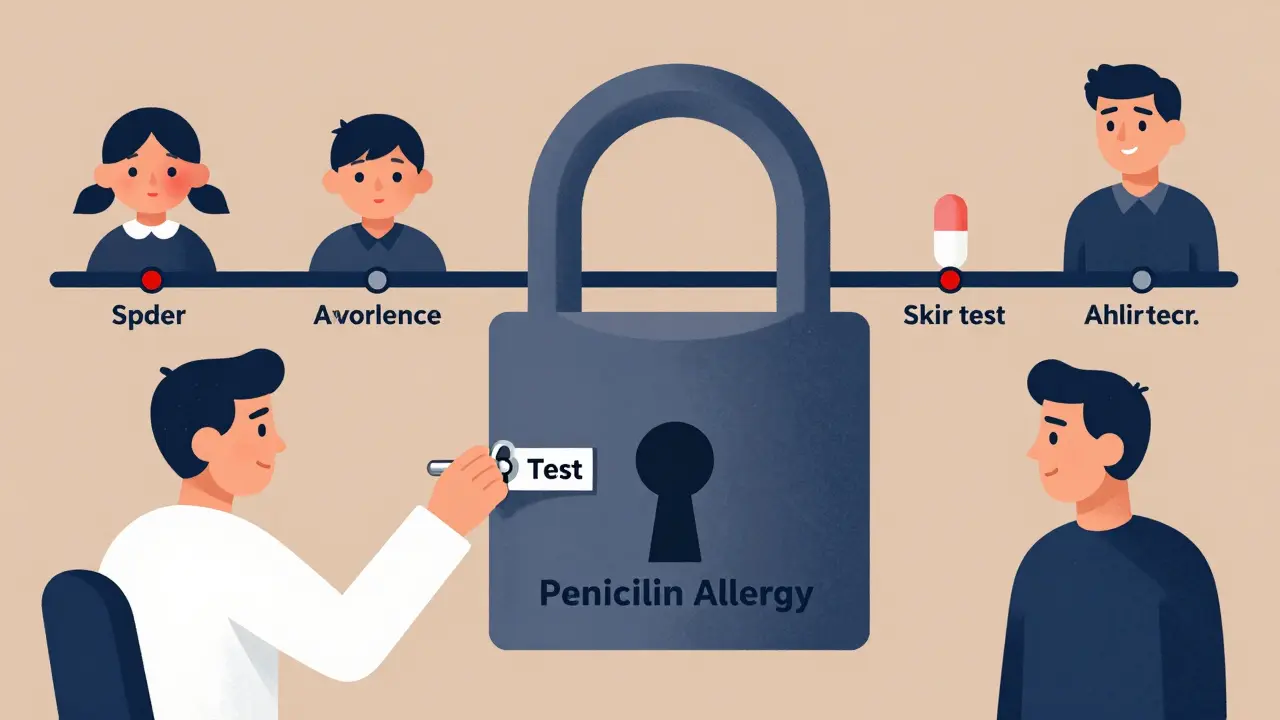
What You Should Do Now
If you’ve been told you’re allergic to penicillin:- Ask: What exactly happened? Was it a rash? Nausea? Anaphylaxis?
- Ask: When did it happen? Was it as a child? More than 10 years ago?
- Ask: Has anyone tested me? If not, request a referral to an allergist.
- Don’t assume cephalosporins are off-limits. Ask if ceftriaxone or cephalexin could be used instead of vancomycin.
- Update your medical records. Don’t write “penicillin allergy.” Write “rash at age 6, never tested.” That helps future doctors make better decisions.
Most people who avoid penicillin do so out of fear. But fear based on outdated info is more dangerous than the drug itself. Testing takes a few hours. It’s safe. It’s covered by insurance. And it could change your medical future.
Real Stories, Real Impact
One patient in Sydney, 42, avoided all penicillins since childhood after a rash. At 38, she got a severe UTI. Her doctor gave her ciprofloxacin. It worked-but she had diarrhea for weeks. Turns out, it was C. difficile. She tested negative for penicillin allergy last year. Now she takes amoxicillin for every infection. No more antibiotics with side effects. No more hospital visits. Just a simple test. That’s the difference.Another man in Melbourne was told he was allergic after a fever during a viral infection. He avoided penicillin for 25 years. When he needed it for endocarditis, he was turned down. He ended up on vancomycin for six weeks. His kidneys took a hit. He tested negative. He’s now on a maintenance dose of amoxicillin-safe, effective, and cheap.
These aren’t rare cases. They’re the norm.
Can I outgrow a penicillin allergy?
Yes. About 80% of people who had a true penicillin allergy lose it after 10 years. That’s why it’s critical to get retested, especially if you were labeled as a child. Allergies don’t usually last a lifetime unless you’ve had repeated exposure or a severe reaction. Most people just never get tested again.
Are cephalosporins safe if I’m allergic to penicillin?
For most people, yes. The cross-reactivity rate is only 1% to 3% for first-generation cephalosporins and even lower for later ones like ceftriaxone. Many doctors still avoid them out of habit, but current guidelines from the CDC and AAAAI say it’s safe to use them unless you’ve had a severe, immediate reaction to penicillin. Always discuss this with your doctor or allergist.
What if I had a rash from penicillin as a kid?
A rash alone-especially if it appeared days after taking the drug-is rarely a true allergy. It’s often a viral rash that happened to coincide with the antibiotic. These are not IgE-mediated reactions and don’t predict future danger. Most allergists will skip skin testing and do an oral challenge with amoxicillin if the rash was mild and occurred more than a year ago.
Is penicillin allergy testing covered by insurance?
Yes, in most cases. In Australia and the U.S., allergy testing for penicillin is typically covered by insurance if ordered by a doctor. The cost of testing is far less than the cost of using alternative antibiotics over time. Many hospitals now offer free or low-cost allergy clinics specifically for this purpose.
Can I take amoxicillin if I’m allergic to penicillin?
Amoxicillin is a type of penicillin. If you’re truly allergic to penicillin, you’re allergic to amoxicillin too. But if your allergy label is wrong-and most are-you can take it safely after testing. Don’t assume you can’t. Get tested. Most people who think they’re allergic to penicillin can take amoxicillin without issue.
What should I do if I need penicillin but can’t get tested?
If you’re in a situation where penicillin is the only effective option-like for syphilis or endocarditis-and testing isn’t available, desensitization is the next step. It must be done in a hospital under supervision. It’s not ideal, but it’s safe and effective. Don’t refuse treatment because you think you’re allergic. Ask your doctor about desensitization.





9 Comments
My mom was told she was allergic to penicillin after a rash at 8. She took amoxicillin last year for a sinus infection-zero issues. Turned out she was never allergic. Why do doctors just assume instead of checking?
Ugh. Of course the medical system is broken. Everyone’s just too lazy to test. I’ve been labeled allergic since I was 5. No one ever asked what happened. Just ‘avoid penicillin.’ Now I’m stuck with clindamycin every time I get a UTI. My gut’s been ruined. And no one cares.
Wait-so you’re telling me… the whole thing… is just a giant mistake?!?!? Like… we’ve been overmedicating people for decades because no one bothered to ask a single question?!?!? This is criminal. Someone’s getting rich off this. Someone’s making billions off these ‘alternative’ antibiotics. I’m not buying it.
You’re not alone. Seriously. If you’ve been told you’re allergic, don’t just accept it. Go get tested. It’s one appointment. One hour. And it could change your whole medical life. I did it last year. Now I take amoxicillin like it’s candy. Best decision ever.
My cousin in Texas got her penicillin label cleared last year after a skin test. She’d been avoiding all beta-lactams since she was 6. Turns out she had a virus when she got the rash. Now she’s on cefdinir for pneumonia. No big deal. Doctors still act like it’s rocket science. It’s not. It’s basic medicine.
Also-cephalosporins? Most of them are basically unrelated to penicillin chemically. It’s like saying ‘if you’re allergic to apples, you can’t eat oranges.’ Just… no. The science’s been updated since 2010. Why are we still stuck in the 90s?
OMG I JUST REALIZED-my grandma’s been on vancomycin for 15 years because she was ‘allergic’ to penicillin. She’s 82. She’s had three C. diff infections. She’s been in the hospital 4 times. We never thought to question it. I’m calling her doctor tomorrow. This is insane.
They’re lying. All of them. The pharma companies made up the ‘allergy’ myth to push expensive antibiotics. They don’t want you to know you can just take penicillin. They’re hiding the truth. The CDC? Controlled. The allergists? Paid off. You think they’d let you test for free if it wasn’t a money grab? Think again.
It’s not just about antibiotics. It’s about how we treat knowledge. We don’t question labels. We don’t revisit diagnoses. We accept ‘allergy’ like it’s a tattoo on your soul. But biology doesn’t work like that. Immune systems adapt. Memories fade. Labels persist. And we pay the price-not just in dollars, but in suffering. We’ve turned medicine into superstition. And we call it science.
I got tested last month. Negative. Took 20 minutes. Now I take amoxicillin without fear. Best $50 I ever spent.