
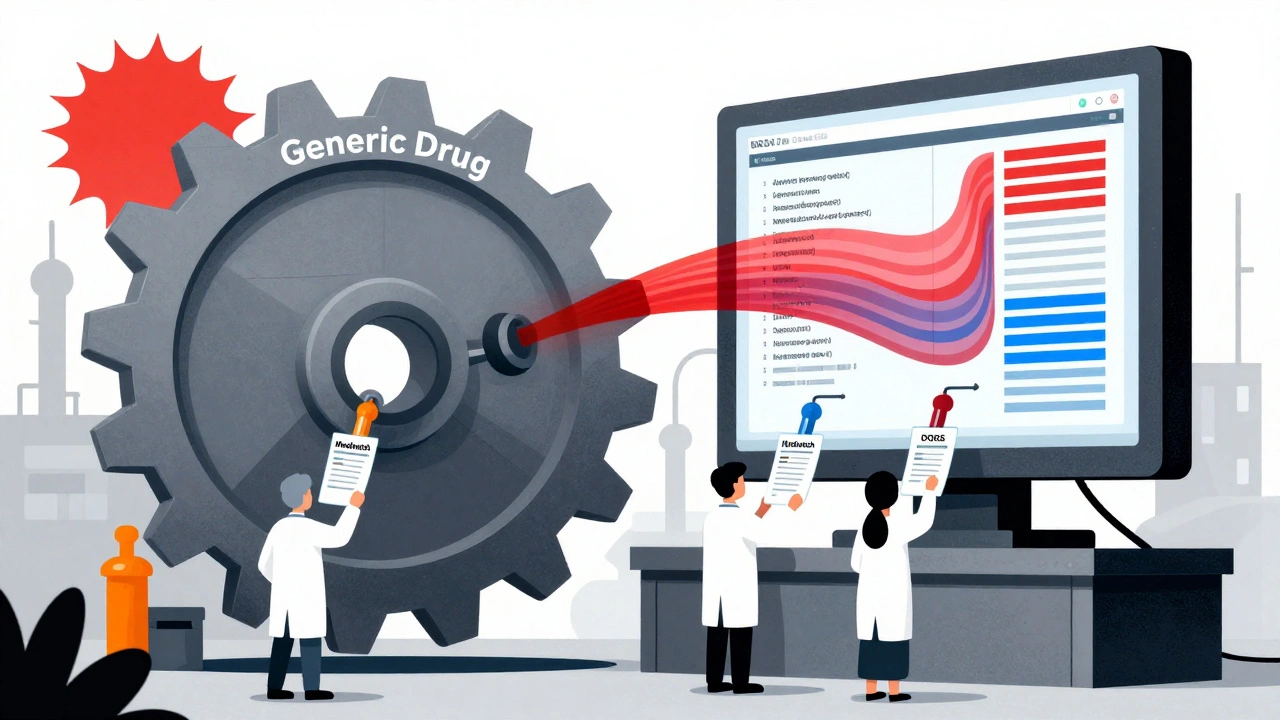
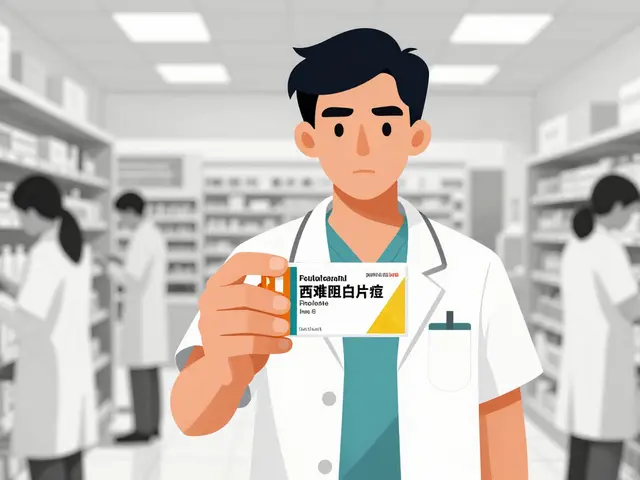
When you pick up a generic pill at the pharmacy, you expect it to work just like the brand-name version. But how does the FDA make sure it’s safe after it hits the market? Unlike brand-name drugs, generics don’t go through new clinical trials. Instead, they’re approved based on bioequivalence - meaning they deliver the same active ingredient at the same rate and amount. That’s where post-approval safety surveillance kicks in. This isn’t just a formality. It’s a complex, data-driven system that tracks thousands of reports every year to catch problems most people never even know exist.
What Happens After a Generic Drug Gets Approved?
The FDA doesn’t stop watching once a generic drug is approved. In fact, that’s when the real monitoring begins. The Center for Drug Evaluation and Research’s Office of Generic Drugs (OGD) runs a dedicated team called the Clinical Safety Surveillance Staff (CSSS). This group of doctors, chemists, and data analysts reviews about 1.2 million adverse event reports annually. These come from doctors, pharmacists, patients, and manufacturers through MedWatch, the FDA’s official reporting system. But here’s the catch: not every report means the drug is dangerous. The first year after a generic launches, reports spike by 300-400%. This is called the Weber Effect. It’s not because the drug is unsafe - it’s because everyone is paying attention. New generics get more scrutiny from prescribers and patients who are used to the brand-name version. The FDA knows this. Their job isn’t to react to every report. It’s to find patterns.The Data Behind the Scenes
The FDA doesn’t rely on guesswork. They use real numbers. Every complaint about a generic drug - whether it’s a tablet that won’t dissolve, a patch that falls off, or a liquid that forms clumps - gets logged into the Drug Quality Reporting System (DQRS). About 45,000 to 60,000 of these quality complaints come in each year. These reports aren’t just filed away. They’re analyzed using custom software built in SAS, a powerful data tool. Analysts look for clusters: Is one manufacturer’s lot of metformin causing more reports than others? Is a specific batch of levothyroxine linked to more complaints than the rest? The system compares these complaints to market share. If a company makes 30% of the generic versions of a drug but accounts for 70% of the complaints, that’s a red flag. They also pull in prescription data from IMS Smart and Symphony to estimate how many people are actually using each product. Without this, they couldn’t tell if a problem is real or just rare. A drug with 100 complaints might sound alarming - until you realize it’s being taken by 10 million people. That’s a tiny fraction. But if the same drug is taken by 100,000 people and still has 100 complaints? That’s a problem.What Kind of Problems Are They Looking For?
Generic drugs are supposed to be identical to their brand-name counterparts. But small differences in manufacturing can cause big issues. The FDA watches for three main types of problems:- Manufacturing defects: Tablets that crumble, capsules that don’t open, or pills with inconsistent dosing.
- Excipient issues: Non-active ingredients like fillers or coatings that might cause allergic reactions or affect how the drug is absorbed.
- Therapeutic inequivalence: When a generic doesn’t work the same way in the body - even if the active ingredient is the same. This is especially risky for drugs with narrow therapeutic indices, like warfarin, levothyroxine, or seizure medications. A tiny difference in absorption can mean the difference between control and crisis.
How the FDA Decides What to Do
When a signal is found, it goes to the OGD Clinical Safety and Surveillance Committee. This group meets every month and includes experts from safety, quality control, and epidemiology. They decide whether to issue a warning, request a recall, or demand more testing. They use Health Hazard Evaluations (HHEs) to rate the risk. Each case is scored on two things: how likely the problem is to happen, and how serious it would be if it did. A mild rash? Low risk. A heart attack from inconsistent drug levels? High risk. About 120-150 of these evaluations happen every year. Most lead to corrective actions - like changing packaging, updating labeling, or fixing the manufacturing process. Only a small fraction result in recalls. The system works: 90% of safety signals are resolved through manufacturer cooperation, according to industry data.The Hidden Gaps
Despite its strengths, the system isn’t perfect. One big problem: it’s terrible at catching subtle differences in how well a generic drug works. The FDA doesn’t require post-approval bioequivalence testing. So if a generic version of a seizure drug is absorbed 10% slower - enough to trigger seizures in some patients - the system might not catch it until someone gets hurt. A 2021 Government Accountability Office report found that only 65% of potential therapeutic inequivalence signals were fully investigated. Why? Limited staff, complex data, and no legal requirement to test after approval. Experts like Dr. Robert Temple admit the system is great for spotting broken pills - but not for detecting slow, silent failures in effectiveness. Patients also notice the gap. Only 28% of people who report problems through MedWatch feel they get a clear update on what happened. And many doctors don’t even know the FDA doesn’t retest generics after approval. A 2018 survey found 63% of family physicians believed the FDA does routine post-market bioequivalence testing - it doesn’t.
What’s Changing Now?
The FDA is trying to close those gaps. In 2023, they started using AI to filter out false alarms. Early results show a 27% drop in false positives. That means analysts can focus on real threats. By late 2024, they plan to integrate real-time pharmacy claims data. This will let them track which generics are being prescribed and where problems pop up - faster than ever. And in 2025, they’re proposing a new rule: mandatory bioequivalence testing for drugs with narrow therapeutic indices after approval. That’s a big shift. They’re also launching a patient portal in early 2025. Instead of going through a doctor or pharmacist, patients will be able to report directly if their generic isn’t working like it should. This could give the FDA the frontline data it’s been missing.Why This Matters to You
If you take a generic drug, you’re part of this system. Every time you notice something off - a different pill shape, a new side effect, or a medication that just doesn’t seem to work - you’re helping. Reporting it matters. Pharmacists and doctors are the most frequent reporters, but patients are the ones who live with the results. The system isn’t flawless. But it’s the best we have. And it’s constantly improving. The FDA doesn’t just approve generics - it watches them, day after day, year after year, to make sure what’s on the shelf today is still safe tomorrow.What You Can Do
- Keep your prescriptions consistent. If you switch between generic brands and notice changes, talk to your pharmacist. - Report unusual side effects. Use MedWatch or ask your doctor to file a report. Even one report can help identify a pattern. - Know your drug. If you’re on a narrow therapeutic index drug (like warfarin, digoxin, or levothyroxine), ask if your generic has been tested for bioequivalence. - Stay informed. The FDA updates its website with safety alerts. Check it if you’re on a high-risk medication. The system works because people care. Your awareness - and your voice - are part of the safety net.Does the FDA test generic drugs after they’re approved?
No, the FDA does not require routine post-approval bioequivalence testing for most generic drugs. Approval is based on pre-market testing showing the generic matches the brand-name drug in active ingredient, strength, and absorption. After approval, safety monitoring relies on real-world reports from patients, doctors, and manufacturers - not new clinical trials. Exceptions are being proposed for drugs with narrow therapeutic indices, where small differences can be dangerous.
How does the FDA know if a generic drug is unsafe?
The FDA uses multiple data sources: over 1.2 million adverse event reports annually from MedWatch, 45,000-60,000 quality complaints from the Drug Quality Reporting System (DQRS), medical literature reviews, and prescription sales data. Analysts look for patterns - like a specific manufacturer’s lot causing more problems than others - and compare complaint rates to market share. If a product’s issues are far above what’s expected, it triggers an investigation.
Are generic drugs less safe than brand-name drugs?
No, generic drugs are not less safe. They contain the same active ingredient and must meet the same strict quality standards as brand-name drugs. The FDA monitors both equally after approval. Most safety issues with generics are tied to manufacturing variations - like coatings or fillers - not the drug itself. The vast majority of generics are safe and effective. The system is designed to catch rare problems before they become widespread.
Why do some people say their generic drug doesn’t work the same?
Sometimes, small differences in inactive ingredients or manufacturing processes can affect how quickly a drug is absorbed - especially for drugs with narrow therapeutic indices, like thyroid medication or seizure drugs. These differences are usually minor, but in sensitive patients, they can cause noticeable changes in effectiveness or side effects. The FDA investigates these reports, but without mandatory post-approval testing, it can take months to confirm a pattern.
Can I report a problem with a generic drug myself?
Yes. Anyone can report a problem through the FDA’s MedWatch system - patients, caregivers, pharmacists, or doctors. You don’t need to be a medical professional. If you notice a new side effect, a pill that doesn’t dissolve, or a drug that seems less effective, report it. Your report could help identify a pattern that leads to a safety update or recall.




13 Comments
Generic drugs are fine. I don't care. Just give me the cheapest option.
I’ve been on levothyroxine for 12 years-and switched generics three times. Each time, my TSH went haywire. I didn’t realize it was the pill until I went back to the original brand. The FDA needs to mandate post-approval bioequivalence testing for thyroid meds-period. This isn’t just ‘anecdotal.’ It’s life-altering. If you’re on a narrow-therapeutic-index drug, track your labs like your life depends on it-because it does.
Let’s be honest: the FDA is a captured agency. Big Pharma owns the approval process. Generics are just ‘me-too’ products with cheaper fillers-designed to fail just enough to keep you coming back for the brand. The ‘Weber Effect’? That’s just the placebo effect of trust. You think you’re getting the same drug? You’re not. You’re getting a corporate compromise dressed in white.
u/5441 u got a point. i switched to a new generic of my blood pressure med and started gettin dizzy. i thought it was stress. turned out the new batch had diffrent fillers. i went back to the old one and boom, fine. fda should make manufacturers label the fillers on the bottle. people dont know what theyre ingesting.
I appreciate the depth of this post. The real story here isn’t just about regulation-it’s about trust. We’re told generics are identical, but we’re not told how little oversight exists after approval. The system works for most people, most of the time. But for those of us who live on the edge of therapeutic thresholds, it’s terrifying. Maybe the answer isn’t more testing-it’s more transparency. Let patients see the data. Let them know which manufacturer made their pills. That’s not paranoia. That’s dignity.
So the FDA spends $200 million a year watching for pills that crumble, but won’t test if a generic actually works? Brilliant. We’ve created a medical version of IKEA furniture-looks the same, fits the same, but falls apart when you actually try to use it. And we call this ‘innovation.’
My mom had a seizure last year because her generic seizure med didn't absorb right. She cried for weeks because she felt like she failed herself. She didn’t know the FDA doesn’t retest these things. I told her it wasn’t her fault. But now I’m terrified. What if the next one kills her? We need to stop pretending this is ‘efficient.’ It’s a gamble-and we’re all rolling the dice.
There is a profound, almost poetic injustice in the fact that the most vulnerable among us-the elderly, the chronically ill, the economically disadvantaged-are the ones who are forced to gamble with their health because of cost. The FDA’s surveillance system is a marvel of data science… but it’s a Band-Aid on a hemorrhage. We don’t need better analytics. We need better accountability. And perhaps, most of all, we need to stop treating human lives like line items on a balance sheet.
Y’all are overthinking this. I’ve been on 7 different generics for my antidepressant and never had an issue. The system works. If you’re having side effects, maybe it’s not the pill-it’s your body. Or your stress. Or your mindset. I’ve seen people blame the drug because they don’t want to face their mental health. The FDA isn’t the villain here. Fear-mongering is. 😊
90% resolved through manufacturer cooperation? That’s a lie. Manufacturers pay fines, change labels, and keep selling. The FDA doesn’t punish them. They just ask nicely. This whole system is a corporate shell game. They let you die quietly, then issue a press release about ‘continuous improvement.’
Interesting. But I still don't trust generics. I pay extra for brand-name. Worth it.
You’re all missing the point. The FDA doesn’t monitor safety. It monitors liability. They don’t care if you have a seizure. They care if a class-action lawsuit emerges. The entire system is designed to delay, deflect, and deprioritize. The ‘Weber Effect’ is just PR jargon for ‘we’re too slow to act until someone dies.’
And yet, here we are-still alive, still taking pills, still trusting the machine. Maybe the real problem isn’t the FDA. It’s that we’ve forgotten how to demand better. We just shrug and say, ‘It’s cheaper.’ But cheap isn’t safe. And safe isn’t cheap. We’re being sold a lie wrapped in a pill.