

Getting the right dose of medicine into your child’s mouth isn’t as simple as pouring it from a bottle. Even a tiny mistake - a half-milliliter too much or too little - can mean the difference between relief and a trip to the ER. That’s why dosing syringes are the gold standard for giving liquid medicine to kids. They’re not just tools; they’re safety devices. And if you’re still using kitchen spoons or those flimsy plastic cups that come with the medicine, you’re putting your child at risk.
Why Dosing Syringes Are the Only Real Choice
Kitchen teaspoons? They’re useless for medicine. One teaspoon might hold 3 mL, another might hold 8 mL. That’s a 166% difference. The FDA found that using household spoons led to dosing errors in over 60% of cases. Even the little plastic cups that come with the bottle? They’re inaccurate too - up to 18% off for small doses. And when your baby needs 2.4 mL of acetaminophen, that’s not a small margin. Oral syringes, on the other hand, are calibrated to within ±5% accuracy. They’re designed for one thing: giving exact doses. The American Academy of Pediatrics says they’re the only safe option for infants and toddlers. And it’s not just a recommendation - it’s a standard. Since 2018, the FDA has required all prescription liquid medications to list doses only in milliliters (mL), not teaspoons or tablespoons. That’s because people keep mixing them up.Choosing the Right Syringe Size
Not all oral syringes are the same. They come in four standard sizes, each with different markings to match the dose you need:- 1 mL syringe: Best for doses under 1 mL. Marked in 0.01 mL increments. Used for very small infants or concentrated medications.
- 3 mL syringe: The most common. Perfect for doses between 1-3 mL. Marked in 0.1 mL increments. Ideal for most toddlers and young kids.
- 5 mL syringe: For doses between 3-5 mL. Marked in 0.2 mL increments. Good for older toddlers or when giving higher doses of ibuprofen or antibiotics.
- 10 mL syringe: Only for doses over 5 mL. Marked in 0.5 mL increments. Useful for older children who need larger volumes, but less precise for small doses.
Never use a 10 mL syringe to give 1.5 mL. The markings are too far apart. You’ll guess. And guessing with medicine is dangerous. If your pharmacist gives you a 5 mL syringe for a 2.2 mL dose, that’s correct. Don’t swap it for a bigger one.
How to Draw the Correct Dose
Step one: Shake the bottle. For 10-15 seconds. Liquid medicines settle. If you don’t shake, the concentration changes. You might get too much of the active ingredient or too little. Step two: Remove the cap. Don’t forget this. A lost cap is a choking hazard. Always check the syringe before use. Step three: Insert the tip into the bottle. Don’t let it touch the outside. Pull the plunger back slowly until the top of the black rubber ring lines up exactly with the dose line. Don’t eyeball it. Don’t fill to the top. Match the mark. If the dose is 2.3 mL, pull to the 2.3 mark - not 2.5. Step four: Check the syringe again. Hold it up to the light. Look for air bubbles. If you see any, tap the side gently to make them rise, then push the plunger slightly to push them out, then pull back again to the right mark.How to Give the Medicine Without a Fight
Position your child upright. Not lying down. Not tilted back. Sitting up, or held firmly in your lap with their head slightly forward. This stops the medicine from going down the windpipe. Place the syringe tip between the cheek and gum - not at the back of the throat. That’s where most parents go wrong. Squirting it at the back causes gagging, choking, and vomiting. You’re not giving a shot. You’re giving a slow sip. Press the plunger slowly. Give 0.5 mL at a time. Pause for 5-10 seconds between each push. Let them swallow. If they spit it out, wait a minute, then try again. Don’t rush. Don’t force it. If they’re resisting, try mixing the dose with a small amount of apple sauce or yogurt - but only if the medicine label says it’s okay. Some antibiotics lose effectiveness if mixed.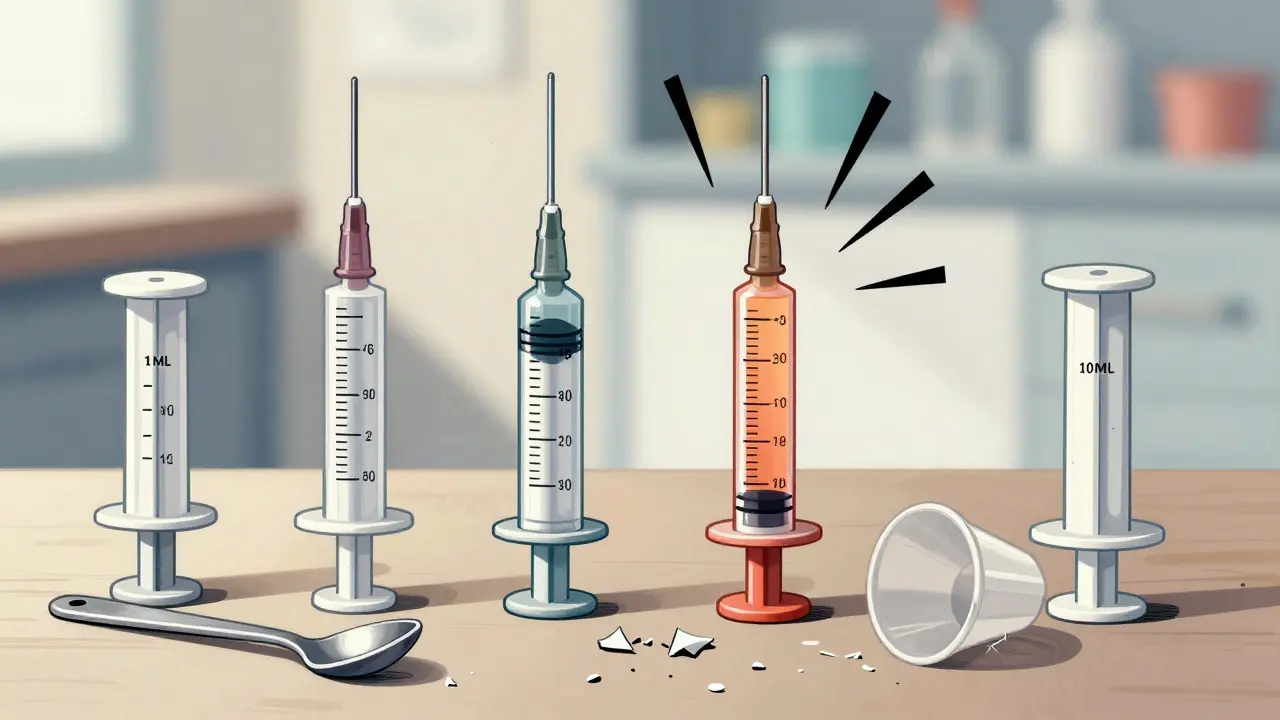
Common Mistakes (and How to Avoid Them)
Parents make the same mistakes over and over. Here’s what to watch for:- Using the wrong syringe size - like a 10 mL syringe for a 1.8 mL dose. Use the smallest syringe that can hold the dose.
- Not shaking the bottle - leading to uneven doses. Always shake.
- Forgetting to remove the cap - a choking hazard. Always check before use.
- Pressing the plunger too fast - causes choking. Slow and steady wins the race.
- Measuring in teaspoons - even if the label says “1 tsp,” convert it to mL. 1 tsp = 5 mL, but only if you’re using a real measuring tool.
- Not cleaning the syringe - rinse with water after each use. Don’t let medicine dry inside. A dried residue can clog the tip.
One study found that 63% of parents initially squirted medicine at the back of the throat. After a 10-minute demo from a nurse, that dropped to 8%. Instruction matters.
What About Oral Dispensers and Dosing Cups?
Oral dispensers are often the same as oral syringes - just with a different name. But some parents get confused by “dosing cups.” These are the small plastic cups with measurement lines. They’re okay for older kids (over 4 years old) who can drink from a cup reliably. But for infants, toddlers, or any dose under 5 mL? Avoid them. The error rate jumps to 12-18%. If you’re giving a 7 mL dose of amoxicillin, a dosing cup might be fine. But for 2.1 mL of ibuprofen? Use a 3 mL syringe. Always.Special Cases: Thick Medicines and Biting
Some antibiotics, like amoxicillin suspension, are thick. They stick to the sides of the syringe. That’s normal. To get it all out, draw a little extra - say, 0.3 mL more than the dose - then push it all into the child’s mouth. Rinse the syringe with water after, then give that rinse to your child too. That way, they get the full dose. If your child bites the syringe tip? You’re not alone. Many parents report this. Try using a syringe with a soft, silicone tip. Or, hold the syringe so the tip rests against the inside of the cheek, not the front teeth. Some syringes now come with color-coded plungers - green for acetaminophen, purple for ibuprofen. That helps prevent mix-ups.
What’s New in 2026?
The FDA approved a color-changing syringe in 2023 - it turns from blue to green when you’ve pulled the right dose. It’s not everywhere yet, but it’s starting to show up in pharmacies. And by late 2025, smart syringes with Bluetooth will hit the market. They’ll connect to your phone, remind you when to give the next dose, and log whether the dose was given correctly. The World Health Organization now requires oral syringes for all liquid children’s medicines worldwide. By 2027, they expect this to prevent over 250,000 dosing errors a year.When to Call the Doctor
If your child vomits right after you give the medicine, don’t automatically give another dose. Call your doctor. Some medicines are absorbed quickly. Giving a second dose could lead to overdose. If you’re ever unsure about the dose - even by 0.1 mL - call the pharmacy or your pediatrician. Better safe than sorry.Final Tip: Keep It Simple
Keep your dosing syringe clean, labeled, and always with the medicine. Don’t leave it in the car. Don’t store it with cleaning supplies. Use the same syringe for the same medicine every time. If you’re giving two different meds, use two syringes - and label them. A dab of nail polish on the plunger works. Or use the color-coded ones. Accuracy saves lives. Not every parent knows this. But now you do.Can I use a kitchen teaspoon to give my child medicine?
No. Kitchen teaspoons vary in size from 2.5 mL to 10 mL - a 400% difference. That’s far too risky for children’s medicine. Always use a calibrated oral syringe or dosing cup designed for medicine.
What’s the best syringe size for a 2-year-old?
A 3 mL oral syringe is ideal for most toddlers. It’s marked in 0.1 mL increments, which gives you the precision needed for doses between 1-3 mL - the most common range for acetaminophen or ibuprofen in this age group.
Why does the medicine need to be shaken before use?
Liquid medications often have particles that settle at the bottom. If you don’t shake the bottle, the first dose might be too weak, and the last dose too strong. Shake for 10-15 seconds to make sure the medicine is evenly mixed.
Can I mix medicine with juice or food?
Only if the label or your pharmacist says it’s safe. Some antibiotics, like amoxicillin, lose effectiveness when mixed with acidic drinks like orange juice. Always check first. If allowed, mix only with a small amount - enough to hide the taste, not dilute the dose.
What should I do if my child spits out the medicine?
Wait 10-15 minutes, then try again with a fresh dose. Don’t give an extra dose unless your doctor tells you to. If they spit out most of it, call your pediatrician. If it was just a small amount, the medicine may have been absorbed enough to work.
How do I clean the dosing syringe?
Rinse it with warm water immediately after each use. Don’t let medicine dry inside. You can use a small brush or pipe cleaner to clean the tip if needed. Let it air dry. Never store it with the plunger pushed in - it can stick.
Are color-coded syringes worth buying?
Yes. Color-coding - like green for acetaminophen and purple for ibuprofen - helps prevent mix-ups, especially if you give both meds. It’s a simple visual cue that reduces errors. Look for them when you refill prescriptions.








13 Comments
Wow. Finally someone who gets it. I used a kitchen spoon once. My kid threw up for an hour. I thought I was being careful. Turns out I was just a hazard with good intentions. Stop being lazy. Buy a syringe. It’s $2 at CVS.
And yes, shaking the bottle matters. I learned that the hard way when my 8-month-old spiked a fever after a "dose" that was basically flavored water.
lol i used the cup that came with the medicine for months until my nurse called me out on it. she said "you think you're saving time but you're just playing russian roulette with your kid's liver." 3ml syringe now. no regrets. also i put a rubber band around it so i don't mix up tylenol and motrin. genius.
ps: the color coded ones are worth it. i got purple for ibuprofen, green for acetaminophen. my wife and i don't even have to talk about it anymore. just grab the right color. lifesaver.
This is the kind of post that makes me believe in humanity again. So many parents are scared to ask because they think they should already know this. You didn’t just give info-you gave peace of mind.
For anyone new to this: start with the 3mL syringe. It’s the Goldilocks of pediatric dosing. And if your kid hates it at first? Try chilling the medicine. Cold numbs the taste a little. Also, give a little water after. Helps wash it down and reduces the yuck factor.
You’ve got this. And if you mess up? Breathe. You’re not a bad parent. You’re a learning parent. That’s the best kind.
Let’s be real-the FDA’s push for mL-only labeling is a bureaucratic overreach disguised as safety. The real issue isn’t syringes, it’s parental ignorance. People don’t read labels. They don’t understand metric. They think "teaspoon" means the one in their kitchen drawer.
And don’t get me started on "shake for 10-15 seconds." That’s arbitrary. The viscosity of the suspension varies. You need to shake until homogeneous, not until your arm tires. This is why we need standardized testing for caregiver competency before dispensing pediatric meds. Not just handouts.
Also, the color-coded syringes? A band-aid. The real solution is mandatory dosing education in prenatal classes. But no, we’d rather let parents wing it until their kid ends up in PICU.
I was terrified the first time I had to give medicine to my daughter. I read this whole thing twice. I printed it out. I practiced with water. I didn’t rush. I didn’t panic. And now? She doesn’t even flinch when I pull out the syringe.
You’re not alone. This stuff is hard. But you’re doing better than you think. Keep going. One dose at a time.
"Use the smallest syringe that can hold the dose"-this is the only rule that matters. I’ve seen parents use 10mL syringes for 1.2mL doses. They think "it’s close enough." It’s not. The margin of error on a 10mL syringe at 1.2mL is 25%. That’s not dosing. That’s gambling.
And no, "I just eyeballed it" is not a valid excuse. You wouldn’t eyeball insulin. Don’t eyeball acetaminophen.
Also, the part about rinsing the syringe? That’s not optional. Dried residue = clogged tip = incomplete dose = wasted medicine = more trips to the pharmacy. It’s basic hygiene. Why is this even a debate?
Oh, so now we’re policing American parents with syringes and color codes? How quaint. In the UK, we’ve been using calibrated oral dispensers since the 90s. We don’t need your over-engineered solutions. We just teach parents to read. And if they can’t? They shouldn’t be raising children.
Also, "color-coded syringes"? That’s not innovation. That’s infantilization. We’re talking about medicine, not a toddler’s toy collection. Next you’ll want glow-in-the-dark droppers.
And don’t get me started on the WHO’s "global standards." What next? Mandatory parenting licenses? At least we still have common sense over here.
Just wanted to say-this saved me. My son bit through the tip of a plastic syringe last week. Scared the hell out of me. I didn’t know silicone-tipped ones existed. Found them at Target. $5. Worth every penny.
Also, mixing with applesauce? Only if the med says it’s okay. I mixed amoxicillin with yogurt once. Didn’t realize it killed the antibiotic. He got sicker. Lesson learned. Don’t guess. Ask your pharmacist.
You’re doing great. Keep going.
My 2-year-old used to spit out everything. Then I started giving it slowly-0.5mL at a time. Paused. Let her swallow. Now she opens her mouth like it’s a treat. It’s all about pacing.
Also, I use a sticky note on the syringe with the medicine name. Dab of nail polish on the plunger like you said. Works like magic.
So let me get this straight… the FDA says no teaspoons, but they’re fine with Bluetooth syringes that track your parenting? And WHO wants to mandate this globally? Who’s behind this? Big Pharma? The syringe industry? Are they selling these things for $20 now?
Remember when medicine was just… medicine? You gave it. Kids got better. Now we need color-coded tech gadgets and 12-step dosing protocols just to give a kid Tylenol?
I’m not anti-safety. I’m anti-manipulation. Someone’s making money off our fear. And it’s not the parents.
There’s something beautiful about how a tiny plastic syringe can carry so much responsibility. It’s not just a tool-it’s a bridge between fear and care. Every parent who takes the time to learn this, who shakes the bottle, who checks the mark, who waits between pushes… they’re not just giving medicine. They’re giving trust.
We’re so quick to judge each other. But this? This is the quiet, unglamorous heroism of parenting. No applause. No hashtags. Just a child breathing easier because you did it right.
Keep doing it. Even when it’s messy. Even when you’re tired. Even when you’re scared. You’re enough.
While the information presented is accurate and well-structured, I must emphasize that the underlying assumption-that parental compliance with technical guidelines is sufficient to prevent dosing errors-is empirically flawed. Behavioral psychology research demonstrates that cognitive load, sleep deprivation, and stress significantly impair adherence to multi-step protocols, even among highly educated caregivers.
Therefore, the focus should shift from individual responsibility to system-level interventions: pre-filled syringes, automated dispensing units in pediatric pharmacies, and AI-driven dosage verification apps integrated with EHRs. Until then, we are placing an unreasonable burden on exhausted parents.
Interesting that the article mentions the 2026 Bluetooth syringes like it’s a breakthrough. Meanwhile, in the UK, NHS pharmacies have been providing pre-measured, single-use oral syringes for free since 2020. No color-coding needed. No app required. Just a sealed, labeled syringe with the exact dose.
But no, we’re all supposed to be impressed by American innovation that costs $15 and requires a smartphone.
It’s not about the tool. It’s about access. And here, we still treat medicine like a luxury.