
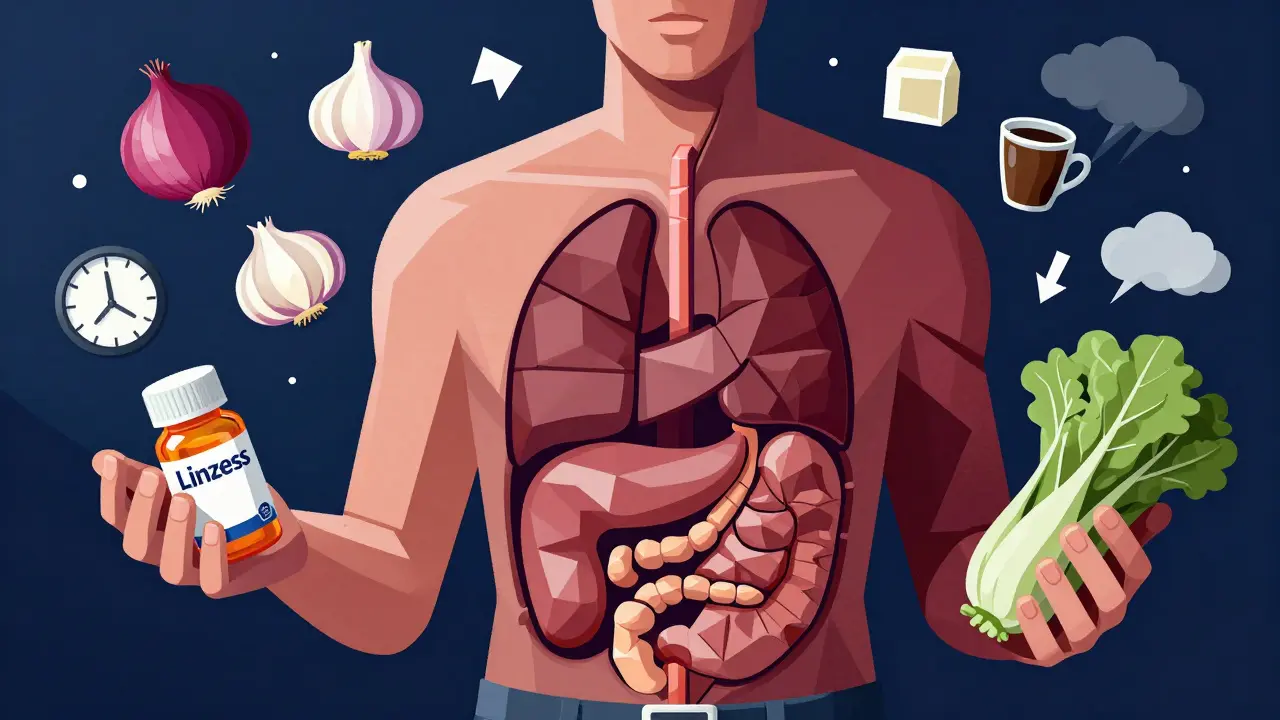
Living with Irritable Bowel Syndrome (IBS) means dealing with pain that comes and goes, bloating that makes you feel like you’ve eaten a whole meal you didn’t, and the constant fear of needing a bathroom at the worst possible time. It’s not just an upset stomach. It’s a full-body experience that affects sleep, work, and social life. About 1 in 7 people worldwide have it, and women are more likely to be diagnosed. The good news? You’re not alone, and there are real ways to take back control.
What IBS Actually Feels Like
IBS isn’t one thing. It shows up differently for everyone. The core signs are abdominal pain that gets better after a bowel movement, along with changes in how often or how your stool looks. You might have diarrhea that hits fast and hard - IBS-D - or constipation so stubborn you feel like you’re stuck - IBS-C. Or maybe you switch between the two, which is called IBS-M. About 40% of people with IBS fall into the diarrhea group, 35% into constipation, and the rest into mixed.
It’s not just bowel issues. Many people report bloating so bad their clothes feel tight, gas that won’t quit, and mucus in their stool. You might feel like you never fully emptied your bowels, even after sitting there for minutes. Some notice a lump in their throat they can’t swallow down, or chest pain that feels like a heart issue but isn’t. Nausea, early fullness after eating a small meal, and acid reflux are also common - and they’re all part of IBS, not separate problems.
The pain isn’t random. It often flares after eating, especially big or fatty meals. And it usually eases after you go to the bathroom. That’s a key clue doctors look for. If your pain doesn’t follow this pattern, it might be something else.
What Makes IBS Flare Up
IBS doesn’t have one trigger. It’s a mix of things that turn up the volume on your gut. For about 70% of people, food is the biggest offender. High-FODMAP foods - things like onions, garlic, beans, apples, wheat, and dairy - are fermented by gut bacteria and cause gas, bloating, and pain. Caffeine, alcohol, spicy food, and fried meals also set off symptoms in many.
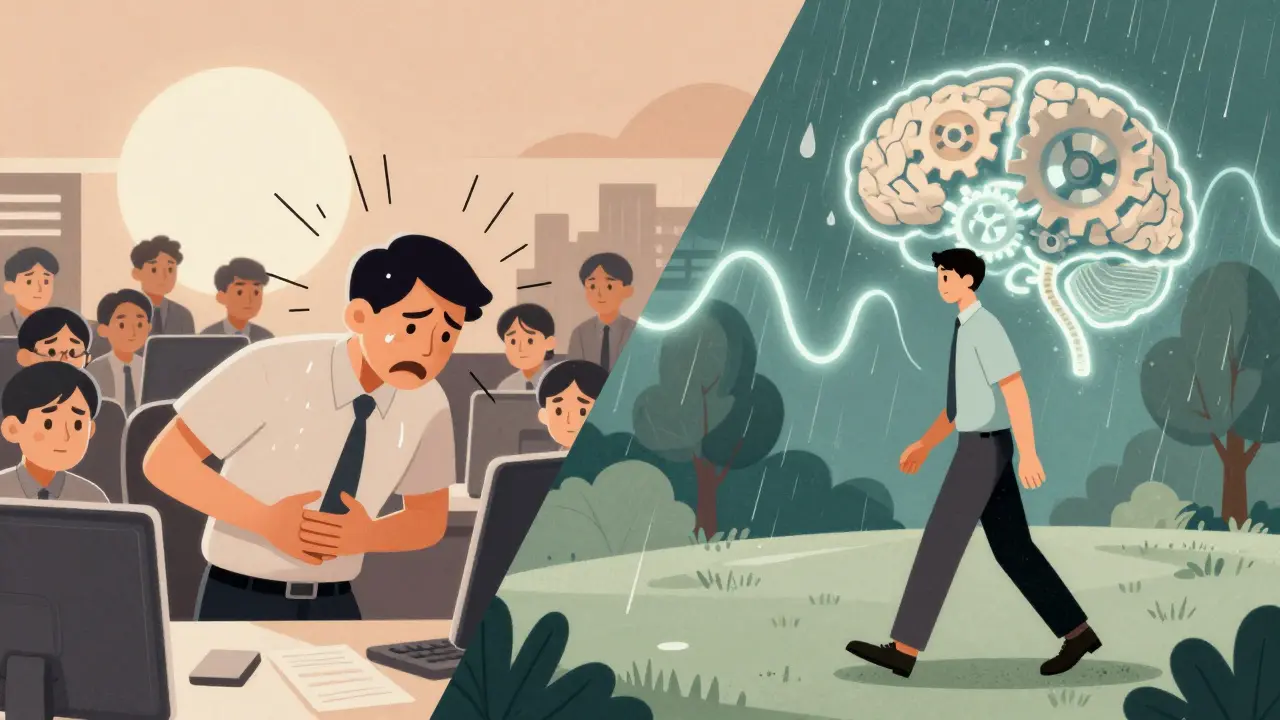
Stress doesn’t cause IBS, but it makes it worse. Around 60 to 80% of people notice their symptoms spike during high-pressure times - job deadlines, family fights, even a bad commute. Your gut and brain are wired together. When you’re anxious, your digestive system reacts. That’s why calming your mind can calm your stomach.
For women, hormones play a big role. About two-thirds of female IBS patients say their symptoms get worse right before or during their period. Estrogen and progesterone levels shift, and your gut sensitivity changes with them.
Antibiotics can also trigger IBS in about 1 in 4 people. They wipe out good and bad bacteria in your gut, throwing off the balance. Sometimes, symptoms start right after a course of antibiotics - even if you were fine before.
How Doctors Diagnose IBS
There’s no blood test or scan that confirms IBS. Diagnosis is based on symptoms and ruling out other conditions. Doctors use the Rome IV criteria: abdominal pain at least once a week for three months, linked to bowel changes. But before they say “IBS,” they check for red flags.
Red flags include: weight loss without trying, rectal bleeding, anemia (low iron), symptoms starting after age 50, or a family history of colon cancer or Crohn’s disease. If any of these are present, you’ll likely need a colonoscopy, blood tests for celiac disease, or stool tests for inflammation.
For most people, diagnosis takes 2 to 3 visits over a few months. You’ll be asked about your diet, stress levels, bowel habits, and family history. It’s not about one test - it’s about putting the pieces together. Don’t be discouraged if it takes time. Many people wait over six years for a correct diagnosis.
Medications That Actually Work
There’s no cure for IBS, but there are medications that help manage symptoms - and they’re targeted to your subtype.
For IBS-D (diarrhea-predominant):
- Eluxadoline (Viberzi): Approved in 2015, it reduces pain and diarrhea by slowing gut movement. About half of users report good relief.
- Rifaximin (Xifaxan): A non-absorbed antibiotic that targets gut bacteria. It’s taken for 14 days and can give relief for weeks. About 40% of patients benefit.
- Loperamide (Imodium): Over-the-counter. Helps with diarrhea but doesn’t touch the pain or bloating. Good for occasional use, not daily long-term.
For IBS-C (constipation-predominant):
- Linaclotide (Linzess): Taken daily, it increases fluid in the intestines to soften stool. Around 30-40% of users get at least three full bowel movements a week.
- Plecanatide (Trulance): Similar to linzess, but may cause less gas. Also taken daily.
- Lubiprostone (Amitiza): Helps the gut move fluid and stool. Works for about 25-30% of people.
For general pain and cramping:
- Antispasmodics like hyoscine or dicyclomine: These relax gut muscles. About 55% of users find relief from cramps. Side effects can include dry mouth and dizziness.
- Low-dose antidepressants like amitriptyline (10-30 mg at night): Not for depression. These help by calming the nerves between gut and brain. They reduce pain and improve sleep. Many see results in 4 to 8 weeks.
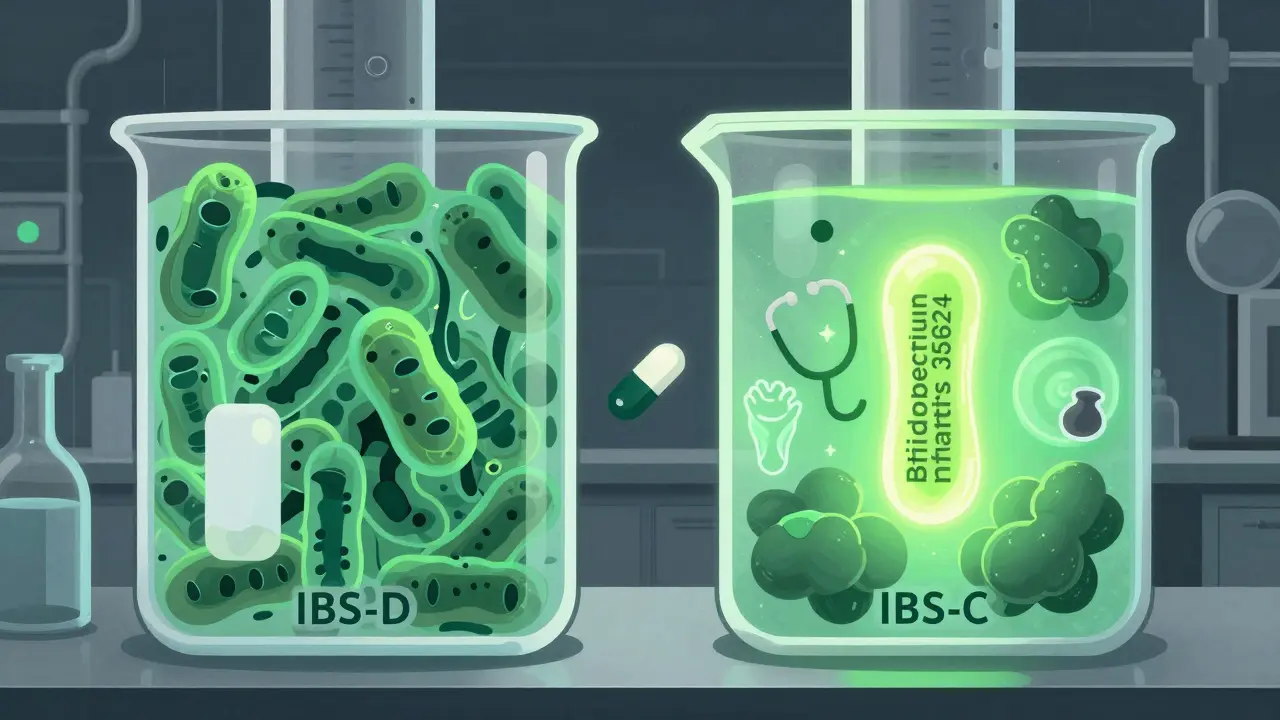
Probiotics are tricky. Not all help. Only one strain - Bifidobacterium infantis 35624 - has solid proof it improves global symptoms in about 35% of users. Most store-bought probiotics won’t do much.
What Works Beyond Pills
Medication alone rarely fixes everything. The most successful plans combine food, mind, and medicine.
The low-FODMAP diet is the most researched dietary approach. It’s not a forever diet. It’s a three-step process: eliminate high-FODMAP foods for 2-6 weeks, then slowly add them back one by one to find your triggers. Done right, with a dietitian, it helps 50 to 75% of people. Many find they can eat some of their favorite foods again - just not all at once.
Stress management isn’t optional. Gut-directed hypnotherapy and cognitive behavioral therapy (CBT) have been shown to work as well as medication. In studies, 40-60% of people saw major improvement after 6-12 sessions. These therapies help retrain how your brain responds to gut signals.
Exercise helps too. Even 30 minutes of walking most days can improve bowel regularity and reduce stress. You don’t need to run a marathon - just move.
What’s New in IBS Research
Science is moving fast. Researchers are now looking at the gut microbiome like a fingerprint. People with IBS-D have different bacteria than those with IBS-C. In 2023, the FDA gave breakthrough status to a new drug called ibodutant, which targets nerve signals in the gut. Early results show nearly half of users improved.
Fecal microbiota transplants (FMT) - basically, a gut transplant from a healthy donor - are being tested. One 2022 study found 35% of IBS patients went into remission after FMT, compared to 15% on placebo. It’s still experimental, but promising.
What’s clear: IBS isn’t just “stress” or “sensitive stomach.” It’s a real, measurable condition with biological roots. And treatment is getting smarter - personalized, targeted, and multidisciplinary.
Living With IBS: Real Talk
People with IBS often feel misunderstood. A 2022 survey of over 1,200 patients found 68% missed work or school because of symptoms - averaging more than 13 days a year. On Reddit’s IBS community, the top complaints? Diagnostic delays, the stress of restrictive diets, and side effects from meds.
But success stories are real too. Over 60% of people say dietary changes helped them. More than half say medication improved their life after six months. It’s not about perfection. It’s about finding your mix: what foods you can handle, how to manage stress, and which meds give you back your day.
IBS doesn’t go away, but it doesn’t have to control you. With the right tools, most people can live well - with fewer flare-ups, less fear, and more freedom.
Can IBS turn into colon cancer?
No, IBS does not cause colon cancer or lead to structural damage in the intestines. It’s a functional disorder, meaning the gut looks normal on scans but doesn’t work properly. However, symptoms like weight loss, rectal bleeding, or anemia could signal another condition like colorectal cancer or inflammatory bowel disease. That’s why doctors check for these red flags before diagnosing IBS.
Is the low-FODMAP diet hard to follow?
Yes, it’s challenging at first. You have to avoid common foods like onions, garlic, wheat, dairy, apples, and beans. Many people struggle with meal planning and feel restricted. But it’s not meant to be permanent. After 2-6 weeks of elimination, you slowly reintroduce foods to find your personal triggers. Working with a registered dietitian increases success rates by 40%. Most people end up being able to eat many foods again - just in smarter combinations.
Why do I feel bloated even when I haven’t eaten much?
Bloating in IBS isn’t always about gas from food. Your gut is hypersensitive - even normal amounts of gas or intestinal movement can feel like extreme swelling. Stress, slow digestion, and imbalances in gut bacteria can all make your brain interpret normal signals as painful bloating. This is called visceral hypersensitivity, and it’s a core feature of IBS, not just overeating.
Do probiotics help with IBS?
Most probiotics don’t help. Only one strain - Bifidobacterium infantis 35624 - has consistent proof in clinical trials. It improved overall symptoms in about 35% of users compared to 25% on placebo. Other strains, including those in popular yogurts or supplements, haven’t shown the same benefit. Don’t waste money on random probiotics. If you try one, pick this specific strain and give it 4-6 weeks.
How long until IBS meds start working?
It depends. Loperamide and antispasmodics can work within hours. Linaclotide and rifaximin usually show results in 1-2 weeks. Antidepressants like amitriptyline take longer - 4 to 8 weeks at full dose. Don’t stop too soon. If one med doesn’t work after 6-8 weeks, talk to your doctor about switching or combining treatments. Patience and consistency matter.


10 Comments
Wow, finally someone who gets it. I’ve been told I’m just ‘anxious’ for years. Turns out my gut’s been screaming for a diagnosis since college. IBS isn’t a phase. It’s not ‘just stress.’ And no, I don’t need to ‘eat less fiber’-I already tried the whole bran cereal thing. It made me look like a balloon with a timer.
YASSS GIRL 🙌 I’m so glad this post exists. I was diagnosed at 28 after 7 years of being told I was ‘dramatic.’ Low-FODMAP changed my life-but don’t let anyone tell you it’s easy. I cried over my first avocado. Then I cried over my first banana. Then I cried over my first *gluten-free* bread that tasted like cardboard. But guess what? I can now go to brunch without planning my exit route. You’re not broken. You’re just wired differently. And that’s okay. 💪❤️
I’ve had IBS-M since I was 19. Took me 6 years to get diagnosed. The antidepressants were a game-changer. Not because I’m depressed, but because my gut and brain are basically wired together with frayed wires. Amitriptyline at night? I sleep through the night for the first time in a decade. No drama. Just science. And yeah, I still get bloated after tacos. But now I know why.
They’re lying. IBS is a cover-up for glyphosate poisoning. Big Pharma doesn’t want you to know that your gut is a chemical graveyard. The real cure? Raw garlic, bentonite clay, and avoiding all WiFi. They banned the studies. They silenced the doctors. Your ‘meds’? Placebos. Your ‘diet’? A distraction. Wake up.
From a clinical gastroenterology standpoint, the Rome IV criteria remain the gold standard for functional GI disorder diagnosis. However, emerging evidence supports the role of the gut-brain axis modulation via neuromodulators like low-dose TCAs and gut-selective agents such as eluxadoline. The microbiome dysbiosis profile in IBS-D demonstrates a significant reduction in Faecalibacterium prausnitzii, which correlates with visceral hypersensitivity. FMT trials show promising modulation of microbial diversity, particularly in non-responders to pharmacotherapy. The low-FODMAP protocol, when administered under dietitian supervision, achieves remission rates exceeding 60% in RCTs.
Okay but why does everyone act like IBS is some new trendy illness? My grandma had ‘nervous stomach’ in the 50s and she never complained. Also, IBS-D? More like IBS-Can’t-Leave-The-House-For-Weeks. And don’t even get me started on the ‘low-FODMAP’ diet. I had to give up pizza, garlic bread, and apples. That’s not a diet. That’s a punishment. 😩
Let’s be brutally honest: 80% of IBS patients are misdiagnosed. The rest are just lactose-intolerant millennials who think their gut is a sacred temple. The real problem? Over-medicalization. You don’t need a $2000 gut biopsy to know that eating a burrito at 2 a.m. is a bad idea. And probiotics? Please. If your solution is a $40 jar of mystery bacteria, you’re not healing-you’re gambling. The truth? Eat less junk. Move more. Stop stressing. It’s not rocket science. It’s just inconvenient.
This post is dangerously misleading. You’re implying that IBS is a legitimate medical condition when, in fact, it is a catch-all diagnosis for individuals who lack self-discipline. The fact that women are diagnosed more frequently is not due to biological factors-it is because they are more likely to seek attention for non-organic symptoms. The low-FODMAP diet is an indulgent fad. The medications? Placebos wrapped in pharmaceutical branding. You are reinforcing victimhood. Take responsibility. Eat clean. Exercise. Stop blaming your gut for your poor life choices.
i just wanted to say thank you for this. i’ve had ibs for 12 years and no one ever talks about the mental toll. i feel like i’m always waiting for the next episode. i’ve missed weddings, job interviews, even my own birthday. i’m on amitriptyline now and it’s not perfect but it’s the first time in years i’ve slept through the night. thanks for not making me feel crazy.
As a certified gut health coach, I’ve worked with over 200 IBS patients. The key isn’t just the low-FODMAP diet-it’s the reintroduction phase. Most people quit after phase one and assume they’re intolerant to everything. But with structured challenge protocols, 78% of patients successfully reintroduce at least 3 previously avoided foods. Pair that with gut-directed hypnotherapy (12 sessions, 3x/week) and you’re looking at a 70%+ symptom reduction rate. Don’t just eliminate-rebuild. Your gut is resilient. It just needs the right roadmap.