
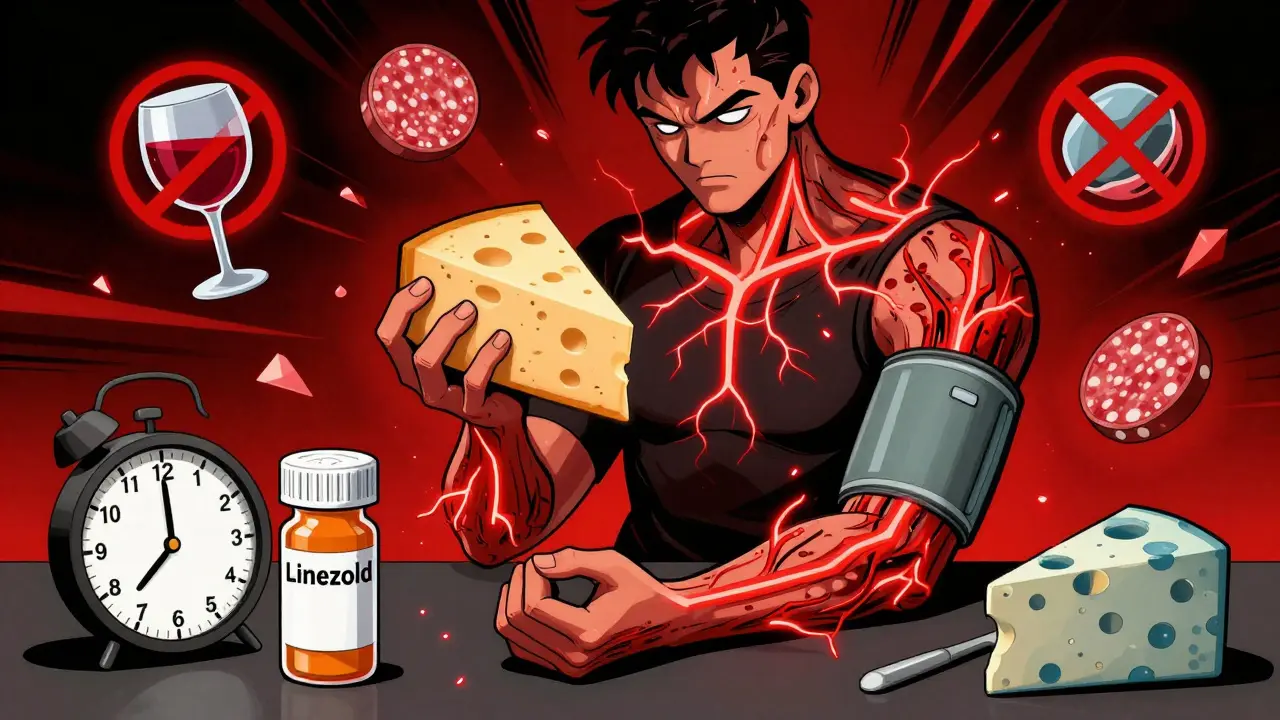
Linezolid Tyramine Intake Calculator
This calculator helps you monitor your tyramine intake while taking linezolid. The FDA recommends staying under 100mg of tyramine daily. Click 'Add Item' to select foods and beverages.
Select Foods & Beverages
Your Tyramine Intake
Your total intake is 0mg out of 100mg limit.
Keep below 100mg daily to avoid hypertensive crisis.
When you're prescribed linezolid for a serious bacterial infection, the last thing you're thinking about is your cheese sandwich. But if you're eating aged cheddar, salami, or drinking red wine while on this antibiotic, you could be risking a dangerous spike in blood pressure - one that might land you in the ICU. This isn't a myth. It's a documented, life-threatening interaction backed by clinical studies and real patient cases.
Why Linezolid Is More Than Just an Antibiotic
Linezolid is a powerful antibiotic used to treat tough infections like MRSA and vancomycin-resistant enterococci. It works by stopping bacteria from making proteins, which kills them. But here’s the twist: linezolid also weakly blocks your body’s monoamine oxidase (MAO) enzymes. These enzymes normally break down tyramine, a compound found naturally in certain foods. When MAO is inhibited, tyramine builds up in your bloodstream.
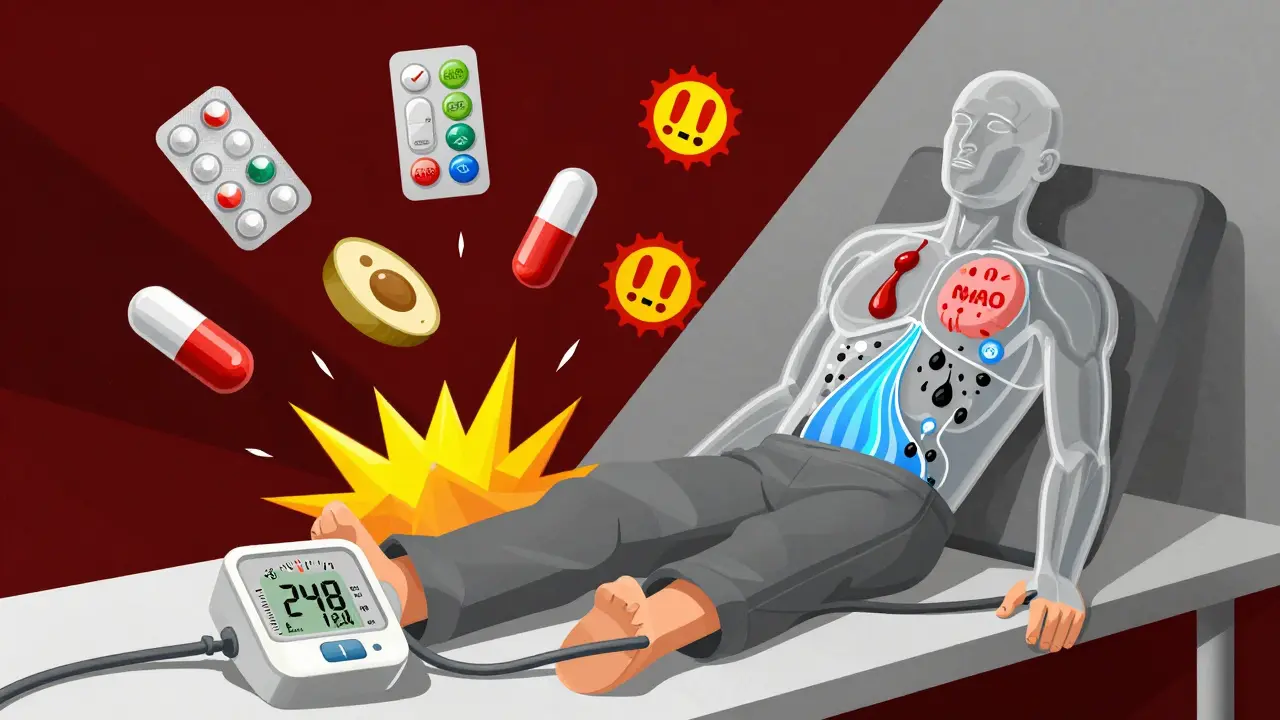
That buildup triggers a surge of norepinephrine - a natural stimulant that makes your heart race and your blood vessels constrict. The result? A sudden, dangerous rise in blood pressure. This isn’t a minor headache. It’s a hypertensive crisis, which can lead to stroke, heart attack, or organ damage.
The U.S. Food and Drug Administration (FDA) flagged this risk back in 2000 when linezolid was approved. Since then, over 1,200 adverse events involving hypertension have been reported to the FDA between 2018 and 2023. A 2021 study in the Journal of Antimicrobial Chemotherapy found 17 cases of hypertensive crises directly linked to linezolid use. In 65% of those cases, patients needed ICU care. One patient’s systolic blood pressure hit 248 mmHg - higher than the pressure in a car tire.
How Much Tyramine Is Too Much?
Not all foods are equal. The cutoff isn’t vague. Clinical guidelines, including those from the Infectious Diseases Society of America (IDSA) in 2024, say you should avoid any food containing more than 100 mg of tyramine while on linezolid.
Here’s what that looks like in real life:
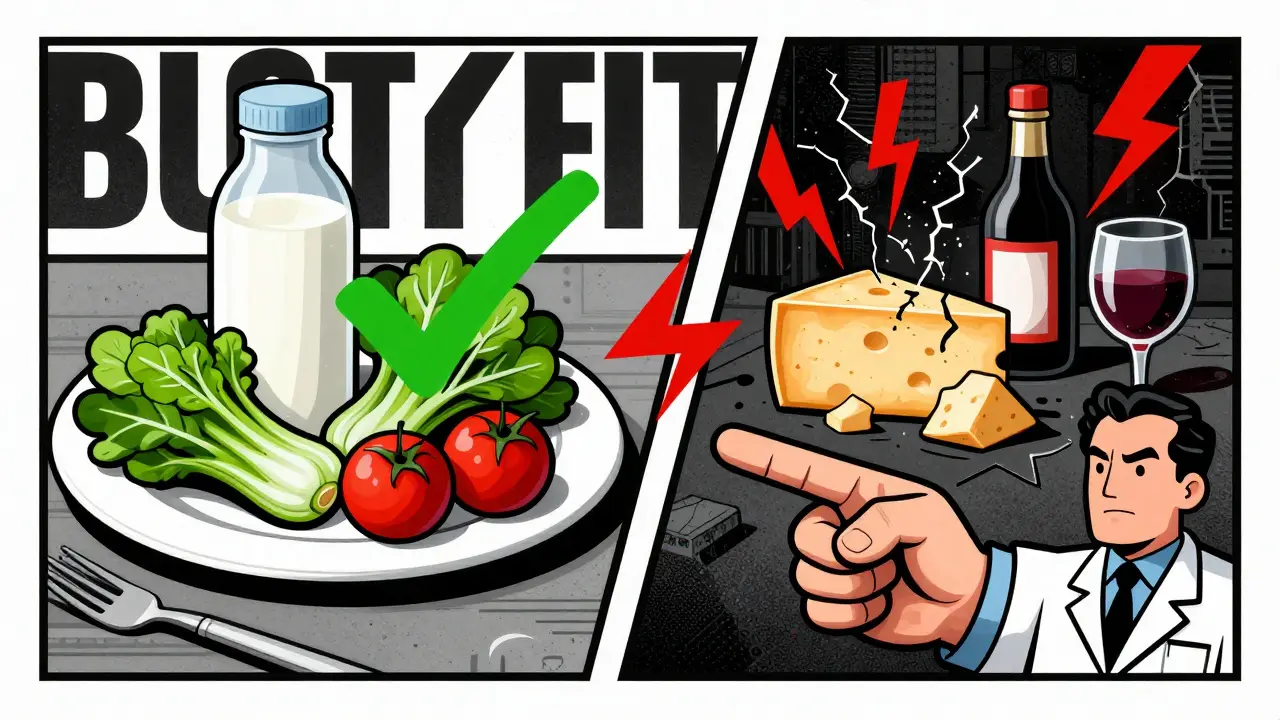
- Aged cheeses - Blue cheese: 900-1,500 mg per 100g. Cheddar: 150 mg per ounce. One slice could push you over the limit.
- Tap beer and red wine - Tap beer: 100-200 mg per 100ml. A single pint could be risky. Red wine: 5-100 mg per 100ml - not always dangerous, but unpredictable.
- Fermented soy products - Soy sauce, miso, tempeh. One tablespoon of soy sauce can have 10-20 mg. A stir-fry with multiple servings adds up fast.
- Dried or cured meats - Salami, pepperoni, air-dried beef. These are high in tyramine because of fermentation and aging.
- Overripe or spoiled foods - Even foods you wouldn’t think of, like leftover stew left in the fridge too long, can develop dangerous tyramine levels.
What’s safe? Fresh meat, fresh dairy (milk, yogurt, cottage cheese), most fruits and vegetables, and canned goods that haven’t been fermented or aged. The key is freshness.
It’s Not Just Food - Other Triggers Too
Linezolid doesn’t just clash with cheese. It can interact dangerously with common over-the-counter and prescription drugs.
- Sympathomimetics - Decongestants like pseudoephedrine (Sudafed) or phenylephrine. These raise blood pressure on their own. With linezolid? Double trouble.
- Serotonin-boosting meds - SSRIs like fluoxetine (Prozac), SNRIs like venlafaxine, even some herbal supplements like St. John’s Wort. Combine these with linezolid and you risk serotonin syndrome - a condition that can cause seizures, fever, and death.
- Dopamine agonists - Medications used for Parkinson’s or low blood pressure. A 2019 case report described a patient who went into cardiac arrest after taking linezolid and dopamine together.
Doctors now recommend reviewing every medication - even supplements - before starting linezolid. A 2023 study in the American Journal of Health-System Pharmacy found that 32% of patients on linezolid were also taking at least one risky drug they didn’t realize was dangerous.
How Long Do the Risks Last?
Unlike older MAO inhibitors (like phenelzine), linezolid’s effect isn’t permanent. Its inhibition of MAO is reversible. That means once you stop taking it, your enzymes start working again.
But don’t rush it. The drug’s half-life is about 5 days. It takes roughly 24-48 hours after your last dose for MAO activity to begin recovering - but full recovery can take up to two weeks. That’s why guidelines say: start dietary restrictions 24 hours before your first dose, and keep them going for 14 days after your last dose.
A case report in PMC10695612 showed a patient’s blood pressure didn’t normalize until 26 days after stopping linezolid. That’s not typical, but it’s a warning: your body might take longer than expected to reset.
Who’s at Highest Risk?
Not everyone reacts the same way. Studies show that:
- People with existing high blood pressure are at much higher risk.
- Those with a higher BMI had significantly greater tyramine sensitivity in clinical trials.
- Older adults and those with kidney problems may clear the drug slower, increasing exposure.
- Patients on long-term linezolid (like for bone infections) face cumulative risk.
Even healthy, young patients aren’t immune. A Reddit thread from a hospital pharmacist in June 2024 shared: “Just had a patient with 230/130 BP after eating aged cheddar while on linezolid - ICU for 3 days.” No prior hypertension. No other meds. Just cheese.
Why Do So Many People Get It Wrong?
Here’s the ugly truth: most patients aren’t properly warned.
A 2022 study in the Journal of Antimicrobial Chemotherapy found that only 43.7% of patients prescribed linezolid received written dietary instructions. Another study in Pharmacotherapy showed 61.3% of patients couldn’t correctly identify high-tyramine foods after being told.
Even doctors aren’t always up to speed. A 2023 survey found only 58.7% of internal medicine residents could name all the major tyramine-containing foods. That’s a huge gap in care.
Some hospitals have fixed this with visual aids - laminated cards showing pictures of forbidden foods, or QR codes linking to a food list. Others use electronic health record alerts that pop up when a linezolid prescription is written. But many community hospitals still rely on verbal warnings - and that’s not enough.
What Should You Do?
If you’re prescribed linezolid:
- Ask for a written list - Don’t rely on memory. Request a handout with examples of safe and unsafe foods.
- Check every medication - Include OTC drugs, supplements, and herbal remedies. Bring your pill bottle to the pharmacy.
- Start restrictions early - Begin avoiding high-tyramine foods 24 hours before your first dose.
- Keep it up for two weeks - Don’t stop the diet just because you feel better. Your body is still recovering.
- Watch for symptoms - Severe headache, chest pain, rapid heartbeat, blurred vision, nausea, or sweating could signal a hypertensive crisis. Go to the ER immediately.
And if you’re a caregiver - remind them. These restrictions are hard. But they’re not optional.
The Future: Is There a Better Option?
Linezolid is still vital for resistant infections. But its risks are pushing innovation. A new antibiotic called contezolid (MRX-I), which kills the same bacteria without blocking MAO, is in Phase III trials and could be approved by late 2025. It’s not here yet - but it’s coming.
For now, linezolid remains a powerful tool - but one that demands respect. A single slice of blue cheese, taken without awareness, can turn a life-saving treatment into a life-threatening event.
Can I have a glass of wine while taking linezolid?
It’s not recommended. Red wine can contain 5-100 mg of tyramine per 100ml. Even a small glass could push you over the 100mg safety threshold, especially if you’ve eaten other tyramine-containing foods that day. To be safe, avoid alcohol entirely during linezolid treatment and for two weeks after.
Is it safe to eat cheese if it’s fresh and unaged?
Yes. Fresh cheeses like mozzarella, ricotta, cottage cheese, and cream cheese contain very little tyramine - usually less than 5 mg per serving. Stick to these. Avoid anything labeled "aged," "blue," "sharp," or "fermented." If you’re unsure, skip it.
How long does linezolid stay in my system?
Linezolid’s half-life is about 5 hours, meaning most of it leaves your bloodstream within a day. But its effect on MAO enzymes lasts much longer - up to 5 days. Full enzyme recovery takes 10-14 days. That’s why dietary restrictions should continue for two weeks after your last dose.
What if I accidentally eat a high-tyramine food?
Monitor yourself closely for the next 24 hours. Watch for symptoms like severe headache, chest pain, rapid heartbeat, sweating, or blurred vision. If any of these occur, go to the emergency room immediately. Do not wait. Even one exposure can trigger a crisis.
Are there any foods that are safe to eat in unlimited amounts?
Yes. Fresh fruits, vegetables, eggs, plain rice, pasta, fresh poultry, fish, and dairy products like milk and yogurt are all safe. Stick to freshly cooked meals. Avoid leftovers older than 24 hours, canned goods with fermentation, and anything that’s been aged, smoked, or fermented.


15 Comments
So I just started linezolid for my MRSA and my mom made me a grilled cheese sandwich. I didn't know cheese was dangerous. Now I'm paranoid every time I eat anything. Thanks for the warning, but also... why isn't this on the pill bottle?!
Let me be the first to say this is all hype. The FDA data is cherry-picked. I've been on linezolid for 18 days and ate blue cheese every day. No issue. People are just scared of antibiotics because they don't understand pharmacology. Also, tyramine levels vary by brand. You're not a scientist if you think 100mg is a hard cutoff.
PLEASE PLEASE PLEASE listen to the article. I'm a pharmacist and I've seen THREE hypertensive crises from this. One patient had a stroke because they thought "a little wine won't hurt." It did. Please, if you're on this med, treat it like you're on warfarin. No exceptions. 🙏
OMG I just realized I ate pepperoni pizza last night and I'm on linezolid... I think I'm going to die??!! My head is pounding and my heart is racing!! Should I go to the ER??!! HELP!!
As someone who reads the actual FDA guidelines (not just Reddit posts), the 100mg threshold is a population-based estimate, not a personal safety line. Individual MAO activity varies by genetic polymorphism. Some people metabolize tyramine 10x faster. You can't apply a one-size-fits-all rule to pharmacokinetics. Also, wine? The 5-100mg range is meaningless without knowing the vintage, region, and fermentation method. This article is dangerously oversimplified.
I'm a nurse and I work in infectious disease. We give out laminated cards with pictures of safe vs unsafe foods now. It's crazy how many people don't know what "aged" means. I had a guy ask if cottage cheese was okay because "it's white like mozzarella." We need better education. This isn't about fear - it's about clarity.
Okay but let's be real - if you're eating aged cheddar while on linezolid, you're either a cheese enthusiast who thinks rules don't apply to them, or you're just lazy and didn't read the pamphlet. I get it. I love blue cheese. But I also don't want to end up on a ventilator because I prioritized flavor over function. This isn't about deprivation - it's about survival. And if you think this is overblown, go read the case reports from 2021. One guy's BP hit 248. That's not a typo. That's a car tire. You want to risk it? Fine. But don't act surprised when your body says "nope." Also - did you know that leftover lasagna from Tuesday? Yeah. That's a tyramine bomb. Refrigeration doesn't stop fermentation. It just slows it down. So if you're eating leftovers more than 24 hours old? You're playing Russian roulette with your circulatory system. And no, I'm not being dramatic. I've seen it happen. Twice.
This is all a pharmaceutical scam. Linezolid was designed to make you dependent on expensive specialty diets. The FDA doesn't care about you. They care about profit. Big Pharma knows people will panic over cheese and buy more meds. Also, did you know that tyramine is naturally produced by your own gut bacteria? So technically, you're poisoning yourself even without eating anything. The real issue? They don't want you to know that. They want you scared. And if you're scared, you'll keep coming back. Wake up.
You got this!! 💪 I'm rooting for you! Just stick to fresh veggies, eggs, and plain rice - you got this!! 🥗🍚🥚 And if you're stressed, take deep breaths - your body will thank you!! 😊❤️
When I first heard about linezolid, I thought it was just another overhyped drug. Then I saw my cousin in the ICU - 230/140 BP, shaking, eyes rolling back - because she had a slice of brie and a glass of Merlot. She didn't even know what tyramine was. I spent three weeks sitting by her bedside. She lost 20 pounds. She can't eat cheese anymore. Not even mozzarella. It's not just about food. It's about identity. Food is culture. Food is comfort. And now? Now she can't even hug her grandmother without crying. Because the cheese she grew up with? It tried to kill her.
Just don't eat cheese. Done. Stop overthinking it. If you're smart, you'll follow the rules. If you're not? Then you deserve what happens.
Everyone's acting like this is a new discovery. It's not. MAO inhibitors have been known to interact with tyramine since the 1950s. Linezolid is just the latest version. The real problem? Doctors don't explain it. Pharmacists don't reinforce it. Patients don't read the damn pamphlet. And then we blame the patient. Wake up. This is systemic failure. Not individual negligence.
I don't care how many studies say it's dangerous. I've been on linezolid for 10 days. I had two glasses of red wine and a plate of salami. I'm fine. I'm 32. I work out. I'm not some frail old person. You're all just scared of modern medicine. This is what happens when you let fear dictate science. My blood pressure? Normal. My liver? Fine. My soul? Free. You can't control life with a list of forbidden foods. That's not healthcare. That's control.
So like if I eat fresh mozzarella and drink soda is that cool? I mean I'm not dumb I know what aged means but like what about like yogurt? Is that fermented? I'm confused
As someone who reviewed the clinical guidelines for our hospital's antimicrobial stewardship program, I can confirm that the 14-day post-treatment restriction is based on enzyme regeneration kinetics. MAO-A activity returns gradually, with 50% recovery at 72 hours and near-complete restoration by day 14. The 26-day case mentioned is an outlier - likely due to renal impairment or concomitant CYP3A4 inhibitors. For the vast majority of patients, 14 days is sufficient. The key is consistency, not fear. And yes - fresh dairy is safe. Yogurt is fine. Cottage cheese is fine. Even aged yogurt? No. That's a different product. Stick to labeled "fresh".