
Why Medication Safety Is a Life-or-Death Issue for People with Low Vision or Hearing Loss
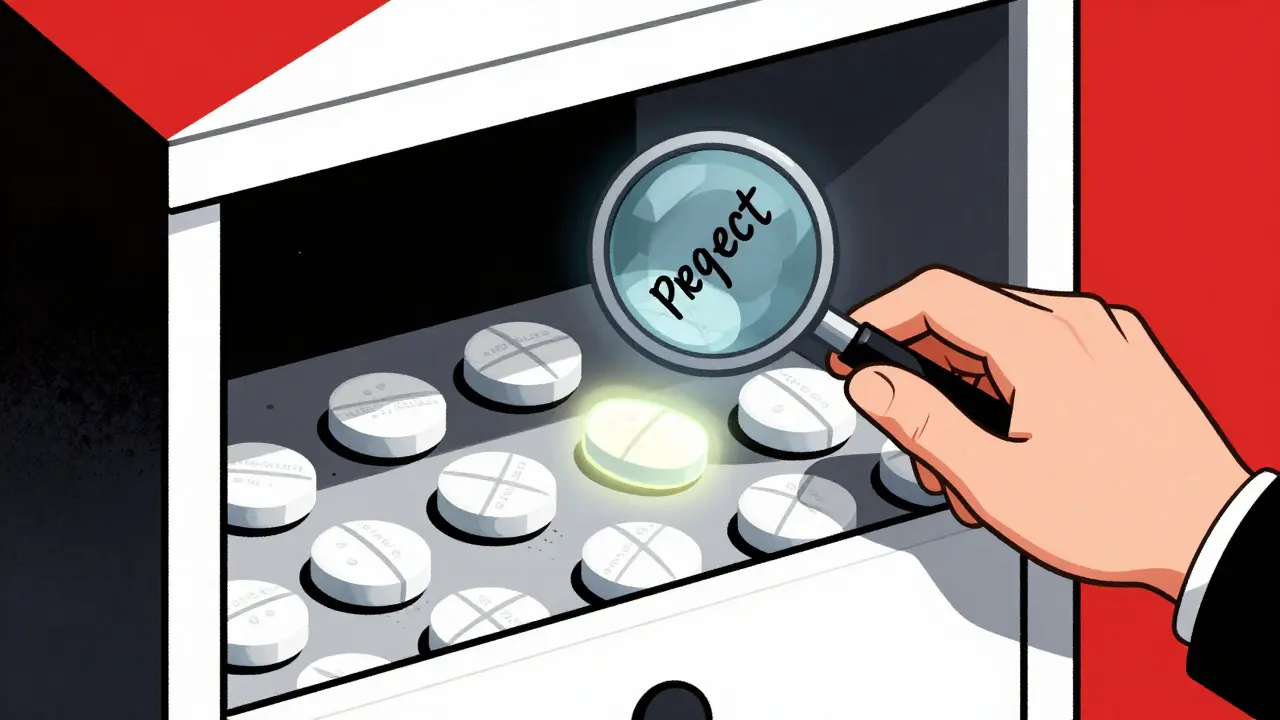
Imagine opening your medicine cabinet and seeing ten identical white pills. No labels. No numbers. No color cues. You can’t read the tiny print, and your pharmacist didn’t explain which one is for your blood pressure and which one is for your sleep. This isn’t a hypothetical scenario-it’s the daily reality for millions of people with low vision or hearing loss. In the U.S. alone, 7.6 million people have significant vision impairment, and over 15 million adults struggle with hearing loss. Many of them take multiple medications every day. And the system isn’t built for them.
It’s not about convenience. It’s about survival. Studies show people with low vision are 1.67 times more likely to make dangerous medication errors than those with full sight. That means taking the wrong pill, doubling a dose, or missing a critical medication-all because the label was too small, the bottle wasn’t labeled clearly, or the pharmacist spoke too fast in a noisy room.
How Vision Loss Makes Medication Management Dangerous
Low vision isn’t just blurry sight. It can mean losing central vision (like macular degeneration), peripheral vision (like glaucoma), or contrast sensitivity. This makes reading prescription labels nearly impossible. Standard pharmacy labels use 7-10 point font. The American Foundation for the Blind (AFB) says you need at least 18-point font with high contrast-black text on white background, no glare, no clutter.
But most pharmacies don’t follow this. A 2022 study found only 32% of U.S. pharmacies use any accessible labeling. And even fewer follow the full AFB guidelines. People end up guessing:
- Is this the blue pill for cholesterol or the blue pill for anxiety?
- Is that white oval my morning blood pressure pill or my nighttime sleep aid?
- Did I already take my insulin today?
One Reddit user shared: “I almost took my blood pressure meds at bedtime because the new generic looked exactly like my sleeping pill-same shape, same color, no markings.” That’s not a mistake. That’s a system failure.
Even measuring liquid medicine is risky. A Malaysian study found only 39% of visually impaired people could accurately use eye or ear drops. Why? Because they couldn’t see the measurement lines. The same issue applies to syringes and oral dosing cups.
How Hearing Loss Creates Silent Risks
If you can’t hear, you miss critical instructions. Pharmacists often give verbal counseling right after filling a prescription. But if the pharmacy is loud, the pharmacist speaks too fast, or you’re wearing hearing aids that don’t pick up speech clearly, you won’t hear:
- “Take this with food.”
- “Don’t drink alcohol with this.”
- “This can cause dizziness-don’t drive.”
Many people with hearing loss don’t speak up. They’re embarrassed. Or they assume the pharmacist will write it down. But most don’t. A 2021 report from the Royal National Institute of Blind People (RNIB) and Action on Hearing Loss found that 67% of people with sensory impairments couldn’t read refill instructions independently-and 68% never told their doctor or pharmacist about it.
Even medication reminders fail. If your pill box beeps and you can’t hear it, you’ll miss doses. If your phone app alerts you with sound and you’re deaf or hard of hearing, you’ll never know it’s time to take your medicine.
What Works: Proven Solutions That Actually Help
There are solutions. And many of them are simple, cheap, and already available.
Low-Tech Fixes That Save Lives
You don’t need high-tech gadgets to stay safe.
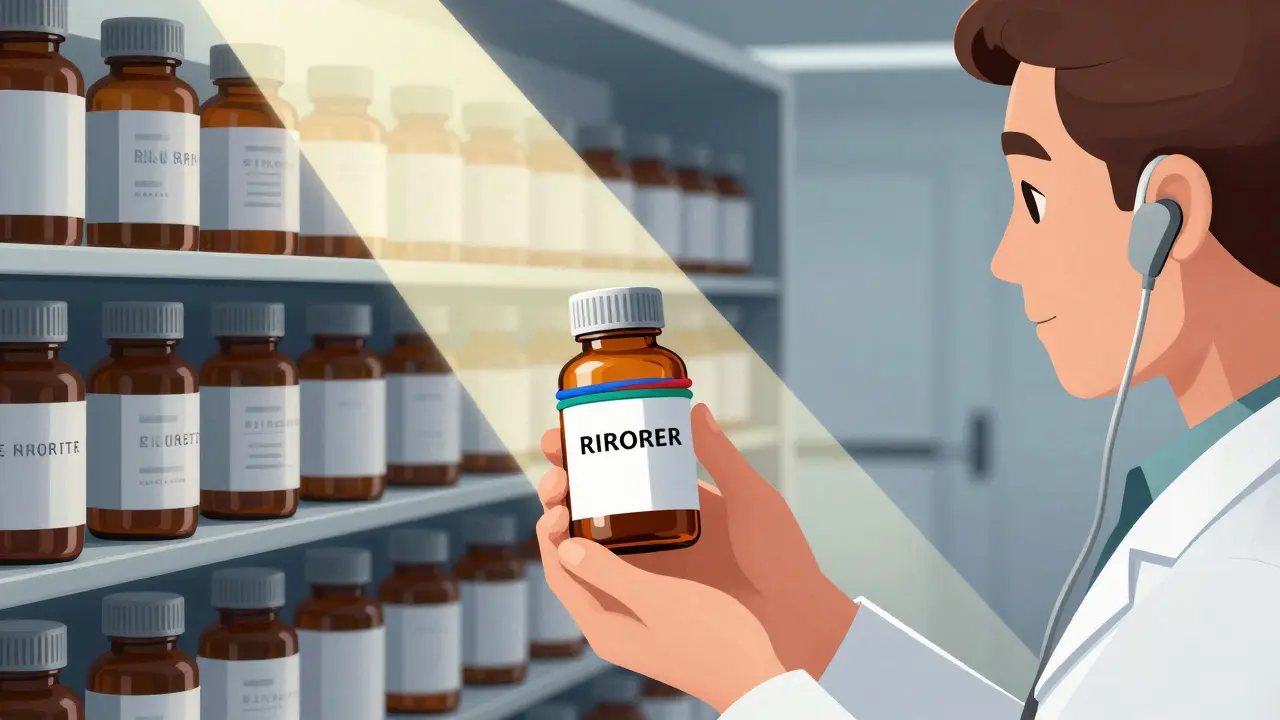
- Color-coding by time of day: Use colored tape or stickers-red for morning, blue for afternoon, green for night. This works for 78% of users, according to pharmacist surveys.
- Rubber bands around bottles: One band = once daily. Two bands = twice daily. Three bands = three times daily. Simple. Cheap. Effective. But only if the pharmacist puts them on correctly.
- Black marker labeling: If your bottle has tiny print, use a thick black permanent marker to write “AM,” “PM,” or “Blood Pressure” directly on the cap. Takes 30 seconds.
- Blister packs: Pre-sorted by day and time. Great for simple regimens. But they fail if you take more than four medications a day or need to split pills.
Braille labels? Only useful if you read braille. But only 15% of adults who lose vision later in life learned braille. So it’s not a universal fix.
Electronic Tools That Work
For those who can afford them, technology helps.
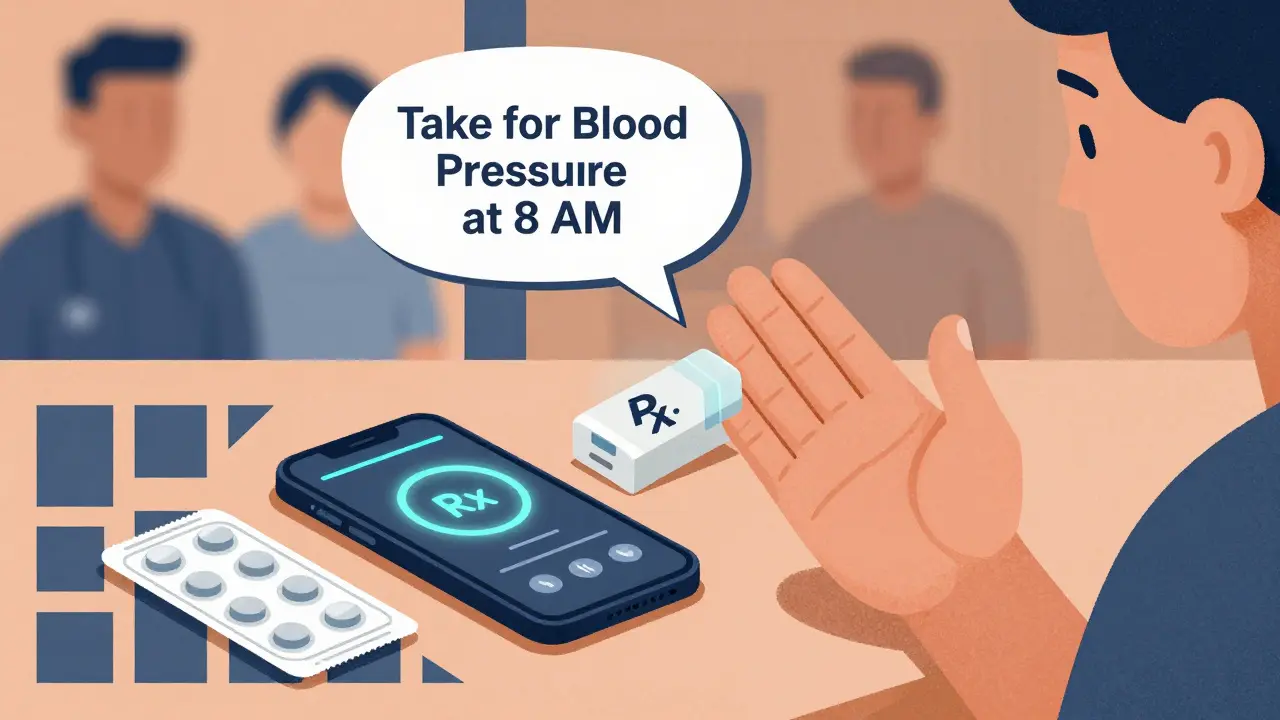
- Talking Rx devices: These small gadgets let you record up to 60 seconds of voice instructions. Press a button, and it says, “Take this pill at 8 a.m. for blood pressure.” Effectiveness? 92% in improving adherence.
- Smart pill dispensers: Devices like Hero Health or PillDrill open compartments at set times, flash lights, and send alerts to your phone. Some even notify a family member if you miss a dose. Price range: $30 to $200.
- Screen reader-compatible apps: Apps like Medisafe or MyTherapy have voice navigation and large buttons. Make sure they’re compatible with VoiceOver (iOS) or TalkBack (Android).
But here’s the catch: only 12% of pharmacies in the U.S. follow the full AFB labeling guidelines. And most insurance plans, including Medicare Part D, don’t pay extra for these services. Pharmacists are under pressure to fill 100 prescriptions a day. Adding 5 minutes per patient for accessibility? Not in the budget.
What You Can Do Right Now
You don’t have to wait for the system to change. Here’s how to take control:
- Ask for large-print labels. Don’t assume they’ll give them to you. Say: “I have low vision. Can you print my label in 18-point font with high contrast?”
- Request color-coding or rubber bands. Bring your own colored tape if needed. Ask the pharmacist to mark each bottle.
- Use a pill organizer. Get one with large, clear labels and a lid that locks. Avoid ones with tiny compartments.
- Record voice reminders. Use your phone’s voice memo app. Record: “Take this pill at 7 a.m. for thyroid.” Set a daily alarm with a visual flash or vibration.
- Bring someone with you. When picking up a new prescription, have a family member or friend come along to hear the instructions.
- Never guess. If you can’t read the label, call your pharmacy or doctor. Don’t risk it.
What Pharmacists and Doctors Need to Do
Healthcare providers have a responsibility. The Americans with Disabilities Act requires reasonable accommodations. That means:
- Providing large-print, high-contrast labels as standard-not as a special request.
- Offering audio instructions via phone or app.
- Training staff to recognize sensory impairments and ask: “Do you need help reading your labels?”
- Using braille only if the patient confirms they read it-don’t assume.
- Labeling liquid medications with tactile markers or measuring tools designed for low vision.
Dr. Tim Johnston from RNIB says it plainly: “The current system isn’t designed for people with sight loss. It’s a safety issue, not a convenience issue.”
Pharmacists need to spend 3-5 extra minutes per patient with sensory impairments. But Medicare pays pharmacies just $14.97 per prescription. No extra money for accessibility. That’s the real barrier.
What’s Changing? And What’s Not
There’s progress-but it’s slow.
- The AFB updated its labeling guidelines in 2021 to include electronic formats and braille translation services.
- The UK’s MHRA is reviewing whether packaging rules go far enough.
- The FDA’s 2022 draft guidance still doesn’t require accessible labeling.
The AFB plans to launch a pharmacy certification program in 2024. RNIB is developing a standardized labeling system for 2025. But without mandatory regulations, adoption will stay patchy.
Industry experts predict a 35% increase in demand for accessible medication tools by 2028, thanks to aging populations. But funding? Still lacking.
Final Thought: You’re Not Alone
If you have low vision or hearing loss, you’ve probably felt frustrated, invisible, or even ashamed when you couldn’t manage your meds. You’re not broken. The system is.
But you can protect yourself. Use the tools that work. Ask for what you need. Don’t be afraid to repeat yourself. Call your pharmacy. Bring someone with you. Write things down. Record voice notes. Use color. Use rubber bands. Use your phone.
Medication safety isn’t a luxury. It’s a basic right. And you deserve to take your medicine without fear.








13 Comments