
GI Bleeding Risk: What Medications Increase It and How to Stay Safe
When you take a pill for pain, blood pressure, or inflammation, you might not think about your stomach—but GI bleeding risk, the chance of dangerous internal bleeding in the digestive tract caused by medications is real, and it’s rising. It doesn’t happen to everyone, but for some, even a daily aspirin can lead to ulcers, blood in stool, or life-threatening blood loss. This isn’t rare. Studies show over 100,000 hospitalizations each year in the U.S. are tied to drug-induced GI bleeding, and many of those cases are preventable.
Some drugs are bigger culprits than others. NSAIDs, nonsteroidal anti-inflammatory drugs like ibuprofen and naproxen are the most common offenders. They block protective stomach enzymes while reducing pain and swelling. Anticoagulants, blood thinners like warfarin or apixaban don’t hurt the stomach lining directly, but they turn small irritations into major bleeds. Even aspirin, often taken daily for heart protection, increases risk—even at low doses. And if you’re on corticosteroids, like prednisone for inflammation or autoimmune conditions, your risk jumps again, especially if you’re also taking an NSAID or anticoagulant. These aren’t just side effects—they’re interactions that multiply danger.
Age matters. People over 60 are at higher risk. So are those with a history of ulcers, H. pylori infection, or alcohol use. But you don’t need a perfect medical history to be at risk. Taking multiple meds at once, skipping meals, or ignoring early signs like black stools or stomach pain can turn a small problem into an emergency. The good news? You can lower your risk. Switching to acetaminophen instead of NSAIDs, using proton pump inhibitors like omeprazole for protection, or asking your doctor about alternatives can make a real difference. It’s not about avoiding meds—it’s about using them smarter.
What you’ll find in the posts below are real, practical stories and science-backed tips from people who’ve dealt with this. You’ll see how doctors spot the warning signs, which drug combos to avoid, and how to talk to your provider without sounding alarmist. No fluff. No guesswork. Just clear steps to protect your gut while still getting the treatment you need.
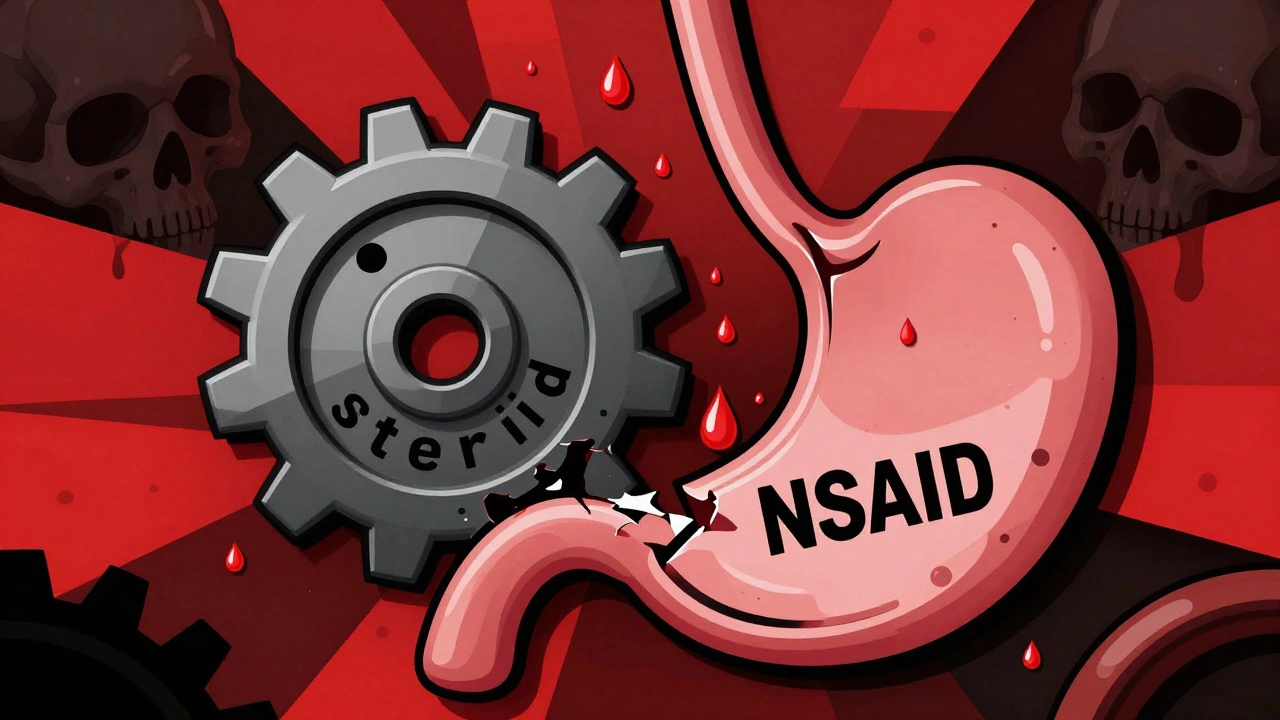
Steroids with NSAIDs: How the Combination Raises GI Bleeding Risk and How to Prevent It
Combining steroids and NSAIDs can multiply the risk of life-threatening GI bleeding. Learn why this happens, who's most at risk, and how to prevent it with proven strategies like PPIs and safer NSAID alternatives.
read more