
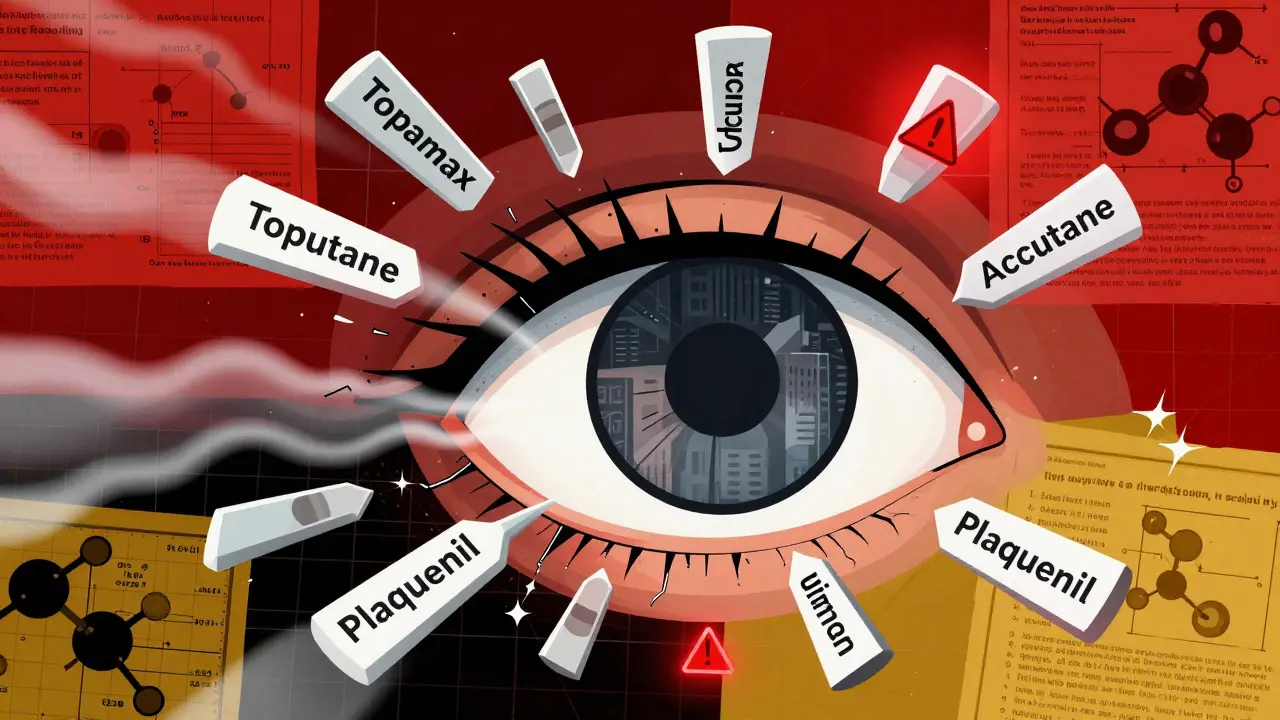
Blurred vision isn't always just a sign you need new glasses. For millions of people taking common medications, it's a warning sign that something deeper is going on. Whether you're on blood pressure pills, acne treatment, or a migraine drug, your eyes might be reacting in ways you didn't expect. And while some cases are harmless and temporary, others can lead to permanent damage if ignored.
Why Do Medications Blur Your Vision?
Your eyes are delicate, and many drugs interfere with their normal function. It's not just about the medication itself-it's how your body responds. Some drugs dry out your eyes. Others change the shape of your lens, swell your cornea, or even damage the nerves and retina over time. The most common culprits fall into a few key categories.
Beta-blockers and calcium channel blockers, often prescribed for high blood pressure, reduce blood flow to the eyes. Around 8-12% of new users report blurry vision within the first month. It's not dangerous in most cases, but it can be disorienting-especially when driving or reading.
Topiramate (Topamax), used for epilepsy and migraines, can trigger a rare but serious condition called acute angle-closure glaucoma. This happens when fluid can't drain properly from the eye, causing pressure to spike. Symptoms include sudden blurred vision, severe eye pain, headache, and nausea. Left untreated, this can cause blindness in under 48 hours.
Isotretinoin (Accutane, Absorica), a powerful acne treatment, affects the oil glands in your eyelids and on the surface of your eyes. Up to 60% of users develop dry eyes. Many describe their vision as foggy or unstable, especially in bright light or after screen use. Some report it made driving at night unsafe.
Amiodarone (Cordarone), used for irregular heart rhythms, builds up in the cornea over time. More than 70% of long-term users develop a swirl-like pattern on the front of the eye. It causes glare, halos around lights, and blurry vision. While this usually doesn't harm sight, it can be persistent-even after stopping the drug.
Corticosteroids, whether taken orally, injected, or inhaled, raise eye pressure in 30-40% of people with glaucoma. Even those without glaucoma can become "steroid responders." After six months of use, 5-7% develop cataracts-cloudy lenses that blur vision permanently unless removed surgically.
Drugs That Can Cause Permanent Eye Damage
Not all blurred vision goes away. Some medications cause damage that doesn't reverse, even after you stop taking them. Two of the most serious are Plaquenil (hydroxychloroquine) and PDE5 inhibitors like Viagra.
Plaquenil, used for lupus and rheumatoid arthritis, can cause a condition called bull's eye maculopathy. This destroys the central part of the retina-the area you use to read, drive, and recognize faces. Studies show 1 in 5,000 people taking it for over five years develop this. The damage is irreversible in 95% of advanced cases. That's why regular eye scans are mandatory. The American Academy of Ophthalmology now recommends annual testing with optical coherence tomography (SD-OCT) and automated visual fields.
Viagra and similar drugs for erectile dysfunction carry a small but real risk of non-arteritic anterior ischemic optic neuropathy (NAION). This is sudden, painless vision loss in one eye, caused by reduced blood flow to the optic nerve. The FDA reports about 2.5 cases per 100,000 prescriptions. It's rare, but if it happens, vision rarely recovers.
Tamsulosin (Flomax), used for enlarged prostate, doesn't cause blurry vision directly-but it creates a major risk during cataract surgery. In 95% of patients taking it, the iris becomes floppy and doesn't respond properly to surgical tools. Surgeons need to know in advance so they can adjust techniques. Many patients don't realize this side effect lasts up to 18 months after stopping the drug.
Who’s at Highest Risk?
Not everyone who takes these drugs will have problems. But some people are far more vulnerable.
If you have diabetes, your risk of steroid-induced cataracts jumps 3.2 times higher. That means even a short course of prednisone can cause vision changes faster than in someone without diabetes.
People with narrow anterior chamber angles are at higher risk for acute angle-closure glaucoma from Topamax or sulfa-based drugs. If you’ve had eye pressure checks before and were told you have "narrow angles," you should avoid these medications unless closely monitored.
Older adults are more sensitive to anticholinergic drugs-used for allergies, overactive bladder, and depression. These drugs relax the muscles that focus the lens, causing temporary blurring. But in seniors, the effect can last longer and increase fall risk.
Those on multiple medications at once are also at higher risk. Drug interactions can amplify side effects. For example, combining a beta-blocker with an anticholinergic can worsen dry eyes and blurred vision more than either drug alone.
When to See a Doctor Right Away
Blurry vision isn’t always an emergency-but some signs mean you need help now.
- Sudden blurred vision with eye pain or headache-This could be acute angle-closure glaucoma. Go to the ER immediately.
- Blurred vision in one eye only-Especially if it’s painless and came on fast. Could be optic nerve damage from Viagra or other drugs.
- Seeing halos, glare, or rainbow rings around lights-Especially if you're on amiodarone. Needs a slit-lamp exam.
- Blurred vision that doesn’t improve after a few days-If you started a new drug and your vision hasn’t cleared up, talk to your doctor. Don’t wait.
- Difficulty focusing on close objects-If you’re under 40 and suddenly can’t read your phone, it might not be presbyopia. Could be ciliary muscle dysfunction from anticholinergics.
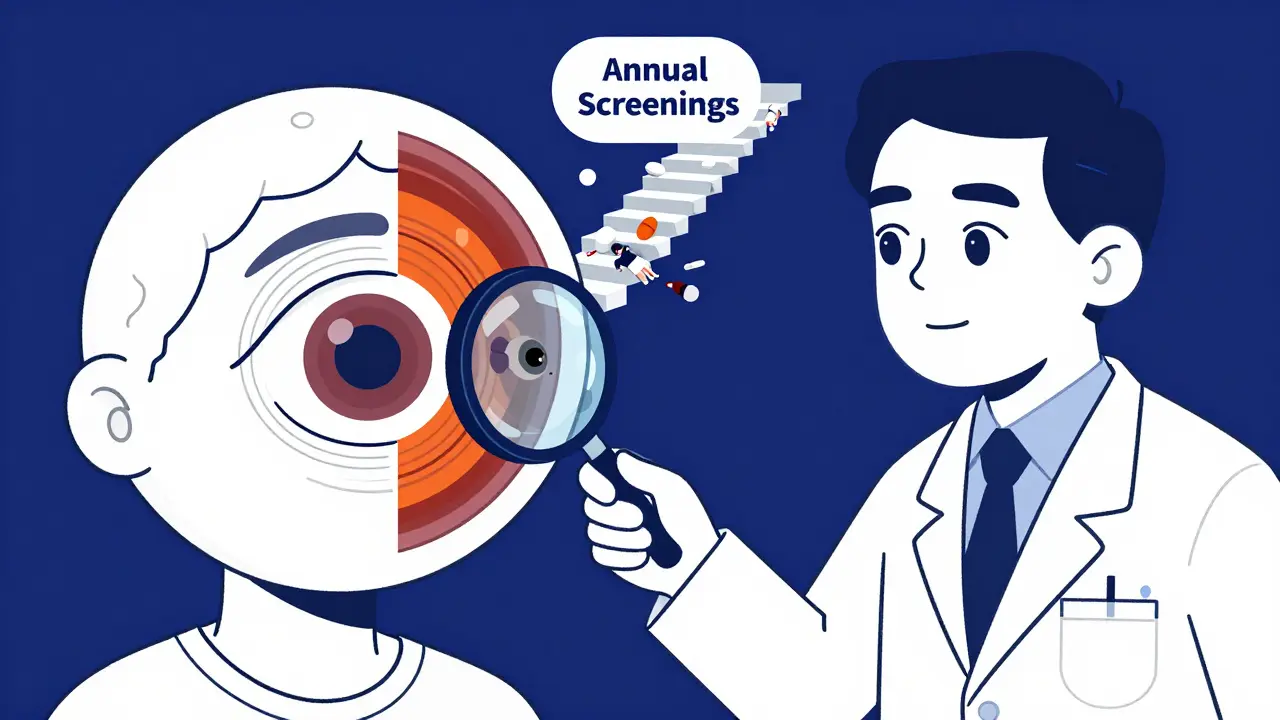
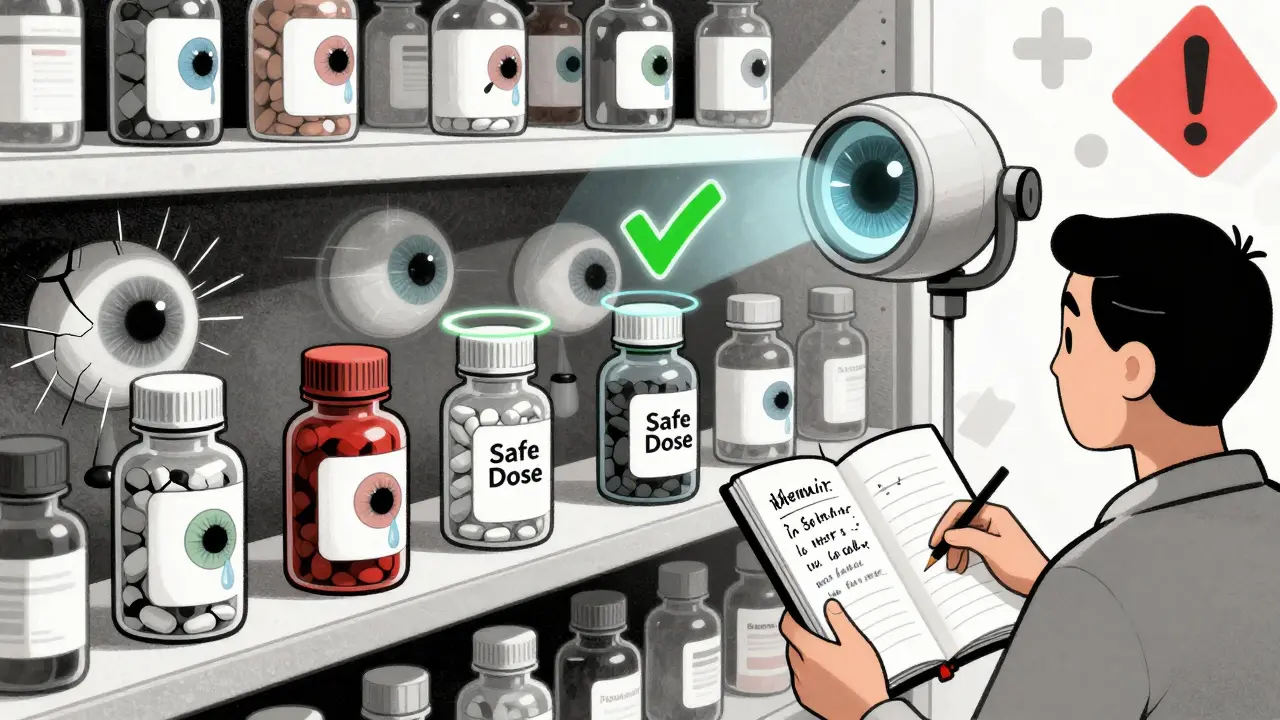
If you're on Plaquenil, amiodarone, or long-term steroids, you should have a baseline eye exam before starting, then yearly checkups. For Plaquenil, the new safety guideline is 2.3 mg per kg of real body weight per day-lower than the old limit. If you're over that, ask your doctor to adjust your dose.
What You Can Do to Protect Your Vision
Don’t stop your medication without talking to your doctor. But do take these steps:
- Know your meds-Check the patient information leaflet. If blurred vision is listed as a side effect, be alert.
- Keep a vision journal-Note when blurriness happens, how long it lasts, and if it’s worse in certain lighting or after screen use.
- Use preservative-free artificial tears-Especially if you’re on Accutane. Use them 4-6 times a day. Many patients need prescription drops like Restasis.
- Tell your eye doctor about every medication-Even over-the-counter ones. Many don’t realize antihistamines or decongestants can dry out the eyes.
- Don’t skip eye screenings-If you’re on Plaquenil or amiodarone, annual scans aren’t optional. Early detection saves sight.
- Inform your surgeon if you take Flomax-Even if you stopped it months ago. The effects linger.
Technology is helping too. In 2023, the FDA approved an AI-powered visual field analyzer that detects Plaquenil damage earlier and more accurately than older methods. This means fewer people will slip through the cracks.
What’s Changing in 2026?
The medical world is catching up. In 2024, the American Academy of Ophthalmology updated its guidelines to reflect new data on safe dosing for Plaquenil. The National Eye Institute is funding research to find genetic markers that predict who’s most likely to develop drug-induced vision damage. Within five years, doctors may run a simple blood test before prescribing high-risk drugs to see if your genes make you vulnerable.
Hospitals now require ophthalmology consultations before starting high-risk medications like Plaquenil or amiodarone. That’s up from less than half of institutions in 2015. More doctors are asking patients about vision changes during routine visits.
But the biggest change is awareness. Patients are speaking up. On patient forums, hundreds share stories of blurred vision that turned into permanent damage because no one warned them. That’s why this information matters-not just for doctors, but for you.
Frequently Asked Questions
Can blurry vision from medication go away on its own?
Sometimes, yes. Blurring caused by anticholinergics, dry eyes from Accutane, or temporary blood pressure drops often improves within hours or days after adjusting the dose or using eye drops. But if the blur persists beyond a week, or if it’s accompanied by pain, light sensitivity, or vision loss, it’s not likely to resolve without medical intervention. Permanent damage from drugs like Plaquenil or amiodarone won’t reverse on its own.
Which over-the-counter meds can cause blurred vision?
Many. Antihistamines (like Benadryl), decongestants (like pseudoephedrine), and even some sleep aids (like diphenhydramine) have anticholinergic effects that relax the focusing muscles in your eyes. This causes temporary blurring, especially up close. NSAIDs like ibuprofen, taken daily for years, can increase cataract risk by 28%. Always check the side effect list-even on "natural" supplements.
Is blurred vision from steroids always permanent?
No. Elevated eye pressure from steroids usually goes back to normal after stopping the drug. But if pressure stays high too long, it can cause glaucoma, which leads to permanent nerve damage. Cataracts caused by steroids are also reversible-with surgery. The key is catching them early. That’s why regular eye pressure checks are critical for anyone on long-term steroids.
How often should I get my eyes checked if I’m on high-risk medication?
For Plaquenil: baseline exam, then every 6-12 months after five years of use. For amiodarone: baseline and annual slit-lamp exams. For long-term corticosteroids: every 3-6 months if you’re a known steroid responder or have glaucoma. For Topamax: immediate exam if you get sudden eye pain or blurred vision. Don’t wait for symptoms-screening saves vision.
Can I still take my medication if I have blurred vision?
Don’t stop without talking to your doctor. For some drugs, like Topamax or Plaquenil, the benefit may outweigh the risk if you’re monitored closely. For others, like amiodarone, the eye changes may be harmless even if they’re permanent. Your doctor can adjust your dose, switch you to a safer alternative, or add protective treatments like eye drops. Never assume blurry vision means you must quit your medicine-just don’t ignore it.
What’s Next?
If you’re on any of these medications and have noticed changes in your vision, schedule an eye exam-even if you think it’s nothing. Bring a list of all your drugs, including supplements. Ask your doctor: "Could any of these be affecting my eyes?" and "Do I need a baseline or follow-up screening?"
Most people don’t realize their vision problems are drug-related. But with the right checks, permanent damage can be prevented. Your eyes don’t warn you loudly. They whisper first. Listen before it’s too late.







12 Comments