
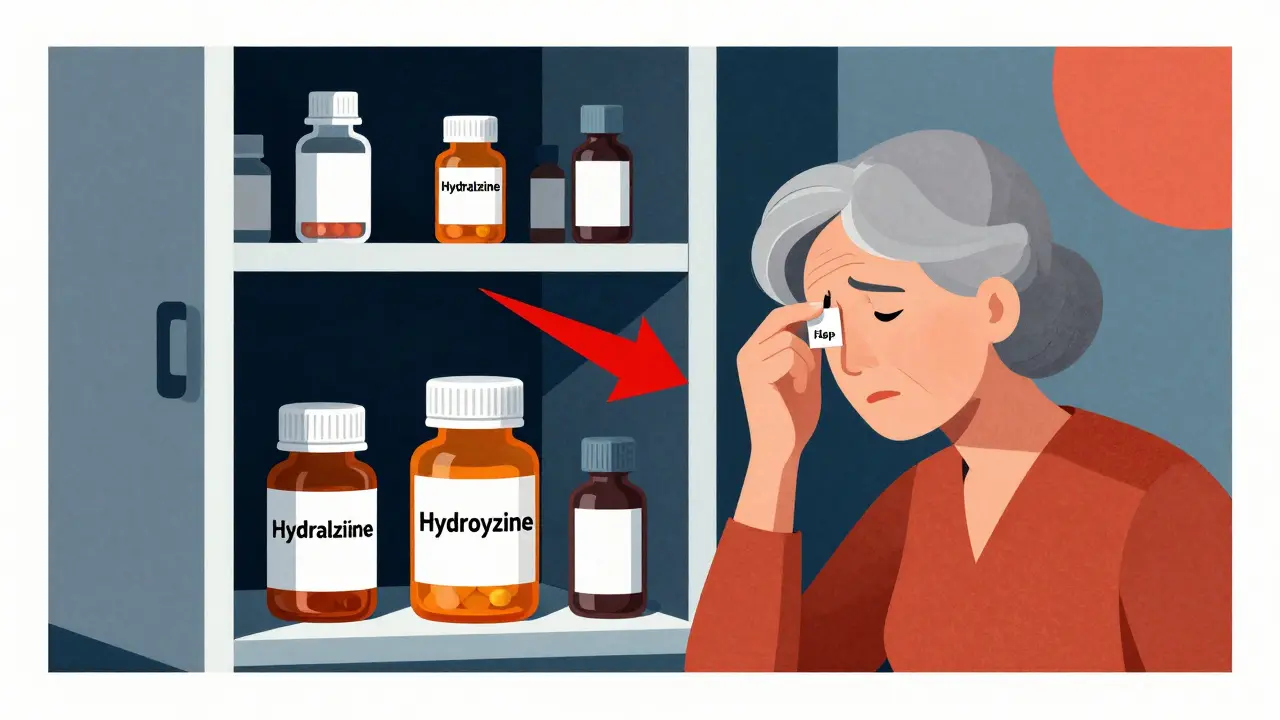
Every year, over 1.3 million people in the U.S. end up in the emergency room because of medication mistakes. Many of these aren’t caused by doctors or pharmacists-they happen at home, when people take pills the wrong way. You might think you’re doing it right because you read the label. But reading isn’t enough. Taking medication safely isn’t about being careful-it’s about knowing exactly what to do, every single time.
Right Patient: Make Sure It’s Really You
It sounds obvious, but mixing up medications happens more than you’d think. One person takes their spouse’s blood pressure pill by accident. Another grabs a bottle labeled "vitamins" that’s actually a strong painkiller. In hospitals, nurses check two identifiers-your full name and date of birth-before giving any drug. At home, you need to do the same.Keep your medications in their original bottles. Don’t dump them into unlabeled containers. If you use a pill organizer, label each compartment with the full drug name and time of day. When you pick up a new prescription, pause for five seconds and ask: "Is this really mine?" Check the name on the label against your ID. If it’s not your name, don’t take it. Even if it looks familiar.
Right Drug: Know What’s in the Bottle
Many drugs sound or look alike. For example, hydralazine (for high blood pressure) and hydroxyzine (for allergies) are easy to confuse. So are celecoxib and clonazepam. The Institute for Safe Medication Practices says look-alike, sound-alike drugs cause about 25% of all medication errors.Always check the generic name, not just the brand. If your doctor says "take Lisinopril," don’t assume the white oval pill labeled "Zestril" is the same unless you verify it. Use a trusted app like Medscape or Drugs.com to look up the pill’s shape, color, and imprint code. If the pill looks different from your last refill, call your pharmacy. Don’t take it just because it’s "the same dose."
Right Dose: More Isn’t Better
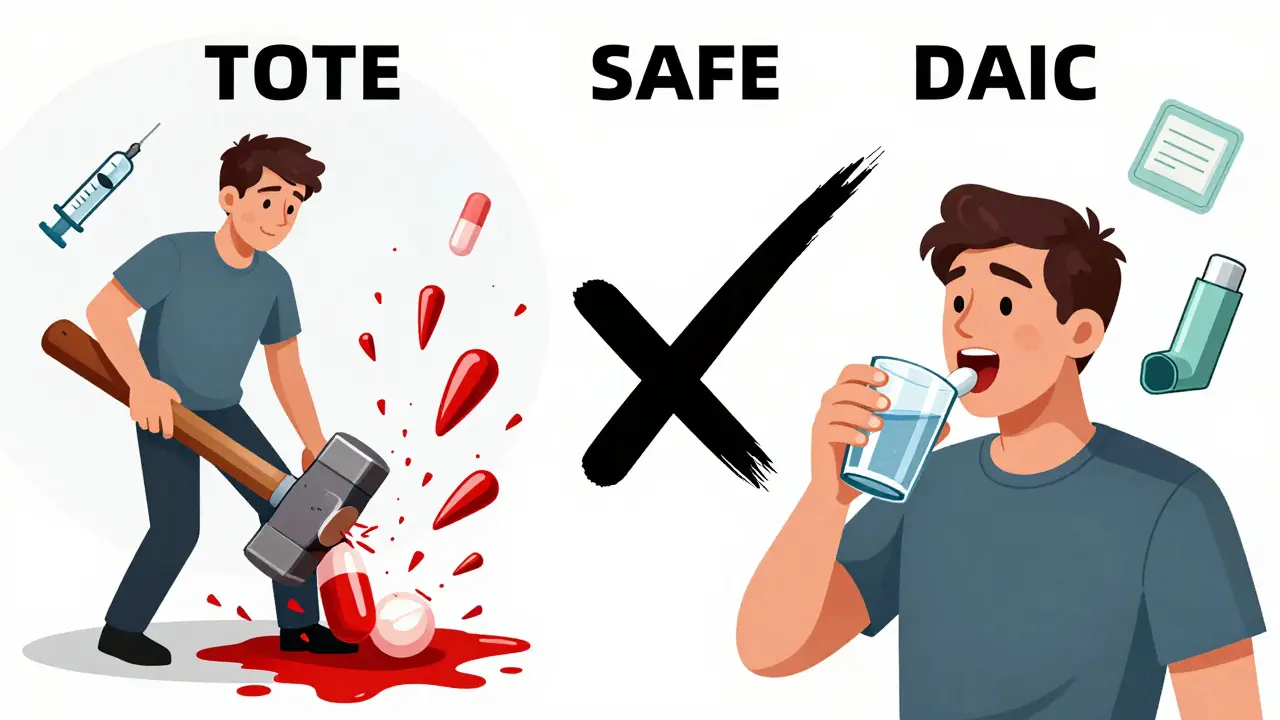
Taking extra pills because you didn’t feel better yesterday is dangerous. The CDC says 15% of dosing errors happen in children, but adults make them too. Insulin, blood thinners, and opioids are especially risky. A single wrong dose can send you to the hospital-or worse.Use the measuring tool that comes with the medicine. Never use a kitchen spoon. A teaspoon isn’t 5 mL unless it’s a medical measuring spoon. If you’re taking liquid medicine, use the syringe or cup provided. For pills, don’t crush or split them unless the label says it’s safe. Some pills are designed to release slowly-crushing them can flood your body with too much drug at once.
Weight matters. If you’re underweight or have kidney or liver problems, your body processes drugs differently. Always tell your doctor or pharmacist your current weight and any health changes. They might need to adjust your dose.
Right Route: Don’t Guess How to Take It
Taking a pill meant for your mouth by injecting it? That’s a deadly mistake. So is swallowing a patch meant to go on your skin. About 16% of medication errors involve the wrong route of administration.Check the label: "Oral" means swallow. "Topical" means apply to skin. "Sublingual" means place under the tongue. "Inhalation" means breathe it in. If the instructions say "for external use only," don’t take it inside your body. If you’re unsure, call your pharmacist. Don’t rely on memory. Even if you’ve taken the same drug for years, the instructions might have changed.
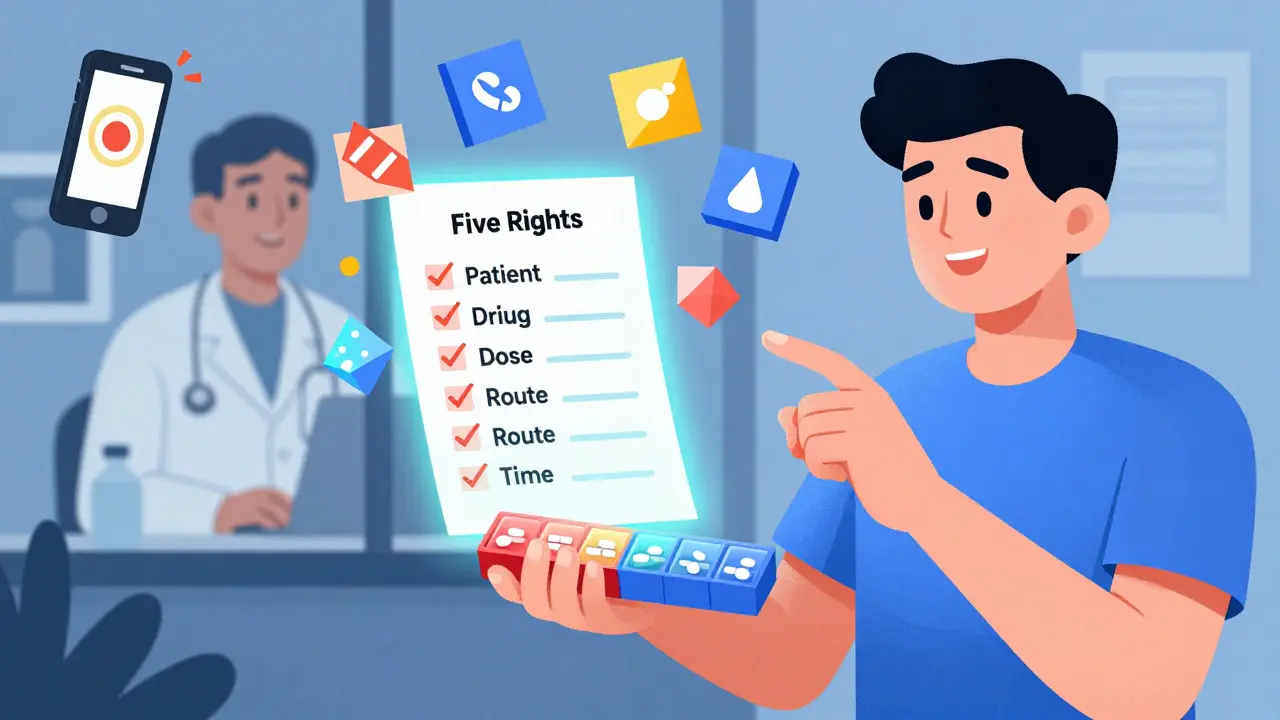
Right Time: Timing Is Everything
Some drugs work best when taken at the same time every day. Others need to be spaced out-like antibiotics, which must be taken every 8 or 12 hours to keep a steady level in your blood. Missing a dose or taking it too early can reduce effectiveness. Taking it too late can cause side effects.For time-critical meds like insulin or seizure drugs, aim to take them within 30 minutes of your scheduled time. Use alarms on your phone or a pill dispenser with built-in reminders. If you forget a dose, check the leaflet or call your pharmacist. Don’t double up unless instructed. Some drugs, like blood thinners, can become dangerous if you take two doses too close together.
What They Don’t Tell You: The Hidden Rules
The Five Rights are the foundation-but safety goes deeper. Here’s what most people miss:- Right reason: Why are you taking this? If your doctor prescribed it for anxiety but you’re using it to sleep, that’s misuse. Always know the purpose.
- Right documentation: Keep a written list of every drug you take-name, dose, time, reason. Update it every time something changes. Bring it to every appointment.
- Right response: Are you feeling better? Worse? New rash? Dizziness? Nausea? Report it. Side effects aren’t always listed on the label.
- Right education: Ask: "What should I avoid while taking this?" (Alcohol? Grapefruit? Other meds?) "What happens if I skip a dose?" "When should I call for help?"
Studies show that patients who ask these questions cut their risk of harm by nearly half. Don’t be shy. Pharmacists are trained to answer these questions. They want you to be safe.
Real-Life Problems and Simple Fixes
Many people struggle with managing multiple pills. One woman in her 70s took 12 different medications. She mixed up the times and ended up in the hospital with dangerously low blood pressure. Her fix? A simple pill organizer with alarms and a weekly checklist she shared with her daughter.Another man took his blood thinner at night, but his doctor had changed the time to morning. He didn’t notice because the bottle looked the same. He started using a color-coded system: red for morning, blue for night. No more mistakes.
For seniors, poor lighting is a hidden danger. A 2022 survey found 37% of older adults struggle to read labels in dim light. Keep a small lamp near your medicine cabinet. Use magnifying glasses if needed. Don’t take pills in the dark.
When to Call for Help
You don’t have to figure this out alone. Call your pharmacist if:- You’re unsure what a pill is
- You’ve missed a dose and don’t know what to do
- You feel strange after taking a new drug
- You’re taking more than five medications
- You’ve had a recent hospital stay or surgery
Many pharmacies offer free medication reviews. Bring all your pills-even supplements and over-the-counter ones-in a brown bag. They’ll check for interactions, duplicates, and risks. It takes 20 minutes. It could save your life.
Technology Can Help-But Not Replace Common Sense
Apps like Medisafe or MyTherapy can remind you when to take pills. Barcode scanners at pharmacies help match your prescription to your ID. Smart pill dispensers lock until the right time. But none of these replace your own attention.One study found that 34% of people who used medication apps still made errors because they ignored alerts or didn’t update their lists. Technology is a tool, not a safety net. Stay involved. Stay aware.
Final Thought: Safety Is a Habit, Not a One-Time Check
Medication safety isn’t about remembering five rules once. It’s about making them part of your daily routine. Like brushing your teeth, it becomes automatic. Check the name. Check the dose. Check the time. Ask questions. Keep a list. Talk to your pharmacist.The goal isn’t perfection. It’s awareness. If you pause for five seconds before taking any pill-just five seconds-you’re already safer than most people. That’s the power of small habits. They don’t make headlines. But they save lives.
What should I do if I accidentally take the wrong medication?
Don’t wait to see if you feel sick. Call Poison Control at 1-800-222-1222 immediately. Have the pill bottle or packaging ready to describe what you took, how much, and when. If you’re having trouble breathing, chest pain, or passing out, call 911. Never try to induce vomiting unless instructed by a professional.
Can I split pills or crush them to make them easier to swallow?
Only if the label or your pharmacist says it’s safe. Many pills are designed to release slowly over time. Crushing or splitting them can cause a dangerous overdose. Extended-release tablets, capsules with beads, and coated pills should never be altered. Ask your pharmacist before changing how you take any medication.
Why do I need to know the generic name of my drug?
Brand names change between manufacturers, but the generic name stays the same. If you know the generic name-like "metformin" instead of "Glucophage"-you can recognize the same drug even if the pill looks different or the price changes. It also helps you avoid accidentally taking two versions of the same medicine.
Is it safe to take expired medication?
Most expired medications lose potency over time, meaning they may not work as well. Some, like insulin or liquid antibiotics, can become harmful. The FDA advises against using any drug past its expiration date, especially for serious conditions. If you’re unsure, bring it to your pharmacy for disposal. Don’t flush it down the toilet-many pharmacies offer take-back programs.
How do I know if a drug interaction is dangerous?
Some interactions cause mild side effects like drowsiness. Others can lead to heart problems, kidney failure, or bleeding. If you start feeling unusually tired, dizzy, nauseous, or have unusual bruising or bleeding after starting a new drug, contact your doctor. Always tell your pharmacist about every supplement, herb, and OTC medicine you take-even if you think it’s harmless.
What’s the best way to store medications at home?
Keep them in a cool, dry place away from sunlight and moisture. The bathroom cabinet is a bad idea-steam from showers can ruin pills. A locked drawer in your bedroom or kitchen is better. Keep them out of reach of children and pets. Some drugs, like insulin or certain antibiotics, need refrigeration-check the label. Always keep original containers to avoid confusion.

8 Comments
Been there. Took my wife's blood pressure pill by accident last year. Thought it was just a vitamin. Ended up dizzy for hours. Never again. Always check the name. Five seconds. That's it.
Of course they tell you to check the label. But who's really monitoring the pharmaceutical industry? They design pills to look identical on purpose-so you keep buying the same brand. Hydroxyzine vs hydralazine? That's not a mistake. That's corporate sabotage. And don't get me started on how the FDA approves these look-alikes. They're all in bed with Big Pharma. You think your pharmacist cares? They get bonuses for selling more pills. Read between the lines.
How utterly pedestrian. Of course you must check your name on the bottle-how gauche to assume otherwise. But let's be honest, the real issue is the cultural collapse of personal responsibility. People don't read labels because they've been conditioned to outsource every decision to an algorithm, a pill organizer, or worse-a smartphone app. I mean, really. Are we now so feeble that we require a vibrating device to remind us not to swallow poison? The decline is palpable. And the fact that they suggest using a 'magnifying glass' for seniors? How quaint. It's not lighting, it's cognitive erosion.
I used to take 11 meds a day. Felt like a human pharmacy. Then I started using color-coded pill cases-red for morning, blue for night, green for 'maybe don't take this one if you're dizzy.' My partner started checking them with me every Sunday. We turned it into a ritual. No alarms. No apps. Just us, a cup of tea, and a quiet moment to ask, 'Why are we doing this again?' Turns out, half the stuff I was taking wasn't even necessary. Sometimes safety isn't about more systems-it's about less noise.
OMG I JUST REALIZED I'VE BEEN TAKING MY BLOOD THINNER AT NIGHT FOR 3 YEARS BUT MY DOCTOR SAID MORNING?? I'M GONNA DIE. ALSO WHY DO THEY MAKE THE LETTERS SO SMALL?? I NEED A MAGNIFYING GLASS AND A FLASHLIGHT AND A THERAPIST. ALSO IS GRAPEFRUIT REALLY THAT BAD?? I LOVE GRAPEFRUIT.
Most people miss the real point: medication safety isn't about rules-it's about relationship. The relationship between you and your body, between you and your pharmacist, between you and the quiet, unglamorous act of paying attention. I’ve seen patients who know every side effect by heart but still swallow pills on autopilot. The difference between survival and disaster? A pause. A breath. A question asked aloud. You don't need an app. You need presence. And maybe a list. Always a list.
It's fascinating how we treat medication like magic beans-swallow it, and the problem disappears. But drugs aren't solutions, they're interventions. They alter chemistry, not meaning. Why are we taking this? What's the underlying tension in our lives that makes us reach for a pill instead of a conversation, a walk, a sleep? The Five Rights are necessary, sure-but they're also a bandage on a systemic wound. We've outsourced healing to chemistry because we're too tired, too rushed, too disconnected to heal ourselves. The real danger isn't misreading a label. It's forgetting we have agency at all.
So I went to my local pharmacy for a free med review last week. Brought in everything-prescriptions, CBD oil, the gummy vitamins I take because my wife says they’re 'good for the soul,' even the expired ibuprofen I kept 'just in case.' The pharmacist, this calm woman named Linda, spent 25 minutes going through each one. Found two duplicates. Pointed out that my blood pressure med interacted with the fish oil I'd been taking since 2018. Told me my 'natural sleep aid' was just melatonin in disguise and I was taking double the dose I thought. She didn't judge. Didn't rush. Just asked, 'What are you trying to fix?' And for the first time in years, I actually answered. I didn't know I needed that until I got it. You don't need a PhD to stay safe. You just need to show up. And ask. And listen.