
Gastrointestinal Bleeding Prevention: How to Reduce Risk and Stay Safe
When we talk about gastrointestinal bleeding prevention, the actions and strategies used to stop dangerous bleeding in the digestive tract before it starts. It’s not just about avoiding blood in your stool—it’s about protecting your stomach and intestines from damage caused by everyday meds, aging, and hidden health risks. Many people don’t realize that something as simple as taking ibuprofen for a headache or aspirin for heart health can quietly increase their risk of internal bleeding. This isn’t rare. In fact, NSAIDs like naproxen and celecoxib are linked to over 100,000 hospitalizations each year in the U.S. alone due to GI damage.
Proton pump inhibitors, medications that reduce stomach acid to heal and prevent ulcers. Also known as PPIs, they’re one of the most common tools doctors use for gastrointestinal bleeding prevention. Drugs like omeprazole and esomeprazole don’t just treat heartburn—they form a protective barrier in the stomach lining, especially for people on blood thinners or long-term NSAIDs. But they’re not magic. Taking them without a clear reason can lead to other problems, like nutrient loss or increased infection risk. The key is using them only when needed, not as a daily habit. And then there’s anticoagulant safety, how to manage blood-thinning drugs like warfarin or apixaban without triggering dangerous bleeding. These drugs save lives by preventing strokes and clots, but they’re also the top reason for serious GI bleeds in older adults. It’s not about stopping them—it’s about balancing them with the right support, like checking for H. pylori infection, avoiding alcohol, and skipping NSAIDs entirely.
People over 65, those with a history of ulcers, or anyone on more than one blood thinner are at the highest risk. But even younger people aren’t safe if they’re popping painkillers daily or drinking heavily. The fix isn’t always a new prescription. Sometimes it’s just swapping ibuprofen for acetaminophen, cutting back on coffee, or asking your doctor if you still need that daily aspirin. And if you’ve ever had black, tarry stools or vomited blood—don’t wait. That’s not just a warning sign. It’s a red alarm.
What you’ll find below are real, practical guides from doctors and patients who’ve walked this path. You’ll learn how to spot the quiet signs of trouble, which meds to avoid, how to use acid reducers safely, and what to do if you’re on blood thinners and need pain relief. No fluff. No guesswork. Just what works.
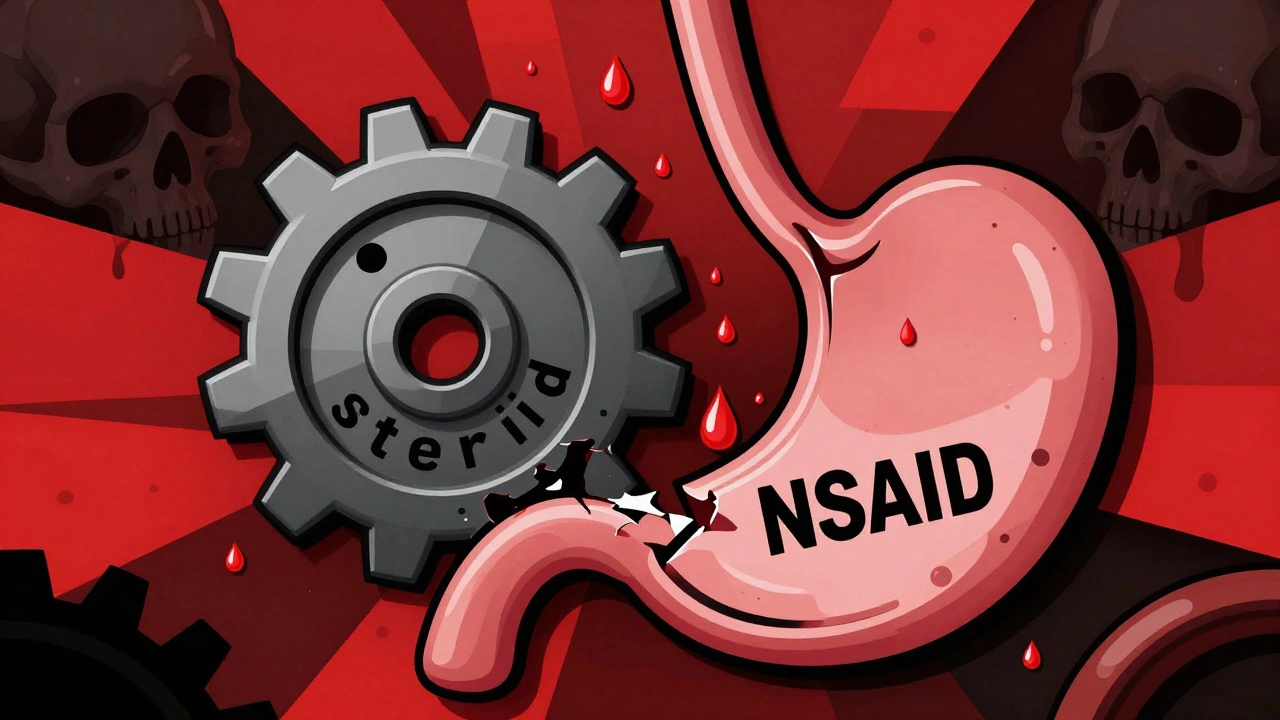
Steroids with NSAIDs: How the Combination Raises GI Bleeding Risk and How to Prevent It
Combining steroids and NSAIDs can multiply the risk of life-threatening GI bleeding. Learn why this happens, who's most at risk, and how to prevent it with proven strategies like PPIs and safer NSAID alternatives.
read more