
Generic Drug Quality: What You Need to Know About Safety, Effectiveness, and Cost
When you hear generic drug quality, the measure of how reliably a non-brand medication performs compared to its brand-name counterpart. Also known as drug equivalence, it's not just about price—it's about whether your body gets the same dose, absorbs it the same way, and responds the same way. The FDA says generics must be bioequivalent to brand names, meaning they deliver the same active ingredient at the same rate and amount. But that’s the baseline. Real-world performance? That’s where things get messy.
Many people assume all generics are interchangeable, but that’s not always true. Drugs with a narrow therapeutic index, medications where even small differences in blood levels can cause serious harm or treatment failure—like warfarin, thyroid meds, or seizure drugs—need extra care. A 10% variation in absorption might be fine for an antihistamine, but for warfarin, it can mean a stroke or a bleed. That’s why some doctors insist on brand-name only for these drugs. And while most generics are fine, studies show that switching between different generic manufacturers can sometimes cause side effects or loss of control, especially in chronic conditions.
Then there’s the issue of manufacturing. Generic drugs are made all over the world—India, China, the U.S., and beyond. The FDA inspects facilities, but not every plant gets checked every year. Some have had repeated violations for poor quality control, contamination, or falsified data. You won’t know which batch you got unless you track your pharmacy’s supplier. That’s why checking the FDA’s drug shortage database, a public tool that tracks when medications become unavailable or unreliable due to production issues matters. If your generic suddenly isn’t working like it used to, it might not be you—it might be the maker.
Cost savings are real, but they shouldn’t come at the cost of safety. Some pharmacies push the cheapest generic, even if it’s from a supplier with a history of problems. Others stick with trusted brands or generics from reputable manufacturers. Ask your pharmacist: "Which manufacturer makes this?" and "Has this version worked well for other patients?" You’re not being difficult—you’re being smart. And if you’re on a critical medication, don’t be afraid to request the brand name if your insurance allows it. Sometimes the extra cost is worth avoiding a hospital visit.
What you’ll find below are real stories and practical guides from people who’ve been there: the patient whose blood thinners went off-track after a generic switch, the senior who saved hundreds with a better generic, the doctor who refuses to prescribe certain generics for heart patients. These aren’t theory pieces—they’re lived experiences, backed by data and clinical insight. Whether you’re managing diabetes, high blood pressure, or mental health meds, you need to know when a generic is safe and when it’s not. This isn’t about fear. It’s about control. And you have the right to it.
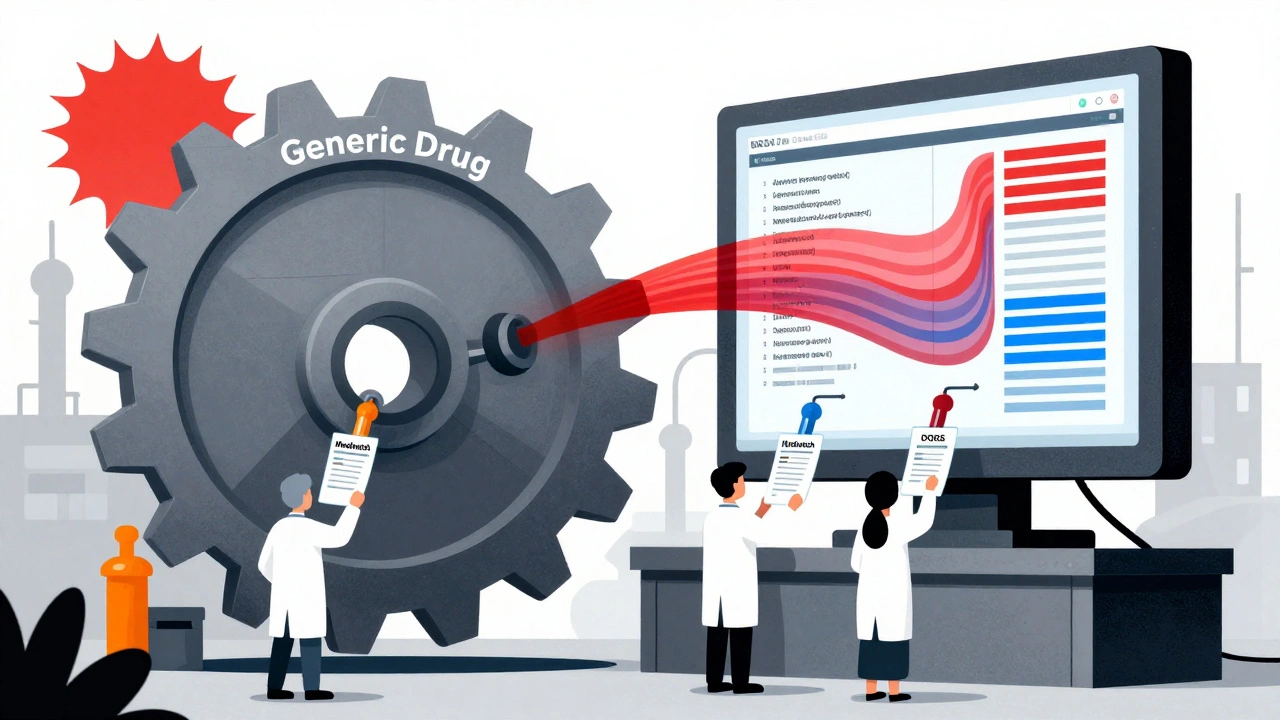
How the FDA Monitors Generic Drug Safety After Approval
The FDA monitors generic drug safety after approval using real-world data, adverse event reports, and market analysis to catch manufacturing defects and therapeutic issues. Learn how the system works - and where it still has gaps.
read more